Breast Reconstruction After Cancer: Why Shanghai Ninth People Hospital Leads Plastic Surgery Rankings
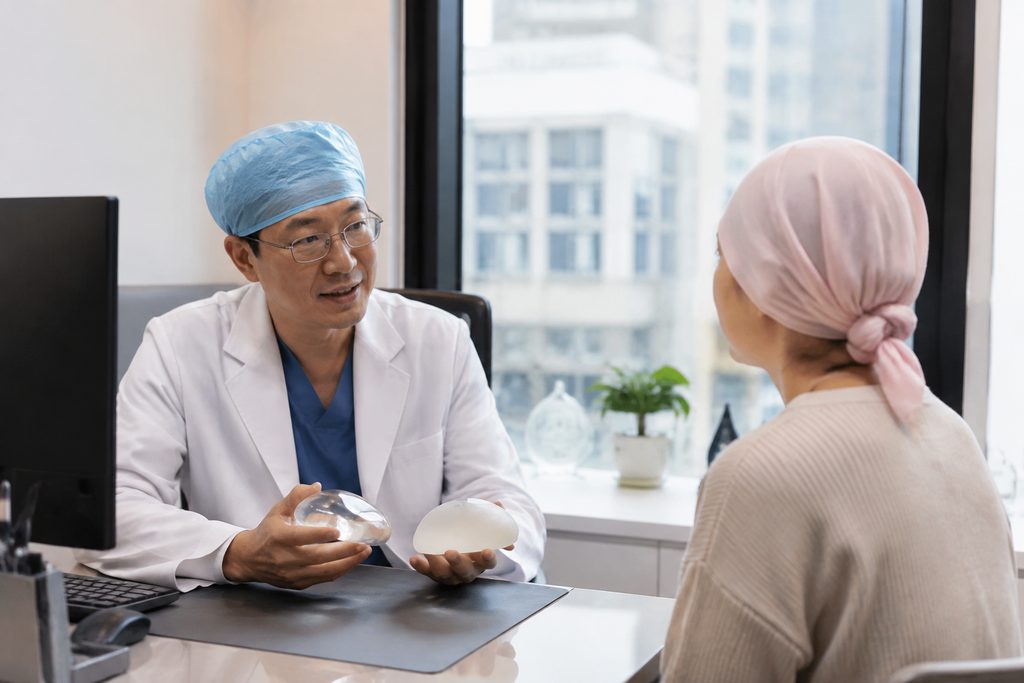
In the United States, a DIEP flap breast reconstruction typically costs between $50,000 and $100,000. At Shanghai Ninth People Hospital, the same procedure runs from $12,000 to $25,000. The price gap is real. But the number that matters more to the women who contact our team is this one: Shanghai Ninth People Hospital’s plastic surgery department has held the top position in China’s national hospital rankings for over a decade. That ranking is not a marketing claim. It comes from the Fudan University Hospital Rankings, the most authoritative hospital evaluation system in China, which assesses clinical volume, outcomes data, and peer reputation across 45 specialties. When a hospital performs over 1,500 microsurgical breast reconstructions annually, technical proficiency becomes pattern recognition. The surgeons have seen what works.
This article explains what that ranking means for international patients, what the different reconstruction options actually cost, and how the logistics work from initial contact through post-operative recovery. We handle the coordination. The medical decisions belong to you and the surgical team.
What “Plastic Surgery Rank 1” Actually Means
The Fudan ranking system evaluates plastic surgery departments nationwide on two axes: clinical reputation among specialists and research output. Shanghai Ninth People Hospital’s department has ranked first in both for eleven consecutive years. That is not a tie. That is sustained dominance.
What does that look like in practice? The department performs more than 15,000 plastic surgery procedures annually across all subspecialties. The breast reconstruction unit alone handles over 1,500 microsurgical cases per year. For comparison, a busy academic medical center in the United States might perform 200 to 400 free-flap breast reconstructions annually. Volume at this scale creates a feedback loop: surgeons encounter rare anatomical variations more frequently, refine their technique faster, and train junior surgeons under conditions that smaller centers cannot replicate.
But volume alone is not the story. The department pioneered several techniques now used internationally, including refinements to the deep inferior epigastric perforator flap that reduce abdominal wall morbidity. Their published complication rates for DIEP flap reconstruction—flap loss below 2%, reoperation rates under 5%—match or exceed benchmarks from major Western centers. These numbers appear in peer-reviewed journals, not brochures.
For international patients, the ranking carries practical weight. When you submit medical records for a written second opinion, the team reviewing your case operates at the highest level of the specialty in China. That does not guarantee a specific outcome. It does mean the technical foundation is as strong as any available globally.
Who This Is Right For — and Who It Isn’t
Breast reconstruction after mastectomy is a deeply personal decision. The right candidate for traveling to Shanghai for this surgery shares a few common characteristics. She has completed her oncologic treatment or is stable on endocrine therapy. She understands that microsurgical reconstruction is a major procedure with a real recovery timeline. She is medically cleared for a surgery lasting six to ten hours under general anesthesia.
Good candidates for traveling to Shanghai Ninth People Hospital typically fall into these groups:
- Women seeking DIEP flap or other autologous reconstruction who face long wait times or high out-of-pocket costs in their home country
- Patients who have had failed implant-based reconstructions and need complex revision using their own tissue
- Women with a strong preference for autologous reconstruction who want to avoid implant-related long-term maintenance
- Patients who can dedicate three to four weeks in Shanghai for surgery and initial recovery, plus a clear plan for follow-up care at home
This path is not for everyone. Women with active cancer requiring ongoing chemotherapy or radiation should complete that treatment first. Patients with significant cardiac or pulmonary comorbidities that elevate surgical risk need careful pre-operative clearance—and some will be better served staying closer to home. Smokers face substantially higher flap failure rates and must quit at least six weeks before surgery. And anyone who cannot arrange reliable follow-up care in their home country should think hard about whether traveling for surgery is wise. A beautiful reconstruction that develops a complication six months later needs a local surgeon who can help.
The Options, Compared
Not all breast reconstruction is the same. The choice between implant-based and autologous reconstruction shapes everything: surgical time, recovery, long-term results, and cost. Here is how the main options compare at Shanghai Ninth People Hospital.
| Procedure | Surgery Duration | Hospital Stay | Recovery Timeline | Cost Range (USD) |
|---|---|---|---|---|
| Implant-based (expander + implant) | 2–4 hours | 3–5 days | 4–6 weeks to normal activity | $8,000–$15,000 |
| Latissimus dorsi flap + implant | 4–6 hours | 5–7 days | 6–8 weeks to normal activity | $10,000–$18,000 |
| DIEP flap | 6–10 hours | 7–10 days | 8–12 weeks to normal activity | $12,000–$25,000 |
| PAP/TUG flap (alternative donor sites) | 6–8 hours | 7–10 days | 8–12 weeks to normal activity | $14,000–$25,000 |
| Nipple-sparing mastectomy + immediate DIEP | 8–12 hours | 7–10 days | 8–12 weeks to normal activity | $15,000–$28,000 |
These numbers include the surgeon’s fee, anesthesia, operating room costs, and standard hospital room charges for the listed stay. They do not include pre-operative imaging, travel, accommodation, or post-operative garments. Final pricing depends on case complexity, whether the reconstruction is immediate or delayed, and whether both breasts are involved. Our team provides a detailed cost breakdown after the surgical team reviews your records.
Implant-based reconstruction costs less upfront and has a shorter recovery. But implants are not lifetime devices. Capsular contracture, rupture, and the need for replacement surgery add costs over time that the initial price tag hides. DIEP flap reconstruction uses your own abdominal tissue, creates a result that ages with your body, and avoids implant-related complications entirely. The trade-off is a longer surgery, a more demanding recovery, and a scar on the abdomen. For women who are good candidates, the one-and-done nature of autologous reconstruction often justifies the higher initial investment.
How Long Is Recovery for DIEP Flap Reconstruction: The Week-by-Week Reality
The question we hear most often from women considering this surgery is not about cost. It is about what the weeks after surgery actually feel like. Here is the honest timeline, based on what the Shanghai Ninth team tells patients to expect.
Week 1: Hospital. You wake up with multiple drains, a urinary catheter, and monitoring wires. Pain is managed with IV medication. You are on strict bed rest for the first 48 hours, then begin sitting up with assistance. The surgical team checks the flap every hour for the first two days using a handheld Doppler to confirm blood flow. By day five, most patients can walk short distances in the hallway with help. One drain may come out before discharge. You leave the hospital on day seven to ten, still with drains in place, carrying a list of activity restrictions and a schedule for follow-up visits.
Weeks 2–3: The hardest stretch. You are out of the hospital but far from normal. Sleeping flat is not allowed—you need a wedge pillow or recliner to keep pressure off the abdominal incision. Drains come out during follow-up visits at the hospital. Showering is awkward. Energy levels crash in the afternoon. The abdominal tightness is real; standing fully upright takes another week or two. Many women describe this period as emotionally harder than the hospital stay because the surgical team is no longer watching over them constantly. This is when having a companion—a family member or our bilingual coordinator—makes a meaningful difference.
Weeks 4–6: Turning the corner. Most restrictions lift around week four. You can drive, lift light objects, and resume desk work. The abdominal swelling decreases noticeably. The breast begins to soften as the nerves reconnect and swelling resolves. Exercise beyond walking is still off the table. By week six, many patients feel substantially normal, though fatigue lingers.
Months 3–6: The result emerges. The reconstructed breast settles into its final shape. Sensation may begin returning—patchy at first. The abdominal scar fades from red to pink. This is when the result starts to feel like part of your body, not a surgical site. Full nerve regeneration can take twelve to eighteen months.
This timeline assumes no complications. A hematoma, infection, or partial flap loss extends recovery significantly. The Shanghai Ninth team’s flap loss rate is under 2%, but that is not zero. Every patient should understand what a complication would mean for their timeline before they commit to surgery.
Breast Reconstruction Cost Shanghai Ninth People Hospital: The Real Numbers
Let us put the figures side by side with what patients face in other systems. A DIEP flap at a major US academic center costs $50,000 to $100,000 for the surgeon, hospital, and anesthesia fees alone. In Australia, the out-of-pocket gap after private insurance can still run AUD $15,000 to $25,000. In the UK, NHS waiting times for delayed reconstruction after mastectomy routinely exceed 18 months in many regions, and some clinical commissioning groups restrict autologous reconstruction access altogether.
At Shanghai Ninth People Hospital, the total hospital bill for a unilateral DIEP flap falls between $12,000 and $25,000. That is the price before travel, accommodation, and our coordination services. Even with those costs added, the total typically lands at 30% to 50% of the US price. The savings are not theoretical. They come from lower facility fees, lower implant costs when implants are used, and a healthcare system where surgical volume drives efficiency without compromising quality.
What is included: surgeon’s professional fee, anesthesiologist fee, operating room charges, standard inpatient room for the listed stay, routine post-operative medications during admission, and standard follow-up visits during your stay in Shanghai.
What is not included: pre-operative imaging if not already done, travel to Shanghai, accommodation for you and any companion, meals outside the hospital, compression garments, and any unplanned extended stay due to complications. If you need a longer hospital stay than the standard range, additional daily room charges apply.
Payment works differently than what many Western patients expect. Chinese public hospitals require prepayment. You deposit an estimated amount before admission, and the hospital draws from that deposit as charges accrue. If the balance runs low, you add funds. Any remainder is refunded at discharge. This system can feel unfamiliar. Our team explains it in detail and helps manage the logistics so there are no surprises at the cashier window.
Is Breast Reconstruction After Mastectomy Safe in China: Evaluating the Evidence
Safety is not a yes-or-no question. It is a question of institutional volume, surgeon experience, infection control protocols, and complication management systems. On all four measures, Shanghai Ninth People Hospital operates at a standard that compares with top-tier Western centers.
The department’s published data shows a total flap loss rate below 2% for DIEP flap reconstruction. Partial flap loss occurs in 3% to 5% of cases. These numbers align with outcomes from MD Anderson, Memorial Sloan Kettering, and other high-volume centers. The hospital’s accreditation status reinforces this: it holds national Level 3 Grade A certification, the highest tier in China’s hospital classification system, and its plastic surgery department is designated a National Key Clinical Specialty.
Infection control matters enormously in microsurgery. A post-operative infection can threaten flap survival. Shanghai Ninth People Hospital’s operating rooms meet international standards for air filtration and sterile technique. Prophylactic antibiotics are administered per protocol. The nursing staff on the plastic surgery ward specializes in free-flap monitoring—they check perfusion, color, temperature, and Doppler signals on a schedule calibrated to catch vascular compromise early, when salvage is still possible.
The honest limitation: language. The surgical team includes English-speaking senior surgeons, but floor nurses and administrative staff generally do not speak English. This is where having a bilingual medical companion changes the experience. Our coordinators translate during rounds, explain medication instructions, and ensure you understand what the team is telling you. Without that bridge, a hospital stay in Shanghai can feel isolating. With it, the clinical care is fully accessible.
If you are asking whether you can trust the surgical quality, the data supports a confident yes. If you are asking whether you can navigate the system alone without Mandarin, the honest answer is that it will be difficult. That is the gap our service exists to close.
Medical Tourism Breast Reconstruction China All Inclusive: What “All Inclusive” Actually Means
The phrase “all-inclusive medical tourism” sounds appealing. It also deserves scrutiny. No legitimate medical coordinator can bundle surgery, travel, accommodation, and aftercare into one fixed price that applies to every patient. Surgery costs vary by procedure and complexity. Recovery timelines vary by individual. Anyone offering a single flat rate without reviewing your medical records first is not being honest about how medicine works.
What we provide is a coordinated package built around your specific case. After the surgical team reviews your records and confirms you are a candidate, we present a detailed plan that includes:
- The hospital’s cost estimate for your specific procedure
- Coordination of your hospital registration, admission, and discharge
- Bilingual medical companion services during hospital stay and key outpatient visits
- Guidance on the S2 visa application with supporting documentation from the hospital
- Recommendations for nearby accommodation suited to post-surgical recovery needs
- Airport transfer coordination
- A clear schedule of follow-up visits required before you can fly home
This is not an all-inclusive resort package. It is a medically coordinated journey where the clinical decisions stay with the surgical team and the logistics stay with us. The total cost breaks into three buckets: the hospital bill (paid directly to the hospital), our coordination fee, and your travel and living expenses. Transparency about that separation matters.
Practical Considerations: Records, Visa, and Follow-Up
Planning surgery abroad requires paperwork. Here is what you need before the surgical team can evaluate your case.
Medical records. The minimum set includes your original pathology report confirming the breast cancer diagnosis, your operative report from the mastectomy if already performed, any radiation therapy records with total dose and field details, recent imaging (CT angiography of the abdomen is particularly important for DIEP flap planning), and a letter from your oncologist confirming you are medically stable for elective surgery. All documents must be in English or accompanied by certified English translations. The surgical team may request additional imaging after initial review.
Visa. Medical treatment in China requires an S2 visa, which covers short-term private affairs including medical treatment. Your accompanying family member applies for the same category. The hospital provides an invitation letter and treatment confirmation that supports the visa application. Processing typically takes one to two weeks at your nearest Chinese embassy or consulate. Do not book flights until the visa is in hand. Approval is never guaranteed, though applications with proper hospital documentation are routinely approved.
Follow-up after returning home. This is the part of planning that is easiest to overlook. You need a local plastic surgeon or breast surgeon who agrees to see you for post-operative checks after you return. Ideally, you establish this relationship before you travel. Send that surgeon the Shanghai team’s post-operative protocol. Make sure they are comfortable managing any late complications. A DIEP flap that heals well in Shanghai can still develop fat necrosis or require scar revision months later. Having a local surgeon who knows your case is not optional.
Insurance. Most international health insurance plans do not cover elective surgery abroad unless you have a specific medical tourism rider. Some plans will reimburse a portion of hospital costs after the fact if you submit itemized receipts and the procedure is deemed medically necessary. Check with your insurer before committing. Do not assume coverage.
Frequently Asked Questions
No. The hospital requires an in-person consultation before scheduling surgery. The surgeon must examine you, review your imaging in person, and confirm the surgical plan. Our team can coordinate the consultation appointment and all pre-operative testing so that surgery follows shortly after—often within one to two weeks of arrival—but the face-to-face visit cannot be skipped. This is standard practice at all Chinese public hospitals and is a patient safety requirement, not an administrative hurdle.
Flap failure is rare but real. If the flap cannot be salvaged, the surgical team will discuss options: a second free flap attempt using a different donor site, conversion to an implant-based reconstruction, or delayed reconstruction after a healing period. The hospital’s reoperation rate for flap compromise is under 5%, meaning most complications are caught early enough to salvage the flap. If a complete loss occurs, the additional surgical costs become your responsibility. Travel insurance with medical complication coverage is strongly recommended.
Autologous reconstruction using your own tissue creates a breast that is warm, soft, and ages with your body—unlike an implant, which maintains a fixed shape and firmness. The aesthetic result depends on the surgeon’s skill, your body’s healing response, and whether you need a matching procedure on the opposite breast for symmetry. Shanghai Ninth’s surgeons have extensive experience with aesthetic refinements, including nipple reconstruction and areola tattooing performed months after the primary surgery. No reconstruction is a perfect replica of a natural breast. But a well-executed DIEP flap is often indistinguishable from a natural breast under clothing and very close to it unclothed.
The decision turns on three factors: your anatomy, your tolerance for a longer recovery, and your feelings about having a foreign body. Implant reconstruction is a shorter surgery with a faster initial recovery, but implants require monitoring and eventual replacement. DIEP flap is a longer surgery with a more demanding recovery, but the result is permanent and uses your own tissue. Women with enough abdominal tissue, no history of abdominal surgery that compromised the blood supply, and a willingness to accept the recovery timeline are generally good DIEP candidates. The surgical team will assess your specific anatomy from your CT angiography and give you a recommendation. That recommendation, not a price list, should drive your decision.
Your Next Step
Choosing where to have breast reconstruction after cancer is not a transaction. It is a decision about your body, your recovery, and your peace of mind. Shanghai Ninth People Hospital offers technical excellence at a cost that makes autologous reconstruction accessible to women who cannot afford it at home or cannot wait the years their local system demands. The trade-off is travel, distance from your usual support network, and the need to navigate an unfamiliar healthcare system.
Our team at China Medical Services handles the unfamiliar part. We are not a hospital. We do not provide medical advice or make clinical decisions. What we do is connect you with the right surgical team, coordinate the logistics from records review through discharge, and ensure you understand every step in your own language. If you are considering breast reconstruction at Shanghai Ninth People Hospital, the first step is a free consultation where we review your situation and explain what the process would look like for your specific case. There is no obligation and no pressure. Just information, clearly presented, so you can make the decision that is right for you.
To start that conversation, visit our patient coordination page or reach out through any channel listed on this site. We will respond within one business day.
For more medical information and treatment options in China, visit chinamedservices.com (China Medical Services).
