Budget IVF in China: Our Service Reviews Your Options
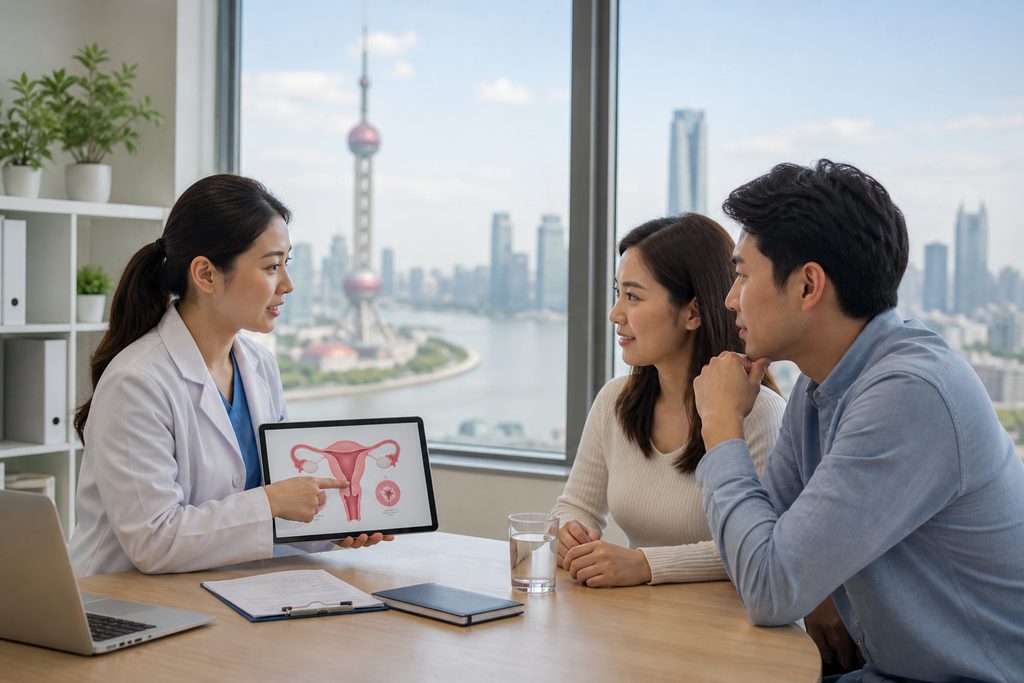
Have you ever looked at the price of one IVF cycle at home and felt the floor drop out from under you? You are not alone. The ivf cost in China runs roughly $3,000 to $8,000 per standard cycle at top public hospitals, and $8,000 to $15,000 at private international clinics. Compare that with $20,000 to $35,000 in the United States or £5,000 to £8,000 in the UK for a single round, and the arithmetic becomes hard to ignore.
But price is only one variable. Safety protocols, embryo transfer policies, language barriers, and the sheer logistics of traveling for treatment matter just as much. This article walks through what our team has learned coordinating fertility care for foreign patients across China’s hospital system.
Budget IVF in China: The Short Answer
Yes, you can get quality IVF in China for a fraction of Western prices. A standard cycle with fresh embryo transfer at a reputable public hospital typically costs between $3,000 and $6,000. Add medication, genetic testing, or frozen embryo transfer, and you might land between $6,000 and $10,000. Private international clinics in Shanghai and Beijing charge more — often $10,000 to $15,000 per cycle — but offer English-speaking staff and Western-style service.
The caveat: getting into a top public fertility center as a foreigner is not as simple as booking a flight. You need the right visa, the right hospital, and someone who can translate your medical records accurately. That is where the real work begins.
Who This Is Right For — and Who It Isn’t
Budget IVF in China makes the most sense for a specific profile of patient. Here is who typically benefits:
- Cash-pay patients whose home insurance does not cover fertility treatment, or who have exhausted their coverage.
- Patients needing multiple cycles. The per-cycle savings compound quickly when you expect two or three rounds.
- Patients comfortable with medical travel who can spend two to four weeks in China for stimulation, retrieval, and transfer.
- Couples seeking donor eggs or donor sperm, where China’s large donor pool and regulated programs offer advantages.
And who should think twice?
- Patients with complex medical histories requiring seamless coordination with their home fertility team. Remote handoffs are harder.
- Single women and same-sex couples. Chinese law restricts assisted reproductive services to married heterosexual couples. Private clinics may have different policies, but this is a legal gray area you must verify directly with the clinic before paying anything.
- Patients who need guaranteed scheduling. Public hospitals do not promise specific dates for retrieval or transfer to anyone, local or foreign.
The Options, Compared
When patients ask us to review their options for budget IVF in China, we typically lay out three paths. Each has different trade-offs between cost, convenience, and service level.
| Option | Typical Cost per Cycle | English Support | Wait Time | Best For |
|---|---|---|---|---|
| Public hospital, standard route | $3,000 – $6,000 | Limited; Chinese-speaking staff only | 2–4 weeks for initial consultation | Budget-first patients with a bilingual companion |
| Public hospital, international/VIP department | $6,000 – $10,000 | Some English; dedicated coordinators | 1–2 weeks | Patients wanting top doctors with less friction |
| Private international clinic (e.g., United Family, Jiahui, Raffles) | $8,000 – $15,000 | Fluent English; Western protocols | Days to 1 week | Patients prioritizing comfort, privacy, and communication |
The public standard route is where the real savings live. But it demands patience and either fluent Mandarin or a paid companion. The private clinics cost more but still undercut Western prices while removing the language barrier entirely. Most of our fertility patients choose the middle path: a top public hospital’s international department, where the doctors are the same senior specialists but the administrative layer speaks English.
How Much Is IVF in Beijing vs. Shanghai? A City-Level Look
The cheapest IVF clinic Shanghai options tend to cluster in public hospital reproductive medicine departments. Shanghai’s advantage is density: the city has multiple Fudan-ranked hospitals with strong reproductive medicine programs, creating price competition. A standard cycle at a Shanghai public hospital runs $3,500 to $5,500 before medication. Medication adds $1,000 to $2,500 depending on protocol.
How much is IVF in Beijing then? Slightly higher. Beijing’s top fertility centers — including the reproductive departments at Peking Union Medical College Hospital and Beijing Obstetrics and Gynecology Hospital — charge $4,000 to $6,500 for a standard cycle. The city’s higher concentration of senior specialists and international patients pushes prices up modestly. But Beijing also offers more choices for patients who want a specific doctor or a specific technique like preimplantation genetic testing.
Neither city is universally cheaper. Your total cost depends more on hospital tier and whether you need donor gametes or genetic screening than on which city you choose.
Is IVF Safe in China? What the Data Shows
Is IVF safe in China is usually the first question after cost. The short answer: at accredited, high-volume centers, yes — safety standards are comparable to international norms. China’s National Health Commission regulates assisted reproductive technology strictly. Clinics must be licensed, and licenses are renewed through inspection.
Volume matters in IVF. Chinese fertility centers handle enormous case numbers. A major center in Shanghai or Beijing may perform several thousand cycles annually. That repetition builds technical proficiency in embryo culture, cryopreservation, and transfer technique. Success rates at top centers — around 40% to 50% clinical pregnancy rate per fresh cycle for women under 35 — align with published rates from reputable Western clinics.
But safety is not uniform. Small, unlicensed, or loosely regulated clinics exist, particularly in lower-tier cities. That is why we steer patients toward hospitals on the Fudan ranking or JCI-accredited private facilities. You can review our database of top-ranked hospitals to see which fertility programs meet that bar.
Finding the Best IVF Hospital China for Foreigners
What makes a hospital workable for a foreign patient is not the same as what makes it good for a local. The best IVF hospital China for foreigners combines three things: clinical strength, administrative accessibility, and a pathway for non-Chinese speakers.
Clinical strength you can verify. The Fudan specialty reputation rankings include reproductive medicine, and our department pages break down the top programs by city. Look for hospitals that publish their cycle volumes and success rates. If a clinic will not share those numbers, keep looking.
Administrative accessibility is harder to assess from abroad. Some public hospitals do not accept foreign patients in their standard reproductive medicine departments at all. Others accept foreigners but require in-person registration with a passport. The international departments of major teaching hospitals — Fudan-affiliated Zhongshan, Ruijin, Peking Union — typically have dedicated foreign patient offices. That is the practical entry point.
Private clinics like United Family and Jiahui in Shanghai, or Raffles in Beijing, were built for international patients. English is the working language. Insurance billing is direct. The trade-off is cost. For many patients, the premium is worth it. For others, a public hospital international department with a bilingual companion offers the same doctors at roughly half the price.
Booking IVF Treatment in China: Packages, Visas, and Paperwork
If you search for book IVF treatment China package, you will find agencies offering bundled deals. Some are legitimate. Some are not. Here is what a real package should include, and what it should not promise.
A legitimate package typically covers: hospital registration and appointment coordination, translation of your medical records into Chinese, interpretation during consultations, and sometimes airport pickup and hotel booking. Prices for coordination services start around $300 for basic appointment assistance and range up to several thousand dollars for full end-to-end management. Any package that promises a specific success rate, a guaranteed pregnancy, or a specific retrieval date is a red flag. Run from those.
Visas are the other piece. Foreign patients traveling to China for medical treatment apply for an S2 visa, which covers short-term private affairs including medical care. Your hospital or clinic must provide an invitation letter and treatment confirmation documents. Family members accompanying you apply for their own S2 visas. Processing typically takes one to three weeks, and requirements vary by embassy, so verify current rules with your nearest Chinese consulate before booking flights.
Medical records matter more than most patients expect. Chinese fertility specialists will want your full reproductive history: previous cycle protocols, embryo reports, hormone panels, semen analyses, genetic carrier screening if done. Have everything translated into Chinese before your first consultation. This single step saves weeks of back-and-forth.
Practical Considerations: Payment, Language, and Follow-Up
Payment at Chinese public hospitals is almost always upfront. You pay for each stage — consultation, medication, retrieval, transfer — as you go. International departments accept international credit cards; standard departments may require cash, UnionPay, or local mobile payment. Budget for the full cycle before you arrive, plus a 20% buffer for medication adjustments.
Language is the single biggest friction point. Even at top hospitals, the doctors may speak some English, but nurses, lab technicians, and pharmacy staff usually do not. A bilingual medical companion costs from $300 per day and handles registration, queueing, payment, and interpretation. For a two-week treatment cycle, that is roughly $3,000 to $4,000 — significant, but often the difference between a smooth process and a stressful one.
Follow-up after you return home is straightforward for most patients. If you do a fresh transfer in China, your home clinic can handle pregnancy monitoring. If you freeze embryos for a later transfer, you will need to return to China for that procedure — frozen embryo transfer is simpler and shorter than a full cycle, usually requiring only five to seven days on the ground.
Frequently Asked Questions
At a public hospital, expect $3,000 to $6,000 for the medical procedure itself. Medication adds $1,000 to $2,500. Travel, accommodation, and a bilingual companion for two weeks add another $4,000 to $7,000. All-in, most foreign patients spend $8,000 to $15,000 per fresh cycle at a public hospital, or $15,000 to $25,000 at a private international clinic. The variance comes from medication protocols, whether you need donor gametes, and whether you add genetic testing.
Rarely. Most national health systems and US insurance plans do not cover treatment abroad. Some private international clinics in China accept direct billing from international insurers, but fertility coverage is often excluded. Check your policy’s fine print before committing. Most foreign patients pay out of pocket and treat the savings versus home-country prices as the financial justification.
No clinic anywhere can guarantee success. At top Chinese centers, clinical pregnancy rates per fresh cycle run 40% to 50% for women under 35, falling with age. If a cycle fails, the clinic will review what happened and adjust the protocol. Frozen embryo transfer cycles are cheaper than full fresh cycles — typically $1,500 to $3,000 — so if you have frozen embryos, subsequent attempts cost less. You should have a clear conversation with your doctor about expected outcomes for your specific age and diagnosis before starting.
Under current Chinese regulations, assisted reproductive services at licensed public hospitals are generally restricted to married heterosexual couples who can provide a marriage certificate. Some private international clinics have more flexible policies, but this varies and can change. Verify the clinic’s current policy in writing before paying any deposits. Do not rely on agency promises.
Plan for two to three weeks. The timeline typically runs: day one to three, initial consultation and baseline scans. Days three to twelve, ovarian stimulation with monitoring every two to three days. Around day fourteen, egg retrieval. Three to five days later, embryo transfer. You can fly home a day or two after transfer. Some patients do monitoring at home and arrive only for retrieval and transfer, shortening the stay to about ten days, but this requires a home clinic willing to coordinate.
Your Next Step
The ivf cost in China is real, and for many patients it is the difference between affording treatment and giving up. But cost savings only materialize if the logistics work. That is what we do at China Medical Services: we match you with a hospital that fits your budget and clinical needs, coordinate appointments, arrange bilingual support, and help with visa documentation. We are not a hospital and we do not provide medical advice or diagnoses. What we provide is the bridge — the translation, the scheduling, the navigation.
If you are weighing your options, start with a conversation. Tell us your situation and your budget, and we will tell you honestly whether China makes sense for you. Sometimes the answer is no. When it is yes, we make the path as smooth as it can be. Request a free consultation and we will walk you through what a realistic plan looks like.
For more medical information and treatment options in China, visit chinamedservices.com (China Medical Services).
