CABG Surgery China Off-Pump: Fuwai Hospital Over 60% Bypass Without Heart-Lung Machine
Key Takeaways
- Fuwai Hospital performs over 14,000 cardiac surgeries annually — the highest volume globally — with more than 60% of isolated CABG procedures done off-pump, sparing patients the inflammatory cascade triggered by the heart-lung machine.
- The total off-pump CABG surgery cost in China at a top-tier public hospital runs between $12,000 and $20,000 USD, roughly one-fifth to one-tenth of the $120,000+ price tag common in the United States.
- Navigating a Chinese public hospital independently is genuinely difficult. There is no centralized overseas booking system for standard outpatient clinics, and language barriers are absolute once you step past the international department’s front desk.
- Off-pump CABG is not for every patient. The surgeon’s judgment on whether to convert to on-pump mid-procedure is a safety feature, not a failure — and that judgment is sharpened by sheer case volume.
When 57-year-old Robert from Manchester started searching for alternatives to a £23,000 private CABG quote with a four-month wait, he typed a phrase into Google that thousands of cardiac patients search each year: what is off-pump coronary bypass surgery, and where is it done best. He had read about the “pump head” fog that sometimes follows conventional bypass. He wanted to know if beating-heart surgery was safer. And he wanted a number — an actual price — not a vague estimate.
Robert’s questions are the right ones. They cut straight to what matters: technique, volume, cost, and trust.
The Problem: When the Pump Becomes the Problem
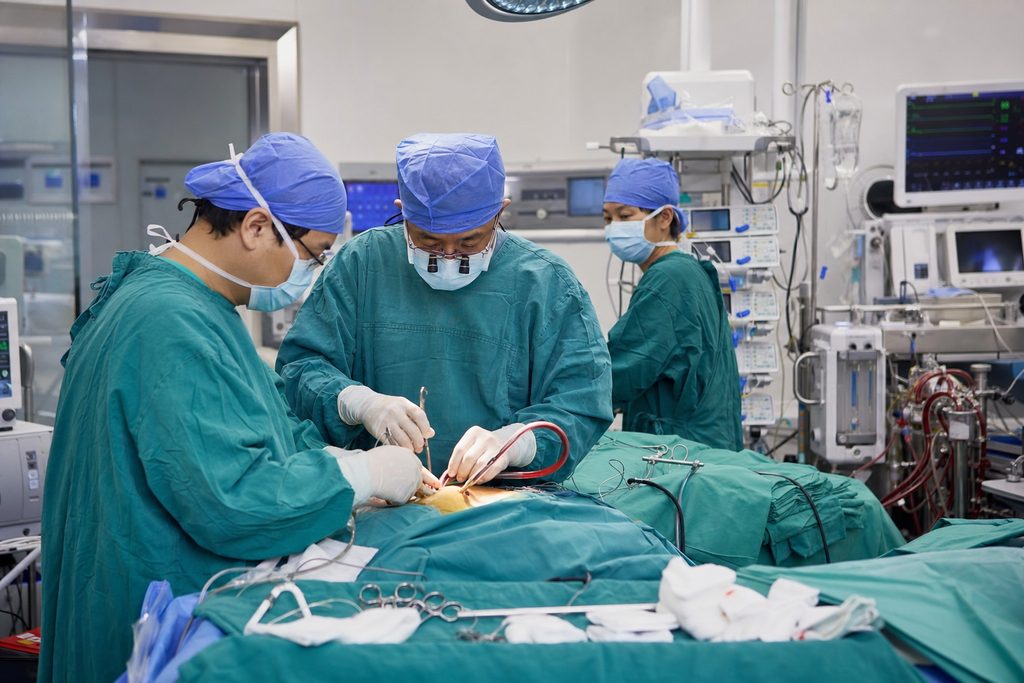
Off-pump CABG, also called beating-heart surgery, uses a mechanical stabilization device to hold a small section of the heart still while the surgeon grafts the bypass vessel. The rest of the heart keeps beating. Blood keeps circulating. The aorta is never cross-clamped. The pump is never connected. The inflammatory cascade — cytokine release, complement activation, platelet dysfunction — is substantially reduced. Patients typically require fewer blood transfusions, have shorter ventilation times, and in some series, leave the ICU a day earlier.
But the technique demands more from the surgeon. Visualization is harder. Hemodynamic shifts during positioning of the heart can drop blood pressure abruptly. Converting to on-pump mid-case is a sign of good judgment, not poor planning. The best hospital for off-pump bypass in China will have a conversion rate that is neither zero percent nor twenty percent — it will be a rate that reflects individualized intraoperative decision-making, and Fuwai’s teams make that call daily.
The Cost Structure: How Much Does Off-Pump Heart Surgery Cost in Beijing?
Let us address the number directly. The off-pump CABG surgery cost in China at a top public hospital like Fuwai, through the international department or VIP channel, ranges from $12,000 to $20,000 USD. This typically includes surgeon fees, anesthesiology, operating room charges, ICU stay, standard ward recovery, and basic medications. It does not include international airfare, lodging for family members, or post-discharge rehabilitation. The price varies by case complexity — number of grafts, presence of comorbidities, need for concomitant procedures — and by the specific hospital’s international pricing tier.
Compare this to the United States, where the average billed charge for CABG exceeds $120,000, and negotiated insurance rates often land between $35,000 and $70,000. Even against the insured rate, the Fuwai Hospital heart bypass price represents a 60-80% reduction. The structural reasons are straightforward: lower physician labor costs, lower facility overhead, and a high-volume public hospital model that spreads fixed costs across a massive patient base. Clinical outcomes at Fuwai, as measured by in-hospital mortality and major complication rates, are comparable to top Western centers — a fact documented in peer-reviewed registries and reinforced by the hospital’s Joint Commission International (JCI) recognition.
| Cost Component | China (Fuwai International Dept.) | United States (Insured Rate) |
|---|---|---|
| Total CABG (3-vessel, off-pump) | $12,000 – $20,000 | $35,000 – $70,000+ |
| Surgeon & Anesthesia Fees | Included in package | $5,000 – $10,000 |
| ICU Stay (per day) | $300 – $600 | $3,000 – $5,000 |
| Hospital Ward (per day) | $150 – $300 | $2,000 – $4,000 |
| Bilingual Coordination Service | from $300 (appointment coordination) | N/A |
What You Need to Know Before Going Alone
We are direct about this because patients who arrive unprepared have a harder experience than necessary. The barriers are real.
- Visa Requirements: Medical treatment in China requires an S2 visa, annotated for medical purposes. The accompanying family member also applies for an S2. This is not a tourist visa. You will need an invitation letter from the hospital — and getting that letter requires a confirmed appointment, which requires navigating the hospital’s international department. It is a sequential process, and starting it from overseas without a local contact is slow.
- Language and Navigation: Fuwai Hospital’s outpatient building sees over 10,000 patient visits daily. Signage in English exists in the international department. Outside that wing, it is Chinese. Registration kiosks, pharmacy queues, lab result printers, pre-operative checklists — all in Chinese. A bilingual medical companion is not a luxury in this environment. It is the difference between a focused recovery and daily logistical exhaustion.
- Payment Systems: Public hospitals in China operate on a pre-payment model. You deposit funds at admission, and the hospital draws down against that balance. International credit cards are not universally accepted at hospital cashiers. WeChat Pay and Alipay dominate, and linking a foreign card to these platforms can fail unpredictably. Insurance is reimbursed after the fact — direct billing is rare outside private international hospitals like United Family or Jiahui, which do not perform high-volume off-pump CABG.
How We Help You Navigate This
These barriers exist for structural reasons, not because the system is broken. China’s public hospitals are designed to serve a domestic population of 1.4 billion people at scale. They were not built with international patient intake as a primary design goal. That is where we fit.
We start with your clinical records. Our team translates and formats them for review by the relevant department at Fuwai or another top cardiac center — we maintain relationships with over 340 top-ranked hospitals across 37 cities, including the cardiac surgery departments ranked in China’s top 10 by the Fudan University specialty reputation list. We coordinate the appointment through the hospital’s official international patient channel. We do not promise a specific surgeon or a specific surgery date — no ethical coordinator can — but we secure a confirmed consultation slot with the department. If we cannot secure the appointment, the coordination fee is refunded in full.
Once you arrive, a bilingual medical companion meets you at the hospital entrance. This person handles registration, translates during the surgeon consultation, guides you through pre-operative testing, and stays with you through admission. After surgery, they bridge the communication gap during ward rounds and discharge instructions. The companion is not a doctor. They are a professional navigator who ensures no critical instruction is lost in translation.
For patients who need a preliminary assessment before committing to travel, we arrange remote video consultations with specialists — typically $500 to $800 for a top-specialist session. Any consultation fee is credited in full toward on-the-ground coordination if you proceed to surgery within 90 days. This is a one-time credit applied to our coordination fee, never to hospital treatment charges.
Frequently Asked Questions
Is off-pump CABG safer than on-pump CABG?
The evidence does not support a blanket “safer” label for all patients. Large randomized trials show comparable long-term mortality. But for patients with calcified aortas, renal disease, or advanced age, off-pump CABG reduces stroke risk and may preserve kidney function. The decision must be made by the surgeon based on your specific anatomy and comorbidity profile — not by a preference for one technique over the other.
How much does off-pump heart surgery cost in Beijing, all-in?
For an uncomplicated three-vessel off-pump CABG at Fuwai Hospital’s international department, expect $12,000 to $20,000 USD for the hospital and surgical fees. Add approximately $2,000 to $4,000 for airfare, lodging, and meals for you and one companion over a three-week stay. Our coordination services start from $300 for appointment arrangement, with full bilingual companion support priced separately based on duration.
What if I need emergency care after returning home?
Your post-operative records, including operative notes, graft diagrams, discharge medications, and follow-up imaging, are provided in English. You hand these to your local cardiologist. The surgical technique — off-pump CABG — is standard worldwide, and any competent cardiac center can manage follow-up. We also facilitate a post-discharge video consultation with your Fuwai surgeon if questions arise, typically within the $100 to $300 range for a standard international department follow-up.
Can I choose my surgeon at Fuwai Hospital?
You can express a preference. The international department will note it. But surgeon assignment ultimately depends on the department’s scheduling, the surgeon’s subspecialty match to your case, and availability. We are candid about this because promising a specific named surgeon upfront would be misleading. What we can say: the attending surgeons performing off-pump CABG at Fuwai operate at volumes that exceed almost any Western peer, and the department’s collective outcomes are publicly tracked and internationally benchmarked.
How long do I need to stay in Beijing?
Plan for approximately three weeks. This includes pre-operative evaluation (2-3 days), the surgery and ICU stay (3-5 days), ward recovery (7-10 days), and a buffer for discharge clearance and a final follow-up visit before flying. Your surgeon will clear you for long-haul air travel only when it is safe — typically once incisions are stable, chest tubes are out, and any arrhythmia risk has been ruled out.
Your Next Step
Off-pump CABG at Fuwai Hospital represents a convergence of factors that exist in few other places: surgical teams performing beating-heart bypass at a scale that sharpens judgment, outcomes that stand up to international scrutiny, and a cost structure that removes the financial catastrophe from heart surgery. The trade-off is distance and the complexity of navigating a foreign healthcare system.
If you have a specific clinical question — whether off-pump is right for your coronaries, whether Fuwai’s approach fits your risk profile — we can help you get a direct answer from the department, not from a brochure. Request a free consultation with our team. We will review your records, explain the pathway honestly, and help you decide if this route makes sense. No pressure. Just clarity.
Medical Disclaimer: This article is for informational purposes only and does not constitute medical advice. Surgical decisions, including the choice between off-pump and on-pump CABG, must be made in consultation with a qualified cardiothoracic surgeon based on individual clinical evaluation. Our organization facilitates access to medical consultations and logistical support; we do not provide clinical diagnoses or treatment recommendations.
For more medical information and treatment options in China, visit chinamedservices.com (China Medical Services).
