Cancer Early Detection in China: Costs, Top Hospitals, and How to Book
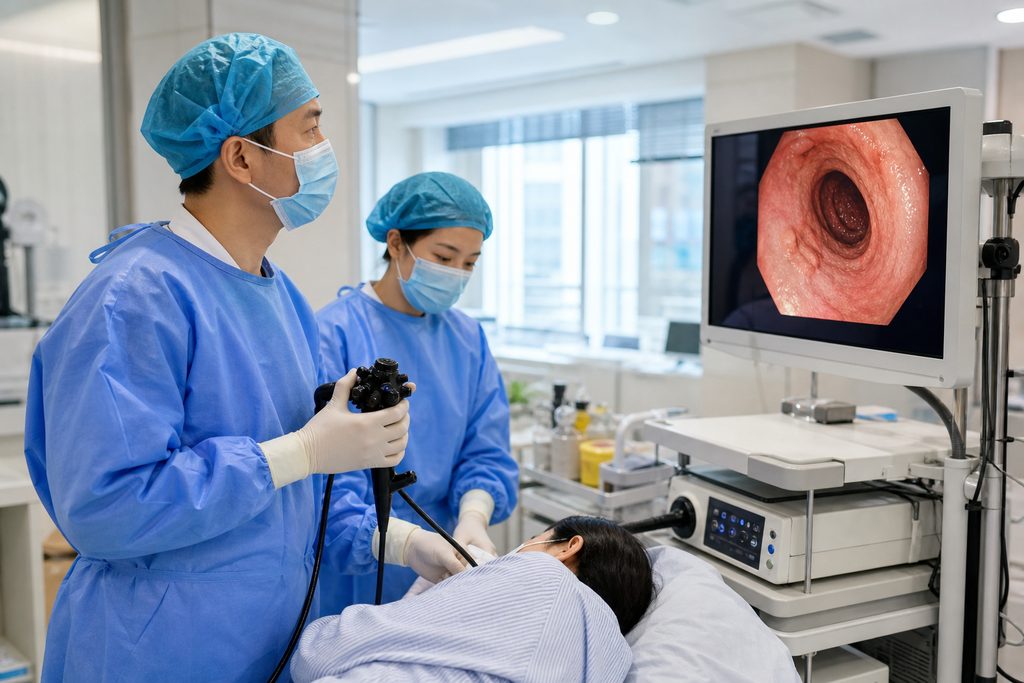
Cancer Early Detection in China: Costs, Top Hospitals, and How to Book
In the United States, a full-body PET-CT scan can run $5,000 or more out of pocket, and a comprehensive cancer screening package at a private clinic often exceeds $8,000. In China, a comparable tier-one hospital screening program — bloodwork, tumor markers, ultrasound, low-dose CT, endoscopy where indicated — frequently lands between $500 and $2,500. That gap is not a discount gimmick. It reflects a different cost structure inside hospitals that handle more oncology volume than almost anywhere on earth. For international patients researching cancer early detection cost China offers a legitimate, transparent alternative to Western pricing.
But cost is only half the story. The harder question is whether the screening is accurate, whether the results mean anything in your home country, and whether you can actually get an appointment without speaking Mandarin. We handle those logistics for a living. Here is what the process genuinely looks like.
How This Actually Works, Step by Step
The sequence matters, because Chinese public hospitals do not operate like Western clinics. You cannot simply book a specialist online and show up.
It starts with your records. You send us whatever you already have — recent bloodwork, imaging reports, family history, prior biopsy results if any, and a short note on your symptoms or concerns. Our team translates the relevant documents into Chinese and routes them to the appropriate specialty at a partner hospital.
What comes back is a written assessment. A physician reviews your file and recommends a screening protocol: which scans, which tumor markers, whether endoscopy is warranted, and how urgently. This is a recommendation, not a diagnosis. It tells you what the Chinese team believes is medically appropriate for your profile.
If you want to speak with the physician directly, a video consultation can be arranged. You explain your concerns, they explain their reasoning, and you decide together whether to proceed.
Then comes scheduling. Screening packages at public tertiary hospitals are booked through the international department or VIP channel — the standard outpatient queue is not designed for overseas patients and cannot be reserved in advance from abroad. Once your slot is confirmed, you travel. A bilingual companion meets you, handles registration, queues, payment, and translation on the day.
Results typically return within three to seven working days for most screening components, longer if pathology is involved.
What Screening Actually Costs, and What Drives the Price
Prices vary by hospital and case complexity, so treat every figure below as a range rather than a quote.
| Screening Package | Typical Range (USD) | What It Usually Includes |
|---|---|---|
| Basic health screening | $300–$700 | Blood panel, urinalysis, chest X-ray, abdominal ultrasound, basic tumor markers |
| Enhanced cancer-focused screening | $800–$1,800 | Low-dose CT, expanded tumor marker panel, thyroid and abdominal ultrasound, gastroscopy or colonoscopy if indicated |
| Comprehensive / executive screening | $1,500–$3,500 | MRI or PET-CT components, full endoscopy, cardiac workup, specialist consultations |
| PET-CT alone | $700–$1,500 | Whole-body metabolic imaging |
Three factors move the number. Hospital tier matters — a Fudan-ranked oncology center charges more than a regional hospital. Depth matters — adding PET-CT or endoscopy can double a package. And the channel matters: the international or VIP department typically costs 1.5 to 2 times the standard domestic rate, because you are paying for English-speaking staff, shorter waits, and coordinated scheduling.
For comparison, the same comprehensive screening in the US commonly runs $3,000 to $10,000, and in the UK private sector £2,000 to £5,000. That is the honest context behind the phrase cancer early detection cost China keeps returning to.
A Realistic Timeline
People underestimate the front end. Here is a schedule that reflects how this usually unfolds.
| Stage | Timeframe | What Happens |
|---|---|---|
| Records collection and translation | Days 1–5 | You send reports; our team translates and prepares the file |
| Specialist review | Days 5–12 | Hospital physician reviews and issues written recommendations |
| Video consultation (optional) | Days 10–18 | Direct discussion with the medical team |
| Screening appointment booked | Days 12–25 | International department slot confirmed |
| Visa application | 1–3 weeks | S2 visa for medical treatment; supporting hospital documents required |
| Travel and screening | Days 30–60 | Arrival, registration, tests completed over 1–3 days |
| Results and follow-up plan | 3–10 days after testing | Reports issued, translated, and explained |
Total from first contact to results: roughly six to ten weeks. Visa processing and appointment lead time are the two steps that most often stretch. Neither can be compressed by paying more.
What Can Go Wrong — and What Happens Then
Screening sometimes finds nothing. That is a good outcome, but it is also an incomplete one — a normal scan does not guarantee you are cancer-free, and any Chinese physician will tell you the same thing a Western one would.
More often, screening finds something ambiguous. A nodule. A borderline tumor marker. A polyp sent for pathology. This is where patients get anxious, and rightly so. The honest answer is that ambiguity is common and usually resolves to something benign. When it does not, the next step is a diagnostic workup, not immediate treatment.
Appointment changes happen. A specialist may be pulled into surgery. Equipment goes down for maintenance. We rebook. If a confirmed appointment cannot be secured at all, the coordination fee is refunded in full.
Language failure is the most preventable risk. If you arrive without a bilingual companion and something goes wrong — a form you cannot read, a consent document, a question you cannot ask — you are stuck. This is not a sales pitch. It is the single most common complaint from patients who tried to do it alone.
Choosing a Hospital: What Actually Matters
If you are searching for the best cancer screening hospital Beijing has to offer, the answer depends on what you are screening for. Beijing hosts 21 of the hospitals on the Fudan Top 100 list — more than any other Chinese city. Shanghai has 18. Guangzhou has 10.
For general cancer screening, the strongest options tend to be large comprehensive tertiary hospitals with dedicated health examination centers. For organ-specific concerns, you want the relevant specialty ranking. The Fudan specialist reputation rankings list a top 10 for each of 45 specialties, including oncology, so you can identify which hospitals are recognized nationally in a given field rather than guessing from brand names.
Three practical criteria matter more than prestige:
- Does the hospital have an international department that handles overseas patients routinely?
- Is the screening protocol matched to your actual risk profile, or is it a generic package?
- Will the results be issued in a format your home physician can read and act on?
Private international hospitals — United Family, Jiahui, Parkway, Raffles among them — offer English-speaking staff, JCI accreditation, and direct insurance billing. They cost more and their oncology depth is generally narrower than the top public centers. For straightforward screening, they are convenient. For anything complex, the public tertiary hospitals remain the stronger choice.
You can browse hospitals by city and specialty through our ranked hospital directory or the specialty rankings by department.
How Accurate Is Early Cancer Detection in China?
This is the question behind how accurate is early cancer detection in China, and it deserves a straight answer.
The imaging equipment at top-tier Chinese hospitals is current-generation. A low-dose CT at a Fudan-ranked center uses the same scanner families you would find in a US academic hospital. Pathology labs at these institutions process very high volumes, which in most medical systems correlates with diagnostic experience rather than against it.
Accuracy depends far more on the protocol than the country. A well-designed screening matched to your age, family history, and risk factors will outperform a generic full-body scan every time. A poorly designed one will miss things anywhere in the world.
What China does offer is speed. Because these hospitals run at enormous daily volume, you can often complete bloodwork, imaging, and endoscopy within a single visit window rather than spreading it across weeks. That compression is real and useful.
As for whether is cancer screening in China safe — the procedural risks are the same as anywhere: radiation exposure from CT, small perforation risk from endoscopy, contrast reactions. These are managed by the same standards you would expect in a Western hospital. The difference is not safety. It is workflow.
Practical Considerations: Records, Visa, Payment, and Follow-Up
Records. Bring everything in digital form, plus translations if you have them. Chinese physicians read English reports reasonably well, but translated summaries speed review considerably.
Visa. Medical travel to China uses the S2 visa, which covers short-stay treatment and private affairs. Accompanying family members apply under the same category. The M visa is for commercial and trade activity and has nothing to do with medical treatment. Requirements shift, so confirm current rules with your nearest Chinese embassy or consulate and bring the hospital’s supporting documents.
Payment. Public hospitals require prepayment; insurance reimbursement happens afterward in your home country. Private international hospitals frequently bill insurers directly.
Language. Assume you will need help. A bilingual medical companion costs from $300 per day for a half or full day of registration, queuing, payment, wayfinding, and translation. It does not guarantee access to a specific named specialist — nobody can promise that.
Follow-up. Ask for your imaging on disc and your pathology slides if a biopsy was taken. You will want them at home.
If you want to reserve a screening slot before booking flights, our patient consultation service handles hospital matching, appointment coordination, and interpretation of what each package actually contains.
Frequently Asked Questions
Yes, but not by walking into a public hospital. Screening at tertiary hospitals is arranged through the international or VIP department, which provides English-speaking staff and coordinated scheduling. You can also work with a coordination service that handles registration and accompanies you on the day. Expect the international channel to cost roughly 1.5 to 2 times the standard domestic rate.
The procedures carry the same risks as anywhere — radiation, contrast reactions, endoscopy complications — managed to comparable standards. Reports from major Chinese hospitals are generally accepted by Western physicians as diagnostic input. They are not a substitute for follow-up care in your own country, and you should arrange that referral before you travel.
A cancer-focused screening package typically runs $800 to $1,800 at a top public hospital, with comprehensive executive packages reaching $3,500. The equivalent in the US commonly costs $3,000 to $10,000. Final pricing varies by hospital and case complexity, so treat all figures as ranges.
Realistically six to ten weeks. Records review takes about a week, appointment confirmation another one to two weeks, visa processing one to three weeks, and results return three to ten days after testing. Rushing the visa stage is not possible.
No formal referral is required for most screening packages. What matters is that your records are reviewed in advance so the protocol matches your risk profile. A generic package chosen without review may include tests you do not need and omit ones you do.
Your Next Step
Early detection works best when it is targeted, and targeting requires someone to read your history before you book anything. That is the whole logic of remote review first, travel second.
China Medical Services connects international patients with more than 340 top-ranked hospitals across 37 cities, and we handle the parts that are genuinely hard from abroad — records translation, appointment coordination through official international departments, visa guidance, and bilingual support on the ground. We are not a hospital and we do not practice medicine. We coordinate, translate, and accompany.
If you would like a straightforward assessment of what screening makes sense for your situation, start with a free consultation. No pressure, no obligation — just a clear picture of your options.
This article is for general information only and does not constitute medical advice. Screening recommendations depend on individual risk factors. Consult a qualified physician before making any decisions about cancer screening or treatment.
For more medical information and treatment options in China, visit chinamedservices.com (China Medical Services).
