Cancer Journey Emotional Support Service China: From Diagnosis Through Treatment and Beyond
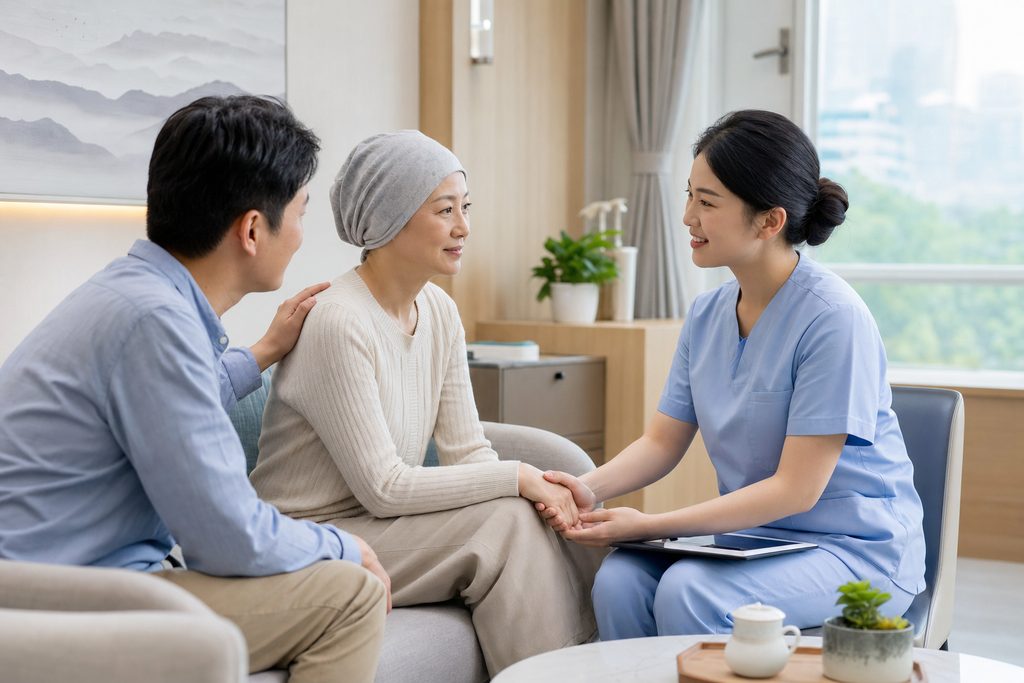
Cancer Journey Emotional Support Service China: From Diagnosis Through Treatment and Beyond
Hearing the words “you have cancer” rearranges every molecule of your life. In the hours and days that follow, you are handed treatment protocols, survival statistics, and a calendar full of appointments. What almost nobody hands you is a roadmap for the emotional terrain ahead. A 2023 meta-analysis published in The Lancet Psychiatry found that approximately 30–40% of cancer patients experience clinically significant anxiety or depression within the first year of diagnosis. The question is not whether emotional support matters. The question is where to find it, especially if you are traveling thousands of miles from home for treatment. For international patients, understanding cancer emotional support services cost China and what is actually available has become an essential part of planning care.
Key Takeaways
- Up to 40% of cancer patients develop significant anxiety or depression within the first year of diagnosis, making emotional support a medically relevant component of treatment outcomes.
- Integrated psycho-oncology services in China’s top-tier hospitals are often bundled into treatment packages, with standalone counseling sessions starting from approximately $80–150 USD.
- Language barriers and cultural differences in how emotional distress is expressed can make independent navigation of support services extremely difficult for international patients.
- Structured emotional support programs exist in China — but accessing them requires knowing which hospitals offer them and how to bridge the communication gap before you arrive.
The Problem: Cancer Treatment Ignores the Person Having It
Modern oncology is extraordinary at targeting tumors. It is far less effective at supporting the human being who carries them. A 2022 study from the American Society of Clinical Oncology tracked 2,400 patients across six countries and found that those who received no structured emotional support during treatment were 2.3 times more likely to discontinue chemotherapy against medical advice. That is not a soft statistic about feelings. It is a hard number about treatment adherence and survival.
The gap is even wider for international patients. You are navigating a foreign healthcare system, often in a language you do not speak, while managing the most frightening diagnosis of your life. Family may be far away. Familiar support networks are inaccessible. The isolation compounds the fear. And yet, emotional care is still treated as optional — something to think about later, after the “real” treatment is done.
That sequencing is backwards. Research consistently shows that psychological well-being during active treatment affects pain perception, immune function, and surgical recovery times. A 2024 review in Nature Reviews Clinical Oncology concluded that integrated psycho-oncology support should be considered standard of care, not an add-on. The data is clear. What has been missing is a practical way for international patients to access that standard when they choose China for treatment.
Who We Are
We are not a hospital. We do not provide medical treatment, clinical diagnoses, or psychological therapy. China Medical Services functions as your logistical architects — we bridge the gap between you and China’s top-tier medical expertise. Our team coordinates hospital matching, appointment scheduling, bilingual medical companions, visa guidance, and access to the full spectrum of supportive care services, including emotional and psychological support programs embedded within China’s leading oncology centers. We work with over 340 top-ranked hospitals across 37 cities. We know which institutions have dedicated psycho-oncology departments. We know how to get you connected to them before you ever board a plane.
Why China’s Integrated Cancer Support Model Delivers Results
Psycho-Oncology Is Built Into the System, Not Bolted On
In many Western healthcare systems, psychological support for cancer patients operates through separate referral pathways. You see your oncologist. You get a separate referral to a therapist. The two rarely communicate. In China’s top-tier hospitals — particularly those ranked in the Fudan University Hospital Rankings — psycho-oncology services are increasingly embedded directly within oncology departments. That means your emotional support team has access to your treatment plan. They understand the specific psychological side effects of your chemotherapy regimen. They coordinate with your surgical team about pre-operative anxiety management.
Fudan University Shanghai Cancer Center, for example, operates a dedicated psycho-oncology unit that has published peer-reviewed research on mindfulness-based interventions adapted specifically for Chinese cancer populations. Peking University Cancer Hospital runs an integrated psychological support program that begins at diagnosis and continues through survivorship. These are not afterthoughts. They are structured, evidence-based programs staffed by clinicians who specialize exclusively in cancer-related psychological care.
Cost Structures That Make Ongoing Support Feasible
Here is where the economics shift the conversation. In the United States, a single session with a psycho-oncologist can run $250–400 without insurance, and many plans limit the number of covered visits. In the United Kingdom, NHS wait times for cancer counseling services average 6–8 weeks in many regions — a delay that can feel interminable when you are in active treatment.
Understanding cancer emotional support services cost China requires looking at how services are structured. At top-tier Chinese hospitals with international patient centers, psychological support is often bundled into treatment packages. Standalone counseling sessions with English-speaking psycho-oncologists typically range from $80–150 USD. Group support programs, art therapy, and mindfulness-based stress reduction courses run $30–60 per session. These are not cut-rate services. They are delivered by clinicians trained to international standards, often with fellowships completed in the US or Europe. The cost difference reflects structural economics — lower operational overhead and different healthcare pricing models — not a compromise on quality.
| Support Service | Estimated Cost in China (USD) | Typical US Cost (USD) |
|---|---|---|
| Individual psycho-oncology session | $80–150 | $250–400 |
| Group support session | $30–60 | $75–150 |
| Mindfulness-based stress reduction (8-week course) | $400–700 | $600–1,200 |
| Written second opinion with psychological assessment | $300–500 | $500–1,000+ |
| Multidisciplinary team consultation (oncology + psycho-oncology) | $1,500–2,000 | $3,000–5,000 |
These figures vary by hospital and case complexity. They are reference points, not fixed quotes. But the pattern holds: accessing structured emotional support in China costs roughly one-third to one-half of what equivalent services command in the US market.
Holistic Cancer Care Packages Abroad: More Than Talk Therapy
When patients search for holistic cancer care packages abroad, they often encounter vague wellness retreats with no clinical integration. That is not what we are describing. The programs available through China’s top oncology centers combine evidence-based psychological interventions with complementary therapies that have demonstrated clinical benefit.
These packages frequently include acupuncture for chemotherapy-induced nausea — a modality backed by a 2023 Cochrane Review involving over 5,000 patients. They incorporate nutritional counseling specific to cancer metabolism. They offer traditional Chinese medicine (TCM) herbal support for managing treatment side effects, always coordinated with your oncology team to avoid interactions. At hospitals like West China Hospital in Chengdu and Ruijin Hospital in Shanghai, these elements are not alternative medicine practiced in isolation. They are integrated into the oncology care plan, with all providers communicating through a shared medical record.
What this means for you: one coordinated team instead of fragmented referrals. One care plan instead of contradictory advice. And a model that treats the whole person because the research says that approach produces better outcomes.
What You Need to Know Before Going Alone
Honesty matters here. Accessing emotional support services as an international cancer patient in China is not simply a matter of walking into a hospital and asking for a counselor. The services exist. The expertise is real. But the barriers to independent access are substantial.
- Language and Cultural Expression of Distress: Psycho-oncology sessions conducted in Mandarin are widely available. English-speaking psycho-oncologists exist, but they are concentrated in a limited number of hospitals — primarily in Beijing, Shanghai, and Guangzhou. Also, cultural norms around expressing emotional vulnerability differ. A clinician trained solely in the Chinese healthcare context may interpret distress differently than a Western-trained practitioner would. Matching you with a provider who understands your cultural framework for expressing fear, grief, and anger requires advance coordination.
- Referral Pathways Are Opaque: Most psycho-oncology services in Chinese public hospitals are accessed through internal referral from an attending oncologist. As an international patient without an existing relationship with a Chinese oncologist, you lack that entry point. The international patient centers at major hospitals can facilitate these connections, but navigating which center to contact — and getting a response — is its own challenge.
- Insurance and Payment Confusion: International health insurance plans vary wildly in their coverage of psychological services abroad. Some classify psycho-oncology as a standard medical benefit. Others exclude it entirely or cap sessions at numbers that make no clinical sense. Public Chinese hospitals typically require upfront payment, with reimbursement sought from your insurer afterwards. Private international hospitals like United Family Healthcare and Jiahui International Hospital offer direct insurance billing, but their psycho-oncology services come at higher price points.
How We Help You Navigate This
These barriers are structural, not insurmountable. Our role is to clear the path before you arrive so that your energy goes into treatment and recovery — not administrative battles.
Before you travel, we identify hospitals with English-speaking psycho-oncology services that match your diagnosis and treatment plan. We coordinate with the international patient center to establish your referral pathway. If your chosen hospital requires an initial oncology consultation before psychological services can be accessed, we schedule both appointments in sequence to minimize delays. For patients asking how to cope with cancer diagnosis support China, this pre-arrival coordination is often the single most valuable step we take. It transforms a fragmented search into a clear schedule of care.
During your stay, our bilingual medical companions provide more than translation. They sit with you during consultations, ensuring that emotional concerns you raise are accurately communicated to your care team. They accompany you to counseling sessions if you want support. They navigate the physical logistics — finding the right department in a hospital that may see 10,000 outpatient visits daily — so you are not wandering corridors while managing treatment fatigue.
After treatment concludes and you return home, the emotional work is not over. Survivorship brings its own psychological challenges: fear of recurrence, identity adjustment, the strange loneliness of being “done” with treatment while still feeling far from normal. We coordinate follow-up video consultations with your psycho-oncology team in China. For patients enrolled in multidisciplinary care packages, those consultations may already be included. For others, video sessions with a psycho-oncologist start from $100–300, and any fees paid toward remote support are credited in full toward on-the-ground coordination services if you return to China for continued care within 90 days.
For patients specifically searching for what emotional support is available for cancer patients in China, the answer is: quite a lot, if you know where to look and how to access it. Individual counseling. Group therapy. Mindfulness programs. Art and music therapy. Family support sessions. Psychiatric medication management when needed. Spiritual care. The infrastructure exists. The gap is in navigation, not in clinical capability.
Frequently Asked Questions
Individual psycho-oncology sessions with English-speaking clinicians at top-tier hospitals range from $80–150 USD. Structured programs — such as an 8-week mindfulness-based stress reduction course — run $400–700. These are reference ranges that vary by hospital and case complexity. What is included depends on the program: some bundle psychological support into comprehensive oncology packages, while others bill services separately. We help you understand exactly what you are paying for before any commitment is made.
To book cancer journey support program Shanghai, the process starts with identifying which hospital’s oncology department offers the integrated support services that match your diagnosis. Fudan University Shanghai Cancer Center and Ruijin Hospital both run structured psycho-oncology programs. We contact the international patient center on your behalf, establish the referral pathway, and schedule your initial consultations. You cannot simply register online — these programs require clinical referral and advance coordination, which is precisely the logistical work we handle.
English-speaking psycho-oncologists practice at major international patient centers in Beijing, Shanghai, and Guangzhou. The number of available clinicians is limited, so advance scheduling matters. For languages beyond English, interpreter services can be arranged, though the available pool narrows. Private international hospitals — United Family, Jiahui, Parkway — offer multilingual psychological support with direct insurance billing, at higher price points than public hospital international departments. We match you to the option that fits your language needs and budget.
Beijing has the highest concentration of top-tier hospitals with dedicated psycho-oncology services — 21 of China’s Fudan-ranked Top 100 hospitals are located there. International patient cancer support services Beijing include programs at Peking University Cancer Hospital and Peking Union Medical College Hospital, both of which operate integrated psychological support units. The depth of services in Beijing is unmatched, but Shanghai and Guangzhou offer strong alternatives. The right city depends on your specific cancer type, the specialist you need, and where the most appropriate emotional support program is available.
Yes. Several hospitals offer family counseling and caregiver support groups. Cancer affects entire families, and the psychological burden on caregivers is well-documented — rates of depression among cancer caregivers run as high as 40–50% in some studies. Family sessions are typically billed separately from patient services, with costs similar to individual counseling rates. We can include family support in your care coordination plan from the outset.
Your Next Step
A cancer diagnosis fractures your sense of control. Rebuilding it starts with information and practical support. The emotional dimension of cancer care is not a luxury to consider after treatment concludes. It is a core component of treatment itself, with measurable effects on adherence, recovery, and quality of life. China’s top hospitals offer structured, evidence-based emotional support programs — and accessing them as an international patient is possible with the right navigation. If you are considering cancer treatment in China and want to understand what integrated emotional support looks like for your specific situation, reach out to our team. There is no charge for the initial conversation, and no pressure to commit to anything. Just clear answers about what is available and how to access it.
Medical Disclaimer: This article is for informational purposes only and does not constitute medical advice, diagnosis, or treatment recommendations. Always consult a qualified healthcare provider about your specific medical condition and treatment options. China Medical Services does not provide clinical care — we coordinate access to licensed medical professionals and accredited hospitals.
For more medical information and treatment options in China, visit chinamedservices.com (China Medical Services).
