Cancer Hospital CAMS Beijing: How We Coordinate Your Full Oncology Service Guide
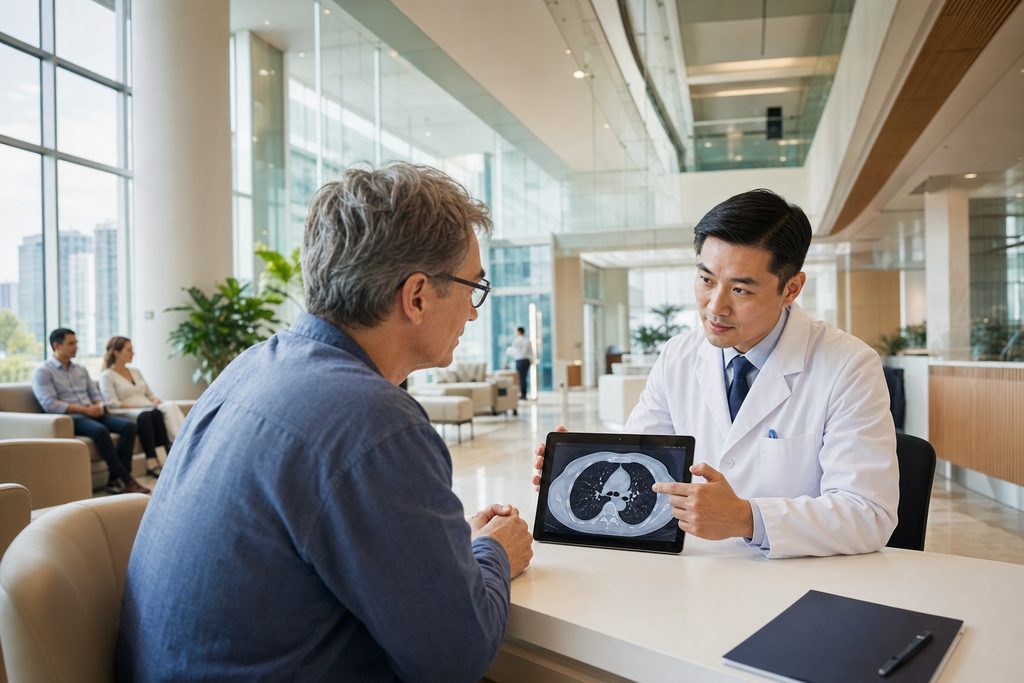
When 42-year-old Michael first heard the diagnosis, he had no idea where to start looking for treatment. His oncologist in Manchester had laid out the options clearly enough, but the waiting times gnawed at him. Six weeks just to begin. A colleague mentioned looking abroad. That conversation led to a search that probably looked a lot like yours: “cancer treatment Beijing CAMS hospital price,” “is it even possible for a foreigner,” “how does any of this actually work.”
The short answer is that Cancer Hospital Chinese Academy of Medical Sciences (CAMS) in Beijing is not just possible. It is one of the most concentrated centers of oncology expertise anywhere. Our team coordinates the entire journey, from the first remote review of your medical records to the day you walk out of the hospital and head home. This guide lays out exactly what that coordination looks like, what it costs, and what you should realistically expect.
How This Actually Works, Step by Step
The process starts before you ever book a flight. We ask every patient to send their existing medical documentation first. That means pathology reports, imaging studies on a CD or via a secure link, recent blood work, and a summary of any treatments already received. Our bilingual case managers translate and format these records to meet the standards Chinese specialists expect.
From there, we submit the file to the international department at Cancer Hospital CAMS. A relevant oncology team reviews it. This remote evaluation determines whether a treatment plan in Beijing makes clinical sense. Sometimes it does not. If the cancer is at a stage where travel would add risk without benefit, the specialists say so directly. We have seen cases where the recommendation was to continue care at home. That honesty is the foundation of the entire model.
If the review is positive, we receive a preliminary treatment outline and a cost estimate. You then decide whether to proceed. If you do, we move to scheduling. This includes locking in the initial consultation date, arranging any necessary pre-admission tests, and guiding you through the S2 visa application. The hospital issues an official invitation letter that supports the visa. Once the visa is secured, we coordinate arrival logistics. A bilingual medical companion meets you at the hospital on day one and stays with you through every appointment, test, and billing interaction.
What the “cancer treatment Beijing CAMS hospital price” Question Really Means
People search for a single number. The reality is a range that depends on diagnosis, stage, and treatment modality. Based on cases we have coordinated, here is what international patients should budget for common oncology services at the international department of Cancer Hospital CAMS Beijing.
| Service | Estimated Cost (USD) | Notes |
|---|---|---|
| Initial specialist consultation | $200 – $400 | Includes review of translated records |
| Comprehensive diagnostic workup (PET-CT, labs, pathology review) | $2,000 – $4,500 | Varies by imaging needs |
| Surgical oncology (major resection) | $15,000 – $35,000 | Hospital stay, surgeon fees, OR costs |
| Radiation therapy (full course, IMRT/VMAT) | $8,000 – $18,000 | Depends on fractions and technique |
| Chemotherapy (per cycle, international ward) | $1,500 – $4,000 | Drug regimen drives the variance |
| Immunotherapy (per cycle) | $3,000 – $8,000 | Agent-dependent; some drugs now on China’s national reimbursement list |
These figures reflect the international department pathway. They are higher than what a Chinese national with local insurance pays on the public ward, but they are still a fraction of what the same treatments cost in the United States. A major cancer surgery that runs $100,000 or more at a US academic center often lands between $20,000 and $35,000 here. That gap is what drives many of the inquiries we receive.
A word on the “full oncology package China medical tourism” searches we see. There is no fixed-price package that covers every possible complication. Cancer care does not work that way. What exists is a coordinated care pathway with transparent line-item pricing. You pay for what you need, when you need it. Our coordination fee covers the logistics, not the hospital charges.
A Realistic Timeline
People underestimate the waiting steps. Here is what the calendar actually looks like, based on dozens of cases.
| Stage | Duration | What Happens |
|---|---|---|
| Document collection and translation | 5–10 days | You gather records; we translate and format |
| Remote case review by CAMS specialists | 7–14 days | Department reviews; preliminary opinion issued |
| Decision and scheduling | 3–7 days | You approve the plan; we lock dates |
| Visa processing (S2) | 10–20 days | Hospital invitation letter + embassy processing |
| Arrival and first consultation | Day 1–3 in Beijing | Meet specialist; confirm physical exam findings |
| Pre-treatment testing | 3–7 days | Any required repeat imaging or labs |
| Treatment commencement | Day 7–14 after arrival | Surgery, first chemo cycle, or radiation start |
| Inpatient recovery (if surgery) | 7–21 days | Depends on procedure complexity |
| Post-discharge follow-up in Beijing | 3–7 days | Wound check, discharge summary, home care plan |
The total time from first contact to starting treatment usually runs five to eight weeks. Urgent cases can move faster. The remote review sometimes identifies that a patient needs to be in Beijing sooner, and we compress the back half of the timeline accordingly. But planning for two months is wise.
What Can Go Wrong — and What Happens Then
The honest failure modes matter more than the success stories.
The remote review comes back negative. It happens. The specialist determines that the cancer has progressed beyond what aggressive intervention can help, or that the specific mutation profile does not match the clinical trials or protocols available at CAMS. When this occurs, we receive a written explanation. We share it with you verbatim. There is no charge for the coordination service if the hospital declines the case at this stage, beyond the written second opinion fee if you chose that route.
The visa is delayed. Embassy processing times are not within our control. We track the application and adjust the hospital schedule accordingly. If the delay pushes past the scheduled consultation, we rebook. The hospital understands that international patients face this variable.
The in-person evaluation changes the plan. Sometimes the physical exam or a repeat scan in Beijing reveals something the original reports did not capture. The treatment plan shifts. That can mean a different procedure, a longer stay, or a change in cost. We communicate the revised estimate immediately. You always retain the right to decline and return home.
A complication occurs during treatment. Cancer Hospital CAMS is a full-spectrum academic medical center. Intensive care, interventional radiology, and emergency surgical capacity are all on-site. The international department coordinates with the relevant subspecialty teams. Our companion stays with you through any escalation.
Payment runs higher than the estimate. We provide a buffer range in every initial estimate. For a surgical case quoted at $20,000–$30,000, we advise having access to the upper end of that range plus 15% for unforeseen needs. Most cases land within the estimate. When they do not, it is usually because of an extended ICU stay or a switch to a costlier drug regimen.
Is Cancer Hospital CAMS Good for International Patients? The Evidence
The question “is Cancer Hospital CAMS good for international patients” deserves a direct answer. The institution is not a small boutique center that caters primarily to medical tourists. It is China’s national cancer center. It handles over 800,000 outpatient visits and more than 50,000 inpatient admissions annually. The surgical volume alone exceeds 20,000 cancer operations per year.
For oncology, the hospital consistently ranks among China’s top two cancer centers in the Fudan University hospital rankings. The thoracic surgery department is the largest in the country. The radiation oncology department was among the first in Asia to adopt volumetric modulated arc therapy. Clinical trials run constantly. For an international patient, this means access to protocols and techniques that may not yet be standard elsewhere.
The international department is purpose-built for foreign patients. English-speaking coordinators manage scheduling. The wards are private rooms. Billing is transparent and itemized. The specialists you see are the same senior oncologists who lead the public departments. You are not getting a separate, lesser tier of care.
That said, this is a large Chinese public institution. The pace is fast. Consultations are efficient, not leisurely. You need someone with you who speaks Mandarin and understands how to navigate the physical campus. That is exactly the role our bilingual medical companions fill. They are not interpreters standing in a corner. They are case managers who know which window to approach, which form comes next, and how to clarify a medication instruction when the pharmacy label is only in Chinese.
Cancer treatment coordination at this scale is complex. The “how does CAMS Beijing coordinate cancer care” question has a simple core: the hospital provides the medical expertise, and a coordination layer handles everything that sits between the patient and the medicine. Without that layer, a non-Mandarin speaker would struggle. With it, the experience is structured and manageable.
Practical Considerations: Records, Visa, Payment, and Follow-Up
Medical records must be complete. A partial file leads to a delayed review or a request for more information, which adds weeks. We ask for pathology slides, not just reports. The CAMS pathologists often want to re-stain and confirm the diagnosis themselves. That is standard practice here, not a sign of distrust.
The visa is an S2. Not an M. The M visa is for commercial activity and has nothing to do with medical treatment. The S2 short-stay private affairs visa covers medical treatment when supported by a hospital invitation letter. Processing times vary by embassy. We advise applying at least three weeks before your intended travel date. Family members accompanying you also apply for S2 visas.
Payment at the international department is required upfront or at admission. The hospital does not directly bill foreign insurance. You pay, then seek reimbursement from your insurer. We provide itemized receipts and a discharge summary formatted for insurance submission. Some patients use medical financing services. Others pay from savings. The payment flow is straightforward: deposit at admission, periodic top-ups if the stay extends, final settlement at discharge.
Language cannot be an afterthought. Outside the international department, the hospital operates in Mandarin. Signs, forms, pharmacy instructions, cafeteria menus — all in Chinese. Our companion handles all of this. But you should know that stepping out alone means stepping into a purely Chinese-language environment. Some patients find that isolating. Others do not mind because the companion is with them for every clinical interaction.
Follow-up after returning home requires planning. The CAMS oncologist provides a detailed treatment summary and a recommended surveillance schedule. You take that to your local oncologist. We can facilitate one or two remote follow-up consultations if questions arise. But ongoing care transfers back to your home system. The relationship with CAMS is episodic, not continuous. Know that going in.
Frequently Asked Questions
You can try. The international department accepts direct inquiries. But the intake process requires Chinese-language documentation, and scheduling without someone on the ground often leads to misunderstandings about dates and requirements. Most international patients work with a coordinator for this reason. The hospital itself often recommends it.
We provide a range, not a fixed quote, because treatment plans shift. If the cost exceeds the upper end of the estimate, you receive an explanation of what changed and a revised projection before additional charges accrue. You can decline further treatment at any point and settle the account for services already rendered.
The hospital does not contract with foreign insurers for direct billing. You pay the hospital, then file for reimbursement. We provide all the documentation your insurer requires. Some patients successfully recover 70–90% of costs depending on their plan’s out-of-network benefits. Check with your insurer before traveling.
CAMS pathologists routinely re-examine tissue samples. A second pathology review is built into the diagnostic workup. In a meaningful minority of cases, the re-review identifies a different subtype or a mutation that changes the treatment recommendation. This alone can justify the trip.
Your local oncologist takes over. The CAMS team provides a complete treatment record and is available for one or two follow-up communications. But they do not manage ongoing care remotely. The model is designed for a defined treatment episode, not indefinite remote management.
Your Next Step
The decision to pursue cancer treatment abroad is never simple. It sits at the intersection of fear, hope, logistics, and money. What we do is reduce the unknowns on the logistics side. We translate records, secure the specialist review, lock the schedule, handle the visa paperwork, and put a bilingual professional at your side from the moment you arrive. We do not practice medicine. We do not promise outcomes. We connect you with one of the world’s highest-volume cancer centers and make sure nothing gets lost in translation.
If you want to know whether Cancer Hospital CAMS Beijing is a realistic option for your specific diagnosis, the first step is a remote case review. Send us your records. We will get you an honest answer.
For more medical information and treatment options in China, visit chinamedservices.com (China Medical Services).
