Cancer Hospital CAMS Beijing: China’s National Cancer Center for Foreign Patients
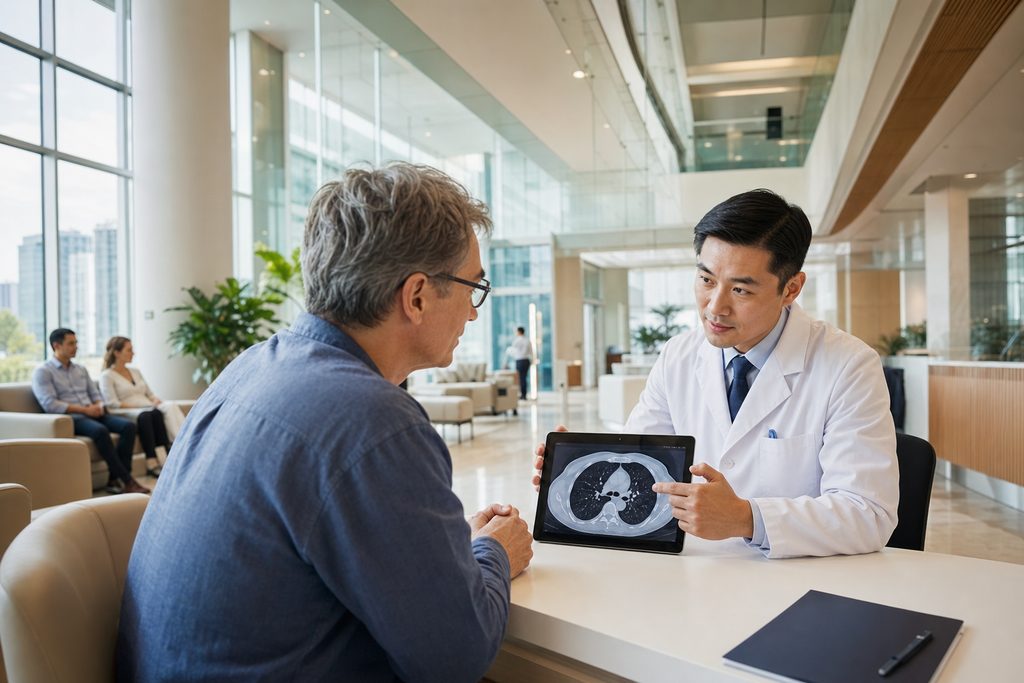
Have you been handed a diagnosis that feels like a race against a clock that is ticking too fast back home?
Maybe the wait for a surgical slot stretches into months. Or the estimated cost of a treatment protocol, even with decent insurance, looks like a number that could reshape your family’s entire financial future. These are the moments when people start searching beyond their borders. And when they look toward Asia for oncology, one institution appears in nearly every serious conversation: the Cancer Hospital Chinese Academy of Medical Sciences in Beijing—the China National Cancer Center.
Our team has walked this specific corridor with patients from over a dozen countries. We know what the sign on the door promises. We also know what the hallway feels like when you do not speak the language. This is a frank look at what this hospital actually offers an international patient, what it costs, and how to make it work without losing your mind in the logistics.
Key Takeaways
- The Cancer Hospital CAMS is China’s highest-volume oncology center, handling over 840,000 outpatient visits annually with outcomes data that holds up against top Western cancer institutes.
- For a self-paying international patient, a complex surgical oncology procedure here typically runs 60–80% less than the same protocol in the United States—but you must understand the payment structure before you pack a bag.
- This is a public institution. That means no online booking for foreigners, no English-language patient portal, and no Western-style insurance direct billing at the standard public wing.
- You cannot simply email the hospital and get a surgery date. Access runs through the international department, and that pathway requires specific documentation and a confirmed on-the-ground presence.
The Problem: When Your Home System Runs Out of Time or Money
A cancer diagnosis in the United States carries a financial toxicity that is now well-documented. A 2022 study in the *Journal of the National Cancer Institute* found that over 40% of newly diagnosed patients deplete their entire life savings within two years of starting treatment. The numbers are brutal. A course of immunotherapy can bill at $150,000 annually. A complex resection with reconstruction and inpatient recovery can push past $200,000 before you factor in adjuvant therapy.
And then there is the calendar.
In Canada, the median wait time from specialist referral to oncologic surgery reached 27.4 weeks in 2023, per the Fraser Institute. In the UK, the NHS target of a 62-day cancer pathway has been missed nationally for years. When you have a malignancy with a doubling time measured in weeks, a six-month queue is not an inconvenience. It is a threat.
That is the calculation that brings a patient to Beijing. Not curiosity. Necessity.
Who We Are
We are not a hospital. We do not employ oncologists, we do not read scans, and we will never offer you a medical opinion on your staging or your protocol. What we do is build a functional bridge between you and the Chinese hospital system. We translate your medical records into the exact format that a Chinese tumor board expects. We coordinate with the hospital’s international office to secure a confirmed consultation slot before you book a flight. We put a bilingual case manager at your side for every minute you are inside the hospital campus. Think of us as the logistics crew that makes the clinical encounter possible. The medicine comes from the doctors. Everything else—that is our job.
Why the China National Cancer Center Delivers Results
Volume That Creates Pattern Recognition
The Cancer Hospital CAMS is not a general hospital with an oncology department bolted on. It is a dedicated cancer fortress. The institution manages approximately 840,000 outpatient visits and admits over 68,000 inpatients annually. Its surgical teams perform more than 30,000 cancer operations each year.
Why does that number matter for you?
A surgeon who does 200 esophageal resections a year sees anatomical variations and intraoperative surprises that a surgeon doing 20 a year reads about in journals. Pattern recognition at that volume is not theoretical. It is muscle memory. The thoracic surgery department here is among the highest-volume units globally for esophageal and lung cancer. For a patient with a tricky tumor location, that volume translates directly into a lower probability of a positive margin.
Technology Deployed at Scale
This is not a place that bought one proton therapy machine and put it on a brochure. The center operates a full spectrum of radiation platforms, including volumetric modulated arc therapy, stereotactic radiosurgery, and brachytherapy suites that run extended hours to clear the patient queue. The surgical robotics program is extensive. The pathology lab runs next-generation sequencing panels that match the genomic profiling offered at major US cancer centers. The difference is throughput. A PET-CT scan that might require a two-week wait in a regional European hospital can often be completed within 48 hours here, not because the machine is fancier, but because the scheduling system is designed for volume.
cams beijing cancer treatment cost for foreigners: The Numbers That Change Decisions
Let us address the question that every international patient asks first. The cams beijing cancer treatment cost for foreigners varies by diagnosis, stage, and the specific protocol the tumor board recommends. But the ranges are consistent enough to be useful.
| Procedure | Estimated Cost at CAMS (USD, Self-Pay International Rate) | Typical US Hospital List Price (USD) |
|---|---|---|
| Lung lobectomy (VATS) with inpatient stay | $12,000 – $18,000 | $60,000 – $90,000 |
| Esophagectomy with reconstruction | $20,000 – $30,000 | $120,000 – $180,000 |
| Gastrectomy (radical, open) | $14,000 – $22,000 | $80,000 – $130,000 |
| Course of radiotherapy (30 fractions, IMRT) | $8,000 – $15,000 | $50,000 – $80,000 |
| Standard chemotherapy cycle (per infusion, drug-dependent) | $500 – $2,000 | $3,000 – $15,000 |
These are not promotional estimates. They reflect the actual self-pay rates at the international department for patients without Chinese national insurance. The structural reason for the gap is not a mystery. Physician salaries, hospital administrative overhead, and pharmaceutical procurement in China operate on a fundamentally different cost base than the US system. The clinical protocols for solid tumors—the NCCN guidelines, the ESMO recommendations—are the same ones the CAMS oncologists are referencing. The quality difference is not a simple function of price.
is cancer hospital cams beijing good for international patients? The Honest Answer
The institution is excellent. The patient experience, if you walk in alone and unprepared, is punishing.
The clinical outcomes are real. The hospital consistently ranks among China’s top two cancer centers in the Fudan University hospital rankings, a peer-reviewed evaluation that is the closest thing China has to the US News hospital rankings. Its research output is substantial. The center contributes heavily to China’s national cancer screening programs and publishes extensively on epidemiology and treatment outcomes specific to Asian populations, which matters for patients of East Asian descent whose tumor biology may differ from the predominantly Caucasian study populations in Western trials.
But.
The hospital is enormous. The outpatient building processes thousands of patients daily. Signage is predominantly in Chinese. The registration kiosks require a Chinese ID number or a specific hospital-issued card. The pharmacy queue moves fast only if you know exactly which window to stand at. A patient who does not speak Mandarin and does not have a local guide will burn an entire day just getting a blood draw and a CT scan scheduled.
So is cancer hospital cams beijing good for international patients? Clinically, yes—provided you have a mechanism to navigate the operational chaos. Without that mechanism, the clinical excellence becomes inaccessible, because you cannot get to the doctor.
how to book treatment at china national cancer center beijing
This is the question that generates the most frustrated emails in our inbox. Patients find the hospital website, send a message through the contact form, and hear nothing back for weeks. The silence is not rudeness. It is a structural mismatch.
The public-facing hospital website is designed for domestic patients who will physically arrive at the registration desk at 6 AM with a Chinese ID card. It is not a booking engine for international inquiries.
The functional pathway for a foreigner runs through the hospital’s International Medical Service department. This is a dedicated unit that handles overseas patients, but it operates on a referral-and-review model. You cannot book a slot on a calendar widget. You submit a complete medical dossier—translated into Chinese, including imaging reports, pathology slides, and a summary of prior treatments—and the department reviews it and assigns a specialist. That process typically takes 5 to 10 business days. Once the specialist confirms the case is appropriate and a treatment window exists, you get a consultation date. Only then do you book a flight.
This is precisely the sequence we manage for our patients. We know what documents the department requires, we handle the certified translation, and we chase the confirmation so you are not refreshing an inbox for two weeks.
cams beijing oncology packages for overseas patients: What Is Actually Included
The term “package” can be misleading. The hospital does not sell a bundled, all-inclusive oncology product with a single price tag in the way a medical tourism facilitator in Thailand or India might. What the international department offers is a coordinated care pathway with transparent line-item pricing.
A typical pathway for a surgical patient looks like this: initial specialist consultation, preoperative workup including imaging and labs, the surgical procedure with anesthesia and inpatient stay, postoperative pathology, and a follow-up plan. The hospital provides a cost estimate before admission, and you prepay a deposit that is reconciled against actual charges at discharge.
For patients asking about cams beijing oncology packages for overseas patients, the honest framing is that you are buying a coordinated sequence of services at known prices, not a fixed-price bundle. This is actually an advantage. You pay for what you need, not for a package that includes services you may never use. But it also means you need a realistic budget range, not a single number.
can foreigners get cancer treatment at cams beijing? The Legal and Practical Answer
Yes. There is no law barring foreign nationals from receiving cancer treatment at this hospital. The international department exists specifically to serve this population. The hospital treats patients from across Asia, the Middle East, Eastern Europe, and increasingly from North America and Western Europe.
The practical requirements are what trip people up.
You need a valid passport with an S2 visa, which is specifically issued for medical treatment purposes. The hospital will provide an invitation letter that supports the visa application, but you must request this document explicitly—it is not automatically generated. You need to bring physical copies of all prior imaging on a CD or USB drive, not just the written reports. The pathologist will want to review your original tissue slides, not just the pathology summary. And you need a payment method that works: a major international credit card, a wire transfer, or a Chinese bank card. Cash in foreign currency is not accepted at the hospital cashier.
These are solvable problems. But they are not obvious until you are already deep in the process.
best cancer hospital china for international patients price: How CAMS Compares
When patients search for the best cancer hospital china for international patients price, they are usually trying to triangulate between clinical reputation and out-of-pocket cost. CAMS sits at a specific intersection on that graph: top-tier clinical ranking, public-institution pricing, and an international department that is functional but not luxurious.
Other Chinese cancer centers with strong international programs include Fudan University Shanghai Cancer Center and Sun Yat-sen University Cancer Center in Guangzhou. Fudan Shanghai tends to price slightly higher for international patients, reflecting Shanghai’s cost structure. Sun Yat-sen has particular depth in nasopharyngeal carcinoma and hepatobiliary cancers, reflecting regional disease patterns in southern China.
CAMS Beijing’s advantage is breadth. It has dedicated departments for essentially every solid tumor and hematologic malignancy, and its thoracic and esophageal programs are arguably the highest-volume in the world. For a patient with a lung, esophageal, or gastric cancer, CAMS is very difficult to beat on a cost-to-expertise ratio. For a patient with a rare sarcoma or a pediatric brain tumor, the calculus might shift toward a different center.
The “best” hospital is the one with the deepest specific experience in your exact diagnosis. General rankings are a starting point, not a final answer. Our team matches patients to hospitals based on the specific tumor type and the specific surgeon’s case volume, not just the institution’s overall brand.
What You Need to Know Before Going Alone
We have seen too many patients arrive in Beijing with a suitcase and a hope that the system will figure itself out around them. It will not. Here are the barriers that break people.
- Visa timing is tight and unforgiving: The S2 medical visa requires an invitation letter from the hospital, which itself requires a confirmed consultation appointment. The visa processing time varies by country but can take two to four weeks. If your consultation date is too close, you miss it. If you book a flight before the visa is stamped, you risk losing the fare. The sequence must be: dossier submission → hospital confirmation → invitation letter → visa application → visa approval → flight booking. Getting the order wrong is expensive.
- Payment is upfront and in yuan: The hospital requires a deposit before admission. The amount is estimated based on the treatment plan, and the final bill is settled at discharge. International credit cards work at the international department cashier, but daily limits on some cards can block a large deposit transaction. Wire transfers clear in 3-5 business days. You need a financial buffer and a backup payment method.
- Medical records translation is a clinical task, not a clerical one: A machine translation of your pathology report will contain errors that can mislead a tumor board. Drug names differ between pharmacopeias. Staging nomenclature sometimes varies. The translation must be done by someone who understands oncology terminology in both languages. A general translator will not catch that “poorly differentiated adenocarcinoma with signet ring features” requires specific phrasing to convey the prognostic implication correctly.
How We Help You Navigate This
We do not sell access. That phrase makes us wince. What we do is case management.
Before you travel, we collect your complete medical record, have it translated by oncology-native translators, and submit it through the correct channel to the international department. We confirm a consultation date and secure the invitation letter. We advise on the visa application and help you avoid the common mistakes that cause rejections. We estimate the treatment cost based on the proposed protocol and help you arrange a payment method that will not fail at the hospital cashier.
During your treatment, a bilingual case manager is with you at the hospital. This person registers you at the correct window, guides you to the right consultation room, waits in the pharmacy queue, and translates the oncologist’s explanation in real time. You are not standing in a corridor holding a Google Translate screen toward a nurse who is trying to handle forty other patients.
After discharge, we coordinate follow-up imaging and teleconsultations so you do not have to fly back to Beijing just to review a CT scan. Any consultation fee you paid for an initial video assessment is credited in full toward the on-the-ground coordination service if you proceed to in-person treatment within 90 days. That credit applies to our coordination fee only, never to hospital treatment charges.
This is not a concierge service that books you a nice hotel. It is operational support that makes the clinical encounter possible.
Frequently Asked Questions
What if the hospital refuses my case after I have already traveled?
This is why we never advise booking a flight before the hospital confirms acceptance. The international department reviews your dossier and issues a formal acceptance before you travel. If the tumor board determines that your case is not suitable—because the disease has progressed beyond what the available protocols can address, or because a necessary subspecialist is not available—we communicate that clearly and help you explore alternative centers. You do not get on a plane without a confirmed consultation.
Can I use my US or European health insurance at CAMS?
The public wing of the hospital does not do direct billing with foreign insurers. You pay the hospital directly and then seek reimbursement from your insurance company. Some international insurance plans with global coverage have pre-negotiated direct billing arrangements with the hospital’s international department, but this is the exception, not the rule. We help you obtain the itemized invoices and medical documentation that your insurer requires for a claim, but the reimbursement outcome depends entirely on your policy terms.
What happens if there is a surgical complication?
CAMS is a full-spectrum tertiary hospital with an ICU, interventional radiology, and 24-hour surgical backup. It is not a boutique clinic that transfers unstable patients elsewhere. The standard of perioperative care is high. That said, a complication will extend your hospital stay and increase your costs beyond the initial estimate. You should have a financial reserve of at least 30% above the quoted estimate before you travel. This is not specific to China—it is sensible advice for any major surgery anywhere.
How long do I need to stay in Beijing after surgery?
For a major oncologic resection, plan on two to three weeks in the city after discharge. The surgeon will want to see you for a wound check and to review the final pathology report, which takes about 10 to 14 days after surgery. You should not fly long-haul immediately after a major abdominal or thoracic procedure anyway—the risk of thromboembolism is elevated, and you want to be within reach of the surgical team if something feels wrong.
Is the language barrier really that difficult to overcome?
Inside the international department, some physicians speak functional English, and the department staff are accustomed to working with translators. Outside that department—in the imaging suite, the blood draw station, the pharmacy—English evaporates. The hospital is a Chinese-language environment. A bilingual companion is not a luxury. It is the difference between a 90-minute imaging appointment and an all-day ordeal where you miss your CT slot because you could not understand the queue number announcement.
Your Next Step
The China National Cancer Center is a serious institution that delivers serious oncology at a cost that makes treatment possible for patients who would otherwise be financially wrecked or clinically delayed. It is not easy to access. The barriers are real, but they are navigable with the right preparation and the right support on the ground.
If you are weighing this option, start with a clear picture of what your case requires and whether this hospital’s specific strengths match your diagnosis. That is a conversation worth having before you spend a dollar on a plane ticket. Our team is here to help you think it through.
For more medical information and treatment options in China, visit chinamedservices.com (China Medical Services).
