Cancer Screening in China: What We Arrange and What It Costs
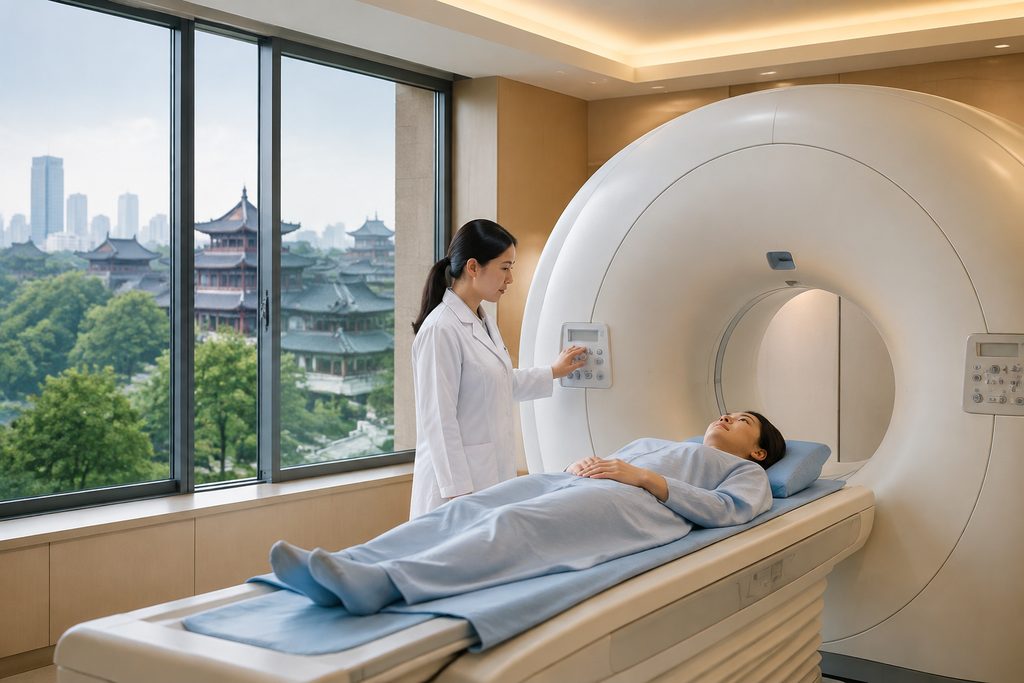
When 54-year-old David from Melbourne started losing weight without trying, his GP ran basic bloodwork, found nothing conclusive, and handed him a referral with a four-month wait. His father had died of pancreatic cancer at 61. Four months felt like a gamble he couldn’t take. So he did what a growing number of patients do — he started looking at options outside Australia, and cancer screening cost China kept coming up in his searches.
He wasn’t looking for a miracle. He wanted a PET-CT, a proper endoscopy, a tumor marker panel, and a radiologist who would actually sit with the images and explain them. What he found was a system that could deliver all of that within two to three weeks, at a fraction of what the same workup costs in the US or Australia — provided someone helped him navigate it.
That’s the part nobody explains clearly. So let’s walk through it properly.
How This Actually Works, Step by Step
Here is the real sequence, from first email to final report.
Step one: you send what you already have. Existing bloodwork, imaging CDs or DICOM files, pathology reports, a short summary of symptoms and family history. If your records are in English, most top-tier hospital international departments can work with them directly. If they’re in another language, translation adds a few days.
Step two: a Chinese specialty reviews the file. Not a call center — the relevant department. Oncology, gastroenterology, or a health management center depending on what you need. They come back with a recommended screening protocol: which imaging, which scopes, which tumor markers, and roughly how many days on the ground.
Step three: appointment coordination. This is where most foreign patients hit a wall on their own. Standard outpatient registration at Chinese public hospitals cannot be booked from overseas in advance — you queue on the day. To lock in a screening slot ahead of travel, you go through the hospital’s international or VIP channel. That channel costs roughly 1.5 to 2 times the standard fee, and it comes with English-speaking staff and scheduled appointments.
Step four: you arrive and complete the screening. A full-body workup at a major hospital typically runs two to four days. A bilingual medical companion handles registration, queueing, payment, and translation so you’re not navigating a hospital that sees 10,000+ outpatients a day in a language you don’t speak.
Step five: results and a written interpretation. Imaging reports, pathology if biopsies were taken, and a specialist consult. You leave with documents your doctor at home can read.
What a Screening Package Actually Includes — and What It Doesn’t
This is the section where expectations most often go wrong. “Full body cancer check” is a marketing phrase, not a clinical standard. There is no single test that rules out cancer.
What Chinese top-tier hospitals typically offer in a comprehensive screening package:
- Low-dose chest CT (far more sensitive than chest X-ray for early lung nodules)
- Abdominal and pelvic ultrasound
- Gastroscopy and colonoscopy under sedation — often in the same session
- Blood tumor marker panel (CEA, AFP, CA19-9, CA125, PSA, and others as indicated)
- Thyroid ultrasound, which Chinese hospitals do exceptionally well given case volume
- Cardiac workup, often bundled: ECG, echocardiogram, carotid ultrasound
What it usually does not include unless you specifically request and pay for it: PET-CT, MRI of specific regions, genetic testing, and any biopsy or pathology work beyond what’s found incidentally. PET-CT alone can add several thousand dollars.
A Realistic Timeline
Ranges below assume you’re starting from scratch with records in English and no urgent symptoms.
| Stage | Typical Duration | Notes |
|---|---|---|
| Record review and protocol proposal | 3–7 days | Longer if translation is needed |
| Hospital appointment confirmation | 1–3 weeks | International channel; VIP slots fill faster around holidays |
| S2 visa application | 1–2 weeks | Requires hospital invitation documents; processing varies by consulate |
| Flights and accommodation | 3–10 days | Book refundable where possible |
| Screening on the ground | 2–4 days | Scopes and PET-CT need separate scheduling |
| Results and specialist consult | 1–5 days | Pathology, if biopsies taken, takes longer — up to 7 days |
| Total, door to door | 4–8 weeks | Rush cases can compress to ~3 weeks |
That 4-to-8-week window is the honest number. Anyone promising a full workup in five days is either skipping steps or selling you a package that isn’t what you think it is.
What Can Go Wrong — and What Happens Then
Screening is low-risk compared to surgery, but the logistics fail in predictable ways.
Your scans come back inconclusive. This is common and not a failure. A lung nodule might be 6mm and need a three-month follow-up rather than immediate action. Chinese radiologists read enormous volumes and are generally comfortable with “watch and wait” recommendations where appropriate. You’ll get a written follow-up plan.
A biopsy is needed and wasn’t planned. This extends your stay by several days and adds cost. Budget a contingency of 20–30% above your quoted package.
The visa is delayed. S2 applications require supporting documents from the hospital. If those arrive late, your appointment may need rescheduling. Build two weeks of buffer between visa approval and your flight.
You don’t like the hospital once you’re there. This happens. Scale and efficiency at Chinese public hospitals can feel impersonal to patients used to Western private care. If that’s a dealbreaker, private international hospitals in Shanghai and Beijing offer a different experience at higher cost.
Something serious is found. Then you’re no longer in screening territory — you’re in treatment planning. The good news: you’re already inside a hospital that can act. The hard part is deciding whether to treat in China or fly home. That decision deserves its own careful conversation, not a snap judgment in a hospital corridor.
How Much Does a Full Body Cancer Check Cost in China?
Here’s where the numbers get concrete. Pricing varies by hospital tier, city, and how much imaging you include.
| Screening Level | Typical Cost (USD) | What’s Included |
|---|---|---|
| Basic health check | $300–700 | Bloodwork, ultrasound, ECG, chest X-ray |
| Comprehensive cancer screening | $1,200–2,500 | Low-dose chest CT, abdominal ultrasound, tumor markers, gastroscopy + colonoscopy |
| Premium package with PET-CT | $3,500–6,000 | Everything above plus whole-body PET-CT |
| Same workup in the US | $8,000–20,000+ | Varies wildly by facility and insurance |
For comparison, a PET-CT alone in the US routinely runs $3,000–6,000. In China, at a top-tier public hospital, it’s typically $800–1,500. That gap is the single biggest driver of cancer screening medical tourism China sees from the US, Australia, and the UK.
Add the international channel premium — roughly 1.5–2x standard fees — and you’re still well under Western pricing. Add flights, hotel, and companion services, and the total for a comprehensive package with PET-CT typically lands between $6,000 and $10,000 all-in from North America.
Which Hospitals, and Why It Matters
Not every hospital offering a “cancer screening package” is worth your time. China has 35,000+ hospitals. The ones that matter for international patients sit in the top 5%, ranked by the Fudan Hospital Rankings and JCI accreditation.
For the best cancer screening hospital Shanghai offers, you’re looking at facilities like Zhongshan Hospital Fudan University and Ruijin Hospital, both with established international departments. Beijing brings Peking Union Medical College Hospital and a cluster of 21 Fudan Top 100 institutions — the densest concentration in the country. Guangzhou, Chengdu, and Hangzhou each anchor their regions.
If you’re weighing cities, our Fudan-ranked hospital directory by city breaks down which institutions sit in which tier. For cancer specifically, the oncology department rankings show which hospitals place in China’s top 10 by specialty reputation — a more useful signal than overall rank.
Is cancer screening in China reliable? At these institutions, yes. They run the same equipment — Siemens, GE, Philips scanners — as major Western centers, and read far higher volumes. The variable isn’t the technology. It’s whether you’re at a top-tier hospital or a mid-tier one that bought a package brochure.
Practical Considerations: Records, Visas, Payment, and Follow-Up
Records. Bring everything. Prior imaging, even old films, gives radiologists a comparison baseline. Digital files on a USB drive are better than printed films.
Visa. Medical travel to China uses the S2 visa, with a notation for medical treatment purposes. Family members accompanying you apply for S2 as well. Stays beyond 180 days require S1. The M visa is for commercial and trade activities — it is not a medical visa, despite what some older guides still say. Requirements shift, so confirm current documentation with the nearest Chinese embassy or consulate before applying.
Payment. Chinese public hospitals require prepayment. International insurance is typically reimbursed after the fact, not billed directly. Private international hospitals more often offer direct billing — worth checking if you carry coverage that supports it.
Language. This is the practical wall. A hospital with 10,000 daily outpatients is not designed for someone who can’t read signage or fill out forms in Chinese. Bilingual medical companion services exist precisely for this gap.
Follow-up at home. Get your imaging on disc and your reports in English before you leave. Your doctor at home will need both, and chasing documents across time zones after the fact is miserable.
Frequently Asked Questions
A comprehensive package with PET-CT typically runs $3,500–6,000 at a top-tier Chinese hospital, versus $8,000–20,000+ in the US for comparable workup. Adding the international channel premium and travel costs, most patients land between $6,000 and $10,000 all-in. Final pricing varies by hospital and case complexity.
At Fudan-ranked and JCI-accredited hospitals, yes. Equipment matches Western standards and radiologist case volumes are far higher. Reliability drops sharply if you book through an unvetted intermediary at a mid-tier facility. Hospital selection matters more than the country.
Yes, but not through standard outpatient registration, which requires same-day queuing. Pre-booked screening runs through hospital international or VIP departments, which cost roughly 1.5–2x standard fees and include English-speaking coordination. This is the practical route for foreign patients.
The S2 visa, with medical treatment noted as the purpose. Accompanying family members also apply under S2. Stays over 180 days require S1. Requirements change, so verify with your nearest Chinese consulate before applying.
Plan for 2–4 days on the ground for a comprehensive workup, plus 1–5 days for results and a specialist consult. If a biopsy is needed, add up to a week. Total door-to-door planning, including visa and appointment lead time, is realistically 4–8 weeks.
Your Next Step
Screening in China works well when the hospital is right, the protocol is matched to your actual risk profile, and someone handles the logistics you can’t handle in a language you don’t speak. It works badly when it’s treated as a commodity purchase.
Our team at China Medical Services connects international patients with 340+ top-ranked hospitals across 37 cities. We arrange written second opinions, video consultations with Chinese specialty teams, appointment coordination, and bilingual medical companions who stay with you through registration, queueing, and results. We are not doctors and we don’t diagnose. We handle the bridge between you and the medical expertise.
If you’re considering screening and want a straight answer about what’s feasible for your situation, start with a conversation. No pressure, no package pitch — just a clear picture of your options. Reach out for a free consultation and we’ll tell you honestly whether China makes sense for your case.
This article is for informational purposes only and does not constitute medical advice. Screening recommendations should be discussed with a qualified physician who knows your history. Prices are estimates and vary by hospital and case complexity.
For more medical information and treatment options in China, visit chinamedservices.com (China Medical Services).
