Cancer Screening in China: Which Hospital Should You Choose?
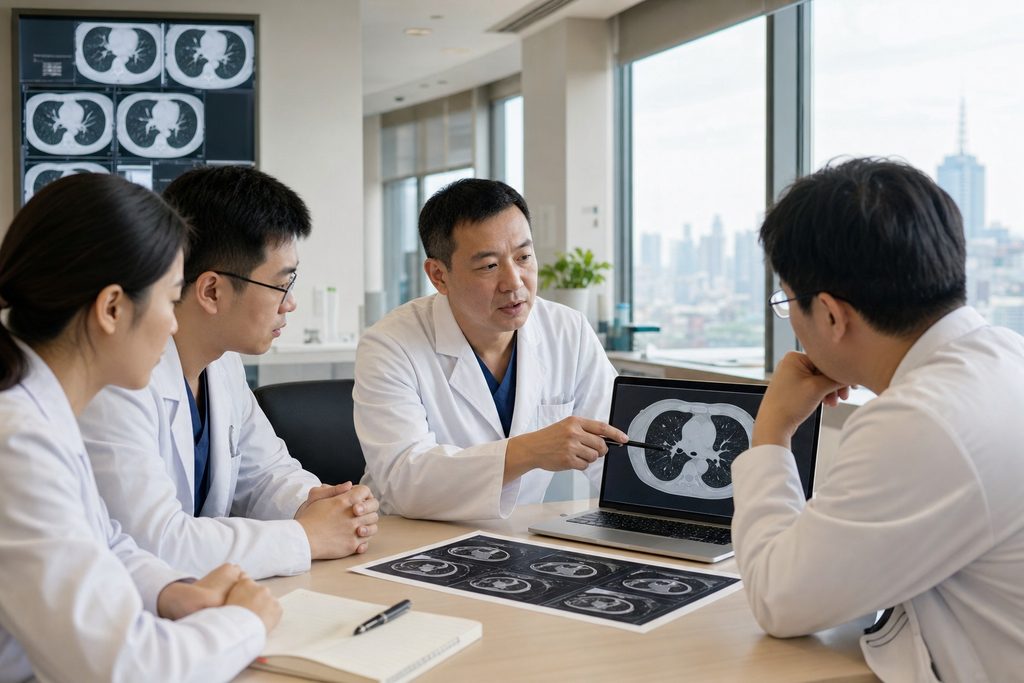
According to the World Health Organization’s 2024 global cancer statistics, China performs over 4.8 million new cancer diagnoses each year. That staggering volume has driven an equally massive investment in early detection infrastructure. For international patients weighing their options, the cancer screening cost China presents is often a fraction of what they would pay at home. But cost means nothing without the right hospital. So which hospital in China offers cancer screening that is actually worth traveling for? The answer depends on what you need screened, your risk profile, and how much clinical oversight you expect from the process.
Our team has coordinated screening packages for patients from the United States, the United Kingdom, Australia, and the Gulf states. The recurring question is not whether Chinese hospitals can detect cancer early. They demonstrably can. The question is which facility matches a given patient’s clinical history, language needs, and budget. This article walks through that decision without guesswork.
How This Actually Works, Step by Step
You do not simply book a flight and walk into a hospital lobby expecting a comprehensive cancer screening. The process follows a specific sequence. Here is what actually happens when an international patient pursues screening through our coordination service.
First, you send us your existing medical records: any prior imaging, bloodwork, family history of malignancy, and a list of current medications. A physician on the hospital side reviews these documents before any appointment is confirmed. This step matters because certain screening protocols — colonoscopy, for example — require preparation and carry contraindications. Nobody should fly ten hours for a procedure they cannot safely undergo.
Second, we match your profile to a hospital. A 45-year-old woman with a BRCA1 mutation and dense breast tissue needs a different facility and protocol than a 60-year-old man with a 30-pack-year smoking history. The former may benefit from breast MRI at a center with dedicated high-risk clinics. The latter needs low-dose CT and pulmonary function assessment. Matching is not a formality. It changes the screening package.
Third, the hospital’s international department confirms dates and issues a formal invitation letter. This document supports your S2 visa application. We handle the paperwork, but the hospital must generate the letter. No letter, no visa. Fourth, you arrive. A bilingual medical companion meets you at the airport or hotel, accompanies you to registration, handles payment deposits, and translates every conversation with physicians and technicians. Fifth, results are delivered — typically within 3 to 7 working days for most imaging and laboratory panels. A senior physician reviews the findings with you in person or via video, and you leave with a written report in English.
Which Hospital in China Offers Cancer Screening: The Tiered Reality
China’s hospital system is not monolithic. The facilities that accept international patients for cancer screening fall into three broad tiers. Understanding these tiers answers the question of which hospital in China offers cancer screening that fits your needs.
The top tier consists of public academic medical centers with dedicated international departments. Think Peking Union Medical College Hospital in Beijing, Zhongshan Hospital Fudan University in Shanghai, and West China Hospital in Chengdu. These institutions appear on the Fudan University hospital rankings and operate massive oncology programs. Their international departments offer screening packages that include tumor marker panels, whole-body imaging, endoscopy, and specialist consultation. Clinical depth is unmatched. But the experience is not Western. Expect crowded lobbies, minimal hand-holding unless you hire a companion, and prepaid billing rather than direct insurance settlement.
The second tier includes JCI-accredited private and international hospitals. United Family Healthcare, Jiahui Health, and Raffles Hospital fall here. These facilities offer English-speaking staff, direct billing with major international insurers, and a patient experience closer to what Westerners expect. The trade-off is clinical volume. A private hospital may have excellent radiologists and gastroenterologists, but it sees fewer rare malignancies than a 3,000-bed public academic center. For routine screening, that matters little. For high-risk or symptomatic patients, it matters a great deal.
The third tier is the specialized cancer hospital. Fudan University Shanghai Cancer Center and Sun Yat-sen University Cancer Center in Guangzhou sit here. These are not general hospitals. They are dedicated oncology institutions with screening programs designed around organ-specific risk. If you know your risk profile — say, a strong family history of gastric cancer — a specialized center offers focused protocols that general hospitals cannot match. The downside is that non-cancer findings, like a cardiac anomaly spotted on a chest CT, may require referral elsewhere.
Cancer Screening Cost China: What You Actually Pay
Let us talk numbers. The cancer screening cost China varies widely by city, hospital tier, and package scope. A basic screening package at a public hospital international department in Shanghai — covering chest CT, abdominal ultrasound, standard tumor markers, and basic bloodwork — typically runs between $400 and $800. Add a full-body PET-CT and the price climbs to $1,200 to $2,500. Private international hospitals charge more for the same clinical content, usually $1,500 to $4,000 for comprehensive packages, because you are paying for service, language support, and insurance-compatible billing.
Compare that to the United States, where a self-pay whole-body MRI alone can cost $2,500 to $5,000, and a comprehensive executive physical with cancer screening at a major academic center routinely exceeds $6,000. The cost advantage is real. But price should never be the deciding factor for cancer screening. A cheap package that misses an early-stage lesion is the most expensive purchase you will ever make.
What drives the price difference? Three things. First, physician labor costs in China are substantially lower than in the US or Europe. Second, imaging equipment utilization is extraordinarily high — Chinese hospitals run MRI and CT scanners 16 to 18 hours a day, amortizing capital costs across far more patients. Third, the international department markup, while real, is still modest compared to Western private-pay rates.
| Screening Component | Public Hospital International Dept (USD) | Private International Hospital (USD) | Typical US Self-Pay (USD) |
|---|---|---|---|
| Low-dose chest CT | $80–150 | $200–350 | $400–800 |
| Abdominal ultrasound | $50–100 | $150–250 | $300–600 |
| Standard tumor marker panel | $60–120 | $150–300 | $250–500 |
| Colonoscopy (with sedation) | $300–600 | $800–1,500 | $2,000–4,000 |
| Whole-body PET-CT | $900–1,500 | $1,800–2,800 | $3,000–6,000 |
| Comprehensive package (all above) | $1,500–2,500 | $3,000–4,500 | $6,000–12,000 |
Prices are ranges and vary by hospital and case complexity. Anyone quoting you a fixed, non-negotiable price for a “full body cancer screening package” before reviewing your records is not doing you a clinical favor.
A Realistic Timeline
People underestimate how long the process takes. Here is a realistic sequence for an international patient pursuing cancer screening in China, from first contact to completed results.
| Stage | What Happens | Typical Duration |
|---|---|---|
| Day 1–3 | You submit records and screening goals; we review with hospital international department | 2–3 days |
| Day 4–10 | Hospital confirms protocol, issues invitation letter; we prepare S2 visa documents | 5–7 days |
| Day 11–25 | Visa processing at Chinese embassy or consulate in your country | 5–15 days depending on jurisdiction |
| Day 26–30 | Travel to China; initial consultation and baseline labs | 1–2 days after arrival |
| Day 31–35 | Imaging, endoscopy, specialist consultations | 2–4 days |
| Day 36–42 | Final report review with senior physician; written English summary | 3–7 days after last test |
The forgotten step is always document translation. If your prior records are in English, German, or French, most hospital international departments can review them directly. If they are in Arabic, Russian, or another language, translation adds 3 to 5 days. Budget for that. Also, colonoscopy requires a clear-liquid diet and bowel preparation starting 24 hours before the procedure. You cannot land and scope the same day. Any coordinator who tells you otherwise is cutting corners.
What Can Go Wrong — and What Happens Then
Let us be blunt about failure modes. They exist, and pretending otherwise helps no one.
First, a screening may find something. That is the point, but it can feel like a disaster when it happens to you. A lung nodule on CT. An elevated CA-125. A polyp that looked benign but the pathologist wants to review again. What happens then? The hospital’s oncology department gets involved. You may need additional imaging, a biopsy, or a short-interval follow-up scan. This can extend your stay by days or weeks. It can also change the cost. You should know this before you board the plane. Screening is not a spa visit. It occasionally uncovers problems that demand immediate attention.
Second, language barriers can degrade the experience even at top hospitals. The international department staff may speak English, but the radiology technician, the phlebotomist, and the nurse on the endoscopy unit may not. A bilingual medical companion solves this. Without one, you may find yourself alone in a crowded corridor, unsure where to go next, holding a slip of paper in Chinese that you cannot read. This is not a hypothetical. It is the single most common complaint we hear from patients who tried to navigate the system alone.
Third, scheduling shifts. Chinese hospitals are busy. A machine breaks. A senior radiologist is called to an emergency. Your PET-CT gets pushed from Tuesday to Thursday. If you booked a tight itinerary, this wrecks it. Our coordination team builds buffer days into every screening itinerary for exactly this reason. You should too.
Is Cancer Screening in China Good? Evaluating Quality Honestly
The short answer is yes, with conditions. Is cancer screening in China good by international standards? At top-tier academic centers and JCI-accredited hospitals, the imaging equipment is world-class — often newer than what you would find in a mid-sized American hospital. Radiologists at major Chinese cancer centers read more chest CTs in a month than many Western radiologists read in a year. That volume builds pattern recognition that no textbook can teach.
But quality is uneven. China has more than 35,000 hospitals. The top 5% — roughly the 340+ facilities in our database, ranked by Fudan University and JCI standards — deliver screening quality comparable to good Western academic centers. Below that tier, quality drops sharply. A county-level hospital in a third-tier city may have a CT scanner, but the radiologist reading your scan may lack subspecialty training. The technician may not follow standardized protocols. The lab may not participate in external quality assurance programs.
How do you evaluate a specific hospital? Check three things. First, is it on the Fudan University hospital ranking list for oncology or its relevant specialty? The specialty rankings for oncology and imaging are a useful starting point. Second, does the international department have a documented process for English-language reporting? Ask to see a sample report before you commit. Third, what is the hospital’s annual screening volume? A center that performs 50,000 screening CTs a year has seen everything. A center that performs 500 has not. You want the former.
How Much is Full Body Cancer Screening in Shanghai? A City-Specific Look
Shanghai deserves special attention because it anchors China’s private international hospital sector while also hosting several top-tier public academic centers. So how much is full body cancer screening in Shanghai? The honest answer is that “full body” means different things at different facilities, and the price tracks the definition.
At a public hospital international department like Zhongshan Hospital Fudan University or Huashan Hospital, a comprehensive screening package covering brain MRI, chest CT, abdominal MRI, pelvic ultrasound, full tumor marker panel, thyroid ultrasound, and specialist review typically runs $1,200 to $2,200. At a private facility like Jiahui Health or United Family Shanghai, a comparable package costs $2,500 to $4,000. The clinical content is similar. The difference is service: private hospitals offer English-speaking staff throughout, quieter environments, and direct billing with insurers like Cigna, Aetna, and Allianz.
Shanghai also offers something Beijing does not: density of options. You can consult at a public academic center in the morning and walk to a private imaging center in the afternoon for a second read. That flexibility matters when a finding is ambiguous. For patients who want the best hospital for cancer screening Beijing offers, the trade-off is different: Beijing has deeper academic oncology programs — more subspecialists, more clinical trials — but fewer JCI-accredited private options. Choose based on your clinical risk, not your hotel preferences.
Practical Considerations: Records, Visa, Payment, and Follow-Up
What should you prepare before contacting any hospital in China about cancer screening? Start with records. Bring every prior imaging study — not just the reports, but the actual DICOM files on CD or USB. Radiologists need the raw images to compare interval changes. Bring pathology reports if you have ever had a biopsy. Bring a list of every medication you take, including supplements. Bring your family cancer history, written down, with ages at diagnosis. This is not bureaucratic fussiness. It changes your screening protocol.
Visa is next. For medical screening, you apply for an S2 visa with a note indicating the purpose of treatment and the inviting hospital. The hospital’s international department issues an invitation letter that you submit with your application. Processing times vary by country. Apply at least three weeks before your intended travel date. Your accompanying family members also need S2 visas. The M visa is for commercial and trade activities and is not appropriate for medical travel.
Payment works differently than in the West. Public hospitals require prepayment — you deposit funds at registration, and the hospital deducts charges as services are rendered. Private international hospitals may bill your insurer directly, but you should confirm coverage before traveling. Most international insurers require pre-authorization for elective screening. Get that authorization in writing. If your insurer denies coverage, you are self-pay, and the prices above apply.
Follow-up at home is the step everyone forgets. Your Chinese screening report will include recommendations: repeat CT in 6 months, colonoscopy in 3 years, breast MRI annually. Your home physician needs to act on those recommendations. We provide the English report and raw imaging files so that continuity of care does not break when you leave China. If a finding requires intervention, we can coordinate that too — but that is a different conversation.
Frequently Asked Questions
Yes. Most hospital international departments accept self-referred international patients for screening. You do not need a referral letter from a Chinese physician. However, a review of your existing records by the hospital’s screening physician is usually required before the package is confirmed. This is a clinical safety step, not a bureaucratic hurdle.
Not necessarily better — different. JCI accredited cancer screening hospitals in China, such as United Family and Jiahui, offer superior service, English fluency, and insurance compatibility. Public academic centers offer deeper subspecialty expertise and higher clinical volume. For low-risk routine screening, JCI facilities are excellent. For high-risk or symptomatic patients, the clinical depth of a public academic center often outweighs service considerations.
If a screening test is abnormal, the hospital’s oncology team reviews the finding and recommends next steps: additional imaging, biopsy, or short-interval follow-up. You are not obligated to pursue treatment in China. Many patients return home for treatment. Others choose to stay, given the cost and expertise advantages. The decision is yours, and the screening report gives you the information to make it.
No, but you need language support. Hospital international departments have English-speaking coordinators, but the technicians and nurses you encounter during imaging and procedures may not. A bilingual medical companion from our team handles registration, payment, navigation, and translation throughout the screening process. This is the single most valuable service we provide.
Your Next Step
Choosing where to undergo cancer screening in China is a clinical decision, not a travel decision. The right hospital depends on your risk factors, your prior imaging, and your tolerance for navigating a foreign healthcare system. Our team at For more medical information and treatment options in China, visit chinamedservices.com (China Medical Services).
