Cancer Screening in China: Remote Triage Before You Travel
Cancer Screening in China: Remote Triage Before You Travel
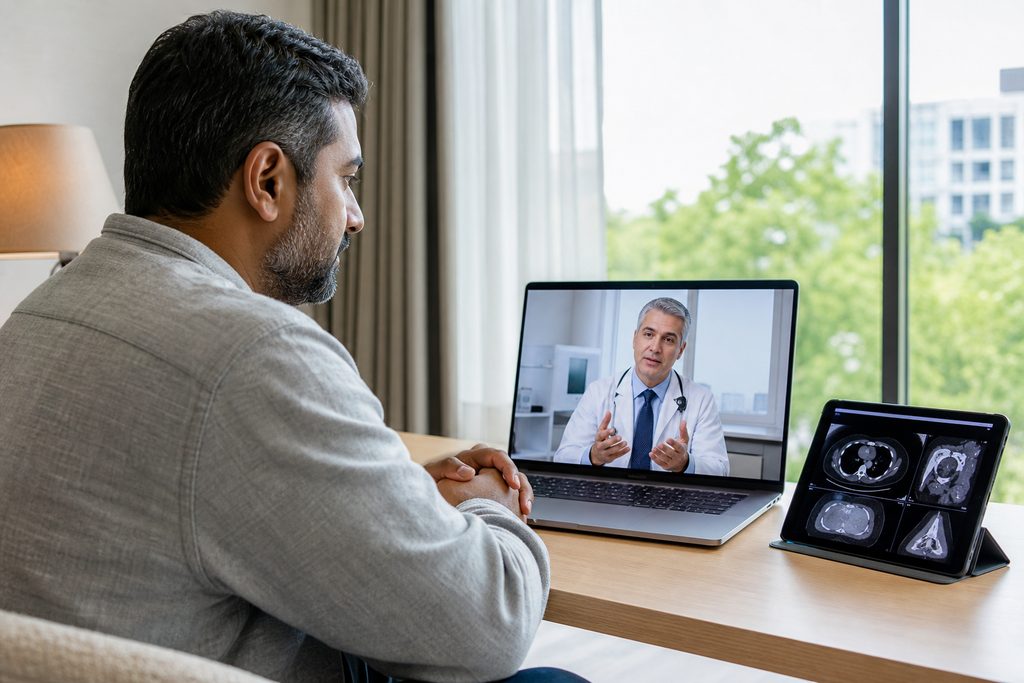
Roughly 1 in 5 people worldwide will develop cancer at some point in their lifetime, according to the World Health Organization. That single number explains why so many international patients now look at cancer screening in China — not as a last resort, but as a proactive, affordable way to get a thorough workup. The catch? You cannot simply book a screening slot from overseas and board a plane. Chinese public hospitals do not open their general outpatient desks to foreign bookings weeks in advance. So the smart path runs through remote triage first: send your records, let a Chinese specialty team review them, and only then decide whether traveling makes sense.
That is the model we help coordinate every week.
How This Actually Works, Step by Step
Here is the real sequence, without the marketing gloss.
Step one — you gather what you already have. Recent blood work, imaging reports (CT, MRI, ultrasound), pathology results if any, plus a short summary of your symptoms, family history, and previous screenings. Scans on CD or DICOM files are fine. We arrange certified translation into Chinese where needed.
Step two — a Chinese specialty team reviews the file. Depending on what you are screening for, that could be an oncology department, a gastroenterology team, or a dedicated health examination center. They read your records and tell you which tests are actually indicated. This is a written second opinion, not a sales pitch.
Step three — you get a concrete plan back. Which hospital, which package, roughly what it costs, how many days in China. If nothing urgent shows up in your records, the honest answer may be “you do not need to fly anywhere yet.”
Step four — appointment coordination. Once you agree on a plan, we handle registration through the hospital’s international department or VIP channel, which is the only reliable way foreigners lock in a specific date in advance.
Step five — you arrive, screen, and leave with results. Most comprehensive packages take two to four days. A bilingual companion stays with you through registration, payment, and every department.
What Remote Triage for Cancer Screening Actually Screens For
China’s top hospitals run structured screening packages built around the cancers that are most common and most treatable when caught early. A typical comprehensive package covers low-dose chest CT for lung nodules, gastric and esophageal endoscopy, colonoscopy, liver ultrasound with alpha-fetoprotein, thyroid and breast ultrasound, and a full tumor marker panel.
Gastric and esophageal cancer screening deserves special mention. China carries a high burden of upper GI cancers, and its endoscopy units perform enormous volumes — some tertiary centers run thousands of procedures annually. That volume translates into experienced eyes. For a patient with a family history of stomach cancer, a Chinese endoscopy unit is a genuinely strong option.
Remote triage shapes which of these you actually need. A 38-year-old with no symptoms and no family history does not need a full endoscopy-and-colonoscopy package. A 55-year-old smoker with a suspicious nodule on a prior scan needs something very different. The review stage is where that gets sorted out — before you spend money on a flight.
A Realistic Timeline
Everyone underestimates the waiting steps. Here is an honest picture.
| Stage | What Happens | Realistic Duration |
|---|---|---|
| Records gathering | You collect reports, scans, prior test results | 3–10 days |
| Translation & submission | Medical translation into Chinese, file organized for the specialty team | 2–5 days |
| Written review | Chinese specialty team analyzes records, recommends tests | 3–7 business days |
| Video consultation (optional) | Live discussion with the medical team about symptoms and goals | Scheduled within 1–2 weeks |
| Appointment coordination | Hospital international department confirms dates | 1–3 weeks |
| Visa (S2 category) | Application with hospital supporting documents | 1–4 weeks depending on consulate |
| Travel & screening | Arrival, registration, tests across several departments | 2–4 days on the ground |
| Results & follow-up | Reports issued, translated, discussed | 3–10 days after testing |
Add it up and a well-organized screening trip takes roughly six to ten weeks from first contact to results in hand. Rushed timelines exist, but they depend on hospital capacity and consulate processing — neither of which anyone can guarantee.
What Can Go Wrong — and What Happens Then
Honesty matters more here than anywhere else in this article.
Your records are too thin to triage. This happens constantly. Someone sends a one-line email saying “I want cancer screening” with no reports attached. Without records, no specialty team can give you anything useful. Recourse: we tell you exactly which documents to obtain from your home physician, and the process restarts.
A screening finds something that needs treatment. This is the scenario people fear most, and it deserves a straight answer. A screening package is diagnostic, not therapeutic. If a polyp, nodule, or lesion is found, further evaluation is required, and any admission or procedure is subject to the hospital’s own rules and the treating physician’s judgment. Nobody can promise you a bed or a surgery date before a doctor has examined you in person. What we can do is coordinate the next conversation quickly, while you are still in the country.
The visa takes longer than expected. Consulate processing times move. For medical travel, the applicable short-stay category is S2, used for medical treatment and private affairs, subject to the latest embassy and consulate requirements and supporting hospital documents. Accompanying family members apply under the same category. Approval is never guaranteed, and one visa category does not fit every case.
You want a specific professor and cannot get one. Senior specialists have fixed clinic days and limited slots. We coordinate through official international departments and special-needs channels. If the appointment you were quoted cannot be secured, the coordination fee is refunded in full.
How to Judge Whether a Screening Package Is Worth It
Not all packages are created equal, and price alone tells you little. Three things separate a serious package from a padded one.
Imaging equipment and reporting depth. A low-dose CT read by a thoracic radiology subspecialist is worth more than three generic ultrasounds. Ask who reads the images and whether you receive the actual report, not just a summary letter.
Endoscopy quality. For GI screening, the relevant question is whether the unit performs high-volume diagnostic endoscopy and whether sedation is standard. Volume and experience matter more than the brand name on the building.
What happens after an abnormal finding. A good package includes a clear pathway — who reviews the result, how fast you hear back, and what the next step looks like. A package that ends with a PDF and no follow-up is not a screening service. It is a test.
For a sense of which hospitals carry the strongest reputations in oncology and gastroenterology, the Fudan specialist reputation rankings list the top ten institutions in each of 45 specialties. Our department-by-department hospital rankings break those down by specialty so you can see which centers lead in the areas relevant to you.
Practical Considerations: Records, Visa, Payment, Language
Records. Bring originals plus digital copies. Chinese hospitals will want to see prior imaging, not just the radiologist’s summary. If your home hospital can export DICOM files, do it before you leave.
Visa timing. Apply for S2 with your hospital appointment confirmation and supporting documents in hand. Build in buffer — consulates occasionally request additional paperwork.
Payment. Public tertiary hospitals require prepayment, with insurance reimbursement handled afterward in your home country. Private international hospitals — many of them JCI-accredited, with English-speaking staff and direct insurance billing — operate closer to Western norms. Our guide to private international hospitals in China covers which ones bill insurers directly.
Language. This is not a minor point. A top Chinese hospital can see more than 10,000 outpatients in a single day. Signage, queues, and payment systems run in Chinese. Without a bilingual companion, a screening visit that should take two days can stretch into five.
Follow-up at home. Ask for your imaging on disc and your reports in English before you leave China. Your home physician will need both.
Frequently Asked Questions
A basic package covering blood work, tumor markers, and ultrasound typically runs a few hundred dollars. A comprehensive package with low-dose chest CT, gastroscopy, colonoscopy, and multiple imaging studies generally falls in the range of $1,000 to $3,000 at top public hospitals, and higher at private international facilities. Final pricing varies by hospital and case complexity, so treat any figure as an estimate until a specific plan is confirmed.
The screening procedures themselves — CT, endoscopy, ultrasound, blood tests — are standard and widely performed, and China’s top tertiary hospitals handle enormous procedural volumes. The larger risk is organizational, not clinical: language barriers, unfamiliar payment systems, and no advance appointment can turn a straightforward visit into a stressful one. Working through a hospital’s international department or with a bilingual coordinator addresses most of that.
Not through the general outpatient system. Public hospitals typically require same-day registration for standard clinics, and procedures follow an in-person consultation. Advance scheduling runs through international or VIP channels, which cost roughly 1.5 to 2 times the standard route. This is exactly why remote triage exists — it establishes whether traveling is worthwhile before you commit.
Shanghai has 18 hospitals in the Fudan Top 100, the second-highest concentration in the country after Beijing. Several rank among China’s top ten in oncology and gastroenterology specifically. The right choice depends on what you are screening for — a lung nodule workup and a gastric cancer workup point to different departments. Our Fudan-ranked hospital directory groups institutions by city and tier so you can compare before deciding.
For short medical stays, the applicable category is S2, used for medical treatment and private affairs, subject to current embassy and consulate requirements and supporting hospital documents. Accompanying family members apply under the same category. Note that the M visa is for commercial and trade activities and has nothing to do with medical treatment. Always confirm current requirements with the relevant consulate before applying.
Your Next Step
Remote triage turns a vague idea — “maybe I should get screened in China” — into a specific plan with named tests, a named hospital, and a realistic cost. It also protects you from the most expensive mistake in medical travel: flying somewhere before anyone has looked at your records. We are a coordination service, not a clinic. We do not diagnose, we do not treat, and we cannot promise a particular specialist or surgery date. What we do is translate your records, route them to the right Chinese specialty team, and manage the logistics if you decide to travel. If you would like a written review of your existing reports, you can start with a free consultation — no obligation, and no pressure to book anything.
This article is for general information only and does not constitute medical advice. Screening recommendations depend on individual risk factors, age, and history. Consult a qualified physician before making any decisions about cancer screening or treatment.
For more medical information and treatment options in China, visit chinamedservices.com (China Medical Services).
