Cancer Screening for Women in China: How We Coordinate Your Tests
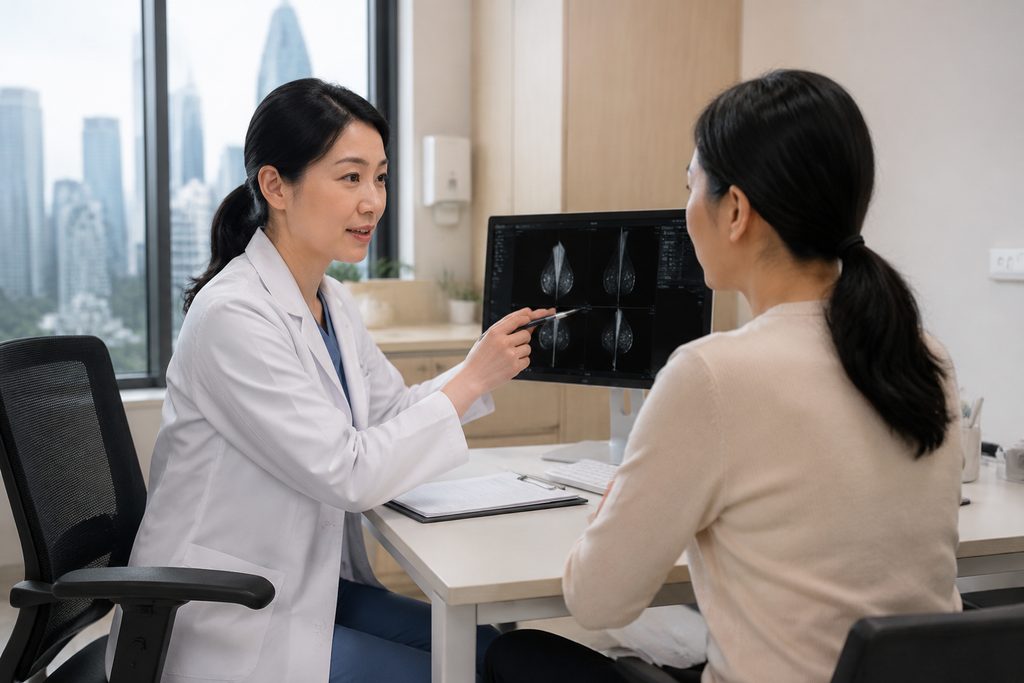
Have you ever put off a screening because the logistics felt heavier than the test itself? That hesitation is exactly what a women cancer screening package China is designed to remove. Our team coordinates breast, cervical, ovarian, thyroid, and lung screening across 340+ top-ranked hospitals in 37 cities. The process takes as little as one full day on the ground. But the real question isn’t whether the tests exist. It’s whether you can trust the machines, the radiologists reading your images, and the pathway that gets you from airport to results without losing a week of your life to confusion.
That trust gap is where most international patients stall. Let’s close it.
Cancer Screening for Women in China: The Short Answer
A coordinated women’s screening package in China typically costs between $400 and $1,800 depending on hospital tier, imaging depth, and whether you add genetic panels. That’s one-third to one-tenth of comparable private-pay screening in the United States or Western Europe. The catch: you cannot simply walk into a public hospital and expect English-speaking coordination. The infrastructure exists. The navigation layer usually doesn’t. That’s the part we handle.
But screening is not diagnosis. A clean scan is not a guarantee. And a flagged scan means you need a follow-up pathway — something we’ll address honestly below.
Who This Is Right For — and Who It Isn’t
Screening makes sense when you have no symptoms but want baseline imaging and bloodwork done efficiently, affordably, and with high equipment quality. It also fits women with a family history of breast or ovarian cancer who want a second-look scan or a more aggressive surveillance protocol than their home system offers.
Good candidates:
- Women aged 35–65 planning travel to China anyway, who want to bundle health checks into the trip
- Patients who’ve been quoted $3,000+ for a private full-body cancer screen at home
- Women with dense breast tissue who need ultrasound in addition to mammography
- Expats already living in China who want a structured, comprehensive screen rather than piecemeal tests
Who should not pursue this:
- Anyone with active symptoms — a lump, abnormal bleeding, unexplained weight loss. That’s not screening. That’s diagnostic workup, and it belongs in a hospital’s oncology department, not a checkup package.
- Women in active cancer treatment or within five years of treatment completion. Surveillance protocols differ from screening protocols. Mixing them up wastes money and causes false alarms.
- Anyone who cannot travel without significant medical support. Screening in China is logistically smooth, but it is not a substitute for ongoing care continuity at home.
Being clear about who shouldn’t come is part of doing this properly.
The Options, Compared
What does “screening” actually include? The term gets stretched. Here’s a real comparison of what’s available to foreign women in China, across three tiers.
| Option | Typical Inclusions | Price Range (USD) | Best For |
|---|---|---|---|
| Public Hospital Standard Package | Breast ultrasound, pelvic ultrasound, Pap smear, basic blood panel (tumor markers CEA/CA125/CA153), chest X-ray | $400–$800 | Budget-conscious patients with a bilingual companion handling registration and translation |
| International Department / VIP Package | Above plus mammography or breast MRI, thyroid ultrasound, low-dose lung CT, HPV DNA typing, more extensive tumor marker panel | $900–$1,500 | Women wanting English-speaking staff, faster queues, and same-day result consolidation |
| Private International Hospital Package | Comprehensive imaging suite, genetic risk assessment (BRCA optional), cardiology add-ons, Western-style report formatting | $1,500–$1,800+ | Patients with international insurance or those prioritizing a fully Western clinical environment |
Which column fits you? If you’re comfortable with a bilingual companion and want maximum value, the public hospital standard package delivers excellent imaging at the lowest cost. If you want fewer friction points and don’t mind paying for convenience, the international department tier is the sweet spot. The private tier is for patients who want JCI-accredited facilities with direct insurance billing — think United Family, Jiahui, or Parkway.
Is Cancer Screening Reliable in China?
This is the question every foreign patient asks, usually after reading a forum post from 2016. The honest answer: equipment quality at top-tier Chinese hospitals is world-class. Fudan-ranked hospitals operate the same Siemens, GE, and Philips imaging platforms you’d find at major US academic centers. The variance is in reading quality and protocol consistency — and that variance narrows dramatically when you stay within the top 5% of hospitals.
Consider volume. A radiologist at a major Chinese cancer center may read 80–120 breast ultrasounds per week. That repetition builds pattern recognition that lower-volume Western centers can’t match. A 2023 study published in The Lancet Regional Health – Western Pacific examined breast cancer screening outcomes across Asian populations and found that experienced Chinese radiologists achieved sensitivity rates comparable to Western benchmarks when using standardized BI-RADS classification. The key phrase is “experienced” — which is why hospital selection matters more than country selection.
Does that mean every screening in China is reliable? No. A package at an unranked private clinic with no academic affiliation is a gamble. We only coordinate with hospitals on the Fudan Top 100 list or JCI-accredited international facilities. That’s not marketing language. That’s the filter that makes the reliability question answerable.
Best Hospital for Female Cancer Checkup Beijing: What Actually Matters
If you search “best hospital for female cancer checkup Beijing,” you’ll get a list. But “best” is the wrong frame. The right frame is: which hospital has the strongest department for the specific screening you need, and can they serve a foreign patient efficiently?
In Beijing, the conversation usually starts with Peking Union Medical College Hospital (PUMCH). Its obstetrics and gynecology department consistently ranks among China’s top 10 in the Fudan specialty reputation rankings. The hospital’s international medical services department has decades of experience with foreign patients. Wait times for screening packages are longer than at private facilities, but the clinical depth is unmatched.
For breast imaging specifically, Cancer Hospital Chinese Academy of Medical Sciences (CICAMS) in Beijing runs one of the highest-volume breast diagnostic units in Asia. For thyroid screening, PUMCH’s endocrinology division is routinely ranked first nationally. The point: “best hospital” depends on which organ system concerns you most. That’s why our coordination starts with a phone call about your history, not a booking form.
Shanghai offers parallel depth. If you’re asking how much does full body cancer screening cost in Shanghai, the range at Zhongshan Hospital‘s international department or Huashan Hospital’s VIP clinic typically runs $800–$1,400 for a comprehensive women’s panel including low-dose CT and breast MRI. Shanghai’s advantage is smoother logistics for foreign patients — more English-speaking staff, more international experience, and a more navigable city for first-time visitors.
What It Costs: Breaking Down the Numbers
Let’s be specific about money, because vague pricing is how patients get surprised.
A standard women’s screening package at a top public hospital in Beijing or Shanghai, coordinated through the hospital’s international department, costs approximately $600–$1,000. That includes:
- Bilateral breast ultrasound: $60–$120
- Mammography (if age-appropriate or clinically indicated): $100–$200
- Pelvic/transvaginal ultrasound: $50–$100
- Thyroid ultrasound: $50–$100
- Pap smear with HPV DNA typing: $80–$150
- Core blood panel with tumor markers (CEA, CA125, CA153, CA199): $100–$200
- Low-dose chest CT (if included): $150–$300
- Physician consultation and report consolidation: $100–$250
Prices vary by hospital and case complexity. What’s not included: our coordination fee (from $300 for appointment coordination), bilingual companion services (from $300/day), airport transfer ($200 round-trip), and any follow-up biopsy or diagnostic imaging if something is flagged. That last point matters. Screening finds things. When it does, the follow-up pathway is a separate cost and a separate conversation.
For comparison, a similar comprehensive women’s cancer screen at a private US facility runs $2,500–$5,000 without insurance. In the UK privately, expect £1,500–£3,000. The cost advantage in China is real, but it comes with travel costs and the time investment of being abroad.
Practical Considerations: Records, Visas, and What Happens After
You’ll need your existing medical records. Bring prior mammograms, ultrasound images (not just reports), any biopsy pathology, and a list of current medications. Images matter more than reports — radiologists here want to compare prior films, not read someone else’s summary. If you don’t have prior imaging, say so upfront. It changes the baseline protocol.
Visa: for medical screening, you’ll apply for an S2 visa with supporting documentation from the hospital or coordination service confirming your appointment. The S2 is the short-stay category used for medical treatment and private affairs. Processing time varies by consulate. We provide the appointment confirmation letter, but we never guarantee visa approval — that decision belongs to the consular officer.
Payment: public hospitals in China require prepayment. Most international departments accept major credit cards, but not all accept foreign insurance directly. Private international hospitals like those on our private hospital directory often bill insurers directly. If you’re relying on insurance reimbursement, confirm your policy’s out-of-network coverage before booking flights.
Language: even at top hospitals, the registration desk, cashier, and imaging technicians may not speak English. The physician in the international department usually does. The gap is everything in between — which is why a bilingual companion changes the experience from exhausting to straightforward.
Follow-up: screening results are delivered as a written report, usually within 24–72 hours. If something is flagged, you’ll need to decide whether to pursue follow-up in China or take the report home. We can coordinate either path, but we don’t make the medical decision for you.
Frequently Asked Questions
Yes — but through the hospital’s international department or VIP channel, not the standard public registration system. Standard outpatient registration in Chinese public hospitals operates on a same-day queue system. Foreign patients cannot pre-book through that route. We coordinate directly with international departments to lock in your screening date before you travel. That’s the difference between a confirmed itinerary and a hope.
A comprehensive women’s panel at a top Shanghai hospital‘s international department runs $800–$1,400. That typically includes breast ultrasound plus mammography or MRI, pelvic and thyroid ultrasound, HPV DNA testing, tumor markers, and low-dose lung CT. Private international hospitals in Shanghai run $1,500–$1,800 for similar depth with a more Western clinical environment. Final quotes depend on your age, history, and which imaging your reviewing physician deems appropriate.
At Fudan-ranked top 100 hospitals, equipment and radiologist experience are comparable to major Western academic centers. The weak points are protocol consistency at lower-tier facilities and report formatting that may not meet Western documentation standards. We only coordinate with top-tier public hospitals and JCI-accredited private facilities, which removes most of that variance. No screening is perfectly reliable anywhere — false positives and false negatives exist in every system.
You’ll be referred for diagnostic follow-up — additional imaging, biopsy, or specialist consultation. This is not included in the screening package price. We can coordinate the follow-up pathway in China or prepare your records for follow-up at home. The decision is yours. What we don’t do is downplay findings or promise that everything will be fine. Abnormal results require proper diagnostic workup, full stop.
Yes, if you speak Mandarin or have a Chinese-speaking contact, you can navigate the public system yourself. It will take longer and involve more friction, but it’s possible. What a coordination service changes is speed, translation accuracy, and the elimination of logistical errors — wrong building, wrong queue, wrong prep instructions. For most foreign patients, the service fee buys back a day of time and a layer of stress.
Your Next Step
Screening in China is not a magic shortcut. It’s a high-quality, lower-cost option that works best when the logistics are handled by people who do this every day. We’re not a hospital, and we don’t diagnose anything. What we do is connect you with the right department at the right hospital, make sure your records are in order, and put a bilingual companion beside you from registration to results.
If you’re considering it, start with a conversation. Tell us your history, your concerns, and your timeline. We’ll tell you honestly whether this makes sense for you — and if it doesn’t, we’ll say so. That’s the whole job.
Ready to explore whether a women cancer screening package China fits your situation? Request a free consultation and we’ll walk through your options together. No pressure, no obligation — just a clear picture of what’s possible.
For more medical information and treatment options in China, visit chinamedservices.com (China Medical Services).
