Your Companion Day by Day: Navigating Cancer Treatment Cost in China
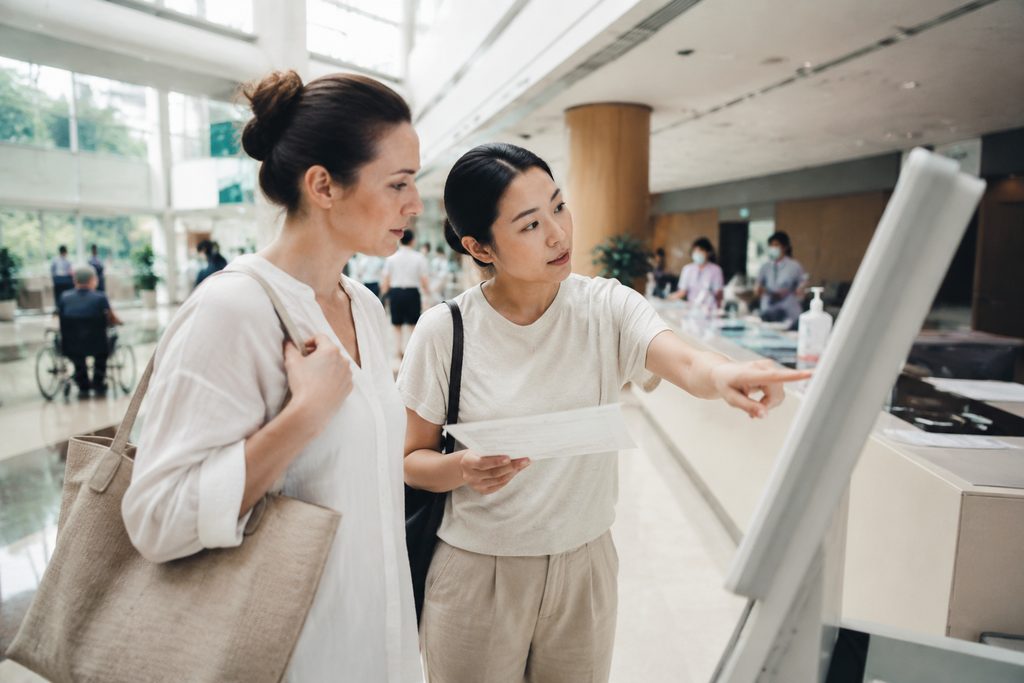
You have probably heard that getting medical care in China means long lines, language chaos, and unpredictable quality. The reality for international patients at top-tier hospitals is far more structured than that. When you understand the real cancer treatment cost in China and how the system actually works, the decision becomes less about fear and more about logistics. Our team coordinates care at 340+ top-ranked hospitals across 37 cities. We handle the parts that exhaust patients: document translation, appointment sequencing, and having a bilingual companion with you day by day.
Cancer care is expensive everywhere. In the United States, a single immunotherapy infusion can bill out above $30,000. In China, the same category of treatment at a top public hospital often lands between $6,000 and $12,000 per cycle. That gap changes what is possible for families. But the savings only matter if the process works. And the process has rules.
How This Actually Works, Step by Step
Most international patients assume they can email a hospital and book a surgery slot for next month. That is not how Chinese public hospitals operate. The sequence is different, and knowing it in advance saves weeks of frustration.
First, you send us your existing medical records: pathology reports, imaging files, blood work, current medication list. We translate these into Chinese and route them to the appropriate department at hospitals that match your diagnosis. For oncology, that often means hospitals ranked among China’s top 10 for oncology in the Fudan specialty reputation rankings. The written second opinion service costs from $300 to $500 and returns a structured analysis of your case, treatment direction, and whether coming to China makes clinical sense.
Second, you speak with the Chinese specialty team by video. This costs $500 to $800 for a top-specialist consultation. The doctor reviews your translated records, asks about symptoms and treatment history, and tells you directly what they would recommend. No travel required yet. If the team believes surgery or a specific protocol is appropriate, they will say so. If not, they will say that too.
Third, you decide. If you move forward, we coordinate the visa documentation, hospital registration, and arrival logistics. You apply for an S2 visa with the hospital invitation letter and treatment plan as supporting documents. Your family members apply for S2 as well. Processing typically takes one to three weeks depending on the consulate.
Fourth, you arrive. This is where the companion service matters most. A bilingual medical companion meets you at the hospital, handles registration, queues, payment counters, and sits with you during consultations. From $300 per day. You are never alone trying to decode a hospital campus that handles over 10,000 outpatient visits daily.
What Cancer Treatment Cost in China Actually Looks Like
Let us put numbers on the table. These are reference ranges based on publicly reported hospital pricing and our coordination experience. Final quotes vary by hospital tier, drug regimen, and case complexity.
| Treatment Category | China Top Public Hospital (USD) | US Average (USD) |
|---|---|---|
| Radical gastrectomy (stomach cancer surgery) | $8,000 – $18,000 | $60,000 – $120,000 |
| Lobectomy (lung cancer surgery, VATS) | $10,000 – $20,000 | $50,000 – $90,000 |
| Immunotherapy (per cycle, PD-1 inhibitor) | $3,000 – $8,000 | $15,000 – $30,000 |
| Proton therapy (full course) | $40,000 – $70,000 | $150,000 – $250,000 |
| PET-CT scan | $800 – $1,500 | $4,000 – $7,000 |
These figures explain why patients from the Middle East, Southeast Asia, and increasingly North America look at Chinese hospitals. The cost differential is structural, not a discount gimmick. Lower labor costs, state-subsidized hospital infrastructure, and domestic pharmaceutical production compress prices across the board.
But price is not the only factor. Volume is the other one. Fuwai Hospital in Beijing performs more than 14,000 cardiac surgeries annually. Top oncology centers in Shanghai and Guangzhou treat cancer volumes that most Western hospitals will not see in a decade. Volume drives proficiency. Proficiency drives outcomes.
A Realistic Timeline
People underestimate how long the pre-arrival phase takes. Here is what a typical oncology case looks like when everything moves without major delays.
| Stage | What Happens | Duration |
|---|---|---|
| Day 1–7 | Record collection, translation, hospital matching | 1 week |
| Day 8–14 | Written second opinion delivered | 1 week |
| Day 15–21 | Video consultation with specialty team | 1 week |
| Day 22–35 | Decision, visa application with hospital documents | 1–3 weeks |
| Day 36–42 | Arrival, first in-person consultation, additional imaging | 1 week |
| Day 43–60 | Treatment plan finalized, admission or first cycle scheduled | 2–4 weeks |
Notice the gap between arrival and treatment start. Chinese public hospitals require in-person evaluation before scheduling surgery or inpatient admission. The remote consultations shorten that process by confirming which department is appropriate, but they do not replace the face-to-face step. Patients who plan for this are fine. Patients who expect to land and have surgery the next week are not.
What Can Go Wrong — and What Happens Then
Let us be direct about failure modes. They exist, and you should know them before spending money.
The hospital reviews your records and says your case is too advanced for the proposed treatment. This happens. The recourse is a second opinion from a different specialty team, or a shift in goal from curative to palliative or supportive care. Our coordination fee for hospital appointments starts at $300, and if the appointment cannot be secured as ordered, that fee is refunded in full. The medical opinion itself is not refundable — it was delivered.
Your visa application is delayed or denied. We cannot guarantee visa approval for anyone. What we can do is provide complete, accurate supporting documents from the hospital and advise on the correct visa category. For medical treatment, that is the S2 visa, not the M visa. The M visa is for commercial and trade activities. Using the wrong category creates problems at the border.
The treatment plan changes after arrival. Additional imaging reveals something the remote review could not see. The hospital adjusts the protocol. This is normal medicine, not a failure. Your companion helps you understand the change in real time, and we coordinate any revised scheduling.
Choosing Between Public, Private, and TCM Hospitals
Not every cancer patient should go to a giant public hospital. The right choice depends on your priorities: cost, speed, language support, or integrative care.
Top public hospitals like those on the Fudan Top 100 list offer the deepest clinical expertise and the lowest prices. But they are crowded, bureaucratic, and almost entirely Chinese-speaking. You need a companion. The international VIP departments within these hospitals provide English-speaking staff and faster scheduling, at roughly 1.5 to 2 times the standard price. That premium is often still far below Western costs.
Private international hospitals such as United Family, Jiahui, and Parkway offer JCI accreditation, English-speaking physicians, and direct insurance billing. They are more expensive than public hospitals but still competitive with Western private care. For patients who prioritize comfort and communication over absolute lowest cost, this is the right trade-off. See the private hospital options for details.
Then there is TCM. The question is traditional Chinese medicine effective for chronic pain comes up often, particularly from patients managing cancer-related pain, neuropathy, or post-treatment fatigue. The evidence is mixed but real. Acupuncture has shown measurable benefit for chemotherapy-induced nausea and certain pain syndromes. Herbal formulas are widely used for appetite recovery and energy support. TCM is not a replacement for oncology treatment. It is a complement. The TCM hospital network we work with focuses on exactly this supportive role.
Practical Considerations: Records, Visa, Payment, Follow-Up
Before you book anything, organize your records. Chinese specialists expect complete documentation: original pathology slides or blocks if available, DICOM files from imaging, chronological treatment summaries. Incomplete records delay everything.
Visa timing matters. The S2 visa covers short stays for medical treatment and private affairs. For treatment exceeding 180 days, the S1 category applies. Apply early. Consulates in some regions take three weeks or more. Your family members need their own S2 applications with proof of relationship.
Payment at public hospitals is prepaid. You deposit funds at admission, and the hospital deducts as services are delivered. Insurance reimbursement happens after the fact — you pay first, then claim. Private international hospitals often bill insurers directly. Verify your policy before you travel.
Language is the quiet killer. Even at hospitals with international departments, the moment you leave that floor, everything is Chinese: the pharmacy, the imaging center, the billing window, the cafeteria. A bilingual companion is not a luxury. It is the difference between a manageable day and a lost one.
Follow-up at home is easy to overlook. Your Chinese oncologist will give you a treatment summary and medication plan. You need a local physician willing to continue care. Coordinate this before you leave.
Frequently Asked Questions
For a typical surgical oncology case, budget $20,000 to $50,000 for treatment, plus $3,000 to $6,000 for flights, accommodation, visa fees, and companion services over a 3 to 6 week stay. Complex cases with immunotherapy or targeted therapy run higher. Every case is different, and the hospital provides a formal quote after reviewing your records.
Yes. Executive health screening packages at Beijing hospitals can be coordinated in advance through their international departments. Packages typically include imaging, blood panels, cardiology assessment, and specialist review. The book medical checkup package Beijing process works through us: you choose the hospital and package level, we confirm availability and pricing, and you arrive with a scheduled appointment. Expect to pay $500 to $2,500 depending on depth.
You need the correct visa category. For medical treatment, that is the S2 visa, annotated for medical purposes. Entering on a tourist visa and then seeking inpatient treatment can create legal complications. The China medical tourism visa for patients is not a separate visa type — it is the S2 with medical documentation. We provide the hospital invitation letter and treatment plan to support your application.
We do not coordinate solid-organ transplants for international patients. Organ transplantation in China is governed by strict regulations, and donor organ allocation follows national protocols that do not prioritize foreign patients. We advise patients seeking transplant care to consult their home country transplant center first. Our services focus on oncology, cardiology, orthopedics, and other specialties where international coordination is straightforward.
Shanghai has 18 hospitals on the Fudan Top 100 list. For oncology, Zhongshan Hospital and Fudan University Shanghai Cancer Center are the two names that come up most often. Both have international departments with English-speaking coordinators. The Shanghai hospital guide breaks down options by specialty and includes both public and private choices. For patients who want JCI-accredited care with Western-style communication, Jiahui and Parkway are the private alternatives.
Your Next Step
You now have a realistic picture of what treatment in China costs, how the timeline works, and where the risks sit. The decision to travel for cancer care is never easy, but it should be informed. Our team at China Medical Services handles hospital matching, document translation, appointment coordination, and bilingual companionship. We do not practice medicine, and we do not promise outcomes. We make the logistics manageable so you can focus on the treatment itself.
Start with a written second opinion. Send your records. See what the Chinese specialists say. If the answer makes sense, we will be with you every day after that.
For more medical information and treatment options in China, visit chinamedservices.com (China Medical Services).
