Is It Too Late for My Cancer to Be Treated? Understanding Advanced-Stage Options in China
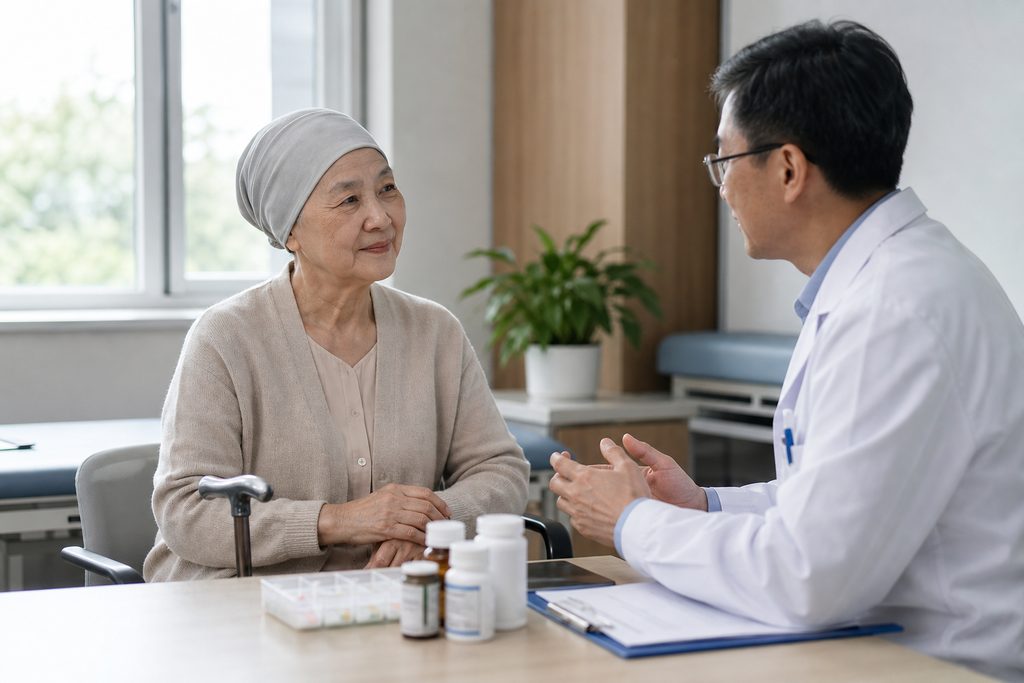
“Is it too late for my cancer to be treated?” That question lands differently at 2 a.m. than it does in a clinic. You are not really asking about tumor staging. You are asking whether anyone will still take your case seriously. The honest answer is that treatment depends less on the stage label and more on the specific biology of your disease, your organ function, and the treatment lines you have already received. Some stage 4 cancers are controlled for years. Others move fast. The stage alone rarely decides anything.
Our team at China Medical Services reviews cases from patients who have been told elsewhere that nothing more can be done. Sometimes that is accurate. Often it is not. China’s top oncology centers handle enormous patient volumes, which means exposure to rare presentations and late-stage cases that smaller systems see once a year. That volume changes how doctors think about resectability, radiation dosing, and off-label combinations.
This article explains what late-stage treatment actually involves in China, what it costs, which hospitals matter for advanced disease, and where the process breaks down. No promises. Just the landscape as it is.
How This Actually Works, Step by Step
You do not fly to Shanghai and walk into a hospital expecting a treatment plan. The sequence matters.
First, you send your existing records. That means pathology reports, imaging files (DICOM format preferred), surgery notes, chemotherapy regimens with dates, radiation summaries, and current lab work. If documents are not in English or Chinese, translation is required before any hospital will review them. Most Chinese hospital international departments accept English, but non-English records still need certified translation.
Second, a specialist reviews the file. The review is usually written, sometimes video. The oncologist looks at your molecular profile — EGFR, ALK, ROS1, HER2, MSI status, PD-L1 expression — and compares it against what is available in China. The written second opinion typically costs $300–500 from a top-tier hospital expert, and it is for reference only, not a prescription.
Third, if the reviewing doctor sees a viable path, you move to a video consultation. That costs $500–800 with a top specialist. You discuss symptoms, treatment goals, and whether travel is even warranted. Some patients stop here. The written opinion alone clarifies that no meaningful option exists, and that knowledge is worth the cost.
Fourth, if travel makes sense, you apply for an S2 visa with supporting documents from the hospital. Processing takes one to three weeks in most countries. Then you arrive, complete in-person evaluation, and only after face-to-face assessment does any hospital schedule surgery, radiation, or inpatient therapy. Public hospital outpatient clinics cannot be booked in advance from overseas. That is a hard rule.
Late Stage Cancer Treatment Cost China: What the Numbers Actually Look Like
The late stage cancer treatment cost China patients actually pay depends on three variables: the hospital tier, the treatment modality, and whether you go through the standard public channel or the international VIP channel. Most foreign patients use the international channel, which runs 1.5 to 2 times the standard price but includes English coordination and faster specialist access.
Immunotherapy is the most common question. PD-1 inhibitors like sintilimab, toripalimab, and camrelizumab are domestically manufactured in China and priced far below Western equivalents. A single cycle of domestic PD-1 therapy in a Chinese public hospital can run from $800 to $2,500, depending on the drug and dose. Imported pembrolizumab or nivolumab costs more — typically $4,000 to $8,000 per cycle. Over a year of treatment, that gap adds up.
Targeted therapy follows a similar pattern. Chinese-approved generics for EGFR and ALK inhibitors cost a fraction of US prices. Osimertinib in China, for example, is covered by national medical insurance for eligible patients, but foreign patients without Chinese insurance pay the self-pay price, which still lands far below US list prices.
Radiation for advanced disease — stereotactic body radiation therapy, or SBRT, for oligometastatic lesions — runs $5,000 to $12,000 per course in top Chinese centers. Surgery for a solitary brain or lung metastasis, when indicated, can range from $8,000 to $25,000. None of these are fixed quotes. They are ranges, and they shift with hospital, case complexity, and length of stay.
| Treatment Modality | China (Self-Pay, International Channel) | US Approximate Range |
|---|---|---|
| Domestic PD-1 immunotherapy (per cycle) | $800–$2,500 | $10,000–$20,000 |
| Imported PD-1/PD-L1 (per cycle) | $4,000–$8,000 | $15,000–$30,000 |
| SBRT radiation course | $5,000–$12,000 | $30,000–$60,000 |
| Metastasis resection surgery | $8,000–$25,000 | $60,000–$150,000 |
| Written second opinion (top specialist) | $300–$500 | $500–$2,000 |
These figures are estimates based on published hospital price lists and patient-reported costs. They vary by hospital and case complexity. Always confirm with the specific institution before committing.
Can Stage 4 Cancer Be Treated in China? What the Hospitals Actually Offer
Can stage 4 cancer be treated in China? Yes — but “treated” does not mean “cured.” It means managed, controlled, or sometimes converted to a less aggressive state. Chinese oncology centers are particularly strong in three areas relevant to advanced disease.
First, high-volume surgical teams. A thoracic surgeon at a top Shanghai or Guangzhou center may perform 400 to 600 lung cancer resections a year. That repetition matters when deciding whether a stage 4 patient with a solitary adrenal or brain metastasis is a surgical candidate. Western guidelines often say no. Chinese tumor boards sometimes say yes, with careful patient selection.
Second, domestic immunotherapy access. China has approved more than a dozen PD-1/PD-L1 inhibitors, many with no Western equivalent. For a patient who has exhausted pembrolizumab and nivolumab, a different domestic checkpoint inhibitor is not magic — but in some cases it is a rational next line, especially when combined with anti-angiogenic agents like anlotinib, which is also China-developed.
Third, interventional radiology. Hepatic arterial infusion chemotherapy, or HAIC, for liver-dominant metastatic disease is used far more aggressively in China than in the US or Europe. The same applies to transarterial chemoembolization and microwave ablation. These are not cures. They are disease-control tools that can buy meaningful time when systemic options are thinning.
The honest limit: if your disease is progressing rapidly on multiple lines of therapy, no hospital in any country will reverse that trajectory. What changes is the speed of evaluation and the willingness to try combinations that Western insurers would never approve.
Best Oncology Hospitals in Shanghai for Advanced Cancer
Shanghai concentrates more top-tier oncology capacity than almost any city outside Beijing. If you are asking about the best oncology hospitals in Shanghai for advanced cancer, three names consistently appear in China’s Fudan University specialty rankings for oncology and thoracic surgery.
Fudan University Shanghai Cancer Center is the highest-volume dedicated cancer hospital in the city. Its departments cover the full spectrum — medical oncology, radiation oncology, thoracic surgery, hepatobiliary surgery — and it runs one of China’s largest clinical trial programs for solid tumors. For a patient with advanced disease, trial access alone can be worth the trip.
Zhongshan Hospital, affiliated with Fudan University, is the reference center for liver cancer and complex hepatobiliary surgery. Its liver surgery volume is among the highest in the world. For metastatic disease confined to the liver, this is where many international patients end up.
Ruijin Hospital, affiliated with Shanghai Jiao Tong University, is known for hematologic malignancies and for aggressive multidisciplinary management of complex cases. Its oncology department is not as large as Fudan Cancer Center’s, but its tumor boards are rigorous.
See our oncology department rankings across all 45 specialties for a fuller picture, or browse Shanghai hospital profiles by specialty.
A Realistic Timeline
| Stage | What Happens | Realistic Duration |
|---|---|---|
| Day 1–7 | Records collected, translated, formatted for review | 1 week |
| Week 2–3 | Written second opinion from top specialist | 1–2 weeks |
| Week 3–5 | Video consultation, treatment feasibility discussion | 1–2 weeks |
| Week 5–8 | S2 visa application with hospital invitation documents | 1–3 weeks |
| Week 8–10 | Arrival, in-person evaluation, staging scans | 3–7 days |
| Week 10–12 | Tumor board review, treatment plan finalized | 1–2 weeks |
| Week 12+ | Treatment begins (surgery, radiation, or systemic therapy) | Varies |
People forget the translation step. They forget that visa processing does not start until the hospital issues an invitation letter. And they forget that no Chinese public hospital will schedule surgery from overseas. The in-person evaluation is non-negotiable. Plan for eight to twelve weeks from first contact to first treatment, and be pleasantly surprised if it moves faster.
What Can Go Wrong — and What Happens Then
The most common failure is records. Incomplete pathology, missing molecular testing, imaging files that cannot be opened. A review cannot proceed without them. The fix is simple: request the full DICOM files from your imaging center, not the printed report. Ask your oncologist for a complete treatment summary with dates and doses. If your records are in a language other than English or Chinese, budget for certified translation.
Second failure: the reviewing doctor says no. It happens. The specialist reviews the file and concludes that no meaningful intervention exists in China that you cannot access at home. That written opinion costs $300–500, and it may be the most valuable money you spend — it prevents a $10,000 trip that ends in the same answer.
Third failure: you arrive and your condition has changed. Disease progresses between the video consult and the in-person evaluation. The hospital re-stages you. The plan changes or is cancelled. This is not bait-and-switch. It is biology. You should have a contingency plan for this possibility, including medical evacuation insurance and a clear understanding of what happens to your deposit.
Fourth failure: language and logistics. A top Chinese hospital sees 10,000+ outpatient visits a day. Without Chinese language ability, you will not navigate registration, payment, or imaging queues alone. A bilingual medical companion from $300 per day is not a luxury in this setting. It is the difference between being seen and being lost.
Medical Tourism for Cancer Treatment China Packages: What a Package Actually Includes
Search for medical tourism for cancer treatment China packages and you will find glossy websites promising airport pickup, five-star recovery suites, and “guaranteed” specialist access. Read the fine print. Most packages are logistics bundles — they cover transport, accommodation, interpretation, and appointment coordination. They do not cover hospital treatment charges. They do not guarantee a specific surgeon or a specific treatment date.
A legitimate package should include: records translation, hospital selection advice, appointment coordination through the hospital’s official international department, visa invitation support, airport transfer, and daily interpretation during hospital visits. Prices for coordination services start around $300 for appointment booking and run to $5,000–8,000 for full VIP end-to-end coordination over several weeks.
What a package should never include: promises of a specific clinical outcome, claims of priority access outside the hospital’s official channels, or pricing that bundles treatment fees into a single non-refundable payment before any doctor has reviewed your file. If a provider quotes you a package price before a specialist has seen your records, walk away.
One practical note on costs: any consultation fee you pay for a remote second opinion or video consult is credited in full toward on-the-ground coordination if you proceed to travel within 90 days. That credit applies to the coordination service only — never to hospital treatment charges. It is a way to de-risk the evaluation phase without committing to the full journey.
Practical Considerations: Records, Visa, Payment, and Follow-Up
Records. You need pathology slides or blocks, complete imaging on DICOM, a chronological treatment summary, and current labs. If you have had next-generation sequencing, include the full report, not just the first page. The molecular profile is often the single most important document for late-stage decisions.
Visa. Foreign patients traveling to China for medical treatment use the S2 visa, which covers short stays for private affairs including medical care. Family members accompanying you also apply for S2. Stays over 180 days require S1. The hospital’s international department must issue an invitation letter before you apply. M visas are for commercial trade and are not appropriate for medical treatment.
Payment. Chinese public hospitals require prepayment for inpatient care. You deposit funds at admission and the hospital draws down against that balance. International insurance is usually reimbursement-based — you pay first, then claim. Private international hospitals like United Family or Jiahui may bill insurers directly. Confirm before you choose.
Language. International departments at top public hospitals have English-speaking coordinators, but the moment you leave that department for imaging, lab work, or pharmacy, you are in a Chinese-language environment. Budget for a bilingual companion on hospital days.
Follow-up at home. The Chinese hospital will provide a discharge summary in English if you request it. Your home oncologist needs that document to continue care. Plan for a handoff call between the Chinese team and your local doctor before you leave, if possible.
Frequently Asked Questions
Not necessarily, but expectations matter. If your disease is refractory to standard agents, the realistic goal in China is disease control, symptom relief, or trial access — not cure. A written second opinion is the cheapest way to find out if a Chinese center sees something your current team has not tried.
Domestic PD-1 inhibitors run $800–$2,500 per cycle on the international channel. Imported checkpoint inhibitors cost $4,000–$8,000 per cycle. Total annual cost depends on dosing schedule and combination therapy. These are ranges, not quotes.
Yes, if the reviewing specialist sees a feasible treatment path. The hospital will re-stage you with its own imaging and labs before committing to any plan. No hospital will guarantee admission or a specific treatment date before in-person evaluation.
That happens, and it is a legitimate outcome. You will have paid for the written opinion or video consult, but you will have avoided the far larger cost of travel and false hope. The evaluation fee is not refundable, but it is the cheapest way to get an honest answer from a high-volume center.
Yes. Accompanying family members apply for the S2 visa under the same private affairs category. Each person needs their own application and supporting documents. The hospital invitation letter should list all travelers.
Your Next Step
The question “is it too late” deserves an evidence-based answer, not a guess. If you have records and a clear treatment history, the fastest way to get clarity is a written second opinion from a Chinese oncology specialist. Our team at China Medical Services coordinates that review — we handle records transfer, translation, and hospital communication. We do not practice medicine, and we do not promise outcomes. What we do is connect you with doctors who see late-stage cases at volumes that most Western centers never encounter. If you want to know whether China has something to offer your specific situation, send your records and ask.
Start with the evaluation. The rest can wait.
For more medical information and treatment options in China, visit chinamedservices.com (China Medical Services).
