Is Cancer Treatment Safe in China? A 2025 Safety and Quality Guide
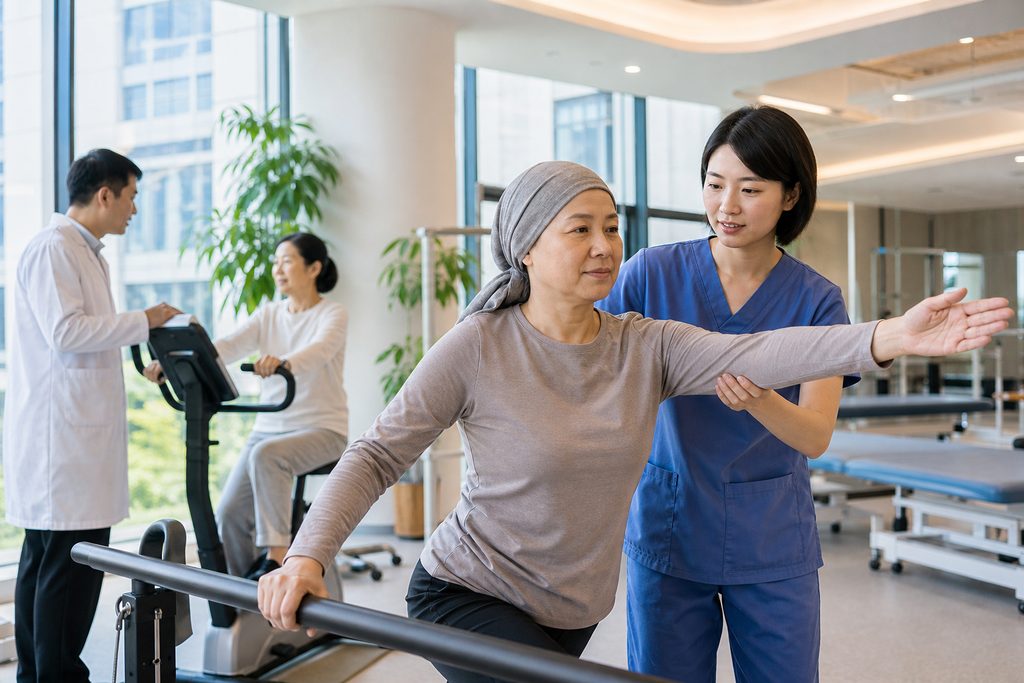
When 42-year-old Michael first heard the diagnosis, he had no idea where to start looking for treatment. Stage II colorectal cancer. His insurance covered care in Texas, but the out-of-pocket estimate for surgery and chemotherapy still ran to $140,000. A colleague mentioned medical tourism. Michael started searching. His first query: “Is cancer treatment safe in China?”
The short answer is yes — with significant caveats. China’s top-tier cancer centers now perform at levels comparable to major Western institutions for many common malignancies. The National Cancer Center of China reports 5-year survival rates for breast cancer above 82%, cervical cancer above 67%, and certain pediatric leukemias above 90%. But “China” is not a monolith. The gap between a top-ranked center in Beijing and a provincial hospital in a third-tier city can be enormous. Safety depends almost entirely on where you go and how you navigate the system.
Is Cancer Treatment Safe in China: The Short Answer
Yes, at accredited top-tier hospitals, cancer treatment in China meets international safety standards. The country has over 35,000 hospitals, but only the top 5% — roughly 340+ facilities ranked by Fudan University’s hospital rankings or accredited by Joint Commission International (JCI) — deliver care that most Western patients would recognize as safe and modern. These hospitals use the same chemotherapy protocols, radiation equipment, and surgical techniques found in the US and Europe. The key is choosing correctly. A patient who walks into a random hospital without vetting faces real risks: outdated protocols, language barriers, and variable infection control.
That’s the honest picture. The system rewards informed navigation.
Who This Is Right For — and Who It Isn’t
International patients who benefit most from Chinese cancer care typically share a few characteristics. They have a confirmed diagnosis with imaging and pathology reports already completed. They are stable enough to travel. They are seeking either a second opinion, a specific surgical procedure, or a treatment plan they can afford. Many come from countries where wait times stretch past 90 days or where certain therapies simply are not available.
Good candidates for cancer treatment in China include:
- Patients with solid tumors requiring surgery — lung, liver, gastric, colorectal, esophageal — where Chinese surgeons perform very high annual case volumes
- Patients seeking proton therapy or heavy ion therapy, which China offers at a fraction of US prices
- Patients who have exhausted first-line options at home and want access to clinical trials or CAR-T therapies
- Patients with a clear treatment protocol already defined, who need execution rather than diagnosis
Who should not pursue this route:
- Patients without a confirmed diagnosis or with unstable vital signs
- Patients requiring emergency intervention
- Patients in late-stage palliative care where travel would impose unnecessary suffering
- Patients who cannot manage the logistical complexity without local support
Being explicit about exclusions matters. We have turned away patients whose conditions made travel unsafe. Any reputable coordinator should do the same.
The Options, Compared
When foreign patients consider cancer treatment in China, they are really choosing between three hospital tiers. The differences are substantial — in cost, language support, and clinical sophistication.
| Factor | Public Top-Tier (Fudan Top 100) | Private International Hospitals | US/EU Benchmark |
|---|---|---|---|
| Typical cost for colorectal surgery + 6 cycles chemo | $25,000–$45,000 | $60,000–$90,000 | $120,000–$180,000 |
| English-speaking staff | Limited; interpreter needed | Standard | Standard |
| JCI accreditation | Some (roughly 100+ across China) | Most major brands | Standard |
| Annual surgical volume for major cancers | Very high (1,000+ cases/year at top centers) | Moderate | Moderate to high |
| Direct insurance billing | Rare; prepay then reimburse | Common | Standard |
| Wait time for surgery after consultation | 1–3 weeks (international/VIP channel) | 1–2 weeks | 4–12 weeks |
Public top-tier hospitals offer the best clinical value. The Fudan-ranked institutions — concentrated in Beijing, Shanghai, and Guangzhou — handle case volumes that few Western centers match. Fuwai Hospital performs over 14,000 cardiac surgeries annually; similar volume dynamics apply in oncology. High volume correlates with better outcomes for complex procedures. Private international hospitals like United Family and Jiahui provide Western-style comfort and English fluency, but at roughly double the public hospital price. They are the right choice for patients who prioritize convenience over cost savings.
What “Safety” Actually Means in Chinese Cancer Care
Safety is not a single metric. It breaks down into four measurable components: clinical outcomes, regulatory oversight, facility accreditation, and medication quality. Each deserves scrutiny.
Clinical outcomes at top centers are published and peer-reviewed. The Chinese Journal of Cancer and international journals regularly feature survival data from institutions like Fudan University Shanghai Cancer Center and Peking University Cancer Hospital. For nasopharyngeal carcinoma — a cancer where China leads the world — 5-year survival at major centers exceeds 80%. For liver cancer, Chinese surgeons perform more resections annually than any other country, with 5-year survival rates at top centers comparable to international benchmarks.
Regulatory oversight comes from the National Health Commission and the National Medical Products Administration. Both have tightened significantly since 2016. Chemotherapy drugs sold in China must meet Chinese Pharmacopoeia standards, which align closely with USP and EP standards. Counterfeit medication was a problem two decades ago. It is rare in accredited urban hospitals today.
But here is the caveat that matters: accreditation is voluntary. Only about 100 Chinese hospitals hold JCI accreditation. The Fudan ranking identifies clinical excellence, but not all Fudan-ranked hospitals have JCI certification. The safest approach is to select a hospital that has either JCI accreditation or a documented international patient program with English-language protocols.
How Much Does Cancer Treatment Cost in China?
The cancer treatment cost China patients actually pay depends on hospital tier, cancer type, and stage. Ranges below reflect 2025 pricing at top-tier public hospitals, excluding travel and lodging.
- Chemotherapy (per cycle): $800–$3,000 depending on regimen. Immunotherapy agents like PD-1 inhibitors cost more — $2,000–$5,000 per cycle for domestically produced options, significantly less than US prices for the same class of drugs.
- Radiation therapy (full course): $8,000–$20,000 for IMRT. Proton therapy runs $30,000–$60,000, versus $100,000+ in the US.
- Surgery (major resection): $12,000–$30,000 for liver, lung, or colorectal procedures at Fudan-ranked hospitals.
- CAR-T therapy: $70,000–$120,000 in China versus $400,000–$500,000 in the US. Several Chinese CAR-T products are now approved and commercially available.
These figures vary by hospital and case complexity. They cover the medical procedure itself. They do not include the international/VIP channel coordination fee, which typically adds 50–100% to the base price at public hospitals. That fee buys English-speaking staff, priority scheduling, and a private room. It is not optional for most foreign patients.
What about how much is chemotherapy in Shanghai specifically? Shanghai’s top cancer centers — Fudan University Shanghai Cancer Center, Ruijin Hospital, and Zhongshan Hospital — charge between $1,000 and $2,500 per cycle for standard regimens. Targeted therapies and immunotherapies push higher. The city’s cost of living for a month of treatment adds roughly $1,500–$2,500 for accommodation and food.
Practical Considerations: Records, Visas, Payment, and Follow-Up
Documentation comes first. Chinese oncologists will not treat a patient without complete records: pathology slides, imaging files (DICOM format), surgical notes, and a detailed treatment history. Patients should request their full medical record from their home hospital before contacting any Chinese facility. Pathology slides often need to be re-reviewed in China, which can add 1–2 weeks to the process.
Visas are straightforward but specific. Foreign nationals seeking medical treatment in China apply for an S2 visa, annotated for medical purposes. Accompanying family members apply for the same category. The S2 allows stays of up to 180 days. Treatment beyond that requires an S1 visa. Approval requires an invitation letter from the treating hospital and supporting medical documents. We never guarantee visa approval — that decision rests solely with the Chinese embassy or consulate.
Payment at public hospitals is prepaid. Patients deposit funds upfront, and treatment draws against the balance. Insurance reimbursement happens after the fact. Private international hospitals often bill insurers directly, which simplifies the process considerably for insured patients.
Language is the single biggest practical barrier. Even at top public hospitals, most nurses and many junior doctors speak limited English. A bilingual medical companion — someone who handles registration, queueing, payment, and translation — costs from $300 per day and transforms the experience. Without one, a foreign patient can spend hours lost in corridors.
Follow-up after returning home requires planning. Chinese oncologists will provide a written treatment summary and recommendations for ongoing care. But they cannot prescribe medications abroad. Patients must transfer their care to a local oncologist, who may or may not agree with the Chinese treatment plan. This handoff is where many medical tourism experiences break down.
JCI Accredited Cancer Centers in China: What the Certification Means
JCI accreditation is the closest thing to a universal safety signal for international patients. The Joint Commission International evaluates hospitals on over 1,000 measurable standards: infection control, medication safety, patient rights, surgical protocols, and staff qualifications. A hospital that holds JCI accreditation has passed an audit that most Chinese hospitals never attempt.
Roughly 100 hospitals in China currently hold JCI accreditation. The list includes major private international hospitals — United Family facilities in Beijing, Shanghai, and Guangzhou; Jiahui International Hospital in Shanghai; Raffles Hospital in multiple cities — and a growing number of public hospital international departments. For cancer specifically, several JCI-accredited facilities offer comprehensive oncology programs with English-speaking staff and direct insurance billing.
But JCI is not the only quality signal. The Fudan University hospital rankings, published annually, assess clinical reputation and research output across 45 specialties. For oncology, the Fudan specialty ranking identifies the top 10 cancer centers in China. These rankings matter because they reflect peer assessment by Chinese specialists who know the system from the inside. A hospital that appears on the Fudan oncology list is, by definition, among the best in the country for cancer care.
Patients searching for the best cancer hospital in Beijing will find several names consistently at the top: Peking Union Medical College Hospital, Peking University Cancer Hospital, and the Cancer Hospital Chinese Academy of Medical Sciences. Each has an international patient department. Each handles thousands of cancer cases annually. Each publishes outcomes data in peer-reviewed journals.
For medical tourism cancer treatment China, the decision framework is simple. Start with the Fudan specialty ranking for your cancer type. Cross-reference with JCI accreditation. Then verify that the hospital has an international patient program with English-language support. If all three align, the safety profile is solid.
Our database of top-ranked hospitals and specialty-specific rankings provides a starting point for this research.
Frequently Asked Questions
At top-tier accredited hospitals, yes — for most common cancers. The protocols, drugs, and equipment are equivalent. The difference is consistency. In the US and Europe, a patient can walk into almost any major hospital and expect a baseline standard of care. In China, that baseline exists only at the top 5% of facilities. Choosing the wrong hospital is the real risk.
Chinese hospitals have internal complaint and medical dispute processes. But foreign patients have limited legal recourse compared to Western systems. Malpractice litigation in China is difficult for foreigners, and damages are typically far lower than US awards. The practical safeguard is choosing a hospital with international accreditation and a track record of treating foreign patients. Some international hospitals carry liability insurance that covers foreign patients.
For standard regimens, yes. Cisplatin, paclitaxel, 5-FU, oxaliplatin — the workhorse drugs are identical. China also manufactures many generic versions at lower cost. For newer targeted therapies and immunotherapies, the situation is more complex. Some drugs approved in the US are not yet approved in China, and vice versa. Chinese hospitals now offer several domestically developed PD-1 inhibitors that are not available in the West. Patients should verify that their specific prescribed drug is available before committing to travel.
Rarely for public hospitals. Most Western insurers require upfront payment and reimburse after the fact. Some international insurers have direct billing arrangements with private international hospitals in China — United Family, Jiahui, Parkway, Raffles. Patients should contact their insurer before treatment to confirm coverage for overseas cancer care. Many policies exclude it entirely.
For surgery alone, plan on 3–4 weeks: one week for pre-operative evaluation, the procedure, and two weeks of recovery before flying. For chemotherapy, treatment cycles typically run 3–6 months, though some patients return home between cycles. Radiation therapy requires 5–7 weeks of daily treatment. These timelines drive visa planning — the S2 visa covers up to 180 days, which accommodates most treatment plans.
Your Next Step
Cancer treatment in China is safe when patients choose carefully. The top-tier hospitals deliver outcomes comparable to Western centers at a fraction of the cost. The risk lies in navigation, not medicine. That is where we come in. China Medical Services maintains a database of 340+ top-ranked hospitals across 37 cities, and our team helps international patients identify the right facility, coordinate appointments, and navigate the system on the ground. We are not a hospital. We do not diagnose or treat. We connect you with the specialists who do. If you are weighing cancer treatment options in China, start with a conversation. Request a free consultation through our patient services page and we will help you understand whether this path makes sense for your specific diagnosis.
The decision to seek cancer care abroad is never easy. But with the right information and the right support, it can be a decision that saves your life — and your savings.
For more medical information and treatment options in China, visit chinamedservices.com (China Medical Services).
