CAR-T Therapy in China for International Patients: Eligibility, Costs, and Coordination
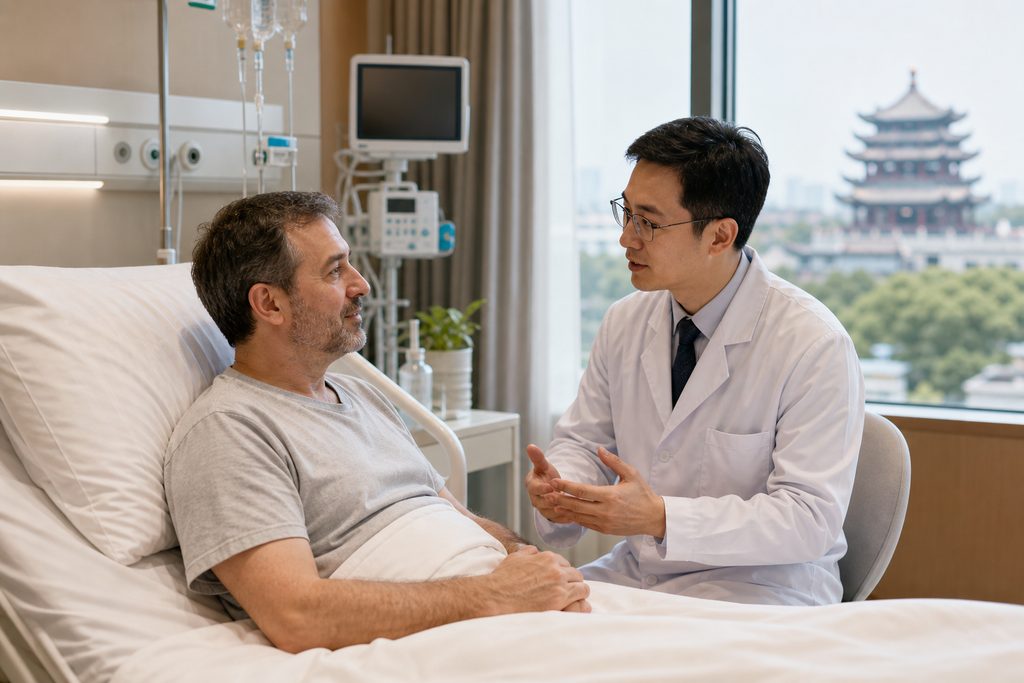
When 54-year-old James finished his third round of chemotherapy in Manchester, his oncologist mentioned something he hadn’t considered. CAR-T cell therapy. The problem was the waitlist at his local hospital stretched past six months, and the quoted price exceeded £300,000. His wife started searching online and found herself looking at clinical data from Shanghai. She wasn’t alone. Every month, dozens of families facing refractory lymphoma or multiple myeloma ask us the same question: can we actually access CAR-T treatment in China, and what does it take to make that happen?
The short answer is yes, with the right coordination. China’s CAR-T development has moved fast. As of early 2025, the National Medical Products Administration had approved six CAR-T products for commercial use, targeting conditions like relapsed or refractory B-cell acute lymphoblastic leukemia, large B-cell lymphoma, and multiple myeloma. Several more are in late-stage clinical trials. The car t cell therapy cost China is substantially lower than in Western markets — often by a factor of three to five — but the real question isn’t just price. It’s eligibility. And that’s where the process gets specific.
How This Actually Works, Step by Step
The coordination path for an international patient follows a sequence that is more structured than most people expect. Here is what happens in practice.
You begin by sending your existing medical records. This means the full package: pathology reports, immunohistochemistry staining results, cytogenetic and molecular testing if available, imaging studies from the last three months, and a detailed treatment summary listing every prior line of therapy and response. Our team translates these documents into clinical Chinese and submits them to the hematology or oncology department at the target hospital.
A specialist reviews the file. This typically takes three to five working days. What they’re looking for is straightforward: does the patient’s diagnosis match an approved indication, has the disease progressed after at least two prior lines of systemic therapy, and is organ function adequate to tolerate the procedure. If the answer is yes across the board, the hospital issues a preliminary acceptance letter.
That letter is what you take to the Chinese visa application center. The applicable category is S2, endorsed for private affairs including medical treatment. Processing time runs about four to eight working days at most consulates, though this varies by country. Once the visa is in hand, we coordinate an exact arrival date and schedule the first in-person consultation.
The patient flies to China, attends the face-to-face evaluation, completes any additional baseline testing the hospital requires, and if everything aligns, proceeds to apheresis — the collection of T-cells that will be engineered into the CAR-T product. That’s the real starting line.
Who Actually Qualifies: The Eligibility Filter
The phrase car t cell therapy eligibility for foreigners China gets searched often, and the answer is more medical than bureaucratic. Chinese hospitals do not exclude patients based on nationality. The gate is clinical.
You need a confirmed diagnosis that matches an approved CAR-T indication. Currently, the commercially available products in China target CD19-positive B-cell malignancies and BCMA-positive multiple myeloma. If your disease does not express these markers, you are not a candidate. Period.
Prior treatment history matters enormously. The regulatory labels specify that patients must have received at least two prior lines of therapy. Some protocols require that one of those lines included an anti-CD20 monoclonal antibody and an anthracycline-containing regimen for lymphoma patients. If you received only one line and stopped, or if your disease never progressed, you likely do not meet the threshold.
Organ function is the third filter. Most centers require an ECOG performance status of 0 or 1, left ventricular ejection fraction above 50%, adequate hepatic and renal function, and no active uncontrolled infection. A patient with significant cardiac dysfunction or severe pulmonary compromise will be declined, not because the hospital is difficult, but because the lymphodepleting chemotherapy before CAR-T infusion carries real risk.
There is one more practical filter that surprises families. The patient must be physically able to travel to China and stay for at least four to six weeks. CAR-T is not a remote treatment. You cannot send blood samples and receive an infusion at home. The entire process — apheresis, bridging therapy if needed, lymphodepletion, infusion, and the critical 30-day post-infusion monitoring window — happens on-site.
Where Treatment Actually Happens
When families search for the best hospital for car t therapy Shanghai, they are usually looking at two or three institutions that dominate the conversation. Shanghai’s Ruijin Hospital, affiliated with Shanghai Jiao Tong University School of Medicine, runs one of the busiest hematology programs in the country. Its CAR-T center has treated over 500 patients with commercial and investigational products combined. The department participated in the pivotal clinical trials for at least two of the currently approved CAR-T therapies.
Also in Shanghai, the Department of Hematology at Shanghai Changzheng Hospital has built a strong multiple myeloma program, including BCMA-directed CAR-T protocols. For patients with relapsed myeloma, this is often the more targeted destination.
Beijing has its own concentration of expertise. Peking University People’s Hospital and the hematology center at Peking Union Medical College Hospital both run active CAR-T programs. The question embedded in can international patients get car t therapy in Beijing is answered by the international medical departments at both institutions. They accept foreign patients, provide English-language coordination, and have established pathways for the S2 visa support letter. The throughput is lower than Shanghai for international cases, but the clinical experience is deep.
What matters more than city choice is product-to-patient matching. Different CAR-T constructs have different toxicity profiles, different manufacturing times, and different response durability data. A hospital that offers three approved products gives the clinical team more flexibility than one offering only one. That flexibility can matter when a patient has specific risk factors, such as a high tumor burden or prior neurotoxicity from other treatments.
A Realistic Timeline
People want a schedule. Here is one grounded in how long things actually take, not how long we wish they took.
| Stage | What Happens | Typical Duration |
|---|---|---|
| Week 1–2 | Medical record collection, translation, and submission to target hospital | 7–14 days |
| Week 3 | Specialist review and preliminary eligibility determination | 3–5 working days |
| Week 4–5 | Visa application with hospital invitation letter; consulate processing | 4–8 working days |
| Week 6 | Travel to China, first in-person consultation, baseline testing | 2–3 days |
| Week 7 | Apheresis — T-cell collection (outpatient procedure, 3–4 hours) | 1 day |
| Week 8–10 | Manufacturing wait; possible bridging therapy if disease is aggressive | 14–21 days |
| Week 11 | Lymphodepleting chemotherapy (typically 3 days of fludarabine/cyclophosphamide) | 3 days |
| Week 12 | CAR-T infusion; begins 30-day mandatory on-site monitoring period | 1 day infusion + 30 days monitoring |
| Week 16 | First post-infusion disease assessment; clearance to fly home if stable | 2–3 days for tests and consultation |
That adds up to roughly four months from first contact to flying home. Some patients stay longer if they experience cytokine release syndrome requiring extended management. Some leave sooner if their disease assessment is clean and they have local hematology follow-up arranged at home.
The step people forget is document translation. A 50-page medical file does not get translated overnight. Every pathology report, every PET-CT finding, every chemotherapy summary must be rendered into precise clinical Chinese. Rushing this step causes delays downstream when the reviewing specialist cannot interpret incomplete records.
What Can Go Wrong — and What Happens Then
This is the part most promotional content skips. We won’t.
Manufacturing failure happens. The apheresis product may yield insufficient T-cells, or the cells may fail to expand adequately during the engineering process. Reported rates vary by product and patient factors, but figures between 5% and 10% appear in the literature. If manufacturing fails, the clinical team has options: repeat apheresis, consider a different CAR-T product with different manufacturing requirements, or pivot to an alternative therapy. The hospital will not leave a patient stranded, but the timeline resets.
Cytokine release syndrome is expected, not aberrant. Most patients experience some degree of fever, hypotension, or hypoxia in the days following infusion. Chinese centers manage this with tocilizumab and supportive care, and the protocols are mature. Severe CRS requiring ICU admission occurs in a minority of patients — the published rates cluster between 10% and 25% depending on disease burden and product characteristics. Every hospital that administers CAR-T has an established CRS management algorithm. Ask to see it.
Immune effector cell-associated neurotoxicity syndrome, or ICANS, is the other major acute risk. Confusion, aphasia, seizures. It is less common than CRS but more frightening for families. Chinese centers grade and manage ICANS according to the ASTCT consensus criteria, the same framework used in the US and Europe.
The less dramatic failure mode is disease progression despite CAR-T. No product cures everyone. In relapsed large B-cell lymphoma, the best complete response rates hover around 50% to 60% at three months. That means a significant minority of patients do not achieve remission. If this happens, the options narrow — enrollment in a clinical trial of a next-generation CAR construct, bispecific antibodies, or palliative care. The hospital will provide an honest assessment. Patients deserve to hear it before they spend their savings on travel.
What CAR-T Cancer Treatment Packages Actually Include
The search term car t cancer treatment packages China reflects a reasonable expectation: that Chinese hospitals offer bundled pricing for international patients. Some do, but the word “package” needs unpacking.
A typical international patient package at a major Shanghai or Beijing center includes the apheresis procedure, the CAR-T product itself, the lymphodepleting chemotherapy, the infusion, and the 30-day post-infusion monitoring period with all associated laboratory tests and imaging. It usually covers management of expected CRS up to a certain grade. It does not cover prolonged ICU stays beyond a defined number of days, nor does it cover unrelated medical events that occur during the stay.
The car t cell therapy cost China for such a package, including the drug product, ranges from approximately $60,000 to $120,000 USD depending on the specific CAR-T product used, the hospital, and the complexity of the case. That compares to $373,000 to $475,000 for the same products in the United States, based on wholesale acquisition costs alone, before hospital fees.
Some hospitals quote the CAR-T product cost as a separate line item from the medical service fees. Others fold everything into a single figure. Ask for the breakdown. If the product cost is listed separately, verify whether it includes the manufacturing charge or whether that is billed independently by the biotech company.
Practical Considerations: Records, Visa, Payment, and Follow-Up
Medical records need to be complete and recent. Imaging older than three months will likely be rejected. Pathology slides may need to be shipped for re-review at the Chinese hospital’s own pathology lab. This is standard practice and not a sign of distrust — it is a regulatory requirement that the treating institution confirms the diagnosis independently.
The visa category is S2. Not M. M is for commercial visitors attending trade fairs and business meetings. Submitting an M visa application for medical treatment will be rejected or, worse, approved and then flagged at the border when the purpose of stay does not match. The hospital’s international department issues an invitation letter that specifies the medical purpose, and that letter is submitted with the S2 application. One family member can apply for an S2 visa as an accompanying relative using the same invitation letter.
Payment is almost always required upfront. Chinese public hospitals do not bill international insurers directly. The patient or their family pays a deposit before admission, and the final settlement occurs at discharge. Reimbursement from a US or European insurer happens afterward, based on the itemized invoice and medical records the hospital provides. Some private international hospitals in China, such as those in the United Family network, do offer direct billing, but these facilities are not the ones running large-scale CAR-T programs. The trade-off is real: direct billing convenience versus deep CAR-T experience.
Follow-up after returning home is a coordination challenge. The Chinese hematology team will provide a detailed discharge summary and a recommended monitoring schedule. The patient’s home oncologist needs to receive these records and agree to manage the long-term follow-up, including immunoglobulin monitoring, infection prophylaxis, and surveillance scans. This handoff should be arranged before the patient leaves China. A video consultation with the Chinese team at the three-month mark is often included in the package and helps bridge the transition.
Language is the friction that wears patients down. The senior hematologists at major Chinese CAR-T centers speak English. The nurses, the phlebotomists, the scheduling staff, and the discharge coordinators generally do not. A bilingual medical companion who can navigate the hospital’s physical layout, translate during ward rounds, and handle the administrative paperwork is not a luxury. It is the difference between a manageable experience and a disorienting one.
And a note on expectations. Chinese hospitals are high-volume institutions. A top hematology department may see hundreds of outpatients in a single morning. The pace is fast, the corridors are crowded, and the privacy norms differ from what a Western patient may be accustomed to. None of this reflects on clinical quality. It reflects a system designed for throughput. Knowing this in advance prevents the shock that can erode trust during treatment.
Frequently Asked Questions
The commercially approved products target relapsed or refractory diffuse large B-cell lymphoma, primary mediastinal large B-cell lymphoma, transformed follicular lymphoma, and B-cell acute lymphoblastic leukemia up to age 25, plus relapsed refractory multiple myeloma. If your subtype falls outside these categories, you may still qualify for a clinical trial, but commercial treatment is not available. Send your pathology report for a specific determination.
All major CAR-T centers in China have ICU capabilities and established CRS management protocols using tocilizumab and corticosteroids. The monitoring period includes daily assessment for CRS symptoms. Severe cases are escalated immediately. The package price typically covers CRS management, but extended ICU stays beyond a defined threshold may incur additional charges. Ask for the specific ICU coverage terms before committing.
No. Chinese regulations require that CAR-T products administered in China be manufactured in a facility licensed by the National Medical Products Administration. Cells collected outside China cannot be imported for CAR-T manufacturing, and CAR-T products manufactured abroad cannot be shipped to China for infusion. The entire process — apheresis, manufacturing, and infusion — must occur within the Chinese regulatory framework.
For lymphoma and myeloma indications, there is no strict upper age limit. The decision hinges on organ function and performance status, not chronological age. Patients in their 70s have successfully received CAR-T at Chinese centers. For the pediatric ALL indication, the approved age range is up to 25 years. Patients older than 25 with ALL would need to explore clinical trial options.
The process starts with sending your complete medical records for review. If the specialist confirms eligibility, the hospital issues an invitation letter for your S2 visa application. Once the visa is secured, we coordinate your arrival, first consultation, and the treatment schedule. There is no centralized government application portal — each hospital manages its own international patient intake. The phrase how to apply for car t cell treatment in China as international patient describes a hospital-by-hospital process, not a single national system.
Your Next Step
CAR-T therapy in China is accessible to international patients who meet the clinical criteria and who have the logistical support to manage a four-month treatment journey. The medical expertise is concentrated in a handful of centers in Shanghai and Beijing, the costs are a fraction of Western prices, and the regulatory framework for commercial CAR-T products is established and enforced.
Our team handles the coordination that makes this feasible: record translation, hospital matching, visa support documentation, and on-the-ground bilingual accompaniment throughout the treatment stay. We do not practice medicine, we do not guarantee outcomes, and we do not promise access that a patient’s clinical condition does not warrant. What we do is remove the barriers that sit between a qualified patient and the treatment they are seeking.
If you want to know whether your case fits, the first step costs nothing. Send your records. We will get them in front of the right specialist and give you an honest answer. You can start that conversation through our patient coordination page.
The window for CAR-T is narrow by nature. If you are eligible, the time to act is now — not because anyone is pressuring you, but because refractory disease does not pause while decisions are made.
For more medical information and treatment options in China, visit chinamedservices.com (China Medical Services).
