Cataract Surgery in China: Restore Your Vision with Personal Medical Assistance
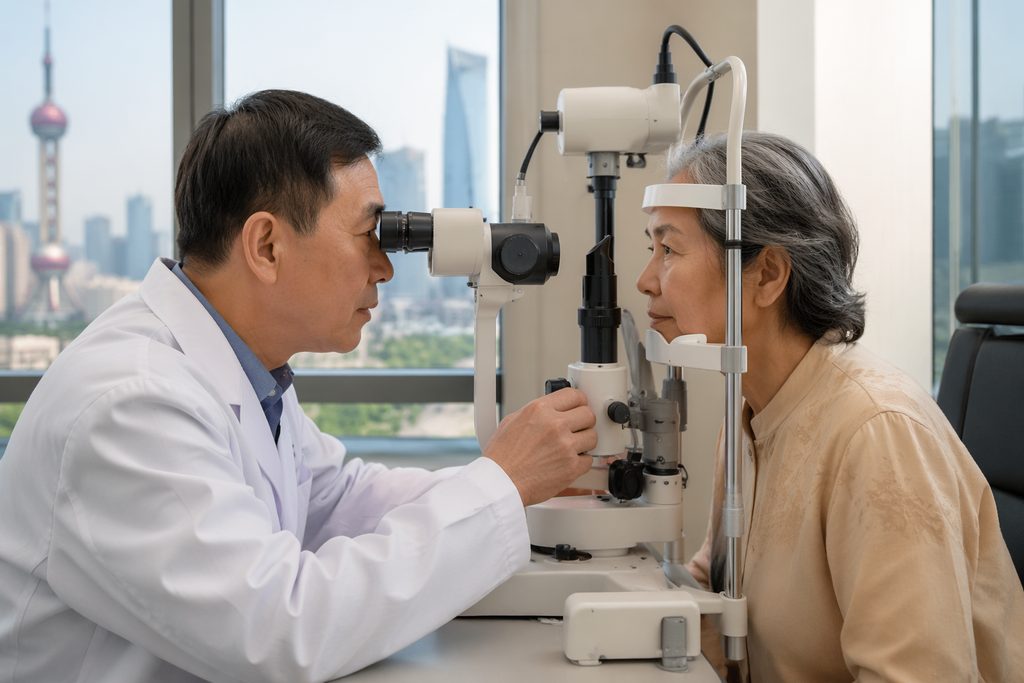
When 68-year-old Linda from Manchester first noticed the world turning beige, she blamed her reading glasses. Six months later, the glare from oncoming headlights made night driving impossible. Her NHS ophthalmologist confirmed bilateral cataracts. Then came the second blow: an 11-month wait for surgery on the first eye. Linda is not alone. Approximately 1 in 3 people over 65 in the United Kingdom and the United States will develop a cataract significant enough to require surgery. For many, the real blindness is not the clouded lens. It is a healthcare system that treats vision as elective. This article examines the cataract surgery cost China presents as an alternative, the clinical standards patients can expect, and the logistical architecture required to make the journey safe.
Key Takeaways
- Top-tier Chinese ophthalmology centers now perform over 10,000 cataract procedures annually, matching or exceeding the surgical volume of leading Western eye hospitals.
- The all-inclusive cost for premium lens implantation in China typically ranges from $3,500 to $6,000 per eye—a fraction of the $15,000 to $25,000 charged in the US for equivalent technology.
- Language barriers and hospital registration systems make independent navigation nearly impossible; a bilingual medical escort is not a luxury but a functional necessity.
- Patients must understand that standard public outpatient queues cannot be booked from overseas; access to predictable scheduling requires the hospital’s international VIP pathway.
The Problem: When the Wait for Sight Becomes the Hardest Thing to See
In publicly funded systems, cataract surgery is classified as a non-urgent procedure. That administrative label has human consequences. The Royal College of Ophthalmologists reported in 2023 that over 640,000 patients in England were waiting for ophthalmology treatment, with cataract extraction representing the single largest backlog. Average wait times stretched to 46 weeks in some trusts. In Canada, the Fraser Institute documented a median wait of 24.3 weeks between specialist consultation and surgery. These are not numbers. They are months of lost independence. Falls caused by poor depth perception. Books that cannot be read. Faces that become blurs. The private alternative in those same countries carries a punishing price tag. A premium multifocal lens implant in a US ambulatory surgery center routinely exceeds $8,000 per eye in surgeon and facility fees alone. That figure does not include anesthesia, pre-operative biometry, or post-operative medications. For the uninsured or underinsured, the math simply does not work.
This is where the geography of medical economics shifts. The cataract surgery cost China offers is not lower because corners are cut. It is lower because the structural cost of delivering high-volume, high-precision surgery in a Chinese tertiary hospital bears almost no resemblance to the cost structure of a Western private clinic. Understanding that distinction matters. It is the difference between assuming risk and managing it intelligently.
Who We Are
We are not a hospital. We do not hold a scalpel, we do not diagnose, and we do not make clinical recommendations. Our team at China Medical Services functions as a logistical and linguistic bridge connecting international patients to the top 5% of China’s 35,000+ hospitals—institutions ranked by the Fudan University Hospital Ranking and accredited by Joint Commission International. We handle the architecture of your medical journey: hospital matching based on your specific ophthalmic needs, appointment coordination through international departments, bilingual medical escorting, visa guidance, and recovery logistics. You focus on your eyesight. We focus on everything that stands between you and the surgeon.
Why Cataract Surgery in China Delivers Results That Rival the World’s Best Eye Centers
Skepticism is healthy. Any patient considering traveling 5,000 miles for eye surgery should interrogate the clinical evidence. The data, however, tells a consistent story.
Surgical Volume Creates Procedural Fluency
A cataract surgeon at a major Chinese ophthalmic center may complete 800 to 1,200 phacoemulsification procedures annually. At Zhongshan Ophthalmic Center in Guangzhou—one of the largest eye hospitals on the planet—the annual cataract surgical volume exceeds 20,000 cases. Compare that to the average US ophthalmologist, who performs roughly 200 to 300 cataract surgeries per year according to Medicare claims data analyzed by Ophthalmology Times. Volume does not guarantee outcomes. But in surgery, procedural repetition under high-stakes conditions is the single strongest predictor of complication avoidance. A surgeon who has managed 5,000 complicated dense cataracts has encountered and solved problems that a lower-volume colleague may see once in a career. This is not speculation. A 2022 study published in the Journal of Cataract & Refractive Surgery demonstrated a clear inverse correlation between surgeon annual volume and rates of posterior capsule rupture—the most common serious intraoperative complication.
Technology Adoption Without Legacy System Drag
Walk into the international department of a Fudan-ranked ophthalmology hospital in Shanghai or Beijing, and you will find the same phacoemulsification platforms that dominate US operating rooms: the Alcon Centurion Vision System, the Johnson & Johnson Veritas, the Bausch + Lomb Stellaris Elite. The difference is not the equipment. It is the upgrade cycle. Chinese hospitals that invested heavily in ophthalmic infrastructure over the past decade leapfrogged directly to the latest generation of machines. There were no legacy systems to amortize. No decade-old phaco units still in service because the capital budget did not stretch. The result for the international patient is access to femtosecond laser-assisted cataract surgery (FLACS) and advanced intraocular lens (IOL) options—toric, multifocal, extended depth of focus—on the same platforms used at Bascom Palmer or Moorfields.
Cost Advantage Without Quality Compromise
Let us address the question that sits unspoken in every initial consultation. How can the cataract surgery cost China hospitals charge be 70% lower than US prices and still be safe? The answer lies in structural economics, not clinical compromise. A Chinese ophthalmologist’s professional fee for a routine cataract extraction is a fraction of what a US surgeon bills—not because the Chinese surgeon is less skilled, but because physician compensation in China’s hospital system operates on an entirely different scale. The same applies to facility fees. A Chinese tertiary hospital runs on high patient throughput with lean administrative overhead. The cost of a 45-minute slot in an operating theater simply does not carry the same capital burden as in a US ambulatory surgery center burdened by malpractice insurance, billing department overhead, and profit margin requirements. The IOL itself—the artificial lens implanted in your eye—is often the same Alcon or Johnson & Johnson product used in London or Los Angeles, purchased at comparable global pricing. The savings are in the service delivery, not the implant quality.
| Procedure | China (International Dept) | United States (Private) | United Kingdom (Private) |
|---|---|---|---|
| Standard Monofocal IOL (per eye) | $2,000 – $3,500 | $4,000 – $6,500 | £2,500 – £4,000 |
| Premium Multifocal/Toric IOL (per eye) | $3,500 – $6,000 | $8,000 – $15,000 | £4,500 – £7,500 |
| Femtosecond Laser-Assisted (per eye) | $4,000 – $7,000 | $10,000 – $18,000 | £5,500 – £9,000 |
Ranges reflect hospital tier, surgeon seniority, and IOL selection. All prices are estimates and vary by individual case complexity.
Finding the Best Eye Hospital for Cataract in Shanghai and Beyond
Shanghai is not one ophthalmology market. It is several. The city hosts multiple Fudan-ranked eye departments, each with distinct clinical strengths. The best eye hospital for cataract in Shanghai depends on what “best” means for your specific eyes. For a routine age-related cataract in an otherwise healthy eye, a high-volume municipal hospital with a streamlined international department may serve you perfectly. For a complex case—a dense white cataract, a post-refractive surgery eye requiring precise IOL power calculation, or a patient with concurrent glaucoma—the calculus changes. You need a center with advanced biometry equipment (IOLMaster 700 or Lenstar with Barrett formula capability) and a surgeon who manages complicated anterior segment pathology daily, not occasionally.
This is where our hospital matching process becomes clinical, not commercial. We do not simply send every patient to the most famous name. We review your ophthalmic history, your biometric measurements if available, and your visual goals—do you want to be glasses-free for distance, or are you willing to trade some contrast sensitivity for true spectacle independence at all ranges? Then we match you to the surgical team whose daily case mix aligns with your needs. Our hospital database covers over 340 top-ranked institutions across 37 cities, including dedicated ophthalmology hospitals and the eye departments of major general hospitals. For patients specifically considering Shanghai, our Shanghai city guide details the logistical landscape: where to stay, how to get around, and what to expect from the city’s international medical infrastructure.
Is Cataract Surgery Safe in China? The Question Every Patient Asks
The short answer: yes, when performed at a properly vetted institution through the international medical pathway. The honest answer requires more texture. Asking “is cataract surgery safe in China” is like asking “is cataract surgery safe in the United States.” The answer depends entirely on where and by whom. A cataract extraction performed in a rural county hospital with a 15-year-old phaco machine and a surgeon who does 50 cases a year carries a different risk profile than the same procedure at Zhongshan Ophthalmic Center or the international department of a major Shanghai teaching hospital.
The safety infrastructure that matters for international patients includes several layers. First, the sterilization protocols and infection control standards in JCI-accredited or Fudan A-tier hospitals are audited and enforced. Post-operative endophthalmitis—the most feared complication of cataract surgery—occurs at rates comparable to Western benchmarks in these institutions, generally below 0.1%. Second, the international departments that serve foreign patients maintain English-speaking nursing staff, separate recovery areas, and direct lines to the operating surgeon for post-operative concerns. Third, the surgical consent process, while culturally different in style, covers the same material risks: infection, retinal detachment, IOL dislocation, and the possibility of needing additional surgery. No responsible surgeon in any country can promise a complication-free outcome. But the systems designed to prevent, detect, and manage complications are mature in China’s top-tier eye centers.
What You Need to Know Before Going Alone
We have seen patients attempt to navigate this independently. It rarely goes smoothly. The barriers are not insurmountable, but they are real and they are structural.
- Visa Requirements: Medical travel to China requires an S2 visa with a notation for medical treatment purposes. The application demands an invitation letter from the treating hospital—a document that standard outpatient departments do not issue. Only the hospital’s international medical center or VIP department can provide this. Without it, the visa application stalls. An M visa, which is for commercial and trade activities, is not valid for medical treatment. Submitting the wrong visa category leads to rejection at the consulate or denial of entry at the border.
- Hospital Registration Systems: Chinese public hospitals operate on a real-time queuing system. Specialist appointments are released in batches and can disappear within minutes. The registration platforms are in Chinese. Payment is often required via WeChat Pay or Alipay—systems that do not accept foreign credit cards. Walk-in registration as a foreigner with no Chinese language ability typically ends with a confused visit to the information desk and no appointment.
- Medical Coding and Insurance: Chinese hospitals code procedures according to their own national classification system. It does not map cleanly to CPT codes used by American insurers or the ICD-10 systems familiar to European payers. If you plan to seek reimbursement from your domestic insurer, you will need itemized invoices translated and coded correctly. The hospital’s standard billing department is not equipped to do this for international insurance claims.
How We Help You Navigate This
These barriers exist for structural reasons, not because anyone wishes to exclude foreign patients. Our role is to route around them.
The process begins before you book a flight. You send us your ophthalmic records—recent refraction, biometry if available, any OCT or corneal topography scans. We translate and forward these to the international department of the hospital best matched to your case. The surgeon reviews your file and confirms that you are a suitable candidate for surgery in China. Only then do we initiate the invitation letter for your S2 visa application. This sequence matters. There is no point securing a visa for a surgery that a surgeon has not yet agreed to perform.
Once your visa is approved, we arrange your initial consultation. A bilingual medical escort meets you at the hospital entrance. This person handles registration, payment, and navigation—shepherding you through the pre-operative workup: blood tests, biometry confirmation, and the surgical consent discussion. You are never left alone in a waiting room wondering which door to enter next. On the day of surgery, the same escort is present to translate the surgeon’s final pre-op check and the post-operative instructions. After discharge, we remain reachable. If you experience pain, blurred vision, or any concern in the days following surgery, we connect you directly with the surgical team for guidance. For patients seeking a comprehensive cataract surgery package China with translator included, this embedded escort model is the single most important factor separating a smooth recovery from a stressful one.
For those looking to book cataract surgery Beijing medical tourism arrangements, the pathway is identical in structure but tailored to the capital’s hospital ecosystem. Beijing hosts several Fudan A-tier ophthalmology departments with particular strength in complex anterior segment reconstruction. The logistics—airport pickup, accommodation near the hospital, post-operative follow-up scheduling—are customized to the city and the specific institution.
We also advise on recovery timelines. Understanding how long to recover from cataract surgery abroad is essential for planning your travel dates. Most patients are visually functional within 24 to 48 hours. Vision stabilizes over one to two weeks. We generally recommend staying in-country for at least 7 to 10 days after surgery on the first eye. This allows for the critical day-1 and week-1 post-operative checks, during which the surgeon examines the anterior chamber for inflammation and confirms intraocular pressure is normal. Flying with an eye that has recently undergone intraocular surgery is not inherently dangerous, but the dry cabin air and the inability to access immediate ophthalmic care if a problem arises make an extended local stay the prudent choice.
Frequently Asked Questions
This is a conversation you should have before you travel. Most ophthalmologists will accept a patient for post-operative care regardless of where the surgery was performed—it is an ethical obligation of the profession. However, some may be reluctant if they are unfamiliar with the surgical center or the IOL model implanted. We provide a complete surgical report and discharge summary in English, including the IOL serial number, surgical technique used, and any intraoperative findings. Presenting this documentation to your home optometrist or ophthalmologist before departure significantly increases the likelihood of a smooth handoff.
Serious complications from modern phacoemulsification are rare—posterior capsule rupture occurs in roughly 1% of cases, and endophthalmitis in fewer than 1 in 1,000. But rare is not zero. If a complication arises after you return home, your local ophthalmologist manages it according to standard clinical protocols. The surgeon in China remains available for consultation with your home physician. We facilitate that communication. You are not abandoned because you crossed a border.
Medically, sequential bilateral cataract surgery during a single trip is possible. The standard protocol spaces the two surgeries 1 to 2 weeks apart, which fits within a 3-week stay. However, many surgeons prefer a longer interval—4 to 6 weeks—to confirm the refractive outcome of the first eye before selecting the IOL power for the second. This is especially important if you are investing in premium multifocal lenses and want the best possible refractive match between the two eyes. We discuss this with your surgeon during the case review and give you a recommendation based on your specific biometric data, not a one-size-fits-all answer.
Your Next Step
Cataracts take vision slowly, then all at once. The decision to pursue surgery abroad is not a small one. It requires weighing clinical evidence, cost realities, and the logistical complexity of navigating a healthcare system in a language you do not speak. What we have seen, across hundreds of international patient journeys, is that the people who have the smoothest experiences are those who accept early that they need a guide. The hospitals exist. The surgical expertise exists. The technology exists. The missing piece is the bridge between you and them.
If you are considering cataract surgery in China and want to understand
For more medical information and treatment options in China, visit chinamedservices.com (China Medical Services).
