Cervical Cancer Second Opinion in China: Red House Hospital Review
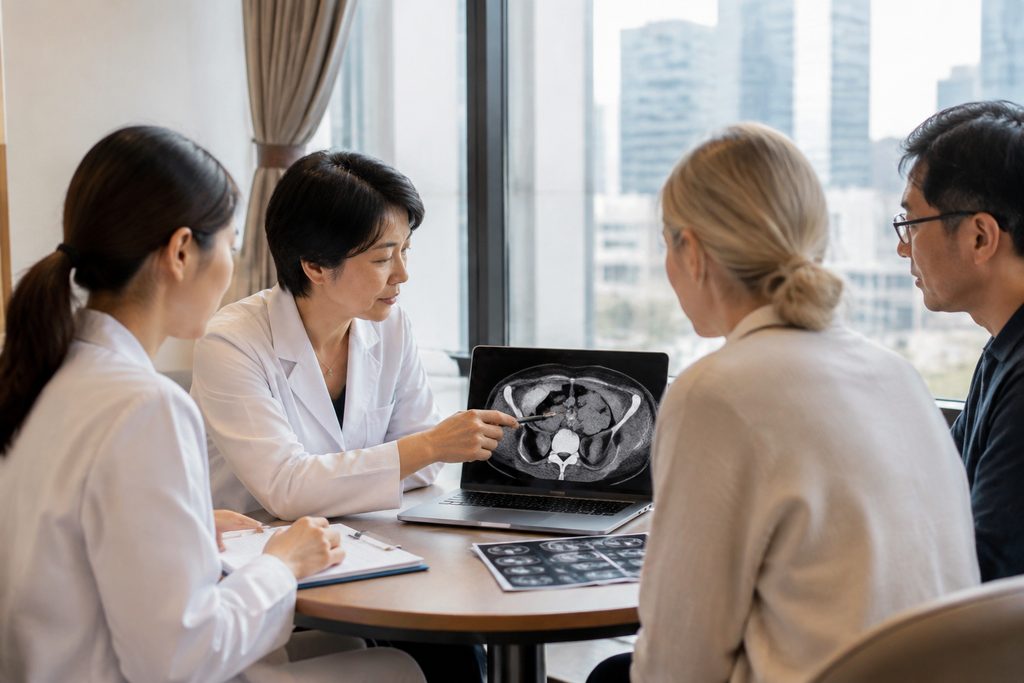
You’ve probably heard that getting medical care in China means navigating chaos, language barriers, and questionable quality. That fear keeps many women from exploring options that could save their lives or their savings. The reality is more nuanced. For a disease like cervical cancer, where treatment protocols vary significantly between hospitals and countries, a second opinion isn’t a luxury. It’s a strategic move. And Shanghai’s Red House Hospital—officially the Obstetrics and Gynecology Hospital of Fudan University—sits at the center of that conversation.
We coordinate second opinions for international patients every week. Not as doctors. As the team that handles logistics, translation, and hospital communication. Here’s what actually happens when you pursue a cervical cancer second opinion in China at Red House Hospital, what it costs, and what you should know before you commit.
How This Actually Works, Step by Step
The process is less complicated than most patients expect, but it does require patience. Here’s the sequence from where you are now to a written opinion in your inbox.
First, you send us your existing medical records. That means pathology reports, imaging studies (MRI, CT, or PET-CT scans), surgical notes if you’ve had a biopsy or conization, and any treatment history. We arrange certified translation into Chinese. This step alone often takes 3 to 5 business days, depending on document volume.
Second, the oncology team at Red House Hospital reviews your translated file. For cervical cancer, that typically includes a gynecologic oncologist and sometimes a radiation oncologist. They assess your stage, histology, and prior treatment response.
Third, you receive a written report in English. It includes their assessment of your current diagnosis, whether they agree with your original treatment plan, and what they would recommend differently—if anything. This is what we call a written second opinion. The fee ranges from $300 to $500, depending on the specialist’s seniority and case complexity.
If you want to speak directly with the Chinese team, you can upgrade to a video consultation. That costs $500 to $800 for a top specialist. You’ll see the doctor on screen, ask questions through a medical interpreter, and hear their reasoning in real time.
What happens next depends on you. Some patients use the opinion to adjust treatment at home. Others decide to travel to Shanghai for in-person evaluation or surgery. We’ll cover that fork in the road later.
Red House Hospital Cervical Cancer Review: What the Reputation Actually Means
Let’s be clear about what “Red House Hospital” is. The name comes from the historic red-brick building on Fangxie Road in Shanghai’s Huangpu district. The hospital’s official name is the Obstetrics and Gynecology Hospital of Fudan University. It’s one of the oldest women’s hospitals in China, founded in 1884.
But history doesn’t treat cancer. Volume does. And this is where the numbers matter.
Red House Hospital performs a high volume of gynecologic oncology surgeries annually. Its gynecologic oncology department is consistently ranked among China’s top 10 for obstetrics and gynecology in the Fudan University hospital rankings—the most authoritative hospital ranking system in China. That’s not a marketing claim. The Red House Hospital cervical cancer review you’ll find across Chinese medical forums and international patient communities consistently points to two things: surgical expertise and relatively lower costs compared to Western hospitals.
But here’s the honest part. Red House Hospital is a public hospital. That means crowded outpatient halls, long queues, and staff who primarily speak Mandarin. The clinical expertise is real. The patient experience is not what you’d find at a private international hospital. That’s not a criticism—it’s just the reality of China’s public healthcare system. If you go in expecting a Western-style concierge experience, you’ll be disappointed. If you go in expecting top-tier surgical skill at a fraction of Western prices, you’ll likely find what you’re looking for.
For context, China’s top-ranked hospitals include several in Shanghai with globally competitive oncology departments. Red House Hospital sits firmly in that tier for gynecologic cancers specifically.
A Realistic Timeline
Time is the variable most patients underestimate. Here’s a realistic breakdown from first contact to receiving a second opinion—and beyond, if you decide to travel.
| Stage | What Happens | Typical Duration |
|---|---|---|
| Day 1–3 | You submit records; we review for completeness | 1–3 days |
| Day 3–8 | Certified translation of medical documents | 3–5 business days |
| Day 8–15 | Red House oncology team reviews your case | 5–7 business days |
| Day 15–20 | Written second opinion delivered in English | 2–3 days after review |
| Week 3–4 | Optional video consultation scheduled | 1–2 weeks lead time |
| Week 4–8 | If traveling: S2 visa application | 2–4 weeks, varies by consulate |
| Week 6–10 | In-person evaluation at Red House Hospital | Depends on appointment availability |
The waiting steps people forget: document translation, appointment lead time for video consultations, and visa processing. None of these are instant. If you’re hoping to have a Chinese opinion in hand within 72 hours, that’s not realistic for a top-tier public hospital. Plan for two to three weeks minimum for a written opinion. Plan for six to eight weeks if you intend to travel.
What Can Go Wrong — and What Happens Then
Let’s talk about failure modes. Because they happen, and you should know the recourse.
The most common problem: incomplete medical records. If your pathology slides or imaging files are missing, the Chinese team can’t render a meaningful opinion. They’ll ask for more information. That adds days or weeks. The fix is to gather everything before you start—including original pathology reports, not just summaries.
Another failure mode: the opinion disagrees with your home oncologist. That’s actually the point of a second opinion. But it can create anxiety. If Red House recommends a different surgical approach or a different chemotherapy regimen, you now have to reconcile two expert views. Our advice: take both opinions back to your primary oncologist and ask them to explain the divergence. You are not obligated to follow the Chinese recommendation.
A third issue: you decide to travel for surgery, but the hospital cannot schedule you immediately. Public hospitals in China do not let international patients book surgery remotely. You must be seen in person first. And even after an in-person evaluation, surgery dates depend on operating room availability and the surgeon’s schedule. If you need a specific surgeon, the wait can be weeks.
What happens if the written opinion is delayed? We follow up with the hospital. If the specialist is unavailable, we offer alternatives—another specialist at Red House, or a comparable gynecologic oncology team at a different Shanghai hospital. You’re never locked into one path.
Is Cervical Cancer Treatment Safe in China? What the Data Shows
Safety is the question every patient asks, and it deserves a straight answer.
Cervical cancer treatment in China follows the same international guidelines used in the United States and Europe—NCCN guidelines, FIGO staging, and standardized surgical protocols. The surgical techniques are the same: radical hysterectomy, lymph node dissection, fertility-sparing trachelectomy for early-stage disease, and concurrent chemoradiation for locally advanced cases.
What differs is volume. Chinese gynecologic oncologists at major centers perform these procedures far more frequently than most Western surgeons. A surgeon at Red House Hospital may perform several radical hysterectomies per week. Volume correlates with outcomes in complex cancer surgery. That’s not a Chinese phenomenon—it’s a surgical reality documented globally.
The question “is cervical cancer treatment safe in China” has a qualified answer: yes, at top-tier academic hospitals with dedicated gynecologic oncology departments. At smaller provincial hospitals, quality varies. That’s why hospital selection matters more than country selection. Red House Hospital is not a small provincial hospital. It’s a Fudan University teaching hospital with a dedicated gynecologic oncology division.
But safety also includes infection control, blood supply screening, and anesthesia standards. Chinese tertiary hospitals have modern operating rooms, and the top academic centers meet international accreditation standards. For more context on how Chinese hospitals are evaluated, see our breakdown of specialty rankings across 45 clinical departments.
One honest caveat: if you have a rare histologic subtype or a heavily pretreated recurrence, the value of a Chinese second opinion may be lower. The strength of Chinese gynecologic oncology is high-volume standard treatment, not experimental salvage therapy. Know what you’re seeking before you start.
How Long Is Cervical Cancer Treatment Recovery? Planning Around Real Timelines
Recovery depends on what treatment you receive. And that depends on your stage.
For early-stage cervical cancer treated with radical hysterectomy, hospital stay in China is typically 5 to 7 days. That’s shorter than many Western hospitals, where 3 to 5 days is common for laparoscopic approaches. Full recovery—returning to normal activity—takes 6 to 8 weeks. You’ll need to remain in Shanghai for at least 2 to 3 weeks after discharge for follow-up before flying home. Long-haul flights immediately after major pelvic surgery carry thrombosis risk, and no responsible surgeon will clear you to fly within days of a radical hysterectomy.
For locally advanced disease treated with chemoradiation, the picture changes. External beam radiation typically runs 5 to 6 weeks, often with concurrent weekly cisplatin. That means a 6 to 8 week stay in Shanghai, assuming no treatment delays. Then another 2 to 3 weeks for recovery before travel. The total commitment can stretch to 3 months.
So when patients ask “how long is cervical cancer treatment recovery“, the honest answer is: it depends on whether you’re looking at surgery or radiation. Surgery recovery is measured in weeks. Radiation treatment itself is measured in months, with recovery layered on top. Plan your finances and your family logistics accordingly.
Practical Considerations: Records, Visas, Payment, and Language
Here’s what actually matters when you’re planning this from abroad.
Your medical records need to be complete and in English or Chinese. If they’re in another language, translation adds time and cost. Certified medical translation for a cancer case typically runs $100 to $300, depending on volume. Budget for it.
The visa category for medical treatment in China is S2. Not M—that’s for commercial and trade activities. S2 covers short-term private affairs, including medical treatment. Your accompanying family member also applies for S2. Processing takes 2 to 4 weeks at most consulates, and you’ll need supporting documents from the hospital, including an invitation letter or treatment confirmation. We help prepare that documentation, but we don’t guarantee approval. That’s the consulate’s decision.
Payment at Red House Hospital is upfront. Chinese public hospitals require prepayment for inpatient care. You pay a deposit, and costs are deducted as services are rendered. International insurance is generally not accepted for direct billing at public hospitals—you pay out of pocket and seek reimbursement from your insurer afterward. Some international insurance plans do have arrangements with Chinese hospitals, but that’s the exception, not the rule. Confirm with your insurer before you travel.
Language is the friction point most patients underestimate. Red House Hospital’s clinical staff speak Mandarin. Some senior specialists speak English, but you cannot rely on that. You’ll need a bilingual companion for registration, payment, pharmacy, and every interaction with nursing staff. That’s not optional—it’s the difference between a functional hospital stay and a stressful one.
And here’s a practical tip most patients don’t think about: bring all original pathology slides, not just reports. Chinese pathologists will want to review the actual tissue. If your home hospital won’t release the slides, request formal pathology blocks or recuts. Without them, the Chinese team may only be able to comment on your written reports, which limits the depth of their review.
Frequently Asked Questions
The cervical cancer treatment cost China is typically 20% to 30% of what the same treatment costs in the United States. A radical hysterectomy at a top Shanghai hospital may range from $8,000 to $15,000, compared to $40,000 to $80,000 in the US. Chemoradiation runs $15,000 to $30,000 in China versus $80,000 to $150,000 in America. These are ranges, not quotes. Final costs vary by hospital, stage, and case complexity.
Yes. The written second opinion process is entirely remote. You send records, we translate them, the Red House team reviews them, and you receive a written report. If you want to speak with the specialist, a video consultation is also available. No travel required for either option. To book cervical cancer second opinion China, start with your existing records and a clear description of what you’re hoping to learn.
It’s among the best for gynecologic cancers specifically. Other strong options include Fudan University Shanghai Cancer Center and Renji Hospital. The “best” choice depends on your stage, histology, and whether you need surgery, radiation, or both. Red House Hospital’s strength is surgical volume and gynecologic subspecialization. For complex cases requiring multidisciplinary input, a cancer center may be more appropriate. We help match patients to the right institution based on their specific case.
That’s not a failure—it’s information. Take both opinions to your primary oncologist and ask them to explain the differences. You are under no obligation to follow the Chinese recommendation. Some patients use the second opinion to confirm their current plan. Others change treatment. The value is in having a second expert perspective from a high-volume center.
Some international insurance plans cover treatment in China, but most require pre-authorization and reimbursement after the fact. Chinese public hospitals do not typically bill international insurers directly. You pay upfront and submit claims. Check with your insurer about out-of-network coverage for overseas cancer treatment before you commit to anything.
Your Next Step
A second opinion from Red House Hospital costs a fraction of what you’d pay for the same review from a US cancer center. And it gives you something money can’t buy: the perspective of a surgical team that treats cervical cancer at volumes most Western hospitals never see. That’s not a guarantee of a better outcome. It’s a data point you don’t currently have.
We’re China Medical Services. We coordinate second opinions, video consultations, and in-person treatment logistics for international patients. We don’t practice medicine, and we don’t promise outcomes. What we do is handle the translation, the hospital communication, and the on-the-ground support so you can make an informed decision.
If you’re weighing a cervical cancer second opinion in China, start with a free consultation. Tell us your stage, your treatment history, and what you’re hoping to learn. We’ll tell you honestly whether a Chinese second opinion makes sense for your case—and what it would cost. No pressure. Just clarity.
For more medical information and treatment options in China, visit chinamedservices.com (China Medical Services).
