How to Check if Hospital Photos Are Real: A Patient’s Verification Guide
You have probably heard that medical tourism means flying blind. That you book a hospital based on a glossy website, wire a deposit, and hope for the best. The photos look convincing. The lobby gleams. The equipment appears modern. But how do you know any of it is real?
The short answer: you can verify most hospital photos yourself, without technical expertise. It takes patience, a few free tools, and a willingness to ask uncomfortable questions. This guide walks through exactly how to verify hospital photos from Chinese clinics, what to look for, and when to walk away.
Our team at China Medical Services has spent years helping international patients evaluate Chinese hospitals. We have seen the good, the bad, and the digitally altered. Here is what we tell every patient before they commit to a trip.
How This Actually Works, Step by Step
Verification is not a single action. It is a sequence of checks that build confidence or reveal red flags. Here is the process we recommend.
First, you collect every photo the clinic or hospital has published. Website galleries, social media posts, WhatsApp images sent by a coordinator, PDF brochures. Save them all to one folder. You need the full set, not a curated selection.
Second, you run a reverse image search on each photo. Google Images, TinEye, and Yandex Images all work. Drag the file into the search bar. If the same image appears on a stock photo site, a different hospital’s website, or a travel blog, you have a problem. Legitimate hospitals photograph their own facilities. They do not borrow lobby shots from a Marriott in Dubai.
Third, you examine metadata. Right-click a photo file and check properties. A genuine smartphone photo from a hospital corridor will usually carry EXIF data: camera model, date, sometimes GPS coordinates. A stock image or a screenshot typically has no EXIF data or shows Adobe Photoshop in the software field. Missing metadata is not proof of fraud. But it is a flag worth noting.
Fourth, you ask for a live video walkthrough. Not a pre-recorded promotional clip. A real-time video call where you can ask the person to point the camera at a specific room, a window, the hospital name on the wall. If the coordinator refuses or makes excuses, treat that as a serious warning.
Fifth, you cross-reference the facility against independent databases. Chinese hospitals have official registration numbers. Public hospital websites end in government domains. We cover this in more detail below.
How to Verify Hospital Photos from Chinese Clinics: The Core Methods
The most common question we hear from Western patients: can I trust hospital pictures on Chinese websites? The honest answer is that some are trustworthy, and some are not. The difference comes down to method.
Start with the domain. A legitimate Chinese public hospital will have a website registered under a .cn or .org.cn domain, often with the hospital’s official English name. A private international hospital might use a .com domain, which is normal. But check the site’s footer for a license number. In China, medical institutions must display their Medical Institution Practice License number. It looks like a long string of digits preceded by a provincial code. You can search this number on the National Health Commission’s public query platform. If the number is missing or does not return a match, the photos on that site mean nothing.
Reverse image search is your strongest free tool. We cannot emphasize this enough. A hospital that uses stock photos of smiling doctors and empty hallways is not necessarily a scam. But it is not showing you their facility. And if they are not showing you their facility, what else are they hiding?
Look at the details in the photo. Real hospital photos have imperfections. A scuff mark on the floor. A power outlet in an odd place. Chinese signage with actual characters that match the hospital’s city. A clock showing a plausible time. Stock photos are clean to the point of sterility. Real photos are lived-in.
Pay attention to the people. Chinese hospital photos often show nurses, doctors, and patients. In a real photo, the staff wear badges with the hospital’s name. The uniforms have consistent colors and logos. The background matches the department. A photo of a cardiology ward with a pediatric cartoon on the wall is a mismatch worth questioning.
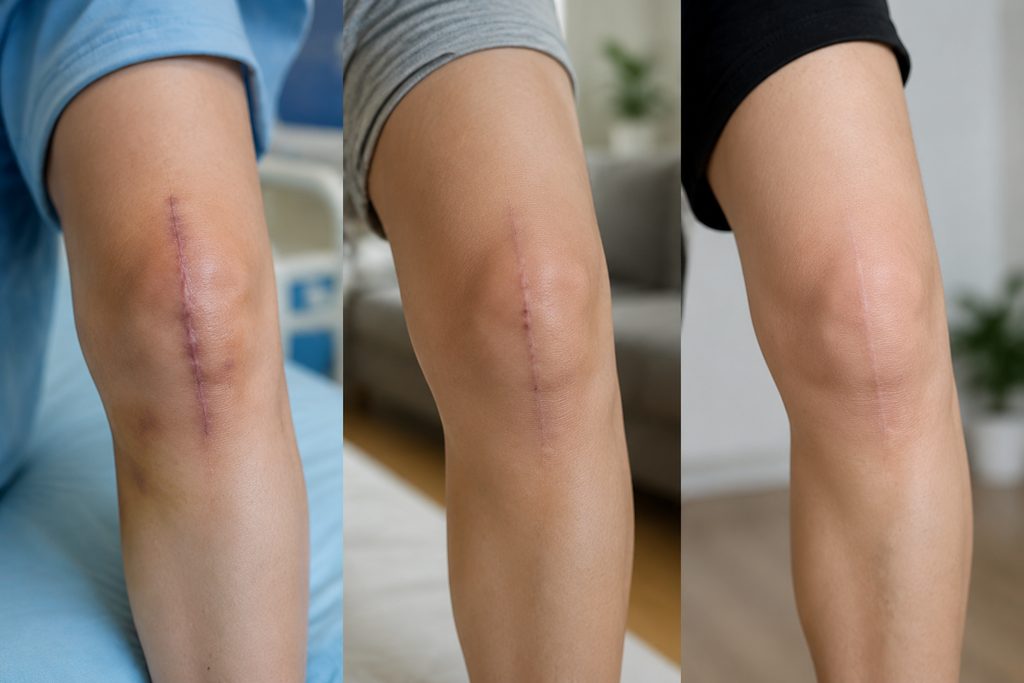
For patients specifically concerned about fake before after photos medical tourism China, the stakes are higher. Before-and-after images in cosmetic surgery, dermatology, and dental work are easy to manipulate. Lighting changes, angle shifts, and makeup can make a mediocre result look dramatic. Software can do the rest.
Here is what we tell patients: ask the clinic to send the original, unedited files. Ask for a video of the patient’s recovery process, not just two still images. Ask whether the patient consented to have their photos shared. A clinic that refuses all three requests is not a clinic you want to trust with your body.
A Realistic Timeline
Verification takes time. Not weeks, but not ten minutes either. Here is what a typical timeline looks like when a patient works with our team or does the checks independently.
| Stage | What Happens | Typical Duration |
|---|---|---|
| Day 1–2 | Collect all photos and brochures from the hospital or clinic. Save them in original resolution. Run reverse image searches on the top 10–15 images. | 2–4 hours of active work |
| Day 3–5 | Check domain registration, hospital license number, and cross-reference the facility on the National Health Commission database. Search for the hospital’s name in English and Chinese on independent forums and review sites. | 1–2 days, depending on language barriers |
| Day 5–7 | Request a live video walkthrough. Coordinate time zones. Prepare specific questions about departments, equipment, and staff. | 3–5 days to schedule |
| Week 2 | If the hospital passes the photo checks, request a written second opinion or video consultation. This is where you confirm the medical team behind the photos. | 1–2 weeks for scheduling |
| Week 3–4 | Visa preparation. For medical travel to China, the S2 visa applies. Processing times vary by embassy and country. | 2–4 weeks, sometimes longer |
People forget the waiting steps. Document translation takes days. Appointment lead times at top hospitals can run one to three weeks. Visa processing is not instant. If a clinic promises you can arrive tomorrow and have surgery the day after, that is a red flag about their entire operation, not just their photos.
What Can Go Wrong — and What Happens Then
Yes, and you should. Reputable hospitals with international departments are generally willing to schedule a video call. If a hospital refuses, that is a decision point. You are not asking for anything unreasonable. A facility that wants your trust will show you the facility.
Ask for an explanation. Some hospitals use stock images for generic website banners while showing real photos elsewhere. If the stock photos are presented as the hospital’s own facility, that is deceptive. If the hospital cannot provide genuine photos of its actual premises on request, choose a different provider.
For China, the National Health Commission maintains a public registry of licensed medical institutions. You can search by hospital name or license number. This verifies the facility’s legal existence, not the accuracy of its photos. Use both checks together. A licensed hospital can still use misleading images; an unlicensed operation is a non-starter regardless of its photos.
They matter differently. Official photos show what the hospital wants you to see. Independent photos show what patients actually experienced. Neither is complete. The best approach is to compare both, then ask the hospital to confirm or explain any discrepancies during a live video call.
Your Next Step
Verifying hospital photos is one part of a larger decision. It protects you from the worst outcomes. It does not, by itself, confirm that a hospital is right for your specific condition. That requires medical records review, specialist consultation, and honest conversation about risks and costs.
Our team at China Medical Services helps international patients evaluate Chinese hospitals before they commit. We do not guarantee outcomes, and we do not promise access that does not exist. We do help you ask the right questions, verify the right documents, and connect with hospitals that match your needs. If you are considering treatment in China, start with a free consultation. Tell us what you are looking for. We will help you figure out what is real.
Frequently Asked Questions
Yes. The hospitals used for international patients are JCI-accredited and follow the same international safety standards as top hospitals in the US and Europe. Surgical teams perform high volumes of procedures — often more than their Western counterparts — which studies show leads to better outcomes.
Costs vary by procedure and hospital, but international patients typically save 40-80% compared to US prices — even when factoring in travel and accommodation. A consultation with our team will give you an exact, all-inclusive quote with no hidden fees.
Send us your existing medical reports to get started. We handle everything from hospital selection and appointment scheduling to visa assistance and post-operative recovery planning. Your medical records are reviewed by the specialist before you even book a flight.
For more medical information and treatment options in China, visit chinamedservices.com (China Medical Services).
