Is a Checkup in China Worth the Trip? A 2026 Cost & Quality Guide
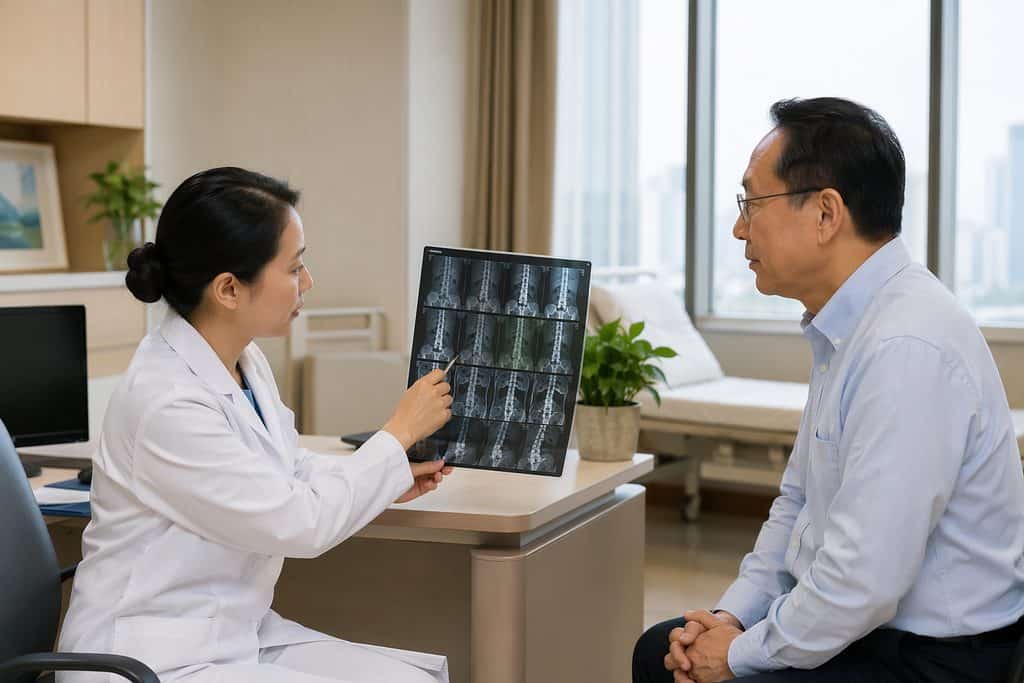
Is a Checkup in China Worth the Trip? A 2026 Cost & Quality Guide
For a growing number of international patients, the answer is yes — and the numbers explain why. A comprehensive executive health screening at a top-tier Chinese hospital typically runs $300 to $2,500, while an equivalent panel in the United States often lands between $2,500 and $7,000. That gap, combined with same-week scheduling and imaging equipment that rivals anything in the West, is why medical checkup cost China searches have climbed steadily among travelers from Europe, the Middle East, and North America.
But a cheap MRI is not a reason to board a 12-hour flight. The real question is whether the quality, the logistics, and the follow-up justify the trip. That depends entirely on what you need, which hospital you choose, and how much groundwork you do before you land.
Medical Checkup Cost China vs. the US: The Short Answer
A full-body checkup in China costs roughly one-fifth to one-tenth of a comparable US executive physical. You can realistically complete a premium screening — bloodwork, ultrasound, CT, endoscopy, cardiac stress testing — in two to three days, often with results in hand before you fly home.
The caveat: not every hospital is set up for foreign patients, and the cheapest option is rarely the best one. China has more than 35,000 hospitals. The ones worth your time sit in the top 5%, ranked by the Fudan Hospital Ranking and JCI accreditation. Choosing the wrong tier can mean long queues, no English support, and a report you cannot use with your doctor back home.
Who This Is Right For — and Who It Isn’t
Health screening in China suits a specific kind of traveler. It is not for everyone.
Typically a good fit:
- Adults over 40 who want advanced imaging (low-dose CT, cardiac CT, full-body ultrasound) without a six-month wait or a five-figure bill
- Travelers already planning a trip to Beijing, Shanghai, or Guangzhou who can add two or three days
- People with a family history of cancer or heart disease who want a deeper screen than their home system offers
- Patients who need a second opinion alongside their checkup — a written review from a Chinese specialist
Probably not worth the trip:
- Anyone with an acute symptom — chest pain, unexplained bleeding, sudden weight loss. Get evaluated at home first.
- Patients who need simple annual bloodwork. Your local lab does that for $150.
- Travelers who cannot stay at least three to four days, including buffer time for scheduling changes.
- Anyone unwilling to share prior medical records. Without them, the screening loses much of its value.
The Options, Compared
Three real paths exist for a checkup in China. Each carries a different price and a different experience.
| Option | Typical Cost (USD) | English Support | Booking Lead Time | Best For |
|---|---|---|---|---|
| Public tertiary hospital — standard health check center | $300–$800 | Limited; often none | 1–2 weeks, in person | Budget-focused travelers with a Chinese-speaking companion |
| Public hospital — international / VIP department | $800–$2,500 | Yes, dedicated staff | 1–3 weeks, bookable remotely | Most foreign patients wanting quality and clear communication |
| Private international hospital (JCI-accredited) | $1,500–$4,000 | Full English, Western-style service | Days to 2 weeks | Patients prioritizing comfort, insurance billing, and speed |
Which column suits you? If you have a bilingual friend in China and a tight budget, the standard public route works. If you are flying in alone and need your results explained clearly, the international department is the sensible middle ground. And if you want a hotel-like experience with direct insurance billing, the private hospitals — United Family, Jiahui, Parkway — are built for exactly that.
Is It Safe to Get a Health Checkup in China?
This is the question that stops most people from booking. The honest answer: yes, at accredited hospitals, the safety standards for screening procedures are comparable to Western facilities. But “accredited” is doing a lot of work in that sentence.
China’s leading public hospitals perform surgical volumes that dwarf most Western centers. Fuwai Hospital in Beijing, for instance, handles more than 14,000 cardiac surgeries a year — the highest volume in the world. High volume means experienced hands, and experienced hands mean fewer complications. The same logic applies to endoscopy, imaging, and lab work at top-tier institutions.
What varies is the service environment. A public hospital on a Monday morning can see 10,000+ outpatient visits in a single day. Corridors are crowded. Signage is in Chinese. Without language support, even a straightforward checkup becomes stressful. That is a logistics problem, not a safety problem — but it matters.
How Much Does a Full Body Checkup Cost in Shanghai?
Shanghai is the most popular entry point for foreign patients, and its pricing reflects that maturity. At a top public hospital’s international department, a comprehensive full-body package — blood panels, chest CT, abdominal ultrasound, ECG, tumor markers, and a physician consultation — generally falls between $800 and $2,000. Private international hospitals in the city charge $1,500 to $4,000 for a comparable or slightly more comfortable experience.
Beijing runs similar numbers, with the added advantage of having the highest concentration of Fudan Top 100 hospitals in the country — 21 of them. If you are weighing cities, our Fudan-ranked hospital directory by city breaks down which institutions sit where, and what each is known for.
What drives the variance? Three things: the depth of imaging (a low-dose chest CT adds cost but catches things a chest X-ray misses), whether you include endoscopy, and whether you want a specialist consultation on top of the standard report.
Book a Medical Checkup in China for Tourists: The Practical Steps
Here is where most DIY attempts fall apart. Public hospital outpatient clinics in China generally do not accept advance bookings from overseas. You show up, you queue, you take a number. For a tourist with three days and no Mandarin, that is a recipe for a wasted trip.
The workaround is the international or VIP department, which does allow remote scheduling. Expect to pay roughly 1.5 to 2 times the standard rate for that access — and it is usually worth it.
Documentation matters too. Bring prior imaging on disk or USB, recent lab results, and a medication list in English. Chinese specialists read these carefully, and having them on hand shortens your visit considerably.
On visas: medical travel to China uses the S2 visa, annotated for medical treatment purposes. Stays beyond 180 days require the S1 category. Accompanying family members apply under S2 as well. Note that the M visa is for commercial and trade activity only — it is not a medical visa, despite what some older guides claim. Always confirm current requirements with your nearest Chinese embassy or consulate, since documentation rules shift.
What the Trip Actually Costs — and What It Doesn’t
The checkup itself is the smallest line item for most travelers. A realistic budget for a three-day medical trip from Europe or North America looks like this:
- Checkup package (international department): $800–$2,500
- Round-trip airfare: $700–$1,800 depending on origin and season
- Hotel, 3 nights: $300–$900
- Airport transfers: $200 round-trip
- Bilingual medical companion, 1–2 days: from $300 per day
Total: roughly $2,300 to $6,000. Compare that to a US executive physical alone at $2,500–$7,000 — before flights, before hotels, before anything. That is the arithmetic that makes the trip pencil out for many people.
What is not included: treatment costs if the screening finds something. A checkup is diagnostic, not therapeutic. If a polyp needs removal or a follow-up MRI is ordered, those are separate and priced separately. Our guide to specialty rankings across 45 medical departments can help you identify the right hospital if a finding requires follow-up care.
Frequently Asked Questions
At public hospitals, generally no — standard outpatient checkups require in-person registration. International and VIP departments are the exception and do accept advance scheduling, usually one to three weeks out. Private international hospitals are the most flexible, sometimes booking within days.
Usually yes, if you request an English-language report in advance. Top hospitals in Beijing, Shanghai, and Guangzhou routinely produce bilingual reports for international patients. Ask before you book, and confirm the format — some hospitals issue digital files, others printed binders.
You will be advised on next steps, and you can choose to pursue treatment in China or return home. No hospital can guarantee a diagnosis or outcome, and no screening catches everything. This is exactly why we recommend sharing prior records and, where relevant, arranging a written second opinion before traveling — so you have context, not just a result.
For basic bloodwork, yes. For advanced imaging and comprehensive panels, often no — the gap can be thousands of dollars. Run your own numbers against the table above before deciding.
Your Next Step
A checkup in China is worth the trip when you pick the right hospital tier, allow enough time, and arrange language support in advance. Skip any of those three and the savings evaporate into frustration. Done well, it delivers Western-standard diagnostics at a fraction of the price, often within a single week.
We are China Medical Services — a coordination service, not a hospital. We do not diagnose or treat. What we do is help you compare hospitals, understand realistic costs, arrange appointments through official international departments, and provide bilingual support on the ground. If you are still deciding, start with a free consultation through our patient support page. No pressure, no obligation — just a clear picture of what your trip would actually involve.
This article is for informational purposes only and does not constitute medical advice. Always consult a qualified healthcare provider regarding your individual health needs.
For more medical information and treatment options in China, visit chinamedservices.com (China Medical Services).
