Children’s Hospital Fudan: How We Arrange Your Child’s Care
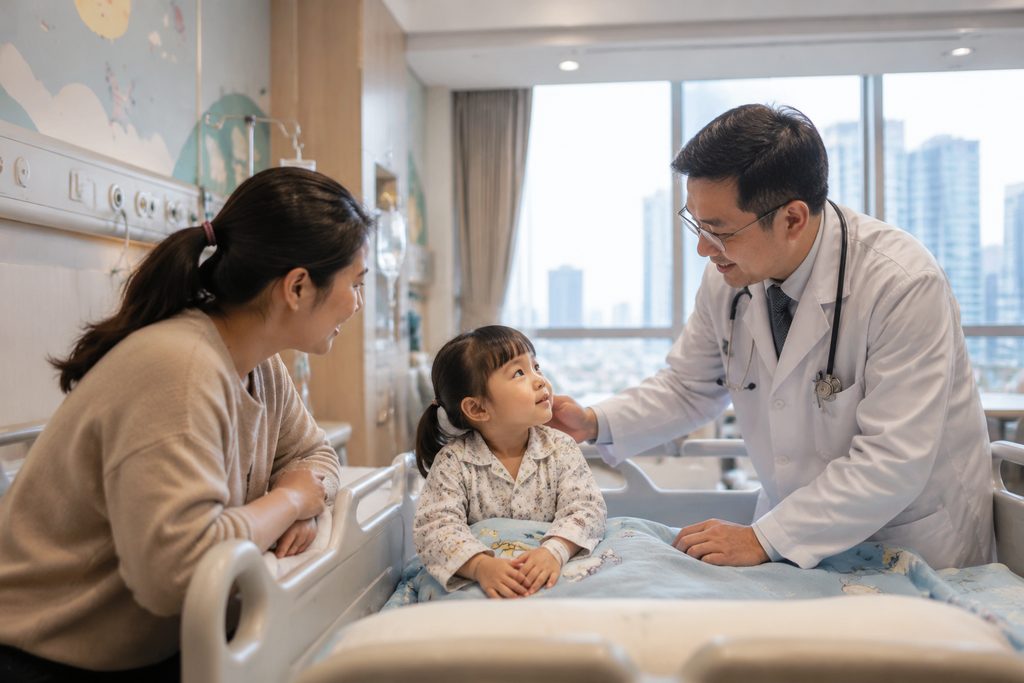
Have you ever stared at a complex overseas hospital website, wondering if the phone number on the screen will actually connect you to someone who can help your child? That specific anxiety—the gap between finding a world-class facility and knowing how to walk through its doors—is exactly where our team operates. We coordinate access to the Children’s Hospital of Fudan University, a name that appears consistently in national pediatric rankings, and we handle the logistics so you can focus on your family. The Children’s Hospital of Fudan University international patient price structure varies by department and case complexity, but we provide transparent estimates before you commit to anything.
How This Actually Works, Step by Step
The sequence is methodical. It has to be. Pediatric cases require precision because a child cannot always articulate symptoms, and parents are understandably on edge.
First, you send us the existing medical records. These include imaging reports, lab results, physician notes, and a summary of the current diagnosis and treatment history. Our team translates these documents into clinical Chinese—not machine translation, but a medically reviewed version that retains nuance. A pediatric cardiology report reads differently from a neurology workup, and the terminology must be exact.
We forward the translated file to the relevant department at the Children’s Hospital of Fudan University. The department head or a senior attending reviews the case and determines whether they can offer a meaningful intervention. This step typically takes three to five business days. Sometimes faster. Sometimes slower, if the case involves multiple subspecialties.
What comes back is a written assessment. It outlines whether the hospital can treat the condition, what the recommended approach would be, and a preliminary cost range. This is not a binding quote. It is a professional opinion grounded in the available data. If the assessment is positive, we move to scheduling.
At this stage, the hospital’s international department provides available consultation windows. We align those with your travel constraints and visa processing timeline. You confirm the dates. We lock the appointment. Then we shift into arrival coordination—airport pickup, accommodation near the hospital, and a bilingual medical companion who stays with you through every registration, consultation, and billing interaction inside the facility.
This is not a concierge fantasy where everything happens in 48 hours. It is a structured, documented process that respects both the hospital’s protocols and your family’s emotional bandwidth.
What Makes This Children’s Hospital Worth the Journey
The Children’s Hospital of Fudan University is not just another pediatric wing attached to a general hospital. It is a dedicated children’s hospital with over 800 beds and a clinical footprint that covers virtually every pediatric subspecialty. The hospital operates under Fudan University’s medical system, which consistently ranks among China’s top-tier institutions. For families asking “is Fudan Children’s Hospital good for international patients,” the answer rests on two pillars: clinical depth and an established international department that has handled foreign cases for years.
The hospital’s surgical volume is significant. Pediatric cardiac surgery, neonatal interventions, and complex orthopedic procedures are routine here—not occasional. When a surgical team performs a specific procedure hundreds of times annually, outcomes tend to stabilize. This is not marketing. This is the statistical reality of high-volume centers. The hospital also houses a neonatal intensive care unit equipped for extremely preterm infants, which matters if your child’s condition was identified prenatally.
For foreign families, the international department functions as a buffer. It provides English-speaking coordinators, streamlined billing, and appointment scheduling that bypasses the chaotic general registration hall. The public side of the hospital can see over 8,000 outpatient visits in a single day. Without the international department pathway, a non-Chinese-speaking parent would be functionally stranded. With it, you move through a parallel system designed for overseas patients.
Specialty strengths include pediatric cardiology, hematology-oncology, neurology, and general pediatric surgery. The hospital is also a national referral center for complex congenital anomalies. If your child has a condition that requires multidisciplinary input, the infrastructure exists to assemble that team under one roof.
A Realistic Timeline
Timelines matter because parents arrange leave from work, siblings need care, and treatment windows can be narrow. Here is what a typical coordination looks like, assuming no unusual complications:
| Stage | What Happens | Typical Duration |
|---|---|---|
| Day 1–3 | You send medical records; we begin translation and clinical summary preparation | 2–3 business days |
| Day 4–8 | Records submitted to the hospital department; senior physician review | 3–5 business days |
| Day 9–14 | Written assessment received; we discuss findings with you; decision to proceed | 2–4 days (depends on your response time) |
| Week 3–4 | Appointment scheduling aligned with visa application; S2 visa processing | 5–10 business days (varies by embassy) |
| Week 5–6 | Travel to Shanghai; first consultation; diagnostic workup if needed | 2–5 days in Shanghai |
| Week 7 onward | Treatment plan execution; possible surgery scheduling; recovery coordination | Case-dependent; minimum 2–4 weeks for surgical cases |
This timeline assumes you have a current passport and can gather medical records quickly. Translation of handwritten physician notes or obscure imaging formats can add a few days. The visa step is the biggest variable. Some consulates process S2 visas in a week. Others take three. We recommend applying the moment you have a confirmed appointment letter from the hospital.
For surgical cases, do not expect to fly in and have the operation the next day. The hospital will almost always require an in-person consultation first. Additional imaging or lab work may be ordered. The surgical schedule depends on operating room availability and the surgeon’s existing case load. Plan for a minimum of two weeks in Shanghai for a straightforward procedure, and longer if post-operative monitoring is intensive.
What Can Go Wrong — and What Happens Then
We lose trust the moment we pretend everything always works perfectly. It doesn’t. Here are the honest failure modes and what recourse exists.
The records are insufficient. You send what you have, but the reviewing physician determines that a key imaging study is missing or outdated. This happens in roughly 15% of initial submissions. The fix is straightforward: we tell you exactly what is needed, you obtain it from your home provider, and we resubmit. The clock resets, but the case is not closed.
The hospital declines the case. This is rare but real. If the condition is too advanced, or if the required subspecialty is not currently accepting international referrals, the hospital will issue a polite decline. We then pivot to alternative hospitals in our network. Shanghai has multiple top-tier pediatric centers, including those affiliated with Shanghai Jiao Tong University. Beijing offers additional options. A single “no” does not end the process.
Visa delay disrupts the appointment. If your S2 visa does not arrive in time, we contact the hospital to reschedule. Appointments are not held indefinitely, but the international department typically accommodates one rescheduling without penalty. If the delay exceeds a reasonable window, we re-engage the department for a new slot.
The child’s condition changes en route. A child who was stable at the time of record submission may deteriorate during travel. We advise all families to carry a detailed medical summary and contact information for the receiving physician. If an emergency arises upon arrival, the hospital’s emergency department can stabilize the child, and the international department coordinates admission from there. This is not theoretical. It has happened, and the system handles it.
Cost exceeds the initial estimate. The preliminary cost range is based on the standard care pathway for the diagnosed condition. If the in-person evaluation reveals additional issues—a secondary diagnosis, unexpected complexity—the treatment plan and associated costs will adjust. We communicate these changes immediately and never proceed without your explicit approval. You always retain the right to decline and return home.
Understanding the Real Cost Structure
The cost of children’s treatment in Shanghai international hospital settings varies widely, and the Children’s Hospital of Fudan University is no exception. The international department operates on a fee-for-service model distinct from the subsidized public pathway that Chinese nationals use. This is not a markup for foreigners. It reflects the cost of English-speaking coordination, dedicated appointment slots, and private or semi-private inpatient rooms.
For a typical pediatric surgical procedure—say, an inguinal hernia repair or tonsillectomy—the all-in cost through the international department generally ranges from $4,000 to $8,000. This includes surgeon fees, anesthesia, operating room charges, and a short inpatient stay. More complex procedures, such as pediatric cardiac surgery for congenital defects, range from $15,000 to $35,000. These figures are approximate and depend on the specific diagnosis, length of stay, and any complications that arise.
How does this compare? In the United States, a pediatric hernia repair can exceed $10,000. Pediatric cardiac surgery routinely surpasses $100,000. Even accounting for international flights and accommodation in Shanghai, the arithmetic often favors treatment in China—particularly for families paying out of pocket or facing high deductibles.
The Children’s Hospital of Fudan University international patient price structure includes a consultation fee for the initial specialist visit, typically $150 to $300. Diagnostic imaging and lab work are billed separately. Inpatient room charges in the international ward range from $200 to $500 per night, depending on the room category. These are not luxury hotel suites. They are functional, clean, private rooms with space for one parent to stay overnight.
Payment is required upfront or in staged installments. The hospital does not directly bill foreign insurance carriers, but it provides detailed invoices and medical reports that you submit to your insurer for reimbursement. We help compile these documents. Some international insurance plans have direct reimbursement arrangements with the hospital, but this is not guaranteed. Verify with your insurer before traveling.
Practical Considerations: Records, Visas, and Follow-Up
The S2 visa is the correct category for medical treatment in China. It covers short-term private affairs, including medical care. Your accompanying family members also apply for S2 visas. The hospital’s international department issues an invitation letter that you submit with your visa application. This letter confirms your appointment and the purpose of your visit.
Do not apply for an M visa. That is for commercial and trade activities. Using the wrong visa category can result in denial at the consulate or complications upon entry. If your child’s treatment requires a stay exceeding 180 days—uncommon but possible for oncology protocols or rehabilitation—an S1 visa may apply. We advise on the correct category based on the treatment plan.
Medical records must be translated before submission. We handle this. What you need to provide: all imaging reports (CT, MRI, X-ray), lab results, pathology reports if applicable, and a chronological summary of the child’s medical history. Include current medications with dosages. If the child has seen multiple specialists, consolidate those records. Gaps in the history slow down the review.
Language inside the hospital is a real barrier. Even in the international department, not every nurse or technician speaks English fluently. Our bilingual medical companion bridges this gap. They translate during consultations, explain discharge instructions, and handle administrative tasks like pharmacy pick-up and billing inquiries. This is not a luxury add-on. It is the difference between a smooth experience and a disorienting one.
Follow-up after returning home is a common concern. The hospital’s physicians can provide a written treatment summary and recommendations for your local pediatrician. For some conditions, video follow-up consultations are available through the international department, typically at $100 to $300 per session. We coordinate these as needed. The continuity is not perfect—no transcontinental arrangement is—but it is structured and documented.
Accommodation near the hospital matters. The Children’s Hospital of Fudan University is located in the Wanda Plaza area of Shanghai. Several serviced apartments and hotels are within a 10-minute walk. We recommend booking a place with a kitchenette if your child has dietary restrictions or if the stay extends beyond two weeks. Our team provides a shortlist of vetted options, but you book directly.
Frequently Asked Questions
You cannot book surgery directly. The process requires a remote case review first. Send us the child’s medical records. We translate and submit them to the relevant surgical department. If the department accepts the case, we schedule an in-person consultation. Surgery is booked only after the surgeon examines the child in Shanghai. This is non-negotiable hospital policy.
The Children’s Hospital of Fudan University is among the strongest options because of its dedicated international department and English-speaking coordinators. Other viable choices include Shanghai Children’s Medical Center (affiliated with Shanghai Jiao Tong University) and the pediatric unit at Jiahui International Hospital, a private facility with native English-speaking staff and direct insurance billing. The best choice depends on the child’s specific condition and the family’s budget.
Beyond the hospital’s quoted treatment cost, budget for: round-trip flights ($1,000–$3,000 per person depending on origin), accommodation ($80–$200 per night for a serviced apartment), meals and daily expenses ($50–$100 per day), visa fees ($140+ per person), and our coordination services (from $300 for basic appointment scheduling to $5,000–$8,000 for full end-to-end coordination). A two-week surgical trip for one parent and one child typically totals $12,000–$40,000 all-in, depending on the procedure complexity.
This scenario is uncommon because the remote case review screens for treatability. But if the in-person evaluation reveals that the planned intervention is not appropriate, the hospital will explain why and may suggest an alternative approach. If no treatment is possible, you return home. You are not obligated to proceed with anything. Our coordination fee for the services rendered up to that point is non-refundable, but any unused portion of the hospital prepayment is returned according to hospital policy.
In the international ward, one parent can stay overnight in the child’s room. A second parent can visit during daytime hours. If both parents need to stay overnight, some rooms accommodate this with an additional bed, but it must be arranged in advance and may incur an extra charge. Nearby hotels and serviced apartments are available for the second parent or other family members.
Your Next Step
Arranging pediatric care overseas is not a casual decision. It demands clarity, reliable information, and a team that answers messages promptly. Our role is to connect you with the right department at the Children’s Hospital of Fudan University, translate the medical and administrative complexity into plain terms, and ensure you are not alone in a foreign hospital corridor trying to decipher a billing statement. We do not practice medicine. We do not guarantee outcomes. What we provide is a structured pathway that removes the logistical unknowns.
If you are considering treatment for your child in Shanghai, start with a conversation. Send the records. Let the clinical team review them. The assessment will either confirm that this is a viable path or point you toward a better alternative. Either way, you gain clarity without obligation. Reach out to our team when you are ready to take that first step.
For more medical information and treatment options in China, visit chinamedservices.com (China Medical Services).
