A Child’s Medical Visa: What to Know Before You Travel to China
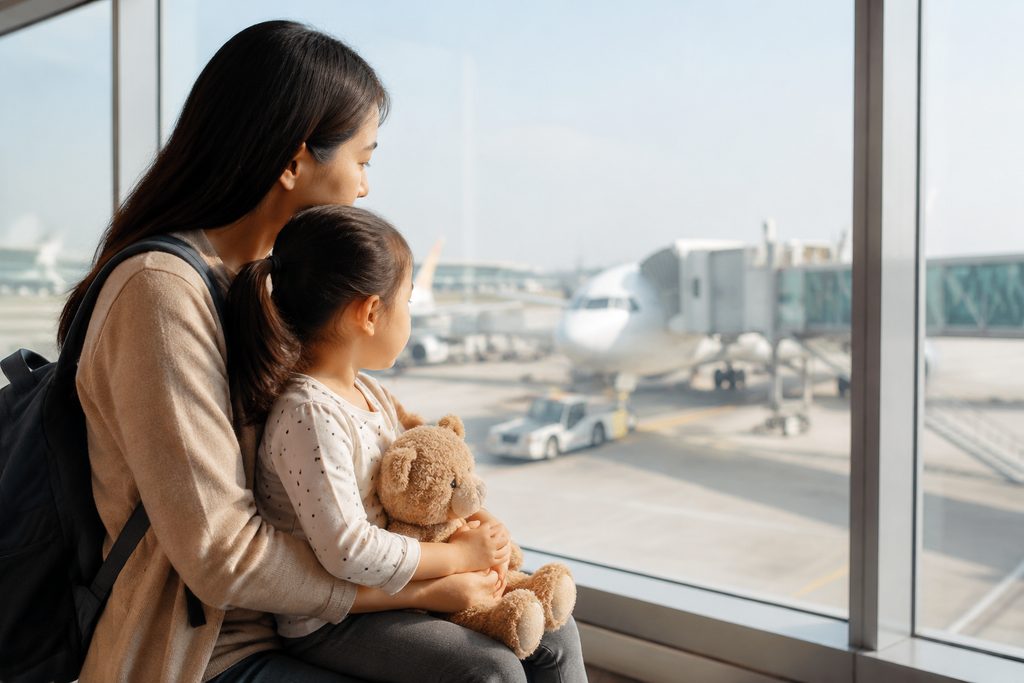
Have you been told your child needs a procedure you cannot easily access at home, and now you are staring at a map wondering whether flying to China is even possible? The visa question is usually the first wall families hit. Here is the short answer: children traveling to China for medical treatment use the S2 visa, not an M visa, and the parent accompanying them applies for the same category. The longer answer involves hospital documents, invitation letters, timing, and a few honest realities about how Chinese hospitals actually admit international pediatric patients.
Pediatric surgery cost China is one of the main reasons families start this conversation. A cardiac repair that might run $120,000 or more in the United States can land between $12,000 and $20,000 at a top Chinese public hospital. That gap changes what is possible for many parents. But cost only matters if you can get in, get treated safely, and get home. This guide walks through the actual sequence, including the visa step most parents get wrong.
How This Actually Works, Step by Step
The process is not as linear as booking a flight and showing up. Here is the real sequence our team sees when families pursue treatment for a child in China.
Step 1: You send medical records first. Discharge summaries, imaging reports, lab results, and the treating physician’s notes. Ideally translated into English or Chinese. A written second opinion from a top-tier Chinese specialist typically costs $300–500 and gives you a realistic read on whether a hospital will accept the case. Some families skip this and fly over directly. That is riskier.
Step 2: The hospital reviews and issues an invitation or treatment confirmation. This is the document the Chinese embassy or visa center wants to see. Without it, the S2 application is weak. Public hospital international departments and private international hospitals are familiar with issuing these. A regular public outpatient clinic is not.
Step 3: You apply for the S2 visa. The child and the accompanying parent each need one. Processing time ranges from 4 to 10 business days depending on the consulate, but document preparation can add two weeks before that. Do not book non-refundable flights until the visa is stamped.
Step 4: You arrive, attend the first face-to-face consultation, and only then does scheduling for surgery or inpatient care begin. This is the part many families underestimate. Chinese public hospitals generally do not lock in a surgery date before the doctor has examined the child in person. That means the first trip often includes evaluation, additional imaging, and a treatment plan — then a wait for a surgery slot.
Step 5: Admission, treatment, recovery, and discharge. For complex pediatric cases, plan for at least 2–4 weeks in-country. For oncology protocols, much longer.
A Child’s Medical Visa: What to Know About the S2 Category
China does not issue a document formally called a “medical visa.” The correct category for short-term private medical treatment is S2. It covers private affairs, including medical treatment, and is issued for stays of up to 180 days. If the child’s treatment will exceed 180 days, the family applies for S1, which allows longer residence and requires conversion to a residence permit after entry.
The M visa is for commercial and trade activities. Using an M visa for hospital treatment creates problems at immigration and inside the hospital’s international office. We have seen families arrive on M visas because a travel agent told them it was fine. It is not. The hospital’s admission office may still treat the child, but the visa status becomes a legal headache, and extensions get complicated.
What does the consulate actually ask for? Typically: the child’s passport with at least six months validity, a completed visa application form, a recent photo, proof of the parent-child relationship (birth certificate), and the hospital invitation or treatment confirmation letter from a recognized Chinese medical institution. Some consulates also request a letter from the referring physician at home explaining why treatment in China is being sought. Requirements vary by country, so check with the specific embassy or visa center handling your application.
How to get medical visa for child in China is really a two-track process: the medical track and the visa track. They move at different speeds. The medical track — records review, specialist opinion, treatment plan — can take one to three weeks. The visa track — document authentication, appointment booking at the visa center, processing — can take another two to four weeks. Running them in parallel is the only way to avoid a six-week stall.
Can My Child Have Heart Surgery in China?
The question comes up constantly, and the answer is yes — with caveats. China performs more pediatric cardiac surgeries annually than any other country. Fuwai Hospital in Beijing alone completes over 14,000 cardiac operations per year across adult and pediatric programs. That volume creates technical proficiency that is hard to replicate in smaller systems.
But volume is not the same as access. A foreign child cannot simply arrive at Fuwai’s public outpatient hall and expect to be scheduled. The path runs through the hospital’s international department or a designated VIP channel. Those channels provide English-speaking coordination, priority scheduling with senior specialists, and a smoother admission process. They also cost more — typically 1.5 to 2 times the standard public rate, which still lands far below Western prices.
For congenital heart defects, valve repairs, and complex reconstructions, families should look at hospitals with dedicated pediatric cardiac surgery programs. The cardiac surgery department rankings are a useful starting point. Shanghai and Beijing both host multiple centers with international patient offices. The key is confirming that the specific surgeon who will operate on your child has experience with the exact defect, not just the general procedure category.
A Realistic Timeline
Here is what a typical journey looks like, from first inquiry to discharge. The ranges are honest — some steps compress, others stretch.
| Stage | What Happens | Realistic Duration |
|---|---|---|
| Week 1 | You submit medical records; our team translates and routes them to a relevant pediatric specialty | 3–7 days |
| Week 2–3 | Specialist review; written second opinion or video consultation scheduled | 5–14 days |
| Week 3–4 | Hospital agrees to evaluate the child; invitation letter issued | 3–10 days after specialist sign-off |
| Week 4–6 | S2 visa application and processing for child and parent | 4–15 business days |
| Week 6–7 | Arrival in China; first face-to-face consultation; additional imaging if needed | 2–4 days in-country |
| Week 7–10 | Surgery scheduling; pre-operative workup; procedure | 1–3 weeks depending on case urgency |
| Week 10–14 | Post-operative recovery in hospital; discharge planning | 1–3 weeks |
| Week 14+ | Return home; remote follow-up with the Chinese team | Ongoing |
The forgotten step is document translation. If your child’s records are not in English or Chinese, certified translation adds 3–5 days before the medical review even starts. And consulates occasionally ask for notarized translations of the birth certificate. Budget for that.
What Can Go Wrong — and What Happens Then
The honest failure modes matter more than the success stories. Here are the ones we see most often.
The hospital declines the case after review. It happens. Some pediatric oncology protocols are too advanced, some prior surgeries make revision too risky, some conditions are better managed at home. If the written second opinion says no, that is not a dead end — it is information. You have spent $300–500 to learn that flying across the world would not have helped. The alternative is spending $10,000 on flights and hotels to hear the same thing in person.
The visa is delayed or denied. Incomplete hospital documents are the usual cause. The fix is resubmission with a stronger invitation letter — sometimes the hospital’s international office needs to reissue with more detail. This adds one to three weeks. Denial is not common when the hospital letter is genuine, but it is not zero.
The child arrives and the planned surgeon is unavailable. Top specialists have packed schedules. A specific surgeon may be abroad at a conference or already booked. The hospital’s international office will typically offer a colleague with equivalent seniority. If the family insists on one named surgeon, the wait can stretch by weeks. This is why we tell families to evaluate the team, not just one name.
Complications during treatment extend the stay. Any honest medical team acknowledges this. A planned 10-day hospital stay becomes 25 days. The S2 visa allows up to 180 days, so short extensions are rarely a visa problem. The bigger issue is accommodation and the parent’s work leave. Plan buffer time and budget.
Insurance refuses to reimburse. Most Western insurers treat Chinese public hospital care as out-of-network or not covered at all. Private international hospitals in China, like those listed on our private hospital directory, often have direct billing arrangements with major insurers. Public hospital international departments usually require upfront payment, with the family seeking reimbursement later. Clarify this before you commit.
Best Children’s Hospital Shanghai International Patients: How to Choose
Shanghai is the most common entry point for international families, and it has the pediatric infrastructure to justify that. The city hosts 18 of China’s Fudan-ranked top 100 hospitals, including several with dedicated pediatric centers. When parents ask about the best children’s hospital Shanghai international patients can access, we point to a few criteria rather than a single name.
First, check whether the hospital has a formal international medical department. That is the difference between an English-speaking coordinator managing your child’s care and you standing in a crowded registration hall with a translation app. Second, look at surgical volume for the specific procedure your child needs. A hospital that does 500 pediatric orthopedic cases a year is different from one that does 50. Third, confirm that the pediatric anesthesiology team has experience with your child’s age group — this is the hidden risk factor in pediatric surgery that parents rarely ask about.
Medical tourism package for child Beijing is a search phrase that suggests a tidy, all-inclusive product. Reality is more modular. A family might use a written second opinion first, then a video consultation, then travel for in-person evaluation, and only then commit to surgery. Each stage is separately arranged. Packages that promise a fixed surgery date before the doctor has examined the child should raise suspicion.
For oncology, the decision is even more layered. Book pediatric oncology treatment China and you will find hospitals with strong pediatric hematology-oncology departments in Beijing, Shanghai, and Guangzhou. But pediatric cancer protocols are long — months, not weeks. The hospital’s willingness to coordinate with the child’s home oncologist for maintenance phases matters as much as the initial treatment plan. Ask about that coordination before committing.
Practical Considerations: Records, Payment, Language, and Follow-Up
Records come first. Gather everything: imaging on CD or cloud link, pathology slides if relevant, genetic testing results, prior surgical notes, current medication list. Incomplete records slow the specialist review and can lead to a wrong preliminary assessment. If the records are in a language other than English or Chinese, get them translated before submission.
Payment at Chinese public hospitals is upfront. The hospital estimates the procedure cost, the family deposits funds, and the balance is settled at discharge. For pediatric cardiac surgery, expect $12,000–20,000 at a top public hospital. Complex oncology protocols run higher and longer. Private international hospitals charge more — sometimes three to five times the public rate — but offer direct insurance billing and Western-style wards.
Language is the daily friction. Even in hospitals with international departments, the radiology technician, the phlebotomist, and the ward nurse may speak only Mandarin. A bilingual medical companion who knows how Chinese hospitals actually work — where to queue, which window to visit first, how to read the lab slip — removes a layer of stress that parents of sick children should not have to carry. Companions start at $300 per day.
Follow-up back home is the step nobody plans for. The Chinese surgical team will want post-operative imaging at specific intervals. Your home physician needs the operative report and discharge summary, ideally translated. The Chinese hospital’s international office can usually provide English versions. Schedule a remote video follow-up with the Chinese team before you leave, so the channel is already open when questions arise.
For families considering treatment in the capital, our Beijing hospital guide breaks down the major institutions by specialty. For those weighing Shanghai against other cities, the top-ranked hospital directory groups Fudan-ranked institutions by city.
Frequently Asked Questions
Every child needs their own passport and their own S2 visa. China does not allow children to be added to a parent’s visa. The application requires the child’s birth certificate and the hospital invitation letter, plus the parent’s own S2 application.
Pediatric surgery cost China typically runs one-fifth to one-tenth of the US price for comparable procedures. A cardiac repair at a top Chinese public hospital ranges from $12,000 to $20,000, versus $120,000 or more in the US. Final cost varies by hospital, surgeon seniority, and case complexity.
In most public hospitals, no. The surgeon must examine the child in person first. International departments and VIP channels can often shorten the wait after that first consultation, but a guaranteed date before arrival is rare. Be skeptical of any service that promises one.
That is a useful outcome, even if it is disappointing. You have spent a few hundred dollars to learn that travel would not have helped. Sometimes the specialist suggests an alternative approach or a different hospital. Sometimes the honest answer is that the child is better served at home.
Some international insurers cover care at private international hospitals in China through direct billing. Most do not cover public hospital international departments upfront. Check your policy’s out-of-network and international treatment clauses before committing. Payment at public hospitals is typically required as a deposit before admission.
Your Next Step
The visa is solvable, the cost gap is real, and the medical infrastructure is substantial. The part that determines whether this works is the preparation — records, specialist review, hospital documents, and honest expectations about timing. We are China Medical Services, and our team helps international families navigate Chinese pediatric care from first inquiry to discharge. We do not perform medical procedures, and we do not promise outcomes. What we do is translate records, coordinate with hospital international departments, arrange bilingual companions, and keep the process moving when it stalls.
If you are weighing whether this path makes sense for your child, start with a written second opinion. It is the lowest-cost way to get a real read on your case. When you are ready, tell us about your child’s condition and we will help you map the route — including the visa step you now understand better than most.
For more medical information and treatment options in China, visit chinamedservices.com (China Medical Services).
