Cancer Care Through Medical Tourism in China: Costs, Hospitals, and How It Works
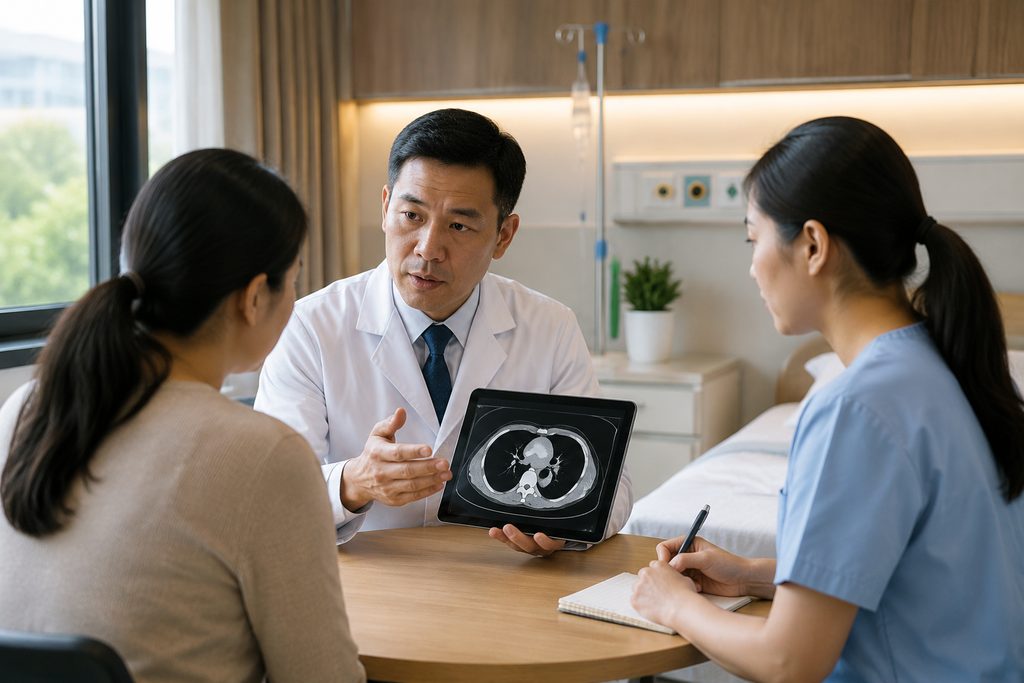
Cancer Care Through Medical Tourism in China: Costs, Hospitals, and How It Works
Roughly 1 in 5 people worldwide will develop cancer in their lifetime, according to the World Health Organization’s International Agency for Research on Cancer — and for patients in the US, UK, and Middle East, the first question after diagnosis is rarely “what treatment?” It’s “how do we pay for it?” Cancer treatment cost China is the reason a growing number of international patients now look east: a full course of care at a top Chinese hospital often lands at one-fifth to one-tenth of US list prices, with no multi-month wait for a surgery date.
That’s the headline. The reality is more layered — and worth understanding before you book a flight.
Cancer Treatment Cost China: The Short Answer
A single chemotherapy cycle at a top-tier Chinese public hospital typically runs $1,500–$4,000. A major cancer surgery — say, a lobectomy or gastrectomy — commonly falls between $12,000 and $30,000 all-in. Radiation therapy, depending on technique, sits in the $8,000–$25,000 range for a full course. In the United States, the same procedures routinely exceed $100,000 before insurance.
Those figures are ranges, not quotes. Final pricing varies by hospital tier, cancer stage, drug protocol, and whether you’re treated through the standard public channel or the hospital’s international department. Nothing here is a substitute for a physician’s assessment.
Who This Is Right For — and Who It Isn’t
Medical tourism for cancer is not a universal solution. It fits some patients well and is genuinely wrong for others.
Typically a good fit:
- Patients with a confirmed diagnosis and clear staging who need surgery, chemotherapy, radiation, or a combination
- People facing long public waitlists at home or quotes that exceed what they can pay
- Patients seeking a second opinion on a treatment plan before committing to it
- Families able to travel for 2–8 weeks and manage follow-up communication afterward
Probably not the right path:
- Anyone in an acute emergency — go to the nearest hospital, not another country
- Patients whose cancer requires highly specialized rare-disease protocols unavailable in China
- Those who cannot travel or tolerate a long flight
- Patients who need continuity with a home oncologist and cannot arrange it
Being honest about the second list matters more than the first.
The Options, Compared
Here’s how the main pathways stack up for a typical solid-tumor case requiring surgery plus adjuvant therapy.
| Pathway | Typical Cost (USD) | Wait Time | Language Support | Insurance |
|---|---|---|---|---|
| US private hospital | $120,000–$300,000+ | 2–6 weeks | Native | Direct billing common |
| UK NHS | $0 (tax-funded) | 4–18 weeks | Native | N/A |
| China top public hospital (standard channel) | $15,000–$45,000 | Days to weeks after in-person consult | Limited — interpreter needed | Pay upfront, reimburse later |
| China public hospital international department | $25,000–$70,000 | 1–3 weeks | English-speaking staff | Pay upfront, reimburse later |
| China private international hospital | $40,000–$100,000 | 1–2 weeks | Full English service | Direct billing with some insurers |
Which column fits you depends on budget, urgency, and how much hand-holding you want. The standard public channel is cheapest but assumes you can navigate a hospital that may see 10,000+ outpatients a day. The international department costs roughly 1.5–2x the standard rate but removes most of the friction.
Best Cancer Hospital in China for International Patients: How to Choose
China has more than 35,000 hospitals. The top 5% — around 340 institutions ranked by the Fudan Hospital Ranking and JCI accreditation — are where international patients should focus.
For oncology specifically, the Fudan Specialist Reputation Ranking names its top 10 hospitals per specialty each year. Several consistently appear for cancer care, including facilities in Beijing, Shanghai, and Guangzhou. You can browse the full specialty list on our departments page, which breaks down the top-ranked hospitals across 45 specialties including oncology.
Three practical filters matter more than brand name:
- Does the hospital have an international department? This is the single biggest factor in whether your experience is smooth or chaotic. English-speaking coordinators, dedicated appointment slots, and clearer billing all live here.
- Is the subspecialty a match? A hospital famous for liver cancer may not be the best for leukemia. Match the disease to the department, not the hospital’s overall reputation.
- Can you get a written plan before flying? Sending records for a remote review first is the smartest move — it confirms feasibility before you spend money on travel.
Our top hospitals directory groups the Fudan Top 100 by city so you can see what’s available in Beijing, Shanghai, Guangzhou, and 20 other cities.
How Long Does Cancer Treatment Take in China?
Timelines depend heavily on the treatment type, but here’s a realistic frame for a patient arriving with a confirmed diagnosis.
Week 1: Arrival, registration at the hospital’s international department, in-person consultation with the specialist, and any repeat imaging or lab work the Chinese team wants. Most hospitals require an in-person consultation before they will schedule surgery — this is a firm rule, not a formality.
Weeks 2–3: Pre-operative assessment, anesthesia review, and surgery scheduling. For straightforward cases, surgery often happens within 7–14 days of the first consult.
Weeks 3–6: Post-operative recovery, pathology review, and discharge planning. Chemotherapy or radiation, if needed, usually begins 3–6 weeks after surgery.
Beyond: Adjuvant cycles run on protocols similar to Western standards — typically every 2–3 weeks for 3–6 months. Many patients complete later cycles closer to home under their local oncologist’s supervision.
Total time on the ground for surgery plus the first cycle: usually 4–8 weeks. Longer for complex cases.
What It Costs — and What’s Included
Let’s break down where the money actually goes. A $25,000 surgical package at a Chinese public hospital international department typically covers:
- Surgeon and anesthesia fees
- Hospital bed and nursing care (ward or semi-private)
- Standard pre-op testing and imaging
- Pathology and post-op medications
What it usually does not cover: flights, accommodation, meals, interpreter services, and any complications requiring extended stay. Those add up — budget $3,000–$8,000 for a 6-week stay for two people in a major city.
Practical Considerations: Records, Visa, Payment, and Follow-Up
Four logistics trip up first-time medical travelers more than anything else.
Medical records. Bring your full diagnostic file — pathology reports, imaging on disc (not just printed films), lab results, and a treatment summary in English. Chinese specialists read English fluently, but the more organized your file, the faster the review. A certified translation is sometimes requested; check with the hospital.
Visa. Foreigners coming to China for medical treatment apply for the S2 visa, which covers short-stay private affairs including medical care. Stays exceeding 180 days require the S1 category. Accompanying family members apply for S2 as well. Note: the M visa is for commercial and trade activities — it is not a medical visa. Requirements shift, so confirm current rules with the nearest Chinese embassy or consulate before applying.
Payment. Public hospitals require prepayment; international insurance is typically reimbursed after the fact. Private international hospitals often bill insurers directly. Bring proof of funds and confirm accepted payment methods in advance.
Follow-up. Plan how you’ll share post-treatment scans and pathology with your home oncologist. Ask the Chinese hospital for a discharge summary and imaging in a format your local team can read.
Is Cancer Care in China Safe for Foreigners?
This is the question every patient asks, and it deserves a straight answer.
China’s top-ranked hospitals perform oncology surgeries at volumes that rival or exceed major Western centers, and several hold JCI accreditation — the same international standard used by hospitals in the US and Europe. Surgical outcomes at these institutions are published in peer-reviewed journals and are broadly comparable to Western benchmarks for common cancers.
What’s different is the environment. Public hospitals are enormous, busy, and not designed around foreign patients. English signage is limited. Queues are real. This is precisely why the international department exists — and why many patients use a bilingual medical companion to handle registration, payment, and communication.
Safety isn’t the issue. Navigation is.
Frequently Asked Questions
Not directly for standard public channels — Chinese public hospitals generally require an in-person consultation before scheduling surgery, and same-day registration is the norm. What you can do in advance is send your records for a written second opinion or video consultation, which confirms whether treatment is feasible and gives you a realistic cost estimate. Only after that does travel make sense.
There’s no standardized package — pricing is built case by case. As a reference, a surgical admission at a top public hospital’s international department commonly runs $25,000–$70,000 depending on procedure and complexity. Some coordination services bundle appointment scheduling, interpretation, and logistics into a service fee, but the hospital charges remain separate and are paid directly to the hospital.
From the moment you arrive with a confirmed diagnosis: usually 1–2 weeks to consultation and pre-op workup, surgery within 2–3 weeks, and discharge 1–2 weeks after that. Add 3–6 months if adjuvant chemotherapy is required, though later cycles can often be done at home.
Clinically, yes — the top-ranked hospitals meet international standards. Practically, no, not without support. You will need someone to handle registration, payments, appointment navigation, and medical interpretation. That’s the gap a bilingual medical companion fills.
Complications happen in any hospital, anywhere. Chinese hospitals handle them through their own emergency and ICU departments, and international departments have protocols for foreign patients. Before you commit, ask the hospital directly about complication management, extended-stay costs, and how they communicate with your family. Get answers in writing.
Your Next Step
Cancer care through medical tourism in China can cut costs dramatically and shorten waits — but only if you match the right hospital to your specific diagnosis and understand the logistics before you fly. The patients who do best are the ones who gather information first and commit second.
We’re China Medical Services, a coordination service that connects international patients with top-ranked Chinese hospitals. We are not a hospital and we do not diagnose or treat anyone. What we do is help you send records for review, understand your options, and — if you decide to travel — handle the appointment coordination, interpretation, and ground logistics so you can focus on treatment.
If you’d like a clearer picture of what your case would look like in China, start with a free consultation. No pressure, no obligation — just answers.
This article is for general information only and does not constitute medical advice. Treatment decisions should always be made with a qualified physician who has reviewed your individual case.
For more medical information and treatment options in China, visit chinamedservices.com (China Medical Services).
