Second Opinion on Your China Checkup Report: Costs, Timing, and How It Works
Second Opinion on Your China Checkup Report: What It Costs and How to Get One
You flew home with a folder of scans, lab sheets, and a diagnosis you’re not entirely sure you trust. Now you’re staring at a report where half the terms are in a language you don’t read, wondering whether the conclusion is solid. The second opinion on medical report China cost question usually comes second — right after “can anyone even review this from 6,000 miles away?” Yes. They can. And it’s often cheaper than one appointment with a specialist in your home country.
We coordinate this exact process for international patients every week. Here’s what actually happens, what it costs, and where it can go sideways.
How This Actually Works, Step by Step
The sequence is simpler than most people expect, but each step has a real time cost.
Step one: you send what you already have. That means your imaging files (DICOM format if you can get them — the actual scan data, not just the radiologist’s written summary), pathology slides or reports, lab results, discharge summaries, and any prior treatment records. Digital files are ideal. Photos of paper reports work if they’re legible.
Step two: we translate and organize. Chinese specialists at top-tier hospitals read English reasonably well in most specialties, but a disorganized pile of foreign records slows everything down. Our team prepares a structured Chinese-language summary alongside your originals, so the reviewing physician sees your case the way they’d see a domestic referral.
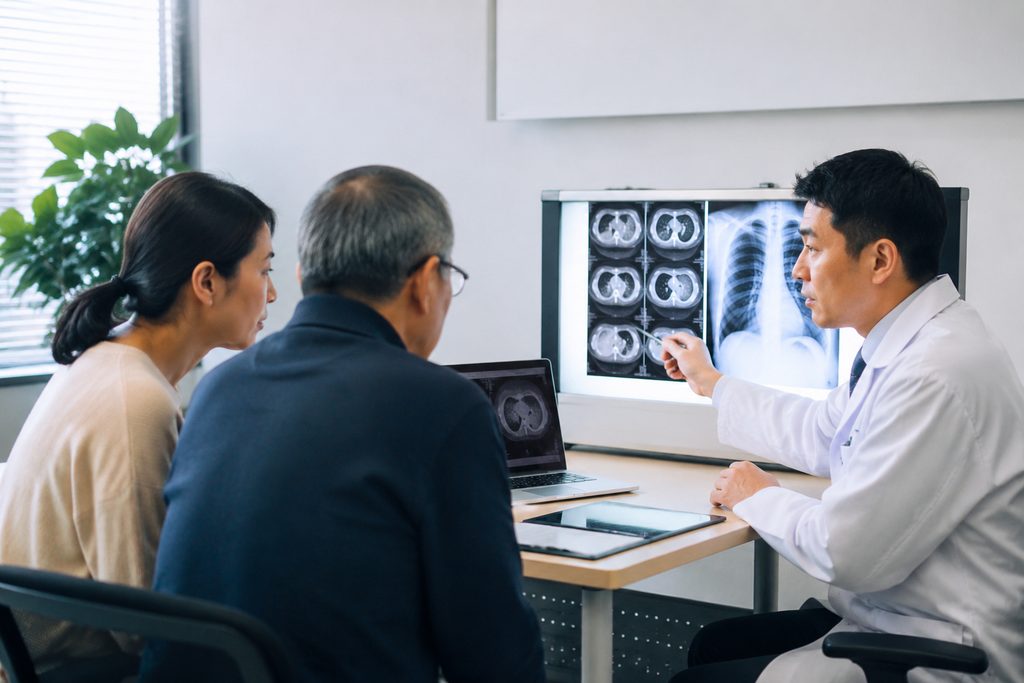
Step three: the relevant department reviews it. Not a general practitioner. If your report concerns a lung nodule, a thoracic oncology or respiratory specialist reads it. If it’s a cardiac finding, it goes to cardiology. The review is written — a document you keep.
Step four: you receive the written opinion. This typically covers whether the original diagnosis appears supported by the evidence, what additional testing might clarify the picture, and what treatment directions the Chinese team would consider. It is a reference document, not a prescription. Your physician at home remains your treating doctor.
Turnaround for a written second opinion runs roughly 5 to 10 business days from the moment your complete records arrive. Incomplete records are the single biggest cause of delay.
What the Second Opinion on Medical Report China Cost Actually Looks Like
Here’s the part most people want upfront, so let’s be direct about it.
| Service Type | Typical Cost (USD) | What You Get |
|---|---|---|
| Written second opinion (top-tier hospital specialist) | $300–500 | Written analysis of your existing records, treatment direction suggestions |
| Video consultation (public hospital international dept. or private international clinic) | $100–300 | Live discussion with the specialty team, plus record review |
| Top-specialist video consultation | $500–800 | Senior specialist, live session, direct Q&A |
| Multidisciplinary team (MDT) video consultation | $1,500–2,000 | Several departments review your case together |
Those are ranges, not quotes. Final pricing depends on the hospital, the specialty, and how complex your case is — a straightforward pathology re-read sits at the low end, a multi-organ cancer staging question sits at the high end.
One mechanism worth knowing: any consultation fee is credited in full toward on-the-ground coordination if you decide to travel to China for treatment within 90 days. It’s a one-time credit applied to the coordination fee only, never to hospital treatment charges. So the second opinion isn’t a sunk cost if you later decide to come.
A Realistic Timeline
People consistently underestimate two things: how long it takes to gather their own records, and how long visa processing adds if they decide to travel afterward.
| Stage | Realistic Duration | Notes |
|---|---|---|
| Requesting records from your home hospital | 3–14 days | Imaging on disc or via portal; pathology slides can take longer |
| Translation and case preparation | 2–4 days | Runs in parallel with record collection where possible |
| Specialist review and written opinion | 5–10 business days | Longer for MDT reviews, which need scheduling across departments |
| Video consultation scheduling | 3–10 days after review | Depends on specialist availability and time zone alignment |
| Hospital appointment coordination, if traveling | 1–3 weeks | Public hospital outpatient slots cannot be pre-booked from abroad in the standard channel |
| S2 visa processing, if traveling | 1–3 weeks | Varies by consulate; requires hospital supporting documents |
Total from first email to written opinion: usually two to three weeks. Total to actually sitting in a Chinese clinic: add another three to six weeks. Anyone promising faster is either guessing or cutting corners.
What Can Go Wrong — and What Happens Then
Being honest here matters more than being reassuring.
Your records arrive incomplete. This is the most common failure. You send the radiology report but not the scan images, or the biopsy result but not the pathology slides. The specialist can only comment on what they can see. Recourse: we tell you exactly what’s missing before the review starts, not after.
The reviewing physician disagrees with your local diagnosis. This happens, and it’s often the point of seeking a second opinion. But a written opinion from China doesn’t override your treating physician at home. It’s one more data point. If the two opinions conflict, the productive next step is usually a video consultation where your questions get answered directly.
The case turns out to need in-person examination. Some conditions simply cannot be assessed from records — certain neurological exams, physical function assessments, anything requiring palpation or real-time imaging under controlled conditions. A good reviewer will say so plainly rather than guess. That’s not a failed second opinion; it’s an honest one.
Language and terminology gaps cause confusion. Medical Chinese and medical English don’t map perfectly. A term translated literally can mislead. This is why we use medically trained translators rather than general translation services — and why we flag terms where the mapping is imperfect.
Is It Safe to Get a Second Opinion in China — and How Do You Judge Quality?
Yes. The entire intake process happens remotely: document upload, translation, scheduling, and payment. The only step that requires physical presence is an in-person examination, and that’s only needed when the clinical question genuinely can’t be answered from records.
A written review carries no physical risk since no treatment occurs. The real considerations are reviewer quality and hospital legitimacy. Stick to hospitals in the Fudan top tier or JCI-accredited international facilities, and ask whether the opinion explains its reasoning rather than just stating a conclusion.
That’s a legitimate outcome and often the reason people seek a second opinion in the first place. It doesn’t automatically mean either side is wrong. The useful next step is usually a video consultation where you can ask directly why the interpretations differ, then bring that information back to your treating physician.
No. A written opinion is a reference document. Plenty of patients use it purely to confirm or challenge a diagnosis and then continue treatment locally. If you do decide to pursue treatment in China within 90 days, the consultation fee is credited toward coordination costs — but there’s no obligation either way.
Your Next Step
A second opinion on a checkup report is one of the lowest-risk, highest-information moves available to an international patient. It costs a few hundred dollars, takes a couple of weeks, and either confirms your current path or opens a conversation worth having.
We’re China Medical Services. Our team handles record translation, hospital and specialty matching, appointment coordination through official international departments, and bilingual accompaniment on the ground. We don’t diagnose, we don’t promise outcomes, and we don’t guarantee that any particular specialist or date will be available.
If you’d like to know what a review of your specific records would involve, you can start with a free consultation — no commitment, just a clear picture of your options.
Frequently Asked Questions
Yes. The hospitals used for international patients are JCI-accredited and follow the same international safety standards as top hospitals in the US and Europe. Surgical teams perform high volumes of procedures — often more than their Western counterparts — which studies show leads to better outcomes.
Costs vary by procedure and hospital, but international patients typically save 40-80% compared to US prices — even when factoring in travel and accommodation. A consultation with our team will give you an exact, all-inclusive quote with no hidden fees.
Send us your existing medical reports to get started. We handle everything from hospital selection and appointment scheduling to visa assistance and post-operative recovery planning. Your medical records are reviewed by the specialist before you even book a flight.
For more medical information and treatment options in China, visit chinamedservices.com (China Medical Services).
