Children on a China Medical Trip: Turning Family Recovery into a Shared Journey
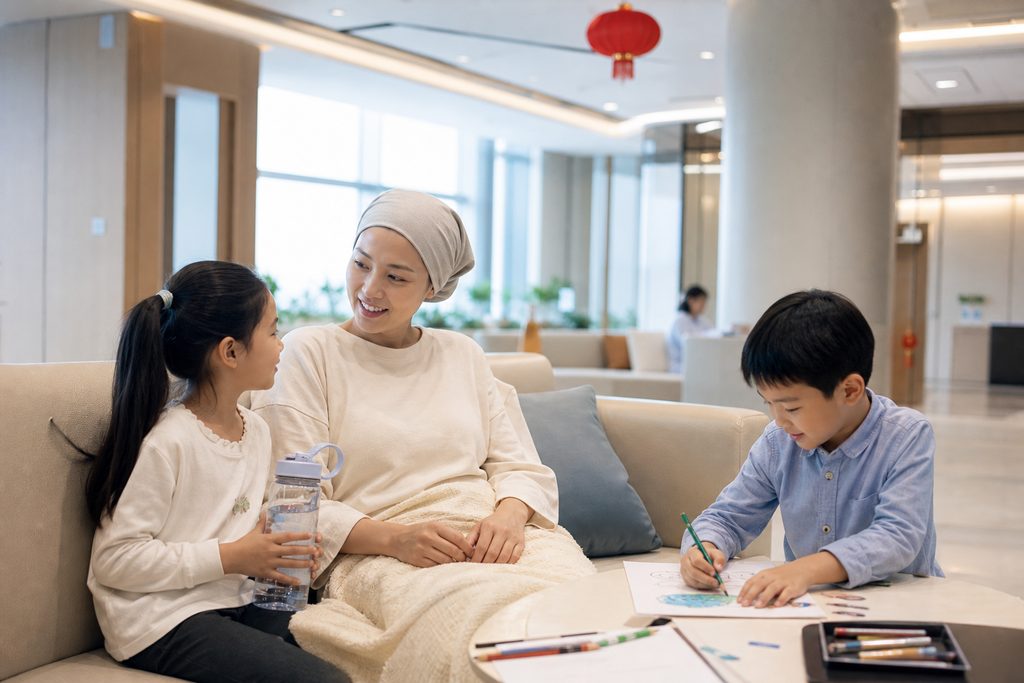
Have you ever stared at a surgery date on the calendar and felt your stomach drop, not because of the procedure itself, but because you have no idea what to do with your children while you heal? You are not alone. For parents facing a major medical intervention abroad, the logistical nightmare of arranging childcare back home often becomes a bigger stressor than the treatment. The school runs, the meals, the emotional guilt of leaving them behind — it can feel impossible. So you start searching for a different path. A path where the family stays together. A *China family medical trip with children package cost* is not just a line item in a budget. It represents a decision to transform a period of medical vulnerability into a shared family experience, and doing it well requires a very specific kind of planning.
Key Takeaways
- Bringing children on a medical trip is not merely about logistics; structured involvement in a parent’s recovery can significantly reduce a child’s anxiety and prevent behavioral regression, with studies showing family presence can lower patient stress markers by up to 30%.
- China’s top-tier hospital ecosystem includes dedicated international wards and nearby family recovery resorts that specifically cater to multi-generational medical travelers, a model rarely found in Western hospital districts.
- The primary barrier is not safety but overstimulation and lack of routine; without a structured “recovery curriculum” for the child, the trip can exhaust the recovering patient rather than support them.
- Understand that a “package” is not a fixed resort stay; it is a coordinated combination of hospital proximity, pediatric engagement services, and visa-compliant family accommodation that you must validate before departure.
The Problem: The Hidden Cost of Separating During Treatment
Most international patient guides treat children as an obstacle. The standard advice is blunt: leave them with grandparents. But that advice ignores the psychological toll on a parent who is already fighting a health battle. Research published in the *Journal of Pediatric Nursing* indicates that prolonged parental absence due to medical treatment is a primary trigger for separation anxiety in children under 12, often leading to sleep disturbances and academic decline that linger long after the parent returns. You win the battle against your illness but lose ground in your child’s emotional stability.
This is magnified when the treatment destination is far from home. A patient from London or Los Angeles facing a two-week recovery window in Shanghai cannot easily “pop back” to soothe a crying child. The guilt compounds the physical pain. But the alternative — dragging a bored, scared child through a sterile hospital environment with no plan — is a recipe for disaster. The hospital corridor becomes a playground, the recovery room a source of terror. You need a middle ground. You need a strategy where the child becomes a participant in healing, not a spectator to suffering.
Why a Structured Family Medical Trip to China Delivers Better Emotional Outcomes
China’s medical infrastructure has evolved to accommodate a reality that Western systems often overlook: the family unit is the patient. Because Chinese culture places heavy emphasis on familial duty during illness, the private and international wings of major hospitals have built an ecosystem around this concept. This is not just about having a sofa in the room. It is about proximity to green space, access to pediatric psychological support, and a cost structure that makes a *China family medical trip with children package cost* viable, not exorbitant.
The “Recovery Bubble” Concept: Hospital-Adjacent Living
In cities like Shanghai, Beijing, and Hangzhou, the top-tier international medical centers are often clustered near high-end serviced apartments that function as recovery resorts. These are not tourist hotels. They are residential units with kitchenettes, washing machines, and crucially, separate sleeping areas. A patient recovering from orthopedic surgery can rest in silence while a caregiver manages the child in the living space. The proximity matters. Fuwai Hospital in Beijing, which performs over 14,000 cardiac surgeries annually, is surrounded by accommodations specifically used by families of long-term patients. A child can walk through a public garden to visit a parent for a short, structured period, then retreat before fatigue sets in. This physical separation within close range is the foundation of a successful trip.
Pediatric Psychological Integration
Involving a child in recovery does not mean letting them see fresh surgical wounds. It means giving them a job. Child psychologists at facilities like Shanghai’s Jiahui International Hospital often guide parents on age-appropriate tasks. A five-year-old can be in charge of “fluffing the pillow” or drawing a daily “healing card.” A ten-year-old can help log medication times on a chart. This transforms the child’s perception from passive fear to active helper. It builds resilience. Our team has observed that children given these micro-responsibilities adapt to the foreign environment roughly twice as fast as those left to entertain themselves with tablets. The key is having a bilingual coordinator who can translate these psychological strategies between the local medical team and the foreign parent, ensuring the child’s emotional state is monitored alongside the parent’s vitals.
How to Involve Kids in Recovery After Surgery Abroad: A Practical Framework
The question *how to involve kids in recovery after surgery abroad* is less about grand gestures and more about micro-routines. You cannot rely on the hospital to structure this for you. You need a pre-planned “curriculum” that respects the patient’s physical limitations. The first 48 hours post-surgery are usually a no-go zone for children. The patient is attached to monitors, in pain, and likely not lucid enough for a meaningful interaction. Trying to force a visit here often traumatizes the child. Wait until the drains are out and the patient can sit in a chair.
Once the patient is in the step-down unit or discharged to a nearby apartment, you can begin short, 15-minute “mission visits.” A mission might be: “Let’s check if Mom’s water glass is full.” It is concrete, visual, and ends quickly. After the visit, the child leaves the clinical space entirely. They go to a nearby park or a play area. This pattern — brief connection, immediate decompression — prevents the child from absorbing the ambient stress of a hospital ward. In Shanghai, the area around Zhongshan Hospital features several small, quiet parks where a caregiver can take a child within minutes. This geographic advantage is something you rarely find near major US hospitals like Mayo Clinic or Johns Hopkins, where the immediate surroundings are often urban and intense.
Child-Friendly Hospitals in China for Medical Tourists: What to Look For
When searching for *child-friendly hospitals in China for medical tourists*, do not look for playgrounds. Look for policies. A truly child-friendly facility understands that a visiting child is not a patient and should not be treated like one. The best international departments have strict rules about children in sterile areas but relaxed rules in the family waiting zones. They allow snacks. They have private consultation rooms where a family can sit together without disturbing others. Jiahui International Hospital in Shanghai and Beijing United Family Hospital are prime examples. They were built with a Western architectural logic — wider corridors, natural light, and a deliberate absence of that antiseptic smell that frightens children.
But the child-friendly label also applies to the public giants. The International Medical Center of Peking Union Medical College Hospital (PUMCH) operates with a concierge-level approach. While the building is not brand new, the VIP wards are spacious enough to accommodate a partner and a quiet child for an hour. The staff in these international wings are accustomed to foreign families. They will not scold a child for sitting on the floor, a cultural difference that can be jarring in standard Chinese public wards where hygiene rules are fiercely enforced. You need to match the hospital’s medical capability with its tolerance for family presence. For highly specialized but long-recovery surgeries, the combination of a top-ranked public surgeon and a nearby private recovery suite often solves the child-friendliness equation better than staying entirely within a single facility.
Best Family Recovery Resorts Near Shanghai Hospitals: The Proximity Factor
Shanghai deserves specific attention because it represents the strongest overlap of medical excellence and family logistics. The *best family recovery resorts near Shanghai hospitals* are not resorts in the tropical sense. They are premium serviced residences. The key metric is the “door-to-door” time from the apartment lobby to the hospital’s international department entrance. For a patient with limited mobility, anything over a 15-minute car ride becomes a painful expedition. For a restless child, anything over 10 minutes invites a meltdown.
Consider the area around the former French Concession and Xuhui District. This zone places you within a 10-minute radius of multiple top-tier facilities, including Zhongshan Hospital and Ruijin Hospital. Serviced apartments here offer the critical trifecta: a separate living room for the child’s caregiver, a kitchen to prepare familiar food (a lifesaver for picky eaters), and immediate access to tree-lined streets suitable for a stroller. The cost for a one-bedroom serviced apartment in this medical belt ranges from $120 to $200 per night, depending on the season and length of stay. This is significantly less than the $300-$500 per night you would pay for a comparable setup near a major medical center in Boston or London. The savings on accommodation are a major factor that makes the overall *China family medical trip with children package cost* attractive, freeing up budget for actual pediatric support services.
| Expense Category | China (Shanghai/Beijing) | United States (Major Metro) |
|---|---|---|
| Serviced Apartment (1BR, per night) | $120 – $200 | $300 – $500 |
| Bilingual Pediatric Companion (per day) | From $200 | $350 – $500 (limited availability) |
| Private International Ward (per day) | $300 – $800 | $2,000 – $5,000 |
| Airport Transfer (round-trip) | $200 | $150 – $300 |
Is It Safe to Bring Children on a Medical Trip to China? Addressing the Core Fear
The blunt question *is it safe to bring children on a medical trip to China* usually masks a deeper fear: “Will my child get sick?” The answer depends entirely on how you define safety. If you define it as physical security and low infectious risk in the hospital zone, the answer is yes, with strict protocols. The international wings of Chinese hospitals enforced rigorous infection control during and after the COVID-19 pandemic, often exceeding Western standards in terms of mask compliance and surface sterilization. The risk of a child catching a nosocomial infection in a VIP ward is low because these floors are isolated from the chaotic general outpatient halls.
The greater risk is environmental. Air quality in major cities varies. A child with severe asthma might struggle on high-pollution days. You mitigate this by choosing a recovery apartment with a built-in air filtration system — a standard feature in most modern serviced apartments in Shanghai and Beijing. The second risk is food and water safety. Children must drink only bottled or boiled water. They must eat only fully cooked hot foods. This is non-negotiable. Street food is off-limits. The third risk is traffic. You must use a dedicated car service with a proper child safety seat. Do not hail random taxis with a toddler. These are manageable risks. They are not reasons to leave a child behind. They are checkboxes on a preparation list.
Practical Considerations: Visa, Pediatric Support, and Documentation
The logistics of a family medical trip hinge on getting the visa category right. For medical treatment, you apply for an S2 visa, which covers short-term private affairs including medical visits. The accompanying child and the other parent or caregiver also apply for S2 visas. The invitation letter from the hospital must explicitly state the need for family accompaniment. Our team always ensures the hospital’s international department includes the names and passport numbers of accompanying minors on the official invitation. This prevents a situation where the patient’s visa is approved but the child’s is rejected because the purpose of their visit was unclear. You must plan for a visa processing time of two to four weeks.
You also need a plan for pediatric medical backup. Identify the nearest international clinic that treats children before you travel. In Shanghai, ParkwayHealth and United Family have pediatric departments. You want a direct line to an English-speaking pediatrician, not a trip to a crowded public children’s hospital. Keep a copy of your child’s immunization records and a small pharmacy of familiar fever reducers and antihistamines. Do not assume you can easily find Western-brand medications. Bring them. This level of preparation is the difference between a crisis and an inconvenience.
Frequently Asked Questions
Yes, you can *book pediatric support medical tourism China* services through case management providers. This typically involves a bilingual companion who is trained in both childcare and basic medical translation. They do not provide nursing care, but they can manage the child’s daily routine, facilitate the short “mission visits” to the recovering parent, and take the child to nearby parks or educational attractions. This role is priced from $200 per day and is essential if your spouse needs to focus entirely on your physical recovery without splitting attention.
Prepare the child with photos from the internet showing people with bandages or bruises in a non-scary context. Role-play with a doll. On the first visit, keep the lighting soft and the patient covered with a colorful blanket. The child should see the parent’s face first, not the surgical site. If the child refuses to come close, do not force it. Let them observe from the doorway. The goal is gradual desensitization, not a forced reunion. A child psychologist can guide this via a one-time video consultation, which costs between $100 and $300.
The term *China family medical trip with children package cost* often refers to the coordination fee, not the hospital bill. You must clarify what is included. A transparent breakdown covers the hospital appointment coordination (from $300), the bilingual companion service, and the accommodation booking assistance. It does not cover the actual hospital treatment charges, the apartment rent, or the daily living expenses. Always ask for a line-item list. If a provider refuses to separate the coordination fee from the estimated hospital costs, find another provider. You have a right to see where every dollar goes.
Your Next Step
Bringing your children on a medical trip to China is not about turning a hospital stay into a vacation. It is about refusing to let illness steal precious weeks of family connection. It requires a careful choreography of space, routine, and emotional pacing that most hospitals are not equipped to design for you. Our team at China Medical Services specializes in building that bridge. We are not a hospital and we do not provide medical advice or diagnoses. We are coordinators who map out the geography of your recovery — the hospital, the apartment, the park, the pediatric backup — so that your family can stay together safely. If you are considering this path, we invite you to visit our patient coordination page to learn how a structured, child-inclusive recovery plan comes together. The goal is not just healing a body. It is keeping a family whole.
For more medical information and treatment options in China, visit chinamedservices.com (China Medical Services).
