Hospital Appointments in China for Foreigners: How Booking Really Works
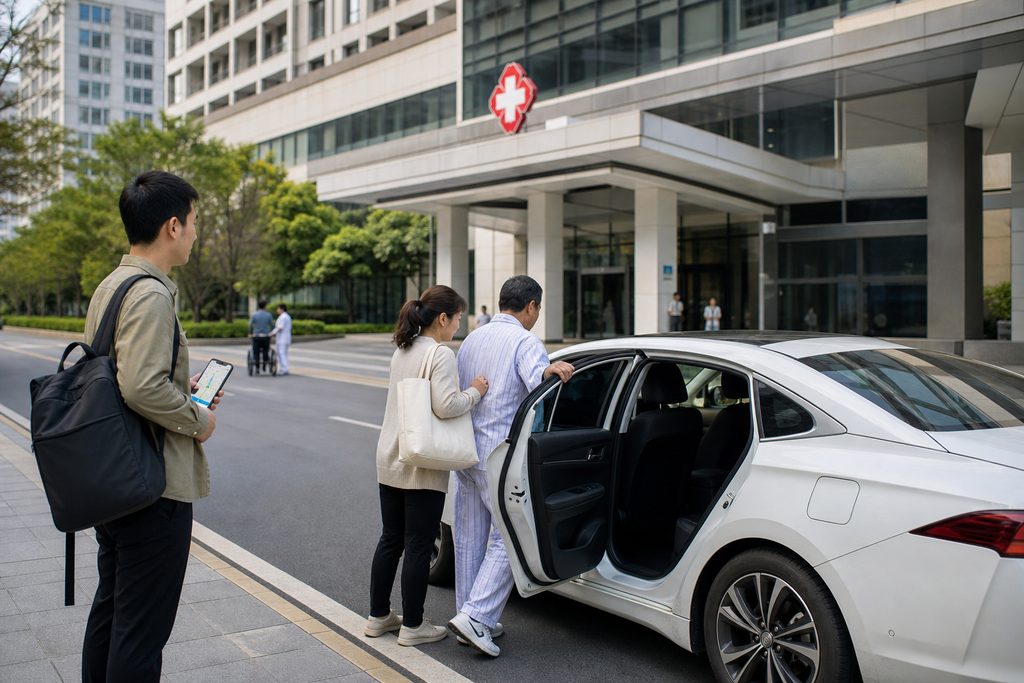
Roughly 4,000 international patients passed through the international departments of just three Beijing hospitals in a single recent year — and that number is a fraction of the total. China now draws medical travelers from Russia, the Middle East, Southeast Asia, and increasingly the United States and Europe. Yet the single biggest obstacle these patients hit is not cost or quality. It is the appointment itself. Hospital appointment booking for foreigners in China works nothing like the online scheduling systems Western patients are used to, and that gap is where most first-time visitors get stuck.
Here is the uncomfortable truth: at a standard Chinese public hospital, you usually cannot reserve a specialist slot from overseas. You show up, you queue, you take a number. That is the rule, not a bug. Understanding why — and knowing the legitimate routes around it — is the difference between a smooth trip and a wasted one.
Hospital Appointments in China for Foreigners: The Short Answer
You have two realistic paths. The first is the public hospital’s international or VIP department, where staff speak English and appointments can be arranged in advance — often at 1.5 to 2 times the standard consultation fee. The second is a private international hospital such as United Family, Jiahui, Parkway, or Raffles, where English-speaking staff and direct insurance billing are standard, and prices run closer to Western levels.
What you generally cannot do is log onto a top public hospital’s website from abroad and book Professor So-and-So for next Tuesday. Surgery, in particular, requires an in-person consultation first. No reputable Chinese hospital schedules an operation on the basis of emailed scans alone.
Who This Is Right For — and Who It Isn’t
China’s top-tier hospitals make sense for a specific kind of patient. They make very little sense for others.
Typically a good fit:
- You need a complex procedure — cardiac surgery, oncology treatment, orthopedic reconstruction — where cost or waiting time at home is prohibitive.
- You want a second opinion from a high-volume center. Fuwai Hospital in Beijing, for instance, performs over 14,000 cardiac surgeries a year, more than any other single facility worldwide.
- You are already in Asia and can travel on short notice.
- You are seeking Traditional Chinese Medicine for chronic conditions or rehabilitation, where China is the source, not the imitation.
Probably not a fit:
- You need urgent or emergency care. China’s system is not built for walk-in foreigners with acute crises.
- You cannot travel. Some evaluations can be done remotely, but treatment cannot.
- Your condition is well managed at home at a price you can afford. Flying 8,000 miles to save $2,000 is bad math.
- You expect a Western-style patient experience at a public hospital. You will not get one. These are enormous institutions — some see more than 10,000 outpatients a day.
The Options, Compared
| Route | Can you book from abroad? | English support | Typical consultation cost | Payment |
|---|---|---|---|---|
| Public hospital, standard clinic | No — queue on arrival | Rare | Under $15 | Prepay; reimbursement later |
| Public hospital, international/VIP wing | Yes, often | Yes | $50–$300 | Prepay; reimbursement later |
| Private international hospital | Yes, online | Yes, native-level | $150–$500 | Direct insurance billing common |
| TCM hospital | Varies by institution | Limited | $20–$80 | Prepay |
If your priority is a specific professor at a Fudan-ranked public hospital, the VIP wing is your route. If your priority is comfort and predictable English service, go private. If you want the genuine Chinese medical experience at the lowest price and have patience, the standard clinic works — but bring a translator.
Public vs. Private: Can Foreigners Use Public Hospitals in China?
Yes. Foreigners are legally entitled to use public hospitals, and millions do. There is no rule barring non-citizens from the standard outpatient system.
The barrier is practical, not legal. China’s 35,000-plus hospitals operate on a registration system where you take a number and wait. Instructions, signage, and payment kiosks are largely in Chinese. A hospital like Peking Union Medical College Hospital or West China Hospital in Chengdu is the size of a small town. Without Mandarin, navigating one on your own is genuinely hard — not impossible, but hard.
That is why the international and VIP departments exist. They are not a scam or a tourist trap; they are the hospital’s own answer to foreign patients. You pay more, and in exchange you get an appointment time, an English-speaking coordinator, and a shorter queue. Roughly 340 of China’s top-ranked hospitals maintain some version of this service.
How to See a Doctor in China as a Foreigner: The Actual Sequence
The workflow is more rigid than most patients expect. Here is how it typically unfolds.
Step one: records first. Before anyone will talk to you, you need your existing imaging, pathology reports, lab results, and a summary of treatment to date — translated into Chinese if possible. This is the raw material for any serious evaluation.
Step two: remote review. A Chinese specialty team reviews your file and tells you whether your case is something they can help with, and roughly what it would involve. This can happen as a written second opinion or a video consultation. Skipping this step and flying over cold is the most common and most expensive mistake.
Step three: appointment coordination. Once a plan looks feasible, someone books the actual consultation slot through the hospital’s international office. For a specialist consultation in Shanghai at a top public hospital, expect to pay somewhere in the $50–$300 range through the VIP channel.
Step four: in-person consultation. You meet the doctor. This is when surgery, if needed, gets scheduled. Not before.
Step five: admission and treatment. Admission follows the hospital’s own rules and depends on bed availability, your fitness for the procedure, and the surgeon’s assessment.
What It Costs and How Long It Takes
Consultation fees are the small number. The real money is in treatment, and the spread is enormous.
Coronary artery bypass grafting at a top Chinese public hospital runs roughly $12,000 to $20,000. The same operation in the United States routinely exceeds $120,000. That 1:6 to 1:10 ratio holds across many major procedures, and it is the single biggest reason patients make the trip.
On timing: a written second opinion typically turns around in a few days to two weeks, depending on how complete your records are. Video consultations can often be arranged within a week. Once you are physically in China, a consultation-to-surgery gap of two to four weeks is common for non-urgent cases, driven by bed availability and pre-operative testing.
What is not included in any quoted treatment figure: flights, accommodation, meals, translator time, and follow-up care after you return home. Budget for those separately.
Practical Considerations: Visas, Payment, and Language
Visa. For medical treatment, the applicable short-stay category is the S2 visa, issued for medical treatment and private affairs, with family accompanying you applying under the same category. Longer stays may fall under S1. Requirements shift, so confirm current rules with the nearest Chinese embassy or consulate and bring your hospital’s supporting documents. Note that the M visa is for commercial and trade activity — it is not a medical visa, despite what some forums claim.
Payment. Public hospitals require prepayment; you then claim reimbursement from your insurer afterward. Private international hospitals frequently bill your insurer directly, which is a meaningful advantage if you carry international coverage.
Language. This is the variable patients underestimate most. Even in VIP wings, the depth of English varies. For anything involving consent forms, discharge instructions, or medication schedules, a bilingual companion is not a luxury.
Follow-up. Plan your post-treatment care before you fly home. Your Chinese surgeon can send records to your local physician, but someone has to arrange that handoff.
Frequently Asked Questions
Only through international departments, VIP wings, or private hospitals. Standard public hospital clinics do not offer overseas advance booking. Any service promising you a confirmed surgical slot without an in-person examination is misrepresenting how the system works.
Yes — you need a valid entry visa regardless of whether you are coming for a consultation or surgery. The S2 category covers short-stay medical treatment. Confirm current documentation requirements with your nearest Chinese consulate before booking flights.
Chinese hospitals handle complications through their own clinical channels, and top-tier institutions have strong safety records. That said, outcomes are never guaranteed anywhere, and legal recourse as a foreign patient is more complicated than at home. Discuss risks directly with your treating physician and confirm your travel insurance covers medical complications in China.
Through a public hospital’s international department, roughly $50 to $300. At a private international hospital, $150 to $500. The fee covers the consultation only — imaging, labs, and procedures are billed separately.
Plenty of patients manage alone, particularly at private international hospitals in Beijing and Shanghai, where English is standard. If you are targeting a top public hospital, need a specific specialist, or do not speak Mandarin, coordination help removes real friction. It is a judgment call, not a requirement.
Your Next Step
The system is navigable. It is just not self-explanatory, and the rules around booking are stricter than most foreign patients assume. Get your records in order, decide whether you want the public or private route, and confirm your visa category before anything else.
We are China Medical Services — a coordination service, not a hospital. We do not diagnose, and we do not sell access. What we do is help international patients find the right institution among China’s top-ranked hospitals, arrange appointments through official international channels, and provide bilingual support on the ground. If you would like to talk through your situation, start with a free consultation — no pressure, and no obligation to travel.
For more medical information and treatment options in China, visit chinamedservices.com (China Medical Services).
