Changhai Hospital Shanghai Guide: Why Urology and Burn Surgery Draw Global Patients
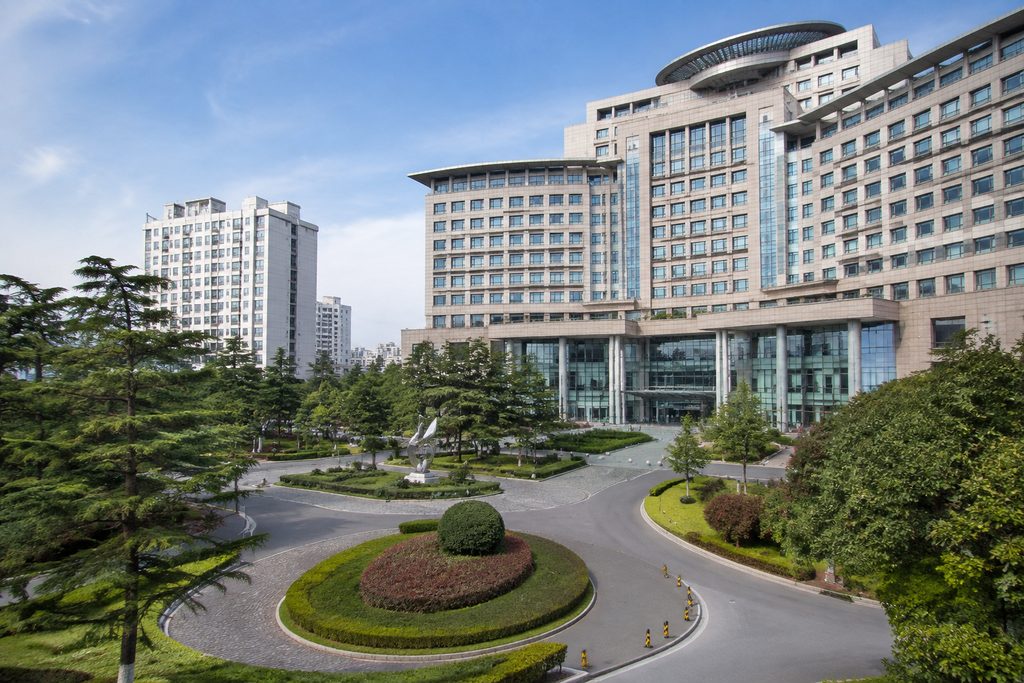
Have you ever stared at a diagnosis and felt the ground shift beneath you, wondering if the best care for your specific condition might actually be on the other side of the world? That question brings a surprising number of patients to one particular institution in Shanghai. Changhai Hospital, a sprawling military medical center, doesn’t just treat urological conditions and burns. It has built two departments that consistently pull international attention away from more famous names.
Our team regularly helps patients unpack what this means in practical terms. It is not about a single hospital being “the best” at everything. It is about knowing that for a complex kidney tumor resection or a catastrophic burn, the volume of cases and the depth of specialized infrastructure here are genuinely hard to match. The real question is not whether the hospital is good. The real question is how you, as someone outside the Chinese system, actually access it.
How This Actually Works, Step by Step
The process is not a website booking engine. Changhai Hospital is a public military hospital serving thousands daily. You cannot simply email a department and reserve a surgery date. The path for international patients follows a logic built on medical documentation, not wishful thinking.
First, we collect your existing records. That means original imaging on CD or via secure cloud link, pathology slides if relevant, operative notes from any prior surgeries, and a concise summary of your current status. If the records are not in English or Chinese, certified translation becomes step zero. A cardiology report in Arabic or a Russian oncology summary must be rendered accurately before any Chinese specialist can review it.
Second, the material goes to the relevant department for a written second opinion. For urology, this often lands on the desk of a senior attending physician within their Urology Surgery Division. For burns, it reaches the Burns and Plastic Surgery Institute. The analysis you get back is a document—not a prescription, not a binding promise. It outlines what they see, what they would recommend, and whether they believe treatment on-site is appropriate. A written second opinion typically costs from $300 to $500.
Third, if the opinion supports proceeding, we coordinate a video consultation directly with the specialty team. This is where you speak face-to-face with the doctors who would handle your care. You show them the scar contracture. You describe the urinary symptoms that imaging alone cannot convey. A video consultation with a top specialist ranges from $500 to $800. Any amount you pay for this consultation or the written second opinion is credited in full toward our on-the-ground coordination fee if you decide to come for treatment within 90 days. This credit applies to the coordination service only, never to hospital charges.
Fourth, with a confirmed plan, we move to logistics. The hospital’s International Medical Center issues a formal treatment invitation letter. You apply for an S2 visa with that letter, your passport, and the relevant embassy forms. Processing times vary by country. We advise budgeting three to five weeks for this stage. Once the visa is approved, we lock in an appointment window and arrange airport pickup and bilingual medical companion support.
Why Urology and Burn Surgery Are Its Signature Strengths
Changhai Hospital’s Urology Department was established in 1949 and has since grown into one of the largest urological centers in Asia. The numbers tell part of the story. The department houses over 200 inpatient beds dedicated solely to urology and performs more than 10,000 surgical procedures annually. That volume creates a depth of experience in robotic-assisted laparoscopic surgery, minimally invasive stone removal, and complex oncology resections that smaller centers simply cannot accumulate.
The department is a designated National Key Discipline and runs one of the few State Key Laboratories focused on urological cancers in China. For international patients, this translates into access to techniques like single-port robotic prostatectomy and precision nephron-sparing surgeries that preserve kidney function while removing tumors. The team has published extensively on surgical approaches for renal cell carcinoma with inferior vena cava tumor thrombus—a high-risk scenario where tumor extends into the body’s largest vein. Few centers worldwide manage more than a handful of these cases each year. Changhai’s team handles them routinely.
The burn unit operates under a different but equally compelling logic. The Burns and Plastic Surgery Institute at Changhai is one of China’s oldest and largest burn treatment centers. It manages over 1,200 inpatient burn cases annually, with a survival rate for patients with burns covering more than 90% of total body surface area that exceeds 98%. That is not a typo. The institute pioneered the “Changhai Method” of staged burn wound management, which combines early eschar excision, temporary biological dressings, and systematic infection control. For patients from regions where severe burn care is fragmented or prohibitively expensive, this concentrated expertise changes the calculus entirely.
The institute also handles post-burn reconstruction—releasing contractures, restoring function to hands and faces, and using tissue expansion and free flap techniques to rebuild what fire has destroyed. This is not emergency care. This is the long, methodical work of restoring a life. And it is work that benefits enormously from a team that sees thousands of such cases rather than dozens.
A Realistic Timeline
| Stage | What Happens | Typical Duration |
|---|---|---|
| Document Preparation | Gathering imaging, reports, pathology; certified translation if needed | 1–2 weeks |
| Written Second Opinion | Records sent to Changhai specialty team; written analysis returned | 5–10 business days |
| Video Consultation | Live discussion with treating physician; treatment plan confirmed | Scheduled within 1–2 weeks of opinion |
| Visa Processing | S2 visa application with hospital invitation letter | 3–5 weeks (varies by embassy) |
| Travel and Admission | Arrival in Shanghai; pre-op testing; surgery scheduling | 3–7 days after arrival |
| Inpatient Stay | Surgery and immediate recovery; varies by procedure | 5–14 days (urology); 14–60+ days (severe burns) |
| Local Follow-Up | Wound checks, catheter removal, initial rehabilitation | 1–4 weeks post-discharge |
This timeline assumes no major surprises. Surprises happen. A pre-operative cardiac clearance flags an issue. The embassy takes longer than expected. The burn wound requires an additional grafting stage. We build buffer into every plan because medicine does not run on a train schedule.
What Can Go Wrong — and What Happens Then
A patient arrives and the surgeon reviews fresh imaging that reveals disease progression since the records were sent. This is not failure. This is biology. When it happens, the team re-evaluates the surgical plan on the spot. Sometimes that means a more extensive procedure. Sometimes it means canceling surgery in favor of systemic therapy first. The hospital does not proceed with a plan that no longer fits the reality on the ground.
Visa delays are another common friction point. An S2 visa application can stall if the invitation letter contains discrepancies or if the applicant’s home country has a backlog at the Chinese embassy. We have seen applications clear in twelve days and others take seven weeks. There is no guaranteed timeline. What we do is track the application daily and maintain contact with the hospital’s international office so the treatment slot can be adjusted accordingly.
Complications after surgery happen at every hospital on earth. A urological procedure can result in a fistula or stricture. A burn graft can partially fail. Changhai’s teams manage these complications in-house with the same senior staff who performed the initial surgery. The difference for international patients is that you are far from home when it happens. That is why we keep a bilingual companion with you through discharge and beyond, ensuring you understand every development and every decision.
How Is Changhai Hospital Urology Department Evaluated
International patients often arrive with rankings in mind. The Fudan University Hospital Rankings, China’s most authoritative hospital evaluation system, consistently place Changhai’s urology department among the top specialists in the country. The department appears in the top tier of the urology specialty reputation rankings, which assess clinical capability, research output, and peer recognition across 45 specialties nationwide.
But rankings capture only part of the picture. What matters more for a prospective patient is the department’s sub-specialization. Changhai’s urology division is not a general unit that handles a little of everything. It operates dedicated teams for urinary stone disease, urologic oncology, andrology, pediatric urology, and female pelvic medicine. When you send your records, they are reviewed by the team that focuses on your specific problem, not by a generalist who sees everything.
The burn institute carries a similar weight. It serves as the Burns and Trauma Center for the People’s Liberation Army Navy and has been designated a National Clinical Research Center for Burns. These are not marketing labels. They reflect the reality that the institute trains burn surgeons from across China and receives the most complex referrals from the entire eastern seaboard.
Practical Considerations: Records, Costs, and Language
Medical records must arrive in a format the reviewing team can use. Digital imaging should be in DICOM format on CD or uploaded to a secure cloud folder. Written reports need certified English-to-Chinese translation unless the referring physician writes them in English and the receiving team reads English comfortably. Pathology slides require special handling—they travel in a secure slide box, not in checked luggage.
The Changhai Hospital urology surgery price varies substantially by procedure complexity. A straightforward transurethral resection of a bladder tumor costs less than a robotic radical cystectomy with urinary diversion. As a reference point, urological procedures at top-tier Chinese public hospitals generally range from $8,000 to $25,000, compared to $40,000 to $120,000 or more in the United States. Burn treatment costs depend entirely on burn depth, surface area, and the number of surgical stages required. A single grafting procedure might fall in the $5,000 to $15,000 range. A prolonged ICU stay for a major burn can run significantly higher.
International patients access Changhai through the hospital’s International Medical Center, not through the general outpatient hall. This means higher consultation fees—typically 1.5 to 2 times the standard rate—but also English-speaking coordination, private rooms, and appointment scheduling that bypasses the general queue. You pay for the infrastructure that makes treatment possible as a foreigner.
Payment is out-of-pocket at the time of service. The hospital provides detailed invoices and medical reports that you submit to your insurance for reimbursement. Some international insurers have direct billing arrangements, but you should verify this before travel. Do not assume.
Language is the invisible barrier. Changhai’s senior urologists and burn surgeons often speak some medical English, having published in international journals and attended global conferences. The nursing staff, administrative desks, and radiology departments operate in Chinese. A bilingual medical companion bridges this gap—translating during consultations, explaining discharge instructions, and handling the practical friction of a hospital system that was not designed for English speakers.
Frequently Asked Questions
Yes. The Burns and Plastic Surgery Institute accepts international patients through the hospital’s International Medical Center. You need a formal referral with detailed medical records, photographs of the burn wounds, and a summary of prior treatments. The institute evaluates each case individually and confirms whether they can accept the patient before any travel arrangements are made. Emergency burn care for unstabilized patients is not coordinated remotely—this pathway is for patients who are stable enough to travel and seeking definitive reconstruction or staged surgical management.
Cost depends entirely on the scope of injury. A single scar contracture release with skin grafting at a top Shanghai burn center typically ranges from $5,000 to $12,000. Extensive post-burn reconstruction requiring multiple staged procedures, tissue expansion, and free flap surgery can reach $30,000 to $60,000 or more. These figures are substantially lower than equivalent care in the United States or Western Europe, where similar reconstructive sequences often exceed $150,000. The final quote comes only after the institute’s surgeons review your specific case.
You cannot book surgery directly. The pathway is: submit records for a written second opinion, complete a video consultation with the urology team, receive a treatment plan and cost estimate, obtain an S2 visa with the hospital’s invitation letter, and then travel for pre-operative evaluation and scheduled surgery. The entire sequence typically takes eight to twelve weeks from initial contact to surgery date. Attempts to shortcut this process by showing up at the general outpatient clinic without coordination will not work for complex surgical cases.
The hospital itself does not sell “packages” in the medical tourism sense. What exists is a coordinated care pathway: the hospital provides treatment at its standard international patient rates, and coordination services handle the logistics around it—visa support, airport transfer, bilingual companion, accommodation recommendations. The total cost is the sum of hospital charges plus coordination fees, not a single bundled price. This distinction matters because it means the medical component and the service component are transparently separate.
Your Next Step
Choosing to travel across the world for surgery is not a decision anyone makes lightly. It sits at the intersection of fear, hope, and practical logistics. What we have laid out here is the real shape of that decision as it applies to Changhai Hospital’s two standout departments.
Our team at China Medical Services exists to handle the coordination that makes this possible—translating records, arranging specialist reviews, navigating visa paperwork, and placing a bilingual companion at your side from the moment you land in Shanghai. We do not practice medicine. We do not promise outcomes. We connect you with the doctors who can evaluate your case, and we make sure nothing gets lost in translation along the way.
If you are ready to understand whether treatment at Changhai makes sense for your specific situation, send us your medical records for a free initial consultation. We will review what you have, explain your options honestly, and help you decide whether this path is right for you. No pressure. Just clarity.
For more medical information and treatment options in China, visit chinamedservices.com (China Medical Services).
