China Hospital with English Doctors: How Foreigners Get Treated
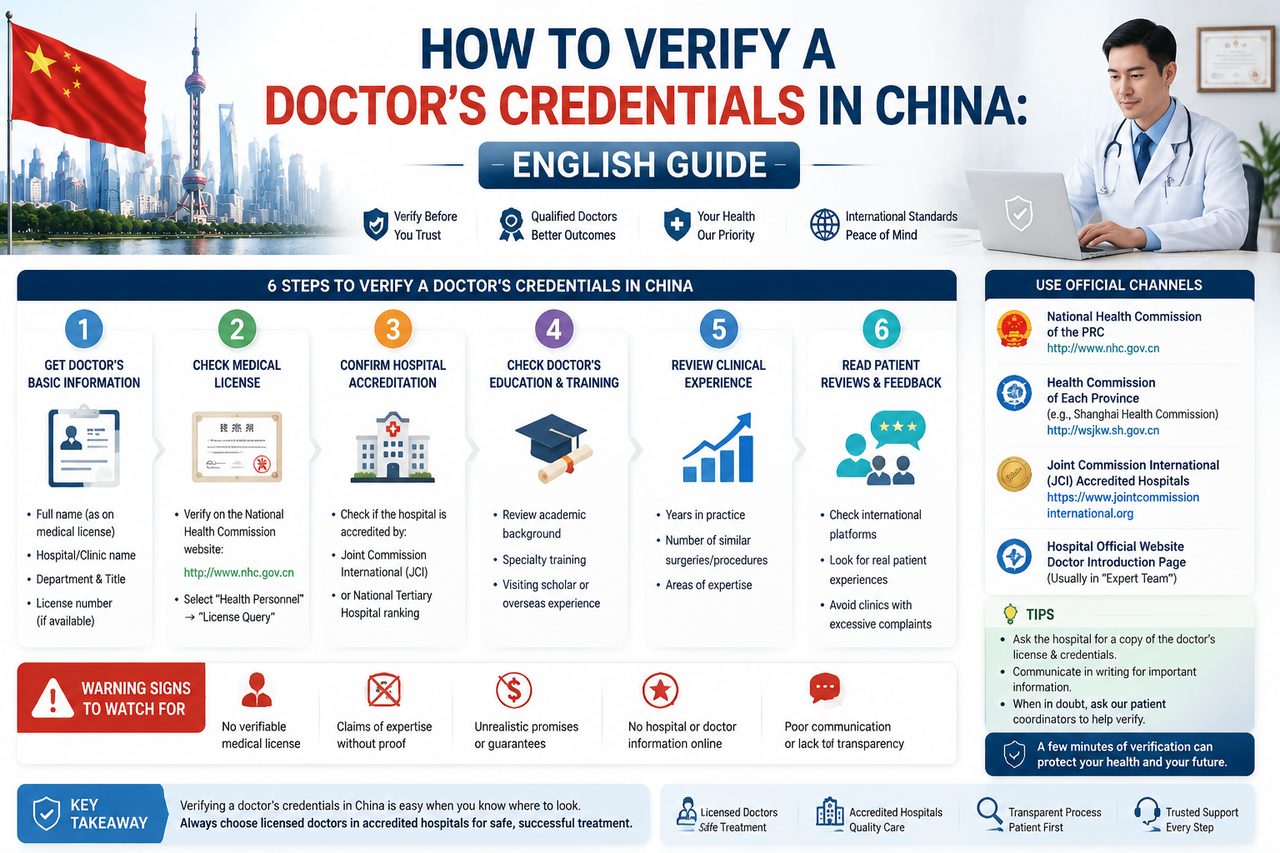
China Hospital with English Doctors: How Foreigners Get Treated
Can a foreigner actually find a hospital in China with English speaking doctors? Yes — but not at every hospital, and not through the same door local patients use. The hospitals that treat international patients in English are a defined, findable group, and knowing which door to knock on changes everything about your experience.
Here’s the part most guides skip. China’s public hospital system was built for volume, not for foreign visitors. The country has more than 35,000 hospitals. A handful of them run dedicated international departments with English-speaking staff, and those departments operate on different rules, different prices, and different timelines than the standard outpatient queue. Once you understand that split, the whole system becomes navigable.
Who This Is Right For — and Who It Isn’t
Medical travel to China suits a specific kind of patient. It is not for everyone, and pretending otherwise wastes your time and money.
Good candidates typically include:
- Patients facing long waits or high quotes at home for a procedure that Chinese hospitals perform at very high volume — cardiac surgery, joint replacement, certain cancer surgeries
- People seeking a second opinion on a serious diagnosis, where a written review from a Chinese specialist costs a few hundred dollars instead of thousands
- Patients interested in traditional Chinese medicine for chronic pain, rehabilitation, or long-term condition management
- Expatriates already living in China who want a private, English-speaking facility with direct insurance billing
- Families combining treatment with recovery time in a city where a relative can accompany them
Who should think twice? Anyone with a condition that cannot tolerate a long flight. Anyone whose treatment requires continuity that cannot be handed off to a doctor back home. And anyone expecting a Western-style, appointment-driven, one-doctor-one-patient experience at a public hospital. That is not what the public system delivers.
The Options, Compared
There are three real routes to English-language care in China, and they are not interchangeable. The table below lays out what each one actually offers.
| Route | English Support | Booking Method | Typical Cost Level | Best For |
|---|---|---|---|---|
| Public hospital international / VIP department | English-speaking coordinators, translated reports, some English-speaking senior specialists | Advance booking possible through the international office | Roughly 1.5–2× the standard public channel | Complex surgery, second opinions, high-volume specialties |
| Private international hospital | English-speaking staff throughout, Western-style service | Direct booking, often online | Highest of the three; direct insurance billing common | Primary care, diagnostics, minor procedures, expat families |
| Standard public outpatient | Limited; no advance booking from abroad | Same-day queue registration only | Lowest | Not practical for most foreign patients traveling in |
Which column fits you depends on one question: how complex is your case? A routine health check or a dermatology consult is a private-hospital job. A cardiac bypass or an oncology workup belongs in a top public hospital’s international department, where the surgical volume and subspecialty depth are the reason you came.
Finding the Best International Hospital in Beijing with English Doctors
Beijing concentrates more top-ranked hospitals than any other Chinese city — 21 of the Fudan Top 100, by our count. That density is useful, but it also means the choice is not obvious.
The hospitals worth knowing fall into recognizable types. Peking Union Medical College Hospital is the name most often cited for difficult diagnostic cases. Fuwai Hospital handles more cardiac surgeries annually than any facility in the world — over 14,000 procedures a year. For cancer, several Beijing institutions rank among China’s top 10 in oncology on the Fudan specialty reputation rankings. Note that the Fudan general ranking groups hospitals into tiers (A++++ down to A) rather than assigning numbered positions; only the 45 specialty reputation lists carry specific rankings.
On the private side, United Family Healthcare and similar JCI-accredited facilities offer English-speaking physicians, direct insurance billing, and a clinic experience closer to what a Western patient expects. For a straightforward issue, that is often the right answer.
Our hospital directory groups facilities by city and tier, so you can see which Beijing hospitals sit in the top tier and which run dedicated international departments. Start with the Beijing hospital guide if the capital is your target.
How Do I Find a Doctor Who Speaks English in Shanghai?
Shanghai is the second-largest concentration of top hospitals in the country, with 18 in the Fudan Top 100. It also has the deepest bench of private international facilities — Jiahui Health, Parkway, and Raffles among them.
The practical answer splits by need. For a consultation, a diagnostic workup, or a minor procedure, a private international hospital will hand you an English-speaking physician without friction. For surgery in a high-volume specialty, the better path runs through a public hospital’s international department, where English coordination exists but you generally cannot simply book a named professor online from overseas.
That last point deserves emphasis, because it trips up a lot of people. Public hospital outpatient registration in China is largely a same-day, walk-up system. You cannot reserve a standard outpatient slot from another country. Surgery, in turn, is scheduled only after an in-person consultation. The international and VIP channels are the exception — they allow pre-arranged appointments and English service, at roughly 1.5 to 2 times the standard price.
For a broader view of what is available citywide, see the Fudan-ranked hospital directory.
What Treatment at an International Hospital in China Costs
At private international hospitals, usually yes — many accept online booking. At public hospitals, standard outpatient registration cannot be reserved from overseas; it is a same-day process. The exception is the international or VIP department, which can arrange appointments in advance. Be wary of anyone promising a guaranteed slot with a specific named professor on a specific date. Coordination services can request it, but hospitals decide.
Most Western insurers do not reimburse directly at Chinese public hospitals — you pay upfront and file a claim afterward, and coverage depends entirely on your policy’s terms for overseas treatment. Some private international hospitals bill certain international insurers directly. Call your insurer before booking anything and ask specifically about China, pre-authorization, and reimbursement timelines.
For a records review or video consultation, days to a couple of weeks. For surgery, plan on several weeks minimum — records review, specialist evaluation, visa processing, and hospital scheduling all take time. Complex cases take longer. Anyone quoting a fixed surgical date before your records have been reviewed is guessing.
Your Next Step
The core message is simple: English-language care in China exists, it is concentrated in a findable set of hospitals, and the route you choose — public international department or private facility — should follow from your diagnosis, not from marketing. China Medical Services is not a hospital and does not diagnose or treat anyone. We translate records, coordinate appointments through official hospital international departments, arrange bilingual companions, and advise on visas and logistics. If you would like an honest read on whether your case is a fit, start with a free consultation — no obligation, and no pressure to travel.
Frequently Asked Questions
Yes. The hospitals used for international patients are JCI-accredited and follow the same international safety standards as top hospitals in the US and Europe. Surgical teams perform high volumes of procedures — often more than their Western counterparts — which studies show leads to better outcomes.
Costs vary by procedure and hospital, but international patients typically save 40-80% compared to US prices — even when factoring in travel and accommodation. A consultation with our team will give you an exact, all-inclusive quote with no hidden fees.
Send us your existing medical reports to get started. We handle everything from hospital selection and appointment scheduling to visa assistance and post-operative recovery planning. Your medical records are reviewed by the specialist before you even book a flight.
For more medical information and treatment options in China, visit chinamedservices.com (China Medical Services).
