China Hospital Surgery Department: A Guide for Foreign Patients
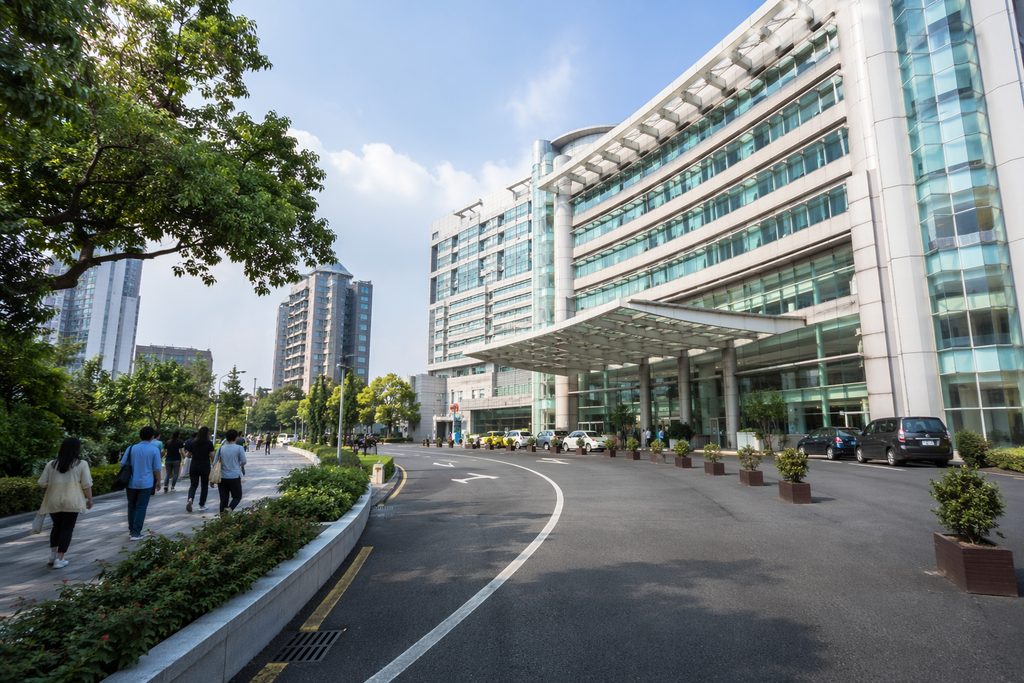
Orthopedic patients in Canada wait a median of 28.6 weeks for hip or knee replacement, according to the Canadian Institute for Health Information. At the same time, surgeons at Beijing Jishuitan Hospital, one of China’s flagship orthopedic centers, complete hundreds of joint replacements every month. Two systems, two very different clocks. For a growing number of international patients, that gap has turned “going to China for surgery” from an odd idea into a serious option.
This guide walks through what a China hospital surgery department actually looks like from the outside — how foreigners get in, what the surgery cost China hospital landscape really is, and where the genuine risks sit. No hype. Just the mechanics.
How This Actually Works, Step by Step
Here is the honest sequence. It rarely looks like booking a hotel room, and anyone who tells you otherwise is selling something.
Step one: records, not reservations. You gather your existing examination reports — imaging files, lab results, pathology slides if relevant, discharge summaries, medication lists. These get translated into Chinese by a qualified medical translator. This step alone takes three to seven days and is where most DIY attempts stall.
Step two: a written second opinion. The relevant Chinese specialty reviews your file and returns written analysis, treatment suggestions, and direction. At our end, this typically runs $300–500 depending on specialty and hospital tier. The output is not a prescription — it is a professional opinion you can take anywhere.
Step three: a live conversation. If the written opinion points toward surgery, a video consultation lets you speak directly with the Chinese specialty team. You explain your symptoms and goals; they explain their recommendations. A top-specialist video session runs $500–800; a multidisciplinary team review involving several departments runs $1,500–2,000.
Step four: the appointment problem. Here is the part nobody mentions in glossy brochures. Standard outpatient registration at Chinese public hospitals cannot be pre-booked from overseas. You queue on the day. Surgery, in turn, cannot be scheduled until a surgeon has seen you in person at that outpatient visit. That is the rule, not a preference.
The workaround is the hospital’s International Department or VIP channel. Senior specialists, English-capable staff, and an appointment that can actually be locked in advance. Expect to pay roughly 1.5 to 2 times the standard-channel price for that access.
Step five: arrival, admission, surgery. Once a plan is feasible and you agree to it, coordination covers arrival support, hospital communication, and available green-channel logistics. Nothing about that sentence guarantees admission, a specific surgeon, or a clinical outcome. Hospitals decide those things.
What Surgery in China Costs — and Where the Numbers Come From
Cost is usually the first question, so let’s answer it with ranges rather than a single seductive figure. Comparable procedures in China generally run one-fifth to one-tenth of U.S. prices. A heart bypass that bills above $120,000 in the United States typically lands between $12,000 and $20,000 at a top Chinese public hospital. That is the headline. The detail matters more.
| Procedure | Typical China Range (USD) | Typical U.S. Range (USD) |
|---|---|---|
| Coronary artery bypass graft | $12,000 – $20,000 | $120,000+ |
| Total knee replacement | $8,000 – $15,000 | $35,000 – $70,000 |
| Spinal fusion (single level) | $10,000 – $18,000 | $80,000 – $150,000 |
| Cancer resection (varies widely by organ) | $10,000 – $30,000 | $50,000 – $200,000 |
| Cataract surgery (per eye) | $1,500 – $4,000 | $3,500 – $7,000 |
Every figure varies by hospital and case complexity. A straightforward knee replacement at a provincial public hospital and a complex revision at a top-tier center in Beijing are not the same purchase, even though both are “knee surgery.”
A Realistic Timeline
Optimistic timelines are how patients end up disappointed. Here is a version with the waiting steps included.
| Stage | Realistic Duration | What Slows It Down |
|---|---|---|
| Records collection and translation | 3–10 days | Missing imaging files, unclear pathology reports |
| Written second opinion | 3–7 business days | Specialist availability; complex multi-organ cases |
| Video consultation scheduling | 1–2 weeks | Time zones; interpreter booking |
| S2 visa application | 1–3 weeks | Embassy processing times vary by country; documentation gaps |
| International Department appointment | 1–4 weeks | Senior specialist calendars fill quickly |
| In-person consultation to surgery date | 3 days – 3 weeks | Pre-operative testing, bed availability, case complexity |
| Hospital stay and recovery | 3 days – 3 weeks | Procedure type |
Add it up and a realistic door-to-surgery window is six to twelve weeks for planned procedures. Urgent cases compress differently, but never assume speed you have not confirmed.
What Can Go Wrong — and What Happens Then
Trust gets earned in this section, so let’s not soften it.
The specialist declines your case. It happens. Some conditions are better managed closer to home, and a good second opinion will say so. Your recourse is simply the opinion itself — useful anywhere.
The appointment can’t be secured. Senior specialists have finite calendars. If a coordination service cannot secure the appointment you requested, the standard arrangement is a full refund of the coordination fee. Ask any provider whether they offer that in writing before you pay.
You arrive and the plan changes. Imaging reviewed in person sometimes tells a different story than imaging reviewed remotely. Surgery may be modified, delayed, or replaced with a different approach. This is medicine, not logistics. Budget for flexibility in both time and money.
Complications after you fly home. This is the risk patients underweight most. Follow-up care in your home country requires your Chinese medical records in a usable format. Request operative notes, discharge summaries, and imaging before you leave the hospital — not after. Getting them later is possible but slow.
Language failure at a critical moment. A top Chinese hospital can see over 10,000 outpatient visits in a single day. Signage, consent forms, and pharmacy instructions are overwhelmingly in Chinese. Without a bilingual companion, small misunderstandings compound.
Is Surgery in China Safe for Foreigners? The Question Behind the Question
What people are really asking is: can I trust a system I don’t understand? Fair question.
The structural answer: China’s top hospitals are ranked by the Fudan Hospital Ranking and accredited by JCI, and the institutions international patients typically reach sit in the top 5% of the country’s 35,000+ hospitals. Fuwai Hospital alone performs more than 14,000 cardiac surgeries a year — the highest volume globally. Volume like that produces experienced teams.
The practical answer is different. Safety for a foreign patient depends less on the surgeon’s skill and more on the connective tissue around the surgery: accurate records transfer, a correct pre-operative workup, clear communication about medications, and a discharge plan you actually understand. Those are coordination problems, and coordination is where things break.
So the honest framing is this: the clinical capability at China’s top hospitals is not the weak link. The weak link is navigation.
Choosing a Hospital: Decision Criteria That Actually Matter
Patients often ask for “the best hospital.” That question has no single answer, because rankings are specialty-specific. The Fudan specialist reputation ranking lists top-10 hospitals across 45 specialties — oncology, cardiac surgery, orthopedics, reproductive medicine, and so on. A hospital ranked among China’s top 10 for oncology is not automatically strong in joint replacement.
Start with the specialty, then the hospital. Our specialty rankings by department map the top 10 hospitals for each of the 45 disciplines. From there, geography narrows things: Fudan’s Top 100 hospitals cluster in 23 cities, with Beijing holding 21, Shanghai 18, and Guangzhou 10.
If you are searching for the best hospitals in Shanghai for surgery, the calculus differs from Beijing. Shanghai’s international patient infrastructure is mature, with several private international hospitals offering English-speaking staff, JCI accreditation, and direct insurance billing alongside the major public centers. Beijing concentrates the highest number of top-ranked public institutions. Both are workable; the right answer depends on your specialty and your tolerance for a large, busy public hospital versus a smaller private one.
For patients weighing medical tourism surgery packages Beijing, be careful with the phrase “package.” Genuine hospital pricing is itemized — surgeon fees, anesthesia, implants, bed days, medications, and complications are separate lines. A flat all-in quote usually means someone has estimated generously and kept the difference.
Practical Considerations: Records, Visas, Payment, Language
Records. Bring originals plus translations. Digital imaging on physical media, not just a cloud link that may not load on Chinese hospital systems.
Visa category. Foreign patients coming to China for medical treatment use the S2 visa, annotated for medical treatment purposes. Family members accompanying you apply for S2 as well. Stays exceeding 180 days fall under S1. Note carefully: the M visa is for commercial and trade activities and has nothing to do with medical treatment. Requirements shift, so confirm current documentation with the relevant embassy or consulate and with the hospital’s supporting letter.
Payment. Public hospitals want prepayment; private international hospitals frequently settle directly with insurers. Bring a payment method that works internationally, and confirm currency and card acceptance in advance.
Language. This is not a minor inconvenience. A bilingual medical companion handles registration, queuing, payment, wayfinding, and translation throughout. Our medical companion and consultation service runs from $300 per day, covering a half day of four hours or a full day of eight. Companions do not promise access to a specific named specialist — they promise competent navigation.
Follow-up at home. Arrange it before you travel. Tell your local physician what you are doing and confirm they will accept post-operative care. Some will, some won’t. Find out early.
Frequently Asked Questions
Not through the standard public channel. Outpatient registration happens on the day, and surgery follows an in-person consultation. The International Department or VIP channel is the route that allows advance scheduling, at roughly 1.5 to 2 times standard pricing.
At top public hospitals, typically $12,000 to $20,000, against $120,000 or more in the United States. The final figure varies by hospital, case complexity, and whether complications extend the stay.
The clinical capability at top-ranked hospitals is well established. The real risk sits in coordination — records, communication, and follow-up. A bilingual companion and a proper second opinion reduce that risk substantially, though no service can eliminate it.
The S2 visa, annotated for medical treatment, with S1 for stays beyond 180 days. Accompanying family members also apply under S2. Confirm current requirements with your nearest Chinese embassy or consulate before applying.
Reputable coordination services refund the coordination fee in full when the requested appointment cannot be arranged. Get that commitment in writing before paying anything.
Your Next Step
China’s top surgery departments offer genuine clinical depth at a fraction of Western pricing — but the system rewards preparation and punishes improvisation. Get the second opinion first. Let the records do the talking before you book a flight.
We are China Medical Services, a coordination team connecting international patients with 340+ top-ranked hospitals across 37 cities. We are not doctors and we do not practice medicine. We handle the parts that break: records, appointments, language, and logistics. When you are ready, start with a free consultation — no obligation, just a conversation about whether China makes sense for your case.
This article is for general information only and is not medical advice. Treatment decisions should always be made with a qualified physician who has reviewed your individual case.
For more medical information and treatment options in China, visit chinamedservices.com (China Medical Services).
