Should I Go to China for LASIK? A Vision Decision Guide
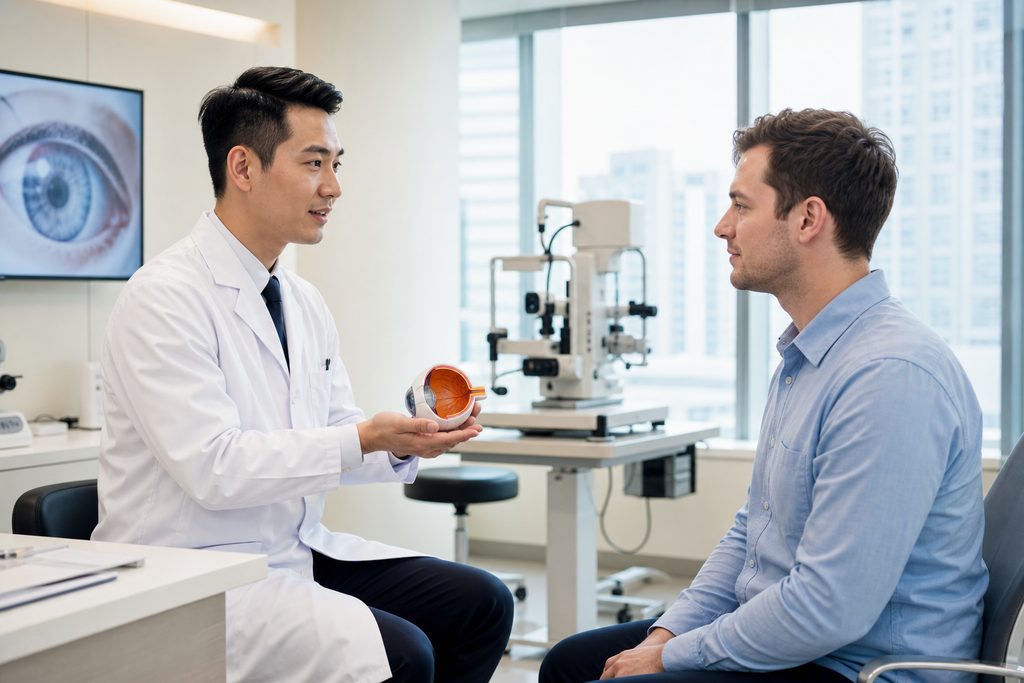
You’ve probably heard that going abroad for surgery means trading quality for a lower price. The data on Chinese ophthalmology tells a different story. Top-tier eye hospitals in Shanghai and Beijing now perform LASIK at volumes that dwarf most Western centers, using the same femtosecond and excimer laser platforms found in London or Los Angeles. The question is not whether the technology exists. It is whether the logistics, the language barrier, and the aftercare make sense for your specific eyes.
Should I Go to China for LASIK? The Short Answer
For most healthy adults with stable myopia, hyperopia, or astigmatism, the answer is a qualified yes — if you plan to be in China anyway, or if you are willing to travel specifically for treatment. The LASIK eye surgery cost China typically runs between $1,200 and $2,800 per eye at reputable private and international hospital departments, compared to $2,000 to $4,000 per eye in the United States. That is a meaningful saving, but it is not the only reason patients choose China. The real advantage is access to high-volume surgeons and same-week scheduling at centers that perform tens of thousands of refractive procedures annually.
The caveat: LASIK is still surgery on your eyes. The decision should not hinge on price alone. You need a thorough preoperative assessment, a surgeon you can communicate with clearly, and a realistic plan for follow-up care once you fly home.
Who This Is Right For — and Who It Isn’t
LASIK works well for a specific profile. You are probably a good candidate if:
- Your prescription has been stable for at least 12 months
- You are between 21 and 45 years old
- Your corneas are thick enough for safe flap creation
- You have no active eye disease, autoimmune condition, or uncontrolled diabetes
- You are traveling to China for at least 7 to 10 days, or you live in the region
Who should not pursue this. Pregnant or nursing women, because hormonal shifts change corneal shape. Anyone with keratoconus or a family history of it. Patients with severe dry eye syndrome. And anyone who cannot return for at least one follow-up visit within the first month — either in China or with a local ophthalmologist back home who agrees to manage post-operative care.
If your prescription is extremely high or your corneas are thin, a Chinese specialist may recommend SMILE or PRK instead of LASIK. That is a conversation to have after a proper examination, not before.
The Options, Compared
You have three realistic paths for laser vision correction. Here is how they stack up for an international patient.
| Factor | LASIK in China | LASIK in the US/UK | LASIK in Thailand/Korea |
|---|---|---|---|
| Cost per eye | $1,200–$2,800 | $2,000–$4,000 | $1,800–$3,200 |
| Wait time | 2–7 days | 2–6 weeks | 3–10 days |
| Surgeon volume | Very high at top centers | Moderate to high | High |
| English-speaking staff | At international departments, yes | Yes | Yes |
| Follow-up continuity | Depends on home provider | Easy | Depends on home provider |
| Regulatory oversight | NMPA; JCI at some private hospitals | FDA | Thai FDA / MFDS |
China wins on cost and scheduling speed. The US wins on follow-up convenience. Thailand and Korea are comparable alternatives, but China’s advantage is sheer scale — the busiest refractive centers in Shanghai and Beijing do more LASIK cases in a month than many Western clinics do in a year. That repetition matters for surgical precision.
Is LASIK in China Safe for Foreigners?
Safety depends on two things: the hospital you choose and the honesty of your preoperative screening. China’s top ophthalmic centers use the same laser platforms you would find at any major Western clinic — Alcon Wavelight, Zeiss VisuMax, Schwind Amaris. The equipment is not the issue.
The screening is where things can go wrong. A reputable center will turn away 10–15% of prospective LASIK patients because their corneas are too thin, their pupils too large, or their tear film too unstable. A less scrupulous clinic might not. That is why hospital selection matters more than country selection. Stick to internationally accredited or university-affiliated eye hospitals. Ask whether the surgeon performs the preoperative exam personally. Ask how many LASIK procedures the surgeon has completed. A good answer is 10,000 or more. A vague answer is a red flag.
For foreign patients, the safest route is usually through a hospital’s international medical department. These units exist specifically to handle language, scheduling, and documentation for non-Chinese patients. You can find several options in our directory of top-ranked Chinese hospitals, including ophthalmology-focused centers in major cities.
Best Eye Hospital for LASIK in Shanghai
Shanghai is China’s most international city and home to several high-volume refractive surgery centers. The most commonly recommended for foreign patients are:
- Eye and ENT Hospital of Fudan University — one of China’s most respected ophthalmic teaching hospitals, with a dedicated international clinic and very high surgical volume
- Shanghai Jiahui International Hospital — a JCI-accredited private hospital with English-speaking staff and direct insurance billing
- Shanghai United Family Hospital — part of the United Family network, known for Western-style care and clear pricing for international patients
These are not the cheapest options in Shanghai. Local public hospital pricing can dip below $1,000 per eye, but you will face language barriers, long queues, and limited hand-holding. For a foreign patient traveling for surgery, the international departments are worth the premium. You can explore more about medical care in Shanghai on our city guide.
How Much Does Laser Eye Surgery Cost in Beijing
Beijing pricing runs parallel to Shanghai, with a slightly wider spread. At public hospital international departments, expect $1,300 to $2,200 per eye. At private international hospitals like Beijing United Family or Raffles Hospital Beijing, expect $2,000 to $3,000 per eye. The higher end typically bundles preoperative testing, the procedure, post-operative medications, and one or two follow-up visits.
What drives the variance? The laser platform. SMILE (small incision lenticule extraction) costs more than traditional LASIK because it requires a femtosecond laser and more surgeon training. Wavefront-guided or topography-guided LASIK also adds cost because of the additional diagnostic mapping. A straightforward myopia correction with standard LASIK will sit at the lower end of any range. A complex astigmatism correction with custom ablation will sit at the higher end.
LASIK Surgery Packages for International Patients in China
Several private hospitals in Shanghai and Beijing now offer structured packages aimed at medical travelers. A typical package includes:
- Comprehensive preoperative examination (corneal topography, pachymetry, wavefront analysis, dilated fundus exam)
- The LASIK procedure on both eyes
- Post-operative eye drops and protective goggles
- One follow-up visit at 24 hours and another at one week
- English-language medical reports for your home ophthalmologist
Package pricing generally ranges from $2,400 to $5,600 for both eyes, depending on the hospital tier and the technology used. Some packages include airport pickup and hotel coordination. Others do not. Always ask for a written breakdown before you commit.
But be direct about this: packages are a convenience, not a discount. The same procedure booked directly through a hospital’s international department often costs the same or less. What a package buys you is coordination — someone to handle registration, translation, and scheduling so you are not navigating a Chinese hospital alone. If you already have a bilingual companion or you speak Mandarin, you may not need it.
Can I Get LASIK Eye Surgery in China as a Tourist?
Yes. You do not need a special medical visa for a short LASIK trip. The S2 visa is the appropriate category for short-term private medical treatment in China, and it covers both you and any accompanying family member. Most LASIK patients are in and out within 7 to 10 days, well within the standard S2 validity period. Check the latest requirements with the Chinese embassy or consulate in your home country before booking flights, and have your hospital appointment letter ready as supporting documentation.
One practical note: do not plan to fly home the day after surgery. You will have a follow-up visit at 24 hours, and your vision will still be fluctuating. Give yourself at least three full days after the procedure before boarding a long-haul flight. Dry cabin air and pressure changes are not dangerous for a healing LASIK flap, but they are uncomfortable, and you want to be near your surgeon if anything feels off.
Practical Considerations: Records, Payment, and Follow-Up
Before you book anything, gather your records. You will need your most recent prescription, any previous corneal topography or pachymetry results, and a list of medications and allergies. If you wear contact lenses, stop wearing soft lenses at least one week before your preoperative exam — two weeks for rigid gas permeable lenses. Contacts reshape the cornea, and testing on a distorted cornea produces bad surgical decisions.
Payment at Chinese hospitals is typically required upfront. International departments accept major credit cards and sometimes international bank transfers. Public hospital departments may require a Chinese bank card or cash deposit. Travel insurance rarely covers elective refractive surgery, so budget for the full amount out of pocket. If you have a flexible spending account or health savings account in your home country, LASIK is often an eligible expense — keep your receipts and ask the hospital for an itemized invoice in English.
Follow-up after you return home is the part most people underestimate. You will need at least one check with a local ophthalmologist within the first month, and ideally another at three months. Before you leave China, ask your surgeon for a complete discharge summary in English, including the laser settings used, the flap thickness, and any medications prescribed. A good home ophthalmologist can manage routine post-LASIK care. What they cannot do is fix a complication from a surgery they did not perform — so choose your Chinese surgeon carefully, because that person remains your point of contact if anything unusual develops.
Frequently Asked Questions
At top-tier hospitals, yes. The laser equipment is the same, and high-volume surgeons in Shanghai and Beijing often have more experience than their Western counterparts. The risk is not the technology — it is the screening. Choose a hospital that turns away unsuitable candidates, not one that treats everyone who walks in.
Serious LASIK complications are rare, affecting roughly 1 in 500 patients. Most issues — dry eye, night glare, under-correction — are manageable by any qualified ophthalmologist. But if you need a flap repositioning or an enhancement procedure, your home surgeon may be reluctant to touch another surgeon’s work. Ask your Chinese surgeon before you leave about their policy on remote follow-up and whether they have referral relationships with ophthalmologists in your home country.
No, if you use an international department or a bilingual medical companion. These services handle registration, translation during your consultation, and communication with the surgical team. Without them, a public hospital visit can be disorienting — Chinese hospitals are large, busy, and almost entirely Mandarin-speaking.
Plan for 7 to 10 days. That allows for the preoperative exam, the procedure, a 24-hour follow-up, a one-week follow-up, and a buffer day or two before your flight. Any shorter and you risk leaving before your surgeon has confirmed the flap is healing properly.
Yes, but the gap narrows at international private hospitals. The headline savings of 40–60% apply mainly to high-quality public hospital international departments. Private international hospitals in Beijing and Shanghai price closer to Western levels, though still generally 20–30% lower. Factor in flights and accommodation, and the total trip cost may be $3,000 to $6,000 for both eyes — still a saving for many patients, but not a dramatic one.
Your Next Step
LASIK in China is a legitimate option for the right patient — someone with stable vision, realistic expectations, and the flexibility to travel. The hospitals are world-class, the surgeons are experienced, and the cost is genuinely lower. But the logistics matter. Getting your records in order, choosing the right hospital, and arranging follow-up care are the parts that determine whether the experience is smooth or stressful.
Our team at China Medical Services helps international patients navigate exactly these steps. We are not a hospital and we do not provide medical advice or diagnoses. What we do is connect you with appropriate ophthalmic centers, coordinate appointments, and arrange bilingual support so you are never lost in the system. If you are considering LASIK in China, start with a conversation.
You can request a free consultation through our patient coordination service. We will help you think through whether this is the right decision for your eyes — before you book a single flight.
For more medical information and treatment options in China, visit chinamedservices.com (China Medical Services).
