Why Patients Pick China Over Thailand or Turkey: Costs, Safety, and Care
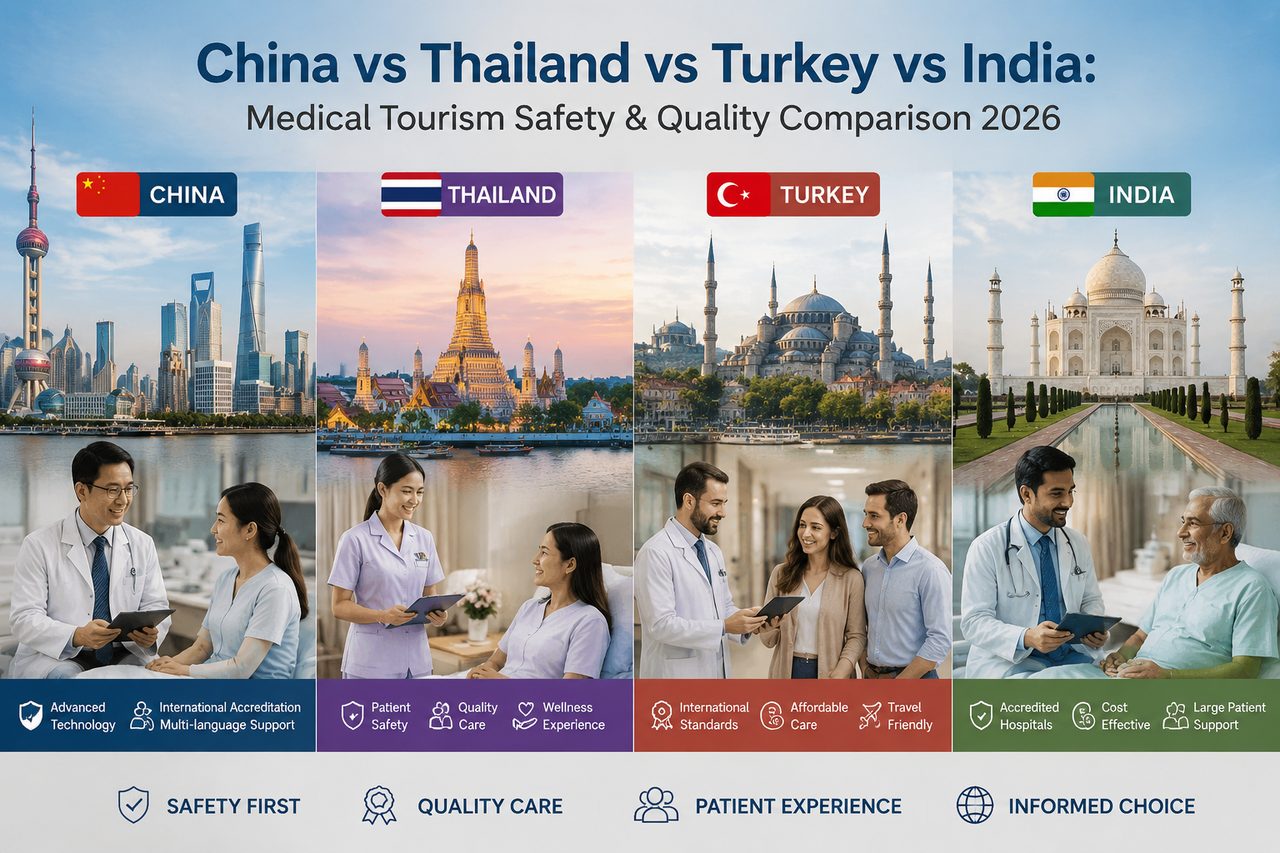
While a hip replacement in the United States averages roughly $40,000 and a private hospital in Thailand quotes about $17,000, a top-tier public hospital in China performs the same procedure for $8,000 to $12,000. That gap explains a lot. But price alone rarely decides where someone travels for surgery. Safety, language, and follow-up care matter just as much — and that is where the medical tourism China vs Thailand cost comparison gets interesting.
Key Takeaways
- China’s top 340+ hospitals deliver complex surgery at roughly one-fifth to one-tenth of US prices, often below private-hospital rates in Thailand for comparable procedures.
- Volume drives outcomes: Fuwai Hospital alone performs over 14,000 cardiac surgeries a year — a caseload few Western centers approach.
- The honest barrier is access. China’s best public hospitals do not let overseas patients book routine outpatient slots in advance, and most staff do not speak English. That is a real obstacle, not a marketing footnote.
- Before committing to any country, get a written second opinion on your actual imaging and reports. A destination decision made without one is a guess.
The Problem: Western Patients Are Priced Out and Waiting Too Long
In Canada, the median wait from referral to orthopedic surgery runs past 20 weeks in several provinces, according to the Fraser Institute’s annual wait-time report. In the United States, the same operation can wipe out a decade of savings. And in the UK, NHS waiting lists for trauma and orthopedics still sit above 800,000 patients.
So people look abroad. Thailand built a reputation on private hospitals like Bumrungrad, which treats over a million international patients a year. Turkey undercuts everyone on price, especially for hair transplants and dental work. Both are legitimate options.
But a growing number of patients — particularly those facing cardiac surgery, complex oncology, or joint replacement — are choosing China instead. Why? Because for serious, high-complexity procedures, China offers something neither Thailand nor Turkey can match: enormous specialist hospitals with case volumes that rival anywhere on earth, at prices closer to Turkey’s than to Thailand’s.
Why China Delivers Results for Complex Cases
China’s healthcare system is vast — over 35,000 hospitals. The top 5%, ranked by the Fudan University Hospital Rankings and JCI accreditation, is what international patients actually access through coordinated channels. That is a smaller, more selective pool than most people expect.
Clinical Volume That Few Systems Can Match
Fuwai Hospital in Beijing performs more than 14,000 cardiac surgeries annually — the highest volume of any heart center worldwide. For context, the Cleveland Clinic, one of America’s best, performs roughly 4,000. High volume matters because surgical teams that operate daily on complex cases tend to refine technique and manage complications better.
The same logic applies across specialties. China’s national cancer centers treat patient numbers that would overwhelm most Western hospitals, and its transplant-adjacent fields like bone marrow transplantation have published outcomes comparable to international benchmarks.
Technology and Efficiency at Scale
Walk into Zhongshan Hospital in Shanghai or West China Hospital in Chengdu and you will find robotic surgical systems, 3T MRI scanners, and PET-CT units — the same equipment as any top US academic center. The difference is throughput. A single Chinese tertiary hospital may run 10,000 outpatient visits a day.
That scale means imaging gets done in days, not months. It also means the system is crowded, loud, and confusing if you do not speak Mandarin. Which brings us to the honest part.
Cost Advantage Without the Quality Compromise
China’s price advantage comes from labor economics and hospital efficiency, not from cutting corners on implants or sterilization. A cardiac bypass at a top Chinese public hospital runs $12,000 to $20,000. The same operation in the US exceeds $120,000. In Thailand’s private hospitals, it typically lands between $25,000 and $40,000.
Cardiac surgeon volumes, implant brands, and ICU protocols at Fuwai or Anzhen are not inferior to what you would find in Bangkok. They are simply cheaper to deliver.
Medical Tourism China vs Thailand Cost: A Side-by-Side Look
Numbers vary by hospital and case complexity, but the pattern is consistent. Here is how the three destinations compare on procedures international patients ask about most.
| Procedure | China (top public) | Thailand (private) | Turkey (private) | USA |
|---|---|---|---|---|
| Cardiac bypass | $12,000–20,000 | $25,000–40,000 | $18,000–30,000 | $120,000+ |
| Hip replacement | $8,000–12,000 | $15,000–20,000 | $10,000–16,000 | $40,000+ |
| IVF cycle | $5,000–9,000 | $9,000–14,000 | $4,000–7,000 | $12,000–20,000 |
| Spinal fusion | $10,000–18,000 | $18,000–28,000 | $12,000–20,000 | $80,000+ |
| Cancer surgery + chemo | $15,000–40,000 | $30,000–60,000 | $20,000–45,000 | $150,000+ |
Notice where Turkey wins: simple, high-volume cosmetic and dental procedures. Where China wins: complex surgery and oncology, where specialist depth matters more than hotel comfort. Thailand sits in the middle — excellent service, higher prices.
On IVF specifically, patients often ask how much does IVF cost in China. A standard cycle at a top reproductive medicine center runs $5,000 to $9,000, roughly half the Thai private rate. Success rates vary widely by age and diagnosis, so treat any clinic quoting a single percentage with caution.
Is Surgery in China Safe for Foreigners?
This is the question that decides everything, and it deserves a direct answer. China’s top-tier hospitals are safe by international standards. They perform millions of surgeries annually, follow sterile protocols, and many hold JCI accreditation. Complications happen everywhere; the question is whether the system catches them.
What makes China different is not safety — it is access and communication. Three practical realities matter:
- Routine public-hospital outpatient slots cannot be booked from overseas in advance. You queue on the day.
- Surgery is scheduled only after an in-person consultation. No exceptions at public hospitals.
- English-speaking staff are concentrated in international departments and private hospitals, not across the general wards.
If you want a senior specialist and English service, you go through the hospital’s international or VIP channel. That costs roughly 1.5 to 2 times the standard fee — still far below Western prices. Private international hospitals like United Family, Jiahui, and Parkway offer Western-style care, English-speaking teams, and direct insurance billing, but at higher rates.
So the honest answer to “is surgery in China safe for foreigners” is: yes, at accredited hospitals, provided you have someone managing the logistics and language on your behalf. Without that, the system can be genuinely difficult to navigate.
What the Three Destinations Actually Offer Different Patients
Choosing a country is not about which is “best.” It is about matching your case to the right system.
Thailand suits patients who want a private-hospital experience, English service from arrival to discharge, and are willing to pay a premium for comfort. It is strong for orthopedics, cosmetic surgery, and health screening.
Turkey suits price-sensitive patients with simpler procedures — hair transplants, dental work, bariatric surgery, and some cosmetic operations. Its private hospitals are modern, but specialist depth for rare or complex conditions is thinner.
China suits patients facing complex surgery, cancer treatment, cardiac intervention, or a diagnosis that has stumped local doctors. The trade-off is a more demanding logistical environment and a language barrier that requires support.
For a fuller picture of what Chinese hospitals offer by specialty, the department-by-department top 10 rankings are a useful starting point. Patients comparing cities often begin with Beijing, home to 21 of the Fudan Top 100 hospitals, or Shanghai, which has 18.
Practical Considerations: What You Actually Need to Arrange
Every destination has logistics. Here is what applies specifically to China.
Visa. Foreign patients traveling for treatment apply for the S2 visa, annotated for medical purposes. Stays beyond 180 days use the S1. Accompanying family members also apply for S2. Note that the M visa is for commercial and trade activities only — it is not a medical visa, despite what some agencies claim. Always confirm current requirements with the nearest Chinese embassy or consulate and bring supporting hospital documents.
Records. Bring translated imaging, pathology reports, and medication lists. Chinese specialists read English-language reports regularly, but a clean summary speeds everything up.
Payment. Public hospitals require prepayment; insurance is typically reimbursed afterward. Private international hospitals often bill insurers directly. International credit cards work at major hospitals, but daily transaction limits apply — plan for wire transfers on large amounts.
Language. This is the single biggest friction point. Bilingual medical companions handle registration, queueing, payment, and translation during consultations. Without one, even a simple follow-up visit can take a full day.
Follow-up. Arrange your discharge summary and imaging in English before you fly home. Your local doctor will need them.
Frequently Asked Questions
A standard IVF cycle at a top Chinese reproductive medicine center runs $5,000 to $9,000, versus $9,000 to $14,000 at Thai private clinics. Final pricing varies by hospital, protocol, and how many cycles you need. Success rates depend heavily on age and diagnosis, so ask for clinic-specific data rather than headline figures.
Not at public hospitals in the usual sense. Routine outpatient appointments cannot be secured from overseas in advance, and surgery is only scheduled after an in-person consultation. What can be arranged ahead of time is a written second opinion or a video consultation, which lets a specialist review your case before you commit to travel.
Turkey often quotes lower headline prices for hip replacement, sometimes $10,000 or less. China’s top public hospitals land in a similar range, $8,000 to $12,000, but with deeper specialist volume. The real difference is implant quality, surgeon experience, and revision rates — ask each provider for specifics rather than comparing sticker prices alone.
At international departments and private hospitals, yes. In general public wards, English support is limited. This is why most foreign patients use a bilingual companion or go through a hospital’s international channel. It is not a reason to avoid China — it is a reason to plan properly.
Request a complete English discharge summary, operative notes, and imaging before departure. Share them with your local physician. For complications, most Chinese hospitals will respond to follow-up inquiries through their international department, though time zones and distance add friction. Discuss a contingency plan with your treating team before you leave.
Your Next Step
The takeaway is simple: China competes on cost with Turkey and on specialist depth with anywhere in the world, but it demands more preparation than a Thai resort hospital. That preparation is manageable with the right information.
We are China Medical Services — a coordination team, not a hospital. We do not diagnose or treat. We help international patients understand their options, obtain written second opinions, and navigate appointments, language, and logistics when they choose to travel. If you would like a clearer picture of whether China fits your case, start with a free consultation at our patient services page.
For more medical information and treatment options in China, visit chinamedservices.com (China Medical Services).
