Medical Tourism in China for European Patients: Costs, Hospitals, and How It Works
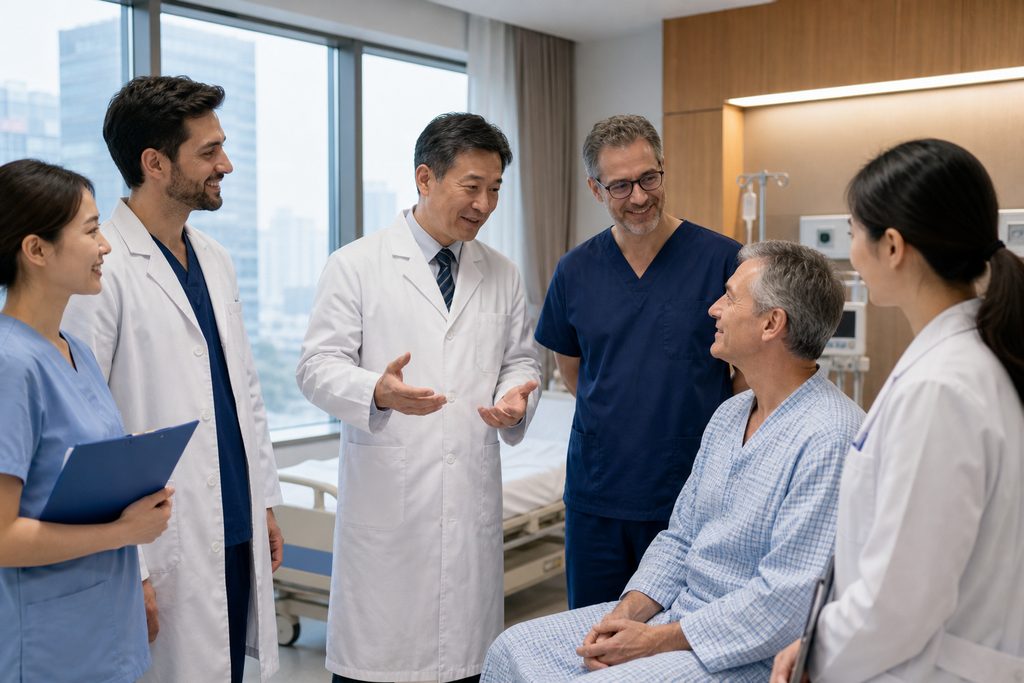
Medical Tourism in China for European Patients: Costs, Hospitals, and How It Works
Medical tourism in China for European patients is not a holiday with a hospital visit attached. It is the practice of traveling to China to receive a specific diagnosis, procedure, or course of treatment at a top-tier public or private hospital, usually because the wait at home is long, the price is high, or the specialist you need is simply not available nearby. The cost question is the one most Europeans ask first, so let’s answer it plainly: a cardiac bypass that runs $120,000 or more in the United States can be performed at a leading Chinese public hospital for roughly $12,000 to $20,000. An IVF cycle in Shanghai typically falls between $4,000 and $9,000 depending on the protocol. A total hip replacement often lands between $8,000 and $15,000.
Those numbers are real, but they are ranges. Final quotes depend on the hospital, the surgeon’s seniority, the complexity of your case, and whether you use the standard public pathway or the international department. Nobody honest will give you a fixed price before seeing your records.
This guide walks through the whole picture: what China’s hospital system actually looks like, how much treatment costs compared with Europe, how the S2 visa works, and where the friction points are. We are not doctors. We are the people who help patients move through a system that was not designed with English speakers in mind.
What “Top Hospital” Actually Means in China
China has more than 35,000 hospitals. The ones worth your attention sit in the top 5%, ranked by the Fudan University Hospital Rankings and validated by JCI accreditation. That group includes roughly 340 hospitals across 37 cities, and the geography matters: Beijing holds 21 of the Fudan Top 100, Shanghai holds 18, and Guangzhou holds 10.
Three categories exist, and choosing the wrong one wastes time.
- Public tertiary hospitals (Grade 3A) — the heavyweights. Fuwai Hospital performs over 14,000 cardiac surgeries a year, the highest volume anywhere. Peking Union Medical College Hospital, Zhongshan Hospital, West China Hospital, and Ruijin Hospital sit in the same tier. Enormous capacity, deep expertise, modest prices. Also crowded, Chinese-language, and bureaucratic.
- Private international hospitals — United Family, Jiahui, Parkway, Raffles. English-speaking staff, JCI certification, direct insurance billing, Western-style rooms. You pay for that comfort, often 3 to 5 times the public rate.
- Traditional Chinese Medicine hospitals — acupuncture, tuina massage, herbal therapy. Genuinely useful for chronic pain, rehabilitation, and recovery support. Not a substitute for surgery.
Here is the rule that trips up almost every foreign patient: you cannot book a standard public outpatient slot from abroad. Registration happens on the day, in person, in a queue. And surgery cannot be scheduled until a doctor has examined you face to face. The workaround is the hospital’s international or VIP department, where a senior specialist sees you, English service is available, and scheduling can be arranged in advance. Expect to pay roughly 1.5 to 2 times the standard channel price for that access.
Medical Tourism China Cost: What Europeans Actually Pay
Let’s put concrete figures next to European private prices. Public systems in Germany, France, or the UK may cover you for free or near-free — but the wait can stretch to months, and elective procedures are frequently rationed. Private care in Europe is fast and expensive. China sits in an unusual middle position: fast, high-volume, and comparatively cheap.
| Procedure | China (top public hospital) | Typical US price | Western Europe (private) |
|---|---|---|---|
| Coronary bypass | $12,000 – $20,000 | $120,000+ | $40,000 – $90,000 |
| Total hip replacement | $8,000 – $15,000 | $40,000 – $65,000 | $18,000 – $35,000 |
| IVF cycle (Shanghai) | $4,000 – $9,000 | $12,000 – $25,000 | $5,000 – $12,000 |
| Knee arthroscopy | $3,000 – $6,000 | $10,000 – $20,000 | $6,000 – $12,000 |
| Comprehensive health screening | $500 – $2,500 | $3,000 – $8,000 | $1,500 – $4,000 |
These figures vary by hospital and case complexity. They exclude flights, accommodation, and companion costs. A realistic total for a hip replacement trip, including two weeks in a hotel and a bilingual companion, adds perhaps $3,000 to $6,000 on top of the surgical fee.
How This Actually Works, Step by Step
The sequence is more predictable than most people expect. Here is the real order of operations.
Step one — you send records. Existing imaging, lab results, pathology reports, discharge summaries. Digital copies are fine. If they are in German, French, or Italian, they need translation, and that takes time.
Step two — a Chinese specialist reviews them. This produces a written second opinion: an analysis of your condition, treatment suggestions, and a direction. Cost runs $300 to $500 at a top hospital. It is for reference, not a prescription.
Step three — a video consultation. You speak directly with the specialty team, explain your symptoms and goals, and hear their recommendations. A standard international department consultation costs $100 to $300. A top-specialist session runs $500 to $800. Complex cases needing a multidisciplinary team sit at $1,500 to $2,000.
Step four — you decide. If the plan is feasible and you agree, coordination begins: appointment scheduling, hospital registration, medical card creation, and visa documentation support.
Step five — you arrive. In-person consultation, admission, treatment. A bilingual companion handles registration, queueing, payment, wayfinding, and translation throughout. That service starts at $300 per day.
One detail worth knowing: any consultation fee you pay is credited in full toward on-the-ground coordination if you travel within 90 days. It applies once, to the coordination fee only, never to hospital charges.
A Realistic Timeline
Optimism is the enemy of good planning here. Below is what actually happens, with the waiting steps people forget.
| Stage | Duration | What happens |
|---|---|---|
| Records collection and translation | 3 – 10 days | Gathering reports; certified translation if needed |
| Written second opinion | 3 – 7 days | Specialist reviews files, returns written analysis |
| Video consultation scheduling | 1 – 3 weeks | Depends on specialist availability |
| Decision and planning | 1 – 2 weeks | You confirm; coordination begins |
| S2 visa application | 1 – 3 weeks | Requires hospital invitation documents |
| Appointment and admission lead time | 2 – 6 weeks | Public hospitals cannot pre-book standard slots |
| Travel and treatment | 1 – 4 weeks | Varies enormously by procedure |
| Recovery and follow-up | 2 weeks – 3 months | Local follow-up, remote review afterward |
Realistic total from first contact to treatment: six to twelve weeks for most elective procedures. Urgent cases move faster, but never instantly.
What Can Go Wrong — and What Happens Then
This is where trust gets earned, so let’s not soften it.
The specialist says your case is not treatable in China. It happens. Some conditions need technology or expertise that sits elsewhere. The written second opinion tells you this before you book a flight, which is precisely its value. You lose a few hundred dollars, not a few thousand.
The appointment cannot be secured. Public hospital scheduling is genuinely unpredictable. If a coordination service cannot secure the appointment you were quoted, the coordination fee is refunded in full. That is the standard we hold ourselves to.
The visa is delayed or refused. S2 applications require supporting hospital documents and are subject to consulate discretion. No service can guarantee approval. Build buffer time into your plan.
Complications after surgery. Any operation carries risk. Chinese top hospitals handle complications competently, but your follow-up care at home needs arranging before you leave, not after. Get your discharge summary and imaging in English before departure.
Language failure at a critical moment. This is the most common real-world problem. Consent forms, medication instructions, discharge advice — all in Chinese. A bilingual companion is not a luxury. It is the difference between understanding your own care and guessing.
Is Medical Treatment in China Safe for Foreigners?
The honest answer: at the top-tier hospitals, yes — with caveats. China’s leading institutions perform surgical volumes that European hospitals rarely match. Fuwai’s 14,000+ annual cardiac surgeries build a level of institutional repetition that translates into outcomes. JCI-accredited private hospitals meet international safety standards directly.
The caveats are systemic, not clinical. Public hospitals are vast — a single day can bring tens of thousands of outpatient visits. Signage, forms, and staff communication are in Chinese. The system assumes you have a local guide. Sterilization protocols and blood safety at Grade 3A hospitals meet national standards, and these standards have tightened considerably over the past two decades.
What you should verify before committing: the hospital’s accreditation status, the surgeon’s specialty ranking, and whether the department regularly treats international patients. The Fudan-ranked hospital directory by city is a reasonable starting filter. For specialty-specific decisions — oncology, cardiac surgery, orthopedics, reproductive medicine — the department-level rankings narrow it further.
Practical Considerations: Visas, Payment, and Follow-Up
Visa. Foreigners seeking medical treatment in China apply for the S2 visa, annotated for medical purposes. Stays exceeding 180 days require S1. Accompanying family members apply for S2 as well. The M visa is for commercial and trade activity only and has nothing to do with medical care — if anyone tells you otherwise, they are wrong. Requirements shift, so confirm current rules with the nearest Chinese embassy or consulate.
Payment. Public hospitals: prepay, claim later. Private international hospitals: often direct insurance billing. Bring a card that works internationally, and confirm the hospital’s accepted payment methods in advance.
Records. Bring physical and digital copies of everything. Imaging on disc, pathology slides if relevant, medication lists with generic names. Chinese specialists read English reports routinely, but translated summaries speed everything up.
Follow-up at home. Arrange it before you travel. Your GP or local specialist should know your plan and expected recovery timeline. Request English-language discharge documentation before you leave the hospital.
Companions. If you are traveling with a family member, budget for their visa, flights, and accommodation. Recovery is easier with someone present, and hospital rooms in China are not designed for long family stays.
For patients comparing pathways, the China Medical Services platform organizes hospitals, departments, and city-level information in one place, which saves a lot of scattered research.
Frequently Asked Questions
A standard IVF cycle in Shanghai generally runs $4,000 to $9,000, including monitoring, retrieval, and transfer. Medication adds $1,500 to $3,000 depending on protocol. Comparable private treatment in Germany or the UK typically costs $5,000 to $12,000, and public waiting lists can run long. Final pricing depends on the clinic, your protocol, and whether additional techniques such as ICSI are needed.
You can arrange a staged package, but not the way you would book a holiday. Chinese public hospitals do not sell bundled packages in advance, because surgery cannot be scheduled before an in-person examination. What works is a sequence: written second opinion, video consultation, then coordination of appointments and arrival support once a plan is agreed. Anyone offering a guaranteed pre-booked surgical date at a public hospital before seeing your records is overpromising.
Total hip replacement at a top Chinese public hospital typically costs $8,000 to $15,000, covering the implant, surgery, hospitalization, and basic rehabilitation. Private international hospitals charge more, often $20,000 to $35,000. The implant type drives much of the variation — ceramic-on-ceramic costs more than metal-on-polyethylene. Prices vary by hospital and case complexity, so request a written estimate after your records are reviewed.
For short-stay medical treatment, the S2 visa is the applicable category, annotated for medical purposes. Stays over 180 days require S1. Accompanying family members also apply for S2. The M visa is for commercial and trade activities and is not used for medical treatment. Approval is always at the consulate’s discretion, and supporting hospital documents are typically required.
If the appointment you were quoted cannot be secured, the coordination fee is refunded in full. That is a standard commitment, not a favor. What no service can promise is a specific surgeon or a specific surgical date at a public hospital — only best-effort coordination within the system’s actual rules.
Your Next Step
The core message is simple: China offers genuinely world-class treatment at a fraction of Western private prices, but the system rewards preparation and punishes improvisation. Get your records reviewed first. Understand the visa category. Know what you are paying for and what you are not.
We are China Medical Services. We connect international patients with top-ranked Chinese hospitals and handle the coordination, translation, and bilingual support that the system does not provide on its own. We are not doctors, and we do not diagnose or promise outcomes. If you want to understand whether your case is a fit, start with a free consultation — no pressure, no obligation, just a clear picture of what is possible.
This article is for general information only and does not constitute medical advice. Treatment decisions should always be made with a qualified physician who has reviewed your individual case.
For more medical information and treatment options in China, visit chinamedservices.com (China Medical Services).
