Do Adults Need Tonsil Removal in China? Costs, Safety, and Recovery
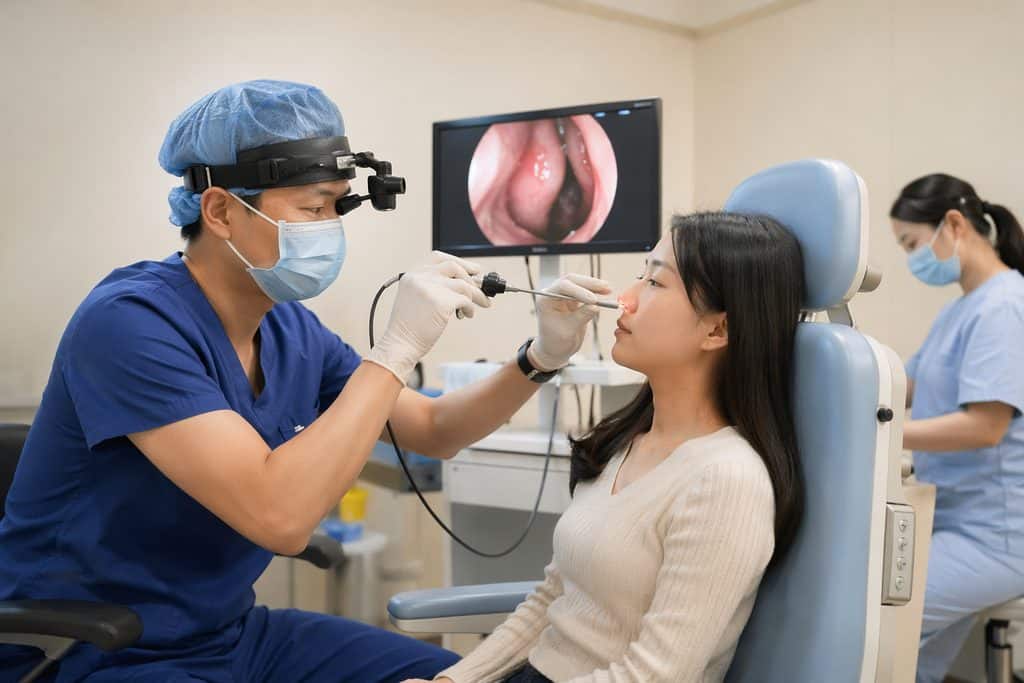
Key Takeaways
- Tonsillectomy cost in China’s top public hospitals typically runs $2,500–$5,000 all-in, versus $8,000–$15,000 in the United States — but the price gap is not the only reason international patients travel.
- China’s highest-volume ENT departments handle thousands of these procedures annually, and the surgery itself is a standardized 30–45 minute operation performed under general anesthesia.
- The real friction is logistics, not medicine: public hospital outpatient slots cannot be reserved from overseas in advance, and no surgeon will schedule an adult tonsillectomy without an in-person examination first.
- Adults recover more slowly than children. Expect 10–14 days of significant discomfort, a two-week soft-food diet, and a small but real risk of post-operative bleeding that needs a plan.
The Problem: A Sore Throat That Never Really Goes Away
You have had strep throat four times in eighteen months. Or maybe it is not strep at all — just a persistent, low-grade ache on one side, a tonsil that looks different from the other, or sleep so disrupted by snoring and apnea episodes that you wake up exhausted. Your family doctor mentions the word “tonsillectomy,” then adds the number that ends the conversation: in the United States, the procedure routinely bills between $8,000 and $15,000 for adults, depending on facility fees and insurance status.
For uninsured patients, or those on high-deductible plans, that figure lands as a genuine barrier. A 2023 analysis of US healthcare spending found that roughly 1 in 4 adults skip or delay recommended care because of cost. And a tonsillectomy is not emergency surgery — it is elective, which means it is exactly the kind of procedure people postpone indefinitely.
Meanwhile, the underlying problem does not resolve. Recurrent tonsillitis in adults carries real consequences: missed work, repeated antibiotic courses, and in a minority of cases, complications like peritonsillar abscess. Sleep-disordered breathing linked to enlarged tonsils affects daytime cognition and cardiovascular health over time.
So the question becomes practical rather than theoretical. If the surgery is medically indicated, where can you get it done well, at a price that does not require a loan — and what does the process actually look like in China?
Why China’s ENT Departments Deliver Results
The case for China is not simply “it costs less.” It rests on three structural facts.
Clinical Volume and Surgical Consistency
China’s top-tier public hospitals — the roughly 340 institutions that sit in the top 5% of the country’s 35,000+ hospitals, ranked by the Fudan Hospital Ranking and JCI accreditation — operate at a scale Western hospitals rarely match. A single large ENT department in Beijing or Shanghai may perform well over a thousand tonsillectomies a year. High volume matters for a standardized procedure: the surgical team, the anesthesia protocol, and the post-operative ward workflow are all deeply rehearsed.
Fudan University’s specialty reputation rankings list the top ten ENT (Otorhinolaryngology) departments in the country each year. Several of those sit in Beijing and Shanghai, which is why readers searching for the best ENT hospital Beijing tend to land on the same handful of names.
Technology and Efficiency at Scale
Modern tonsillectomy in China’s major hospitals uses the same instrument families you would find in the US or Europe: monopolar and bipolar electrocautery, coblation (radiofrequency plasma ablation), and in some centers, harmonic scalpel techniques. Coblation, which tends to produce less thermal damage to surrounding tissue, is widely available at top public hospitals and private international hospitals alike.
What differs is throughput. Pre-operative workup — blood tests, coagulation panel, ECG, anesthesia assessment — is typically compressed into a single day or two. In the US, the same workup often stretches across separate appointments over several weeks. For a patient traveling internationally, that compression is not a minor convenience. It is the difference between a five-day trip and a three-week stay.
Cost Advantage Without Quality Compromise
Address the obvious objection directly: lower price does not automatically mean lower quality. The reasons for the cost gap are structural, not clinical.
Physician salaries in China’s public system are lower in absolute terms than US counterparts. Hospital facility fees are set by government guidance rather than negotiated with insurers. And the sheer patient volume spreads fixed costs — operating room time, sterilization, ward staffing — across far more procedures. The surgeon’s hands are doing the same operation. The economics around them are simply different.
For a broader picture of how these figures compare across procedure types, our Fudan-ranked hospital directory by city breaks down the institutions most international patients consider.
What Tonsillectomy Cost in China Actually Looks Like
Prices vary by hospital tier, city, surgical technique, and case complexity. The table below reflects typical ranges reported for adult patients at top public hospitals and private international hospitals. Treat these as planning estimates, not quotes.
| Cost Component | Top Public Hospital (China) | Private International Hospital (China) | United States (Reference) |
|---|---|---|---|
| Surgeon and anesthesia fees | $1,200–$2,500 | $3,000–$6,000 | $4,000–$8,000 |
| Hospital / facility fee | $800–$1,500 | $2,500–$5,000 | $3,000–$6,000 |
| Pre-op workup and labs | $150–$400 | $400–$900 | $500–$1,500 |
| Medications and post-op care | $200–$500 | $500–$1,200 | $800–$2,000 |
| Typical total | $2,500–$5,000 | $6,000–$12,000 | $8,000–$15,000+ |
Two caveats matter here. First, these figures exclude travel, accommodation, and companion costs. Second, public hospitals in China generally require pre-payment, with insurance reimbursement handled afterward by the patient’s own insurer — direct billing is more common at private international hospitals, several of which are listed in our private hospital guide.
Is Tonsil Removal Safe in China for Adults?
This is the question that decides the trip, and it deserves a straight answer.
Tonsillectomy is one of the most commonly performed otolaryngology procedures worldwide, and the complication profile is well characterized. The two risks that matter most in adults are post-operative hemorrhage and airway complications from anesthesia. Both are manageable in any adequately equipped hospital — and China’s top-tier hospitals are more than adequately equipped.
What actually drives safety outcomes is less about the country and more about three specific variables:
- Hospital tier. A Fudan top-100 hospital or a JCI-accredited private hospital operates to international standards for sterilization, anesthesia monitoring, and emergency response. A small local clinic does not. The distinction is the tier, not the passport.
- Surgeon experience. Ask how many adult tonsillectomies the surgeon performs annually. High-volume operators see fewer complications, full stop.
- Discharge planning. Adult tonsillectomy bleeding most often occurs between days 5 and 10, after the patient has left the hospital. If you are flying home on day 4, you have removed your own safety net. Build the timeline so you remain in the city through at least day 10.
One honest limitation: continuity of care across borders is genuinely harder. If you bleed on day 7 after returning home, your local emergency department will be working without the operative notes. Carry a discharge summary in English. Ask for it before you leave the ward.
How Long Is Tonsillectomy Recovery for Adults?
Longer than most people expect. The common assumption — shaped by pediatric cases — is that recovery takes a few days. For adults, it is closer to two weeks of real discomfort.
| Phase | Days | What to Expect |
|---|---|---|
| Surgery and observation | Day 0–1 | Procedure takes 30–45 minutes. Most patients stay one night for observation. |
| Peak pain | Day 2–5 | Throat pain is at its worst. Swallowing is difficult. Pain often radiates to the ears, which is normal. |
| Scab formation and sloughing | Day 5–10 | White/grey scabs form over the surgical beds, then gradually separate. This is the highest-risk window for bleeding. |
| Functional recovery | Day 10–14 | Most adults return to normal eating and light activity. Voice may still fatigue easily. |
| Full recovery | Week 3–4 | Complete healing of the throat lining. Return to strenuous exercise and full work schedule. |
Pain control matters more than most patients anticipate. Adequate hydration and scheduled analgesia — not waiting for pain to peak before taking medication — are the two factors most consistently associated with smoother recovery. Dehydration is the single most common reason adults end up back in the emergency department after tonsillectomy.
How to Book Tonsillectomy in China: The Process, Step by Step
Here is where reality diverges from what most international patients expect.
You cannot simply email a Chinese public hospital, request a surgery date, and receive a confirmation. The system does not work that way — for anyone, domestic or foreign. Public hospital outpatient appointments are generally issued on the day, and no responsible surgeon will schedule an elective tonsillectomy without examining the patient in person first.
So the realistic sequence looks like this:
- Step 1 — Records review. You send existing examination reports, throat cultures, sleep study results if available, and history of recurrent infections. A Chinese ENT specialty reviews them and gives a written assessment of whether surgery is indicated.
- Step 2 — Remote consultation. A video consultation with the ENT team lets you hear their recommendation directly, ask about technique and timeline, and decide whether to proceed.
- Step 3 — Registration and arrival. Once a plan is feasible, appointment coordination handles hospital registration, medical card creation, and the outpatient slot.
- Step 4 — In-person examination. The surgeon examines you, confirms the indication, and orders pre-operative workup.
- Step 5 — Surgery and observation. Typically within days of the in-person visit at a high-volume hospital.
- Step 6 — Recovery window in China. Remain in the city through day 10–14 before flying.
That first step — remote evaluation before booking flights — is the one that saves people the most money. If surgery is not indicated, you find out before spending $2,000 on airfare.
Practical Considerations: Visas, Payment, and Follow-Up
A few concrete logistics that trip people up.
Visa category. For medical treatment in China, the applicable short-stay category is the S2 visa, issued for medical treatment and private affairs, subject to the latest requirements from your local Chinese embassy or consulate and supported by hospital documentation. Accompanying family members apply under the same category. Note that the M visa is for commercial and trade activities and has nothing to do with medical travel — a surprisingly common mix-up. Stays exceeding 180 days fall under S1. Always verify current requirements directly with the embassy, as documentation expectations change.
Payment. Public hospitals require pre-payment for elective surgery. International credit cards are accepted at most large hospitals, but transaction limits and foreign card acceptance vary — bring a backup method. Private international hospitals frequently offer direct insurance billing for internationally recognized insurers.
Language. China’s top hospitals see tens of thousands of outpatients daily. Signage, registration systems, and ward communication are primarily in Chinese. English-speaking staff exist in international departments but are not universal across the hospital. This is the single most common practical difficulty international patients report.
Follow-up after returning home. Arrange a local ENT or primary care physician before you travel, and bring your operative notes and discharge summary in English. Post-operative checks at home are straightforward if your local doctor has the records.
Frequently Asked Questions
Adults account for a meaningful share of tonsillectomies worldwide, and the indications differ from children’s. In adults, the most common reasons are recurrent tonsillitis (typically seven or more documented episodes in a year, or five per year over two years), sleep-disordered breathing, and asymmetric tonsillar enlargement that raises concern for malignancy. Adults are also more likely to have one-sided symptoms, which warrants closer evaluation. The decision should be made by an ENT specialist after examination — not from a symptom checklist alone.
At top public hospitals, adult tonsillectomy typically totals $2,500–$5,000 including surgery, anesthesia, hospital stay, and medications. Private international hospitals in China generally run $6,000–$12,000. In the United States, the same procedure commonly bills $8,000–$15,000 or more. Prices vary by hospital, city, technique, and case complexity, so any figure here is a planning range rather than a quote. Travel and accommodation are separate.
At Fudan-ranked or JCI-accredited hospitals, yes — the surgical standards, anesthesia monitoring, and sterilization protocols are comparable to international norms. The variables that matter are hospital tier, surgeon volume, and whether you stay in the city through the day 5–10 bleeding window. The genuine weak point is cross-border continuity: if a complication occurs after you fly home, your local doctors will be working without your operative records unless you carry them.
You cannot reserve a public hospital surgery slot directly from abroad. The workable path is remote records review first, then a video consultation with the ENT team, then appointment coordination for an in-person examination, after which surgery can be scheduled. Some patients use a proxy consultation to have their materials presented at a specific hospital before deciding to travel. Anyone promising you a confirmed surgery date before an in-person exam is not describing how Chinese public hospitals operate.
Packages vary widely, and the term itself is used loosely. A legitimate arrangement generally covers hospital registration, appointment coordination, interpretation during consultations and admission, and help with payment logistics. It does not cover the surgeon’s fee, which goes to the hospital. Be cautious with any provider that bundles “guaranteed surgery dates” or quotes a single all-in price before seeing your records — that is a sign the clinical evaluation is being skipped.
Your Next Step
The core message is simple: adult tonsillectomy in China is a well-established, standardized procedure at the country’s top hospitals, and the cost difference against US pricing is real. But the decision should start with a clinical evaluation, not a flight booking.
We are China Medical Services — a coordination service, not a hospital, and we do not provide diagnoses or medical advice. What we do is connect international patients with the right Chinese specialty departments, arrange written second opinions and video consultations, and handle the on-the-ground logistics when you decide
For more medical information and treatment options in China, visit chinamedservices.com (China Medical Services).
