Final Checklist Before Treatment: Your Night-Before Guide for Medical Travel to China
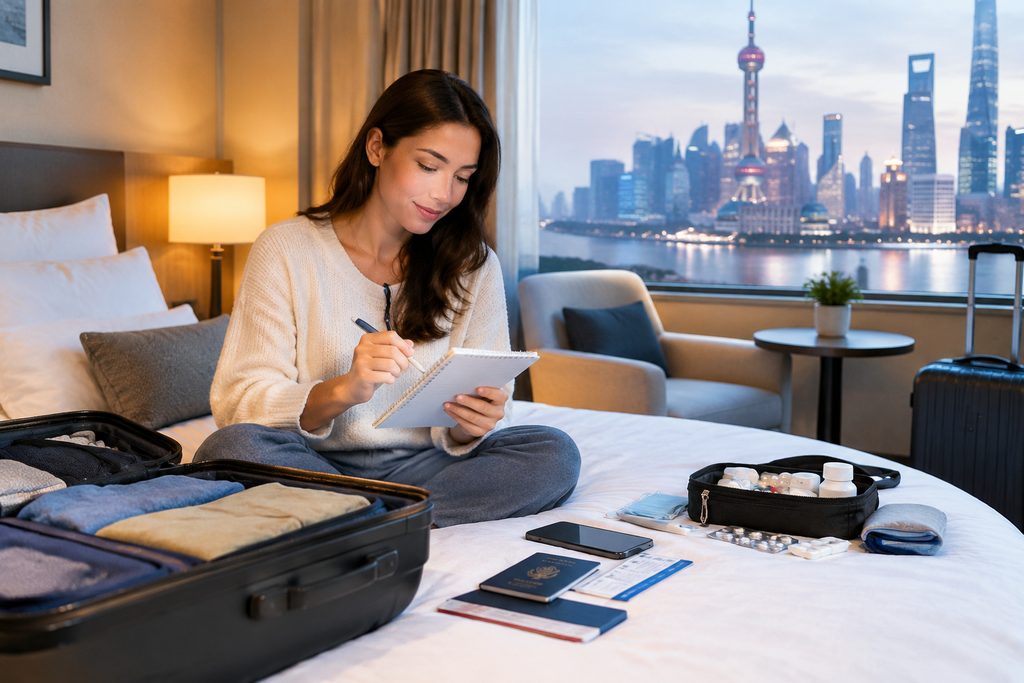
Final Checklist the Night Before Treatment: What International Patients Need to Know
When 42-year-old Michael from Manchester finally booked his cardiac procedure at Fuwai Hospital in Beijing, the weeks of planning came down to one evening. His flight landed at 4:30 PM. His first consultation was at 9:00 AM the next day. That night in his hotel room, he realized he had no idea what to actually do with the hours in front of him. A final checklist the night before treatment would have saved him three hours of anxious scrolling through old emails. This guide is what we send to every patient we support at China Medical Services — not because the list is complicated, but because a calm, organized evening changes how the first clinical day unfolds.
Key Takeaways
- China’s top hospitals handle over 35,000 outpatient visits daily at major centers, so your night-before preparation directly affects how smoothly you navigate the first morning.
- Written second opinions from Chinese specialists cost $300–500 and are credited in full toward in-person coordination within 90 days.
- The S2 visa is the correct category for medical treatment in China — the M visa is for commercial trade only and will not cover medical purposes.
- You do not need to speak Chinese to receive treatment, but your night-before checklist must include confirming your bilingual companion’s arrival time and contact method.
The Problem: Why Patients Underestimate the Night Before
Medical travel is not a vacation. The stakes are higher, the environment is unfamiliar, and the margin for error is thin. A 2023 survey of international patients traveling for elective procedures found that 68% reported elevated anxiety on the evening before their first hospital appointment. That anxiety leads to forgotten documents, missed meals, poor sleep, and arriving at the hospital already exhausted.
Here is what happens when you skip the final checklist. You realize at 11:00 PM that your passport is in the hotel safe and you cannot remember the code. Your phone battery is at 12% and your charger is in your checked luggage, which you left at a friend’s apartment in Shanghai. Your MRI disc is in a format the hospital cannot read. None of these are catastrophic. But each one adds friction to a day that already requires your full attention.
Michael’s story is common. He had every document. He just had not organized them. When the registration desk asked for his hospital medical card number, he spent six minutes searching his email while a line formed behind him.
Why a Final Checklist the Night Before Treatment Matters More in China
China’s healthcare system operates at a scale most Western patients have never encountered. Top-tier public hospitals in Beijing and Shanghai routinely see 10,000 to 15,000 outpatient visits per day. The registration windows open early. The queues form fast. The doctors are extraordinarily efficient, but the system rewards patients who arrive prepared.
Clinical Volume Is Not a Waiting Room Problem — It Is a Preparation Problem
A major Chinese cardiac center performs over 14,000 cardiac surgeries annually. That is more than four times the volume of many leading Western heart centers. High volume means tight schedules. Your 9:00 AM consultation is not a suggestion. If you arrive at 9:20 because you could not find the right building, you may wait hours for the next available slot — or lose the day entirely.
So the night-before checklist is not about packing a bag. It is about controlling every variable you can control, so the variables you cannot control — the language, the crowds, the unfamiliar corridors — do not compound.
Language Barriers Multiply Small Mistakes
Even at internationally accredited hospitals, not every staff member at every counter speaks English. Signs are often bilingual, but verbal communication at registration windows, payment counters, and pharmacy pick-up points can be inconsistent. A bilingual medical companion from our team handles these interactions for you. But that companion can only help if you have confirmed the meeting point, the time, and the backup contact method the night before.
Cost Transparency Requires Paperwork
Treatment in China costs a fraction of what it does in the United States. A cardiac bypass procedure that runs $120,000 or more in the US typically costs between $12,000 and $20,000 at a top Chinese public hospital. But the billing system is prepaid. You pay a deposit before admission. You settle balances before discharge. Insurance reimbursement happens afterward, not at the point of care. Your night-before checklist must include your payment method, your deposit amount, and your insurance documentation.
What to Prepare the Night Before: The Complete Document Set
This section is the checklist itself. Print it. Use it. Every item here has caused a real delay for at least one patient we have supported.
Passport, Visa, and Identification
Your passport must be valid for at least six months beyond your planned stay. Your S2 visa should be stamped with the correct entry date. The S2 visa is the short-stay category used for medical treatment and private affairs in China. Family members accompanying you apply for the same category. Do not let anyone tell you to apply for an M visa — that is for commercial and trade activities, not medical care.
Make two physical photocopies of your passport photo page and visa page. Keep one set in your hotel room. Put the other set in your hospital bag. Photograph both pages with your phone and save them to a folder that works offline.
Medical Records and Imaging
Chinese specialists will review your existing records carefully. Bring everything. If you have a written second opinion from a Chinese specialist, that document should be printed, not just on your phone. Imaging files should be provided on a CD or USB drive in DICOM format. A standard JPEG or PDF of an MRI is often not sufficient for a detailed review. Confirm the format with your coordinator before you leave home.
Payment and Financial Documents
Public hospitals in China require a deposit before admission. The amount varies by procedure and hospital. International credit cards are accepted at most international departments, but daily transaction limits on your card can block a large deposit. Call your bank before you travel. Tell them the dates, the country, and the expected transaction amounts. Bring a backup payment method. Some hospitals accept international bank transfers, but processing can take days.
Practical tip: Set a phone reminder for 8:00 PM the night before treatment. Use it to confirm your companion’s name, phone number, and meeting point. A missed connection at a hospital with 15,000 daily visitors is hard to recover.
The Night-Before Timeline: Hour by Hour
Most patients do not need a rigid schedule. But having a rough timeline removes decision fatigue. Here is what we recommend for a typical first appointment at a major hospital in Beijing or Shanghai.
6:00 PM — Final Document Check
Lay everything on the hotel desk. Passport. Visa. Hospital appointment confirmation. Medical records. Imaging discs. Payment cards. Insurance documents. Check each item against your printed list. Put everything into one folder or document wallet. Do not pack it in your suitcase. It stays with you.
7:00 PM — Confirm Logistics
Confirm your companion’s arrival time. Confirm the exact building and entrance. Many Chinese hospital campuses are enormous — some cover multiple city blocks. The building name on your appointment letter may not match the name on the taxi driver’s map. Your companion will know the right entrance. Confirm they have your correct hotel address and room number.
8:00 PM — Charge Everything
Phone. Power bank. Tablet. Anything you will carry tomorrow. If your phone dies at the hospital, you lose your translator app, your maps, your contact with your companion, and your digital copies of every document. Bring a power bank with at least two full charges.
9:00 PM — Eat a Normal Meal
Do not skip dinner. Do not try a new, adventurous dish the night before a procedure. Eat something familiar and mild. If you have dietary restrictions for fasting before anesthesia, follow your doctor’s instructions exactly. Otherwise, a normal meal helps you sleep.
10:00 PM — Wind Down
Stop checking emails. Stop re-reading your diagnosis. Your preparation is done. Watch something light. Call home if it helps. Set two alarms. Go to bed at a reasonable hour.
Common Mistakes Patients Make the Night Before
We have supported patients from over 37 cities across China. The mistakes repeat. Here are the ones that cause the most damage.
Mistake One: Packing the Wrong Shoes
Chinese hospital campuses are large. You will walk. A lot. Wear comfortable, broken-in shoes. Do not wear new shoes on your first hospital day. Blisters will make every subsequent day harder.
Mistake Two: Forgetting the Medication List
Bring a written list of every medication you take, including dosages and frequency. Include supplements. Chinese physicians will ask. If you forget the list, you will spend precious consultation time trying to remember the name of a blood pressure medication you have taken for eight years.
Mistake Three: Assuming the Hospital Has Your Records
Even if you sent records electronically weeks ago, bring physical copies. Systems fail. Emails get lost. Departments do not always share files. The doctor who reviews your case tomorrow may not have access to what you sent last month.
Mistake Four: Not Confirming the Fasting Instructions
If your procedure requires fasting — blood work, anesthesia, certain imaging — confirm the exact instructions the night before. “Nothing after midnight” means no water, no gum, no mints. A single glass of juice can postpone a procedure by a full day.
Caution: If you feel unwell the night before treatment — fever, vomiting, significant new pain — contact your coordinator or the hospital immediately. Do not wait until morning. The hospital needs time to advise you properly.
What to Carry on the Day Itself
Your hospital bag should be small. A backpack or medium tote is enough. Here is what goes inside.
- Passport and visa (original, not photocopy)
- Hospital appointment confirmation letter
- All medical records and imaging
- Medication list and any current medications
- Payment method and backup payment method
- Phone and fully charged power bank
- Small notebook and pen
- Water bottle (unless fasting)
- Light snack for after the appointment
- Tissue packet — some public restrooms do not stock paper
That is the whole list. Anything else is weight you will regret carrying.
Frequently Asked Questions
Contact your bilingual medical companion or coordinator immediately. In many cases, a family member can bring the document, or the hospital may accept a digital copy for the first consultation while you arrange the original. Do not leave the hospital without speaking to your companion first — the solution is often simpler than you think.
Most international departments accept credit cards, but having 1,000–2,000 RMB (roughly $140–280 USD) in cash covers small expenses like taxis, meals, or pharmacy items that may not accept foreign cards. Withdraw from a major bank ATM at the airport or a large commercial bank branch. Avoid currency exchange counters with poor rates.
Hospital schedules in China can shift. A delayed surgery is not uncommon. If this happens, your companion will help you understand the new timeline and adjust logistics. Do not interpret a schedule change as a quality problem — it is usually a sign that the surgical team is managing complex cases carefully. Stay flexible. Your companion will handle the communication.
Only if your doctor has not given you fasting instructions. If fasting is required, follow the exact instructions you were given. When in doubt, call your coordinator the night before rather than guessing. A wrong guess can delay your entire treatment plan.
Your Next Step
A final checklist the night before treatment is not about eliminating anxiety — it is about giving your anxiety a job. Prepare. Confirm. Rest. The morning will come whether you are ready or not, and being ready feels better. We are China Medical Services, a team that connects international patients with 340+ top-ranked hospitals across 37 Chinese cities. We are not a hospital and we do not provide diagnoses or medical advice. We handle the logistics — hospital matching, appointment coordination, bilingual companionship, and visa guidance — so you can focus on your health. If you are planning treatment in China and want a clear, practical plan, request a free consultation and we will walk you through every step from the night before to the day you fly home.
Prepare well tonight. Tomorrow, you focus on what matters.
For more medical information and treatment options in China, visit chinamedservices.com (China Medical Services).
