Medical Travel Packing List China: Complete Patient Checklist for Your Hospital Stay
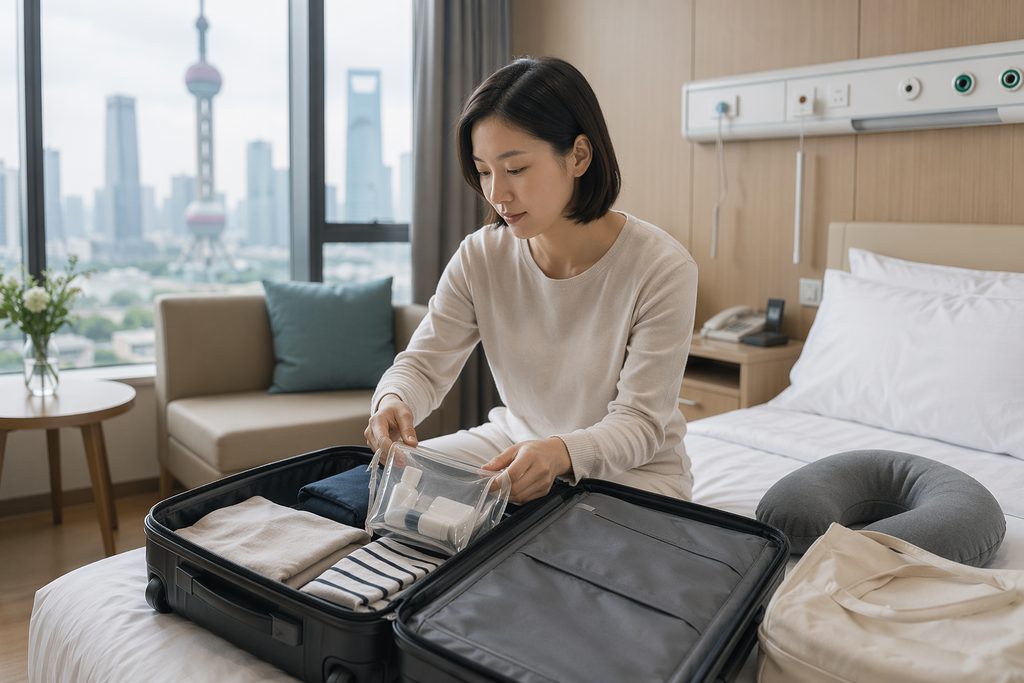
When 53-year-old Elena booked her flight to Shanghai for a complex orthopedic procedure, she stared at her empty suitcase for an hour. She had the visa, the hospital confirmation, and the hotel reservation. What she didn’t have was any idea what to actually pack. A knee brace? Her own pillows? Paper medical records or digital ones? The uncertainty gnawed at her. She is not alone. Every year, thousands of international patients arrive in China for world-class medical care, and nearly all of them wrestle with the same question.
This is not a vacation. A **medical travel packing list China** is fundamentally different from a tourist checklist. You are not packing for sightseeing or business meetings. You are packing for a hospital stay, a surgical recovery, and days when you may not feel like leaving your room. Forgetting one critical item can turn a smooth treatment journey into a stressful scramble through unfamiliar pharmacies with a language barrier.
Our team has coordinated care for patients from over 40 countries at more than 340 top-ranked hospitals across 37 cities. We have seen what works. We have also seen what happens when someone shows up unprepared. This guide is built from that experience. No fluff. Just what you actually need.
Key Takeaways
- Your documents folder is the single most important item — without it, your entire trip can stall on day one.
- Chinese hospital rooms provide basics, but comfort and communication tools are entirely your responsibility.
- Pack for two distinct phases: the clinical hospital stay and the post-discharge recovery period.
- What you leave behind matters as much as what you bring — overpacking creates logistical headaches when you are weak and tired.
The Problem: One Forgotten Item Can Derail Your Medical Trip
A study published in the Journal of Travel Medicine found that approximately 1 in 3 medical tourists report significant stress related to logistics and preparation, separate from their actual medical procedure. That stress has a real physiological cost. Elevated cortisol interferes with wound healing and immune function. You are traveling for better outcomes, not to add a layer of preventable anxiety.
China’s top hospitals are extraordinary. Peking Union Medical College Hospital handles over 15,000 outpatient visits daily. Fuwai Hospital performs more than 14,000 cardiac surgeries each year — the highest volume of any heart center on the planet. These institutions deliver outcomes that rival or exceed Western benchmarks. But they operate on a scale that can overwhelm anyone unfamiliar with the system. Pharmacy counters, payment windows, and nursing stations rarely have English-speaking staff outside of dedicated international departments. You cannot assume you will be able to buy what you forgot.
Elena’s story has a good ending. She packed thoughtfully, her surgery went well, and she recovered on schedule. We want the same for you. This **medical travel packing list China** is designed to remove guesswork so you can focus on what matters: your health.
Who We Are
We are not a hospital. We do not provide medical treatment or clinical diagnoses. We are your logistical architects — we bridge the gap between you and China’s top-tier medical expertise. Our team handles hospital matching, appointment coordination, bilingual medical companions, visa guidance, and the hundreds of small details that turn a daunting international medical journey into a structured, manageable process. We have walked this path with patients from the Middle East, Europe, North America, and Southeast Asia. This packing guide reflects what we have learned on the ground.
Phase One: The Non-Negotiable Documents Folder
If you take nothing else from this **medical travel packing list China**, take this seriously. Your documents are your passport to care. Without them, nothing moves forward. Keep everything in a dedicated folder — physical copies, not just digital. Hospital registration desks in China still operate heavily on paper.
What goes in the folder
- Passport with valid S2 visa: Medical travelers to China require an S2 visa (short-term, annotated for medical treatment purposes) or S1 visa for stays exceeding 180 days. Accompanying family members also need S2 visas. Check expiration dates. Check them again.
- Hospital invitation letter: Chinese hospitals issue a formal invitation letter for visa applications. Bring the original and two photocopies. This document confirms your appointment and treatment plan.
- Complete medical records: Bring everything. Imaging discs (CD/DVD), written radiology reports, pathology slides if applicable, blood work results, and any prior surgical notes. Have these professionally translated into Chinese before departure. Our team handles this as part of our coordination service — it prevents critical delays on arrival.
- Passport-sized photos: Bring six. Hospital registration, visa extensions, and unexpected paperwork often require them. Photo booths are not common in Chinese hospitals.
- Insurance documentation: If your policy covers international treatment, bring the full policy document, pre-authorization letters, and direct billing instructions. Most Chinese public hospitals require upfront payment with reimbursement claimed afterward. Private international hospitals like United Family and Jiahui often handle direct billing — confirm this before you pack.
- Emergency contact list: Names, phone numbers, and WeChat IDs for your primary doctor at home, your insurance case manager, your family members, and your medical coordinator. Write these on paper. Phones get lost. Batteries die.
Phase Two: What to Pack for Surgery in China — The Hospital Stay
Your hospital room will provide the clinical essentials: a bed, basic linens, a bedside table, and medical equipment. Everything beyond that is your responsibility. This section of the **packing checklist for medical treatment abroad** addresses what you need inside the hospital walls.
Comfort items that matter
Chinese hospital rooms are functional, not luxurious. Even in international VIP wards, the pillows tend to be flat and firm. Bring your own if you have neck or back sensitivity. A small, lightweight travel pillow compresses easily and makes a real difference during long post-operative days.
Pack loose, front-buttoning clothing. After surgery, pulling a shirt over your head may be painful or impossible. Think pajama sets with buttons, loose sweatpants, and slip-on shoes. Hospital floors are cold. Bring non-slip socks or soft slippers with grip soles.
An eye mask and earplugs are not optional. Hospital corridors are active at all hours. Nursing shift changes, equipment beeping, and roommate conversations do not pause for your sleep cycle. Blocking out light and sound improves rest, and rest improves recovery.
Personal care and hygiene
Chinese hospitals provide basic soap and sometimes a towel. Bring your own toothbrush, toothpaste, deodorant, lip balm, moisturizer, and any specific toiletries you rely on. International brands are available in major Chinese cities, but finding them from a hospital bed is not realistic. Post-surgery skin gets dry. Pack a heavy moisturizer.
If you use contact lenses, switch to glasses for your hospital stay. You will not want to handle lenses when you are groggy or connected to IV lines. Bring lens solution and a case anyway for the recovery period after discharge.
Communication and entertainment
Your phone is your lifeline. Download WeChat before leaving home — it is the universal communication platform in China. Hospital staff, coordinators, and even food delivery services operate through WeChat. Install a reliable VPN and test it before departure. Confirm it works. Update your phone’s operating system and all apps.
Pack a portable battery pack with a long charging cable. Hospital beds are often positioned far from wall outlets. A 2-meter cable gives you flexibility when you cannot move easily. Bring universal power adapters — China uses Type A and Type I plugs at 220V.
Load your phone with offline content. Download movies, podcasts, audiobooks, and music. Hospital Wi-Fi exists but is often slow and unreliable. You will have hours to fill between procedures, tests, and recovery sleep.
Phase Three: Medical Tourism China — What to Bring for Recovery
Your hospital discharge is not the finish line. Most international patients stay in China for days or weeks of follow-up observation and rehabilitation before flying home. This phase of your **medical tourism China what to bring** preparation is about self-sufficiency in a serviced apartment or hotel room.
Medications and medical supplies
Bring enough of your regular prescription medications to cover your entire stay plus a one-week buffer. Flight delays happen. Quarantine policies can change. Do not assume you can refill a foreign prescription at a Chinese pharmacy — many Western medications are not available or require a local doctor’s prescription.
Pack basic wound care supplies: sterile gauze, medical tape, antiseptic wipes, and any specific dressings your surgeon recommends. Your hospital will discharge you with some supplies, but having your own backup eliminates anxiety. A digital thermometer and a blood pressure monitor are worth the luggage space if your procedure involves cardiovascular or post-operative monitoring.
Nutrition and hydration
Post-surgery appetite is unpredictable. Pack a small supply of familiar, non-perishable comfort foods. Protein bars, instant oatmeal packets, crackers, and herbal tea bags weigh little and provide reassurance when you cannot face an unfamiliar food delivery menu. Electrolyte powder packets help with hydration during recovery.
A reusable water bottle with a built-in filter is useful. Tap water in China is not potable without boiling. Bottled water is widely available, but having your own filtered bottle reduces plastic waste and ensures you always have water within arm’s reach.
Mobility aids and comfort
If your procedure affects mobility, arrange walking aids before departure or through your medical coordinator. Crutches, walkers, and wheelchairs are available in China, but sizing and quality vary. Bringing your own fitted equipment eliminates uncertainty. Confirm with your airline about medical equipment baggage policies — most allow mobility aids without additional charges.
Compression stockings are standard post-surgical wear for many procedures. Bring at least two pairs so one can be washed while the other is worn. The same applies to any prescribed post-surgical braces or supports — bring them with you rather than sourcing them locally.
Things to Bring for Hospital Stay in China: The Often-Forgotten Items
Some items do not fit neatly into categories but matter enormously. These are the **things to bring for hospital stay in China** that patients consistently wish they had remembered.
A small notebook and pen. You will have questions for your surgeon. You will receive instructions about medications, follow-up appointments, and recovery protocols. Write everything down. Fatigue and painkillers make memory unreliable. A notebook also helps when language barriers arise — you can write down key terms or draw simple diagrams.
Tissues and wet wipes. Chinese public restrooms and some hospital bathrooms do not consistently stock toilet paper. Carry a small pack of tissues everywhere. Wet wipes serve double duty for personal hygiene when showering is difficult post-surgery.
A small amount of Chinese cash (RMB). Hospital cafeterias, small pharmacies, and street vendors often do not accept foreign credit cards. Mobile payment platforms like WeChat Pay and Alipay dominate in China, but setting them up as a foreigner can be complicated. Having 1,000-2,000 RMB in cash covers immediate needs while you sort out digital payments.
What Do I Need for Medical Travel to Shanghai — City-Specific Notes
Most forgotten items can be purchased in China, especially in larger cities. The exceptions are prescription medications, specific medical devices fitted to your body, and translated medical records. Those three categories are difficult or impossible to replace on short notice. Everything else — clothing, toiletries, electronics — is available through delivery platforms or hospital-area shops. A bilingual medical companion makes sourcing forgotten items dramatically easier.
Chinese public hospitals, even those with international departments, do not guarantee English-speaking staff on every shift. Nursing staff, pharmacy counters, and payment windows often operate in Chinese only. Private international hospitals like United Family and Jiahui provide English-speaking care throughout. If you are treated at a public hospital, a bilingual medical companion is not a luxury — it is the difference between understanding your discharge instructions and guessing. Our companions handle translation, paperwork, and navigation so you can focus on recovery.
How much cash should I bring for a medical trip to China?
Bring 1,000-2,000 RMB in cash for immediate needs upon arrival. Hospital deposits and treatment fees are typically paid via bank transfer, credit card, or WeChat Pay — not cash. The cash is for taxis, small pharmacies, hospital cafeteria meals, and situations where foreign cards are not accepted. Mobile payment dominates in China, but setting up WeChat Pay or Alip
Frequently Asked Questions
Yes. The hospitals we partner with, like BenQ Medical Center, are JCI-accredited and follow the same international safety standards as top hospitals in the US and Europe. Surgical teams perform high volumes of procedures — often more than their Western counterparts — which studies show leads to better outcomes.
Costs vary by procedure and hospital, but international patients typically save 40-80% compared to US prices — even when factoring in travel and accommodation. A consultation with our team will give you an exact, all-inclusive quote with no hidden fees.
Contact Fenglin International. We handle everything from hospital selection and appointment scheduling to visa assistance and post-operative recovery planning. Your medical records are reviewed by the specialist before you even book a flight.
For more medical information and treatment options in China, visit chinamedservices.com (China Medical Services).
