First Hospital of China Medical University Oncology: A Guide for International Patients
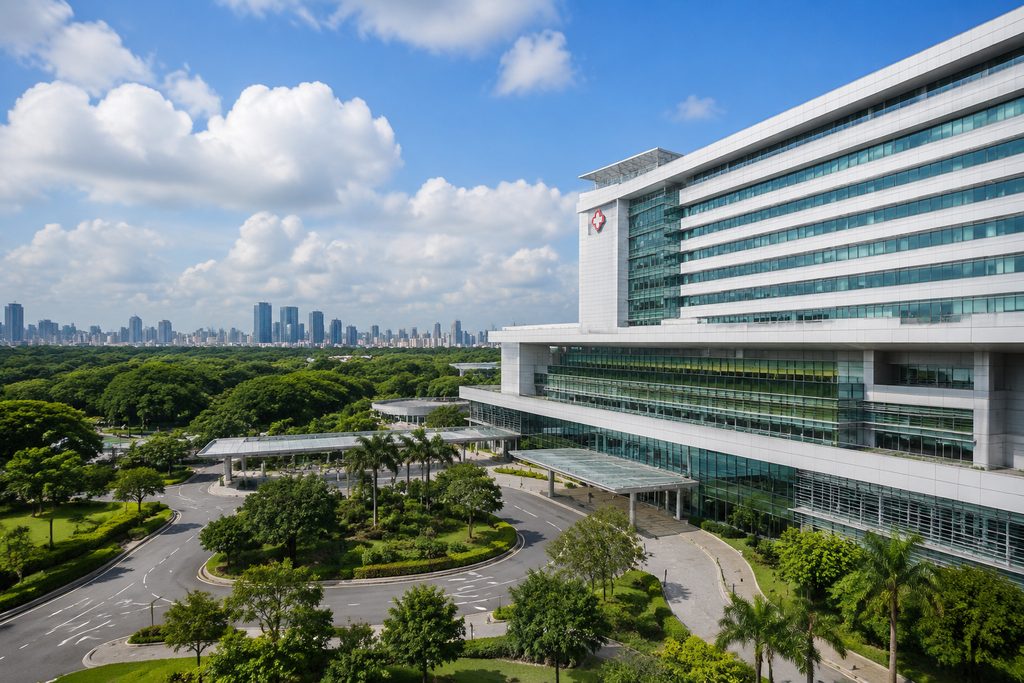
First Hospital of China Medical University Oncology for International Patients: What You Actually Need to Know
Have you been told that top-tier cancer care means flying to Houston, Boston, or Heidelberg — and paying accordingly? The oncology treatment cost China international patients encounter at a hospital like the First Hospital of China Medical University often runs at a fraction of Western prices, without sacrificing the technology or surgical volume that matters for complex cases. But getting there, getting in, and getting through treatment as a foreigner requires a process most people never see explained clearly. This guide walks through it honestly.
The First Hospital of China Medical University, located in Shenyang, Liaoning Province, is one of the region’s most substantial academic medical centers. Its oncology department sits within a hospital system that handles enormous patient volumes and maintains active research programs. For international patients, the question is rarely whether the clinical capability exists. The question is how to access it without Chinese language skills, without local insurance, and without knowing the unwritten rules of the Chinese public hospital system. We work inside that system every day, and the following is what the real path looks like.
How This Actually Works, Step by Step
The sequence from “I’m considering this hospital” to sitting in an oncologist’s office is not a single phone call. Here is the actual workflow we coordinate for patients seeking care at China Medical Services partner institutions like the First Hospital of China Medical University.
Step 1: You send your existing records. This means pathology reports, imaging (CT, MRI, PET-CT), surgical notes if you’ve had a biopsy or resection, and a summary of any treatment already received. Translation into Chinese is required for the hospital’s review. We handle that translation internally — it is not a Google Translate exercise. Oncology terminology must be precise.
Step 2: The department reviews your file. A specialist at the hospital’s oncology department examines whether your case falls within their treatment scope and what additional testing might be needed. This written second opinion typically costs $300–500 and provides a formal analysis plus treatment direction. It is for reference only — not a prescription, and not a guarantee of admission.
Step 3: You decide on the engagement level. Some patients stop at the written opinion. Others proceed to a video consultation ($100–300 for standard international department, $500–800 for a top specialist). A smaller number commit to traveling for in-person evaluation and treatment. Each stage is optional and builds on the last.
Step 4: Travel coordination begins. You apply for an S2 visa, which is the short-stay category used for medical treatment and private affairs in China. Supporting documents from the hospital are typically required. Processing times vary by embassy and season — plan for 2–6 weeks.
Step 5: Arrival and in-person consultation. You land in Shenyang. A bilingual medical companion meets you, handles registration, navigates the hospital’s physical layout, and interprets during the face-to-face consultation. Public hospitals in China do not allow overseas patients to pre-book ordinary outpatient slots remotely. The in-person visit is mandatory before any surgery or inpatient admission can be scheduled.
First Hospital of China Medical University Cancer Center: What the Institution Actually Offers
First Hospital of China Medical University cancer center reviews from international patients are relatively scarce — this is not a hospital that markets heavily to Western medical tourists. But the institutional facts are verifiable. The hospital is a major teaching affiliate of China Medical University, one of the oldest medical schools in China. Its oncology department handles the full spectrum: medical oncology, surgical oncology, radiation oncology, and interventional procedures.
What does that mean for a foreign patient? Volume. Chinese top-tier hospitals see patient numbers that dwarf most Western centers. A single oncology outpatient day may involve hundreds of consultations. That volume translates into procedural experience — especially for surgeries like gastric cancer resection, liver tumor intervention, and esophageal cancer treatment, which are more prevalent in Northeast China than in many Western countries.
But volume is not the same as convenience. The hospital’s public outpatient system operates on a same-day queue model. You arrive, you register, you wait. Without Chinese language ability, the registration kiosks alone are a barrier. That is precisely where a bilingual companion changes the experience from overwhelming to manageable.
For patients evaluating whether this hospital is the right fit, the honest answer depends on cancer type, stage, and treatment goal. The hospital’s strengths in gastrointestinal and thoracic oncology are well established. For rare hematological malignancies or pediatric cancers, other centers in Beijing or Shanghai may offer more specialized programs. Our hospital matching process begins with your pathology, not with a hospital’s brochure.
A Realistic Timeline
Patients searching “how to get cancer treatment in China as a foreigner” often imagine a two-week trip. The reality involves more waiting than anyone expects. Here is a stage-by-stage breakdown based on cases we have coordinated.
| Stage | What Happens | Realistic Duration |
|---|---|---|
| Day 1–7 | You collect and send medical records; we translate and format them for the hospital | 1 week |
| Week 2–4 | Oncology department reviews records; written second opinion issued | 2–3 weeks |
| Week 4–6 | Video consultation scheduled (if desired); treatment direction clarified | 1–2 weeks |
| Week 6–10 | S2 visa application with hospital support documents; embassy processing | 2–6 weeks |
| Week 10–11 | Travel to Shenyang; in-person consultation at First Hospital of CMU | 2–5 days |
| Week 11–14 | Additional testing ordered (imaging, labs, possibly biopsy); results reviewed | 1–3 weeks |
| Week 14+ | Surgical or treatment plan confirmed; admission scheduled | Varies by department capacity |
The waiting steps people forget: document translation quality matters more than speed. Embassy processing times are outside anyone’s control. And the hospital’s own internal scheduling for surgery depends on department capacity, which shifts weekly. Anyone who promises you a specific surgery date before you’ve had your in-person consultation is not being honest.
What Can Go Wrong — and What Happens Then
The failure modes are real, and you should know them before committing time and money.
Your records are incomplete or low-quality. A pathology report without the original slides, or imaging without the DICOM files, may force the Chinese team to repeat everything. That adds cost and delay. The fix: before you travel, we verify with the hospital that your existing materials are sufficient. If not, we tell you what to request from your home provider.
The specialist disagrees with your home oncologist’s plan. This happens more often than patients expect, especially for advanced-stage disease where treatment philosophies differ between Chinese and Western protocols. The recourse is not to argue — it is to get a third opinion or a multidisciplinary team review. A remote MDT video consultation costs $1,500–2,000 and brings several departments into one discussion.
Visa denial or delay. S2 visa approval is not guaranteed. Embassies assess each case individually. If a visa is denied, the hospital typically does not charge for the unconsumed consultation, but translation and coordination fees already incurred are non-refundable. We advise patients to have a backup plan: either a family member travels for the proxy consultation service, or the entire engagement shifts to remote-only formats.
The treatment plan changes after arrival. New imaging may reveal disease progression or a different staging than your home records suggested. That means the surgery you planned for becomes a different surgery — or no surgery at all, with systemic therapy recommended instead. This is not malpractice. It is medicine. The recourse is to make decisions with the Chinese team in real time, with translation support so nothing is lost.
What Is the Best Cancer Hospital in Shenyang for Expats? Comparing Your Options
If you search “what is the best cancer hospital in Shenyang for expats,” the answer is not a single name. It depends on what you mean by “best.”
First Hospital of China Medical University offers the deepest oncology specialization and the strongest academic reputation in the city. But its public-facing systems are built for Chinese-speaking patients. The international department exists, but it is not a five-star concierge experience. Expect efficiency, not luxury.
Shengjing Hospital of China Medical University, also in Shenyang, is another major academic center with strong oncology coverage. It is comparable in scale and capability. For certain subspecialties, one hospital may have a more experienced team than the other. The differences are granular — specific surgeons, specific tumor boards, specific clinical trial access.
For expats who prioritize English-speaking staff and Western-style service over maximum specialization, private international hospitals in larger cities like Beijing or Shanghai may be a better fit. But those come at a higher price point and often lack the surgical depth of a major public academic center. The trade-off is real: specialization versus comfort.
Our recommendation process works like this: we review your diagnosis and treatment history, we identify which hospital’s oncology department has the most relevant experience for your specific cancer, and we present you with honest trade-offs. We do not steer every patient to the same institution.
Practical Considerations: Records, Visa, Payment, and Follow-Up
Medical records. You need complete, recent, and ideally digitized records. Paper photographs of scans are not sufficient. Request DICOM files from your imaging center. Request original pathology slides or at least high-resolution scanned reports. Translation into Chinese is mandatory for the hospital’s review — budget $100–300 for professional medical translation, depending on volume.
Visa category. You will apply for an S2 visa with a notation indicating medical treatment as the purpose. Family members accompanying you apply for S2 as well. If your treatment will exceed 180 days, an S1 visa applies. Do not apply for an M visa — that is for commercial and trade activities, not medical care. Embassy requirements shift; check with the Chinese embassy or consulate in your country for the current document list.
Payment. Public hospitals in China require prepayment. You deposit funds at admission, and treatment costs are deducted as services are rendered. Insurance reimbursement happens after the fact, not at the point of care. For cancer surgery price abroad China medical tourism comparisons, expect a major resection at a top public hospital to run $15,000–35,000 depending on complexity — roughly one-fifth to one-tenth of the equivalent US charge. But that is a range, not a quote. Final pricing depends on your specific procedure, length of stay, and any complications.
Language. Few clinicians at First Hospital of CMU speak functional medical English. Relying on a family member who speaks conversational Mandarin is risky — oncology discussions involve nuance that conversational fluency cannot handle. A professional bilingual medical companion is not a luxury in this context. It is the difference between informed consent and signing documents you do not fully understand.
Follow-up at home. After you return, your home oncologist needs a complete treatment summary in English. The Chinese hospital will provide discharge documents in Chinese. Translation for your home team is an additional step — budget $100–200 and do not skip it. Your home oncologist cannot manage your ongoing care without knowing exactly what was done in Shenyang.
Frequently Asked Questions
No. Public hospitals in China do not allow remote booking of ordinary outpatient appointments. You must appear in person to register and see a specialist. What you can do remotely is submit your records for a written second opinion or a video consultation, which clarifies whether traveling is worthwhile before you commit to the trip. If you want to proceed to an in-person visit, we coordinate the appointment after you arrive.
For surgical oncology, expect roughly 20–30% of the US price for an equivalent procedure. A complex gastrointestinal cancer resection might run $15,000–35,000 in Shenyang versus $80,000–150,000 in the United States. Chemotherapy and radiation are similarly discounted. But these are ranges. Your specific cost depends on cancer type, stage, treatment protocol, and whether you use the standard public channel or the international department, which carries a premium of roughly 1.5–2 times the standard rate.
You get to decide. The written second opinion and video consultation are advisory. If the Chinese team recommends a different surgical approach or a different chemotherapy regimen, you can seek a third opinion, request an MDT review, or proceed with whichever plan you and your family feel most confident about. No one in this process can force you into a treatment you have not consented to.
Yes. Registration kiosks, queue numbers, lab slips, pharmacy instructions, and consent forms are all in Chinese. Even if a physician speaks some English, the nurses, technicians, and administrative staff generally do not. A bilingual medical companion handles the practical navigation and the clinical translation. Without one, you are functionally illiterate inside the hospital.
If that family member has professional-level medical interpretation experience, possibly. If they speak conversational Mandarin, no. Oncology consultations involve explaining staging, margins, recurrence risk, and treatment side effects. Misinterpreting any of those has clinical consequences. We recommend professional interpretation for the key consultations, even if family members help with daily logistics.
Your Next Step
The First Hospital of China Medical University oncology department is a serious clinical institution with real capability — and real access barriers for foreign patients. The path is navigable, but it requires staged evaluation, honest expectations, and on-the-ground support. We are China Medical Services, a coordination team that connects international patients with top-tier Chinese hospitals. We do not practice medicine, and we do not sell guaranteed outcomes. What we do is handle records translation, hospital communication, appointment coordination, and bilingual accompaniment so you can make decisions with full information.
If you are weighing this hospital against others in China, or against staying home, start with a free consultation. Send your diagnosis and records. We will tell you honestly whether this path makes sense for your case. No pressure. No obligation. Just clarity.
Request a free consultation to discuss your case — we will review your records and give you a straight answer on whether First Hospital of CMU or another Chinese center is the right fit.
Take the next step when you are ready. The information is here. The decision is yours.
For more medical information and treatment options in China, visit chinamedservices.com (China Medical Services).
