First Hospital of China Medical University Urology: A Guide for International Patients
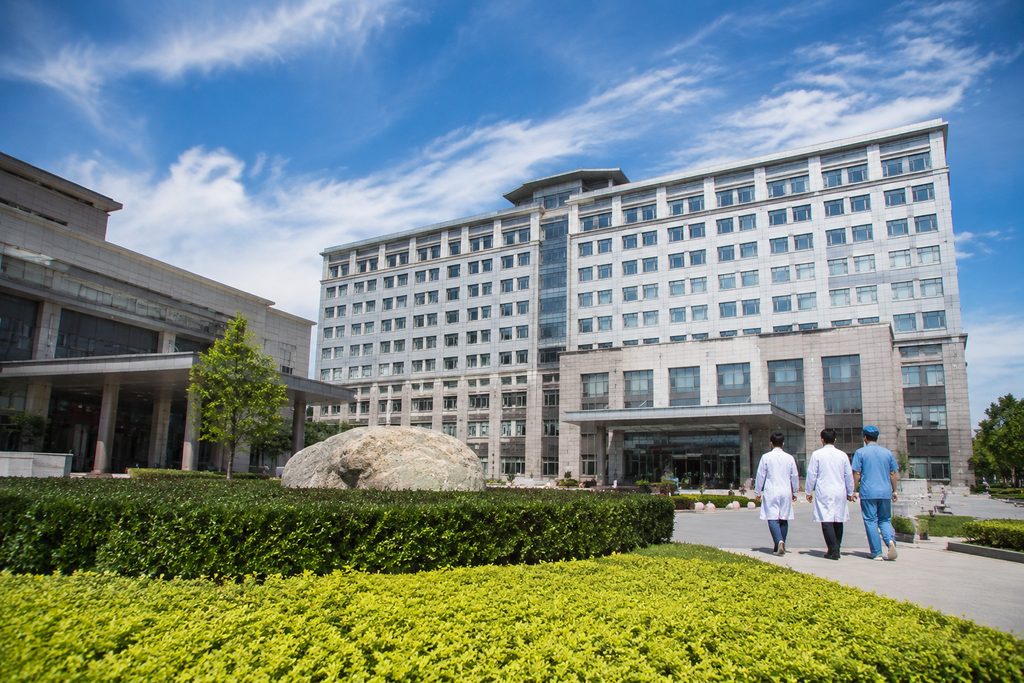
Urology at First Hospital of China Medical University: The Short Answer
First Hospital of China Medical University in Shenyang operates one of northeastern China’s highest-volume urology departments. For international patients weighing urology treatment cost China First Hospital against Western prices, the numbers are stark: a radical prostatectomy that runs $40,000–$70,000 in the United States typically lands between $8,000 and $15,000 here. Robotic-assisted procedures, when clinically indicated, fall in the $12,000–$20,000 range. But cost is only one variable in a decision with real clinical stakes.
The department handles roughly 4,000 inpatient urological surgeries annually, spanning oncology, stone disease, reconstruction, and andrology. That volume matters. Surgeons who perform 300 prostatectomies a year simply operate differently than those who do 30. Yet the practical barriers for a foreign patient — language, scheduling, documentation, post-operative follow-up — are substantial enough that this path is not for everyone. We’ll lay out exactly who should consider it, and who should stay home.
Who This Is Right For — and Who It Isn’t
Urology covers a broad spectrum. The calculus changes depending on whether you’re dealing with an aggressive malignancy, a recurrent kidney stone, or a benign but quality-of-life-destroying condition like severe BPH. Let’s be concrete about fit.
Typically a good candidate:
- Diagnosed with prostate, bladder, or kidney cancer and seeking a second opinion or surgical option without a 3–6 month wait
- Facing out-of-pocket costs at home that exceed $30,000 for a procedure available in China for a fraction of that
- Requiring a high-volume surgeon for a complex case — partial nephrectomy, radical cystectomy with urinary diversion, retroperitoneal lymph node dissection
- Dealing with large or complex kidney stones where percutaneous nephrolithotomy (PCNL) or flexible ureteroscopy with laser is indicated
- Comfortable traveling 7–10 days post-operatively and arranging follow-up imaging or lab work with a local urologist back home
Who should not pursue this:
- Patients with unstable cardiac or pulmonary disease who cannot safely fly long-haul
- Anyone needing immediate emergency intervention — this is a planned-care pathway, not an ER alternative
- Those expecting a Western-style private hospital experience with all-English staff at every turn; this is a Chinese public hospital, with all that implies
- Patients whose condition requires prolonged in-country monitoring beyond 2–3 weeks
- Anyone unwilling to compile and translate complete medical records before travel
The Options, Compared
If you’re researching best urology hospital in China for foreigners, you’ll quickly find that no single institution wins every category. The right choice depends on your specific condition, budget, and tolerance for logistical friction. Here’s how the realistic alternatives stack up.
| Option | Typical Cost (USD) | Wait Time | English Support | Best For |
|---|---|---|---|---|
| First Hospital of CMU (Shenyang) | $8,000–$20,000 surgery | 1–3 weeks | Limited; companion recommended | High-volume oncology, complex stones |
| Top-tier Beijing/Shanghai urology centers | $12,000–$25,000 surgery | 2–4 weeks | Moderate; international departments exist | Robotic surgery, academic second opinions |
| Private international hospitals (United Family, Jiahui) | $25,000–$50,000 surgery | 1–2 weeks | Full English staff | Comfort, insurance direct billing |
| US/UK private care | $40,000–$120,000 surgery | Variable, often 1–3 months | Native language | Continuity of care, no travel |
| Thailand/India private hospitals | $10,000–$25,000 surgery | 1–3 weeks | Good English | Budget medical tourism with established infrastructure |
The Shenyang option wins on cost and surgical volume. It loses on creature comforts and language accessibility. Beijing and Shanghai centers — including those listed in our specialty rankings by department — offer more international patient infrastructure but at a 30–50% price premium. If insurance direct billing and English-speaking staff are non-negotiable, the private international route is the only one that delivers that experience in China. You can compare those facilities on our private hospital directory.
Understanding the Department’s Actual Strengths
First Hospital of China Medical University is not a marketing-driven brand. It’s a workhorse academic center. The urology department traces its lineage to one of China’s earliest urological training programs, and its faculty publish consistently in international journals. What does that mean for you, concretely?
Three areas stand out. First, laparoscopic and robotic radical prostatectomy — the department performs a high annual volume, and the surgeons have accumulated the case experience that correlates with better functional outcomes (continence and erectile function preservation). Second, percutaneous nephrolithotomy for complex renal stones — including staghorn calculi that many Western centers would treat with multiple staged procedures. Third, radical cystectomy with orthotopic neobladder reconstruction — a technically demanding operation where experience genuinely separates good from adequate.
If you’re specifically asking is First Hospital of China Medical University good for prostate surgery, the answer is yes, with a caveat. It is good for oncologic control and surgical efficiency. It is not the place to expect extensive pre-operative counseling in English, shared decision-making tools, or a spa-like recovery floor. You come here for the surgeon’s hands, not the hotel.
What It Costs: Urology Treatment Pricing in Detail
Let’s break down urology treatment cost China First Hospital into components, because the headline surgical fee is only part of the picture.
Surgical fees (hospital charges only):
- Transurethral resection of bladder tumor (TURBT): $2,500–$4,500
- Transurethral resection of prostate (TURP) for BPH: $3,000–$5,500
- Flexible ureteroscopy with laser lithotripsy for kidney stones: $3,500–$6,000
- Percutaneous nephrolithotomy (PCNL): $4,500–$7,500
- Laparoscopic radical prostatectomy: $8,000–$13,000
- Robotic-assisted radical prostatectomy: $12,000–$18,000
- Radical cystectomy with urinary diversion: $12,000–$20,000
- Laparoscopic partial nephrectomy: $9,000–$14,000
These figures cover the hospital’s charges for the procedure itself, standard post-operative inpatient care (typically 3–7 days depending on procedure), and routine medications. They do not include pre-operative imaging if you need it repeated in China, pathology review, your flight, accommodation, or any coordination services. Costs vary by hospital and case complexity — a straightforward TURP and a complex cystectomy are different universes.
For comparison, robotic urology surgery price Shanghai runs 20–40% higher than Shenyang for the same procedure, largely reflecting the cost structure of top-tier academic centers there. The gap narrows if you require a specific named surgeon. If you’re weighing kidney stone laser treatment cost abroad China, the $3,500–$6,000 range for flexible ureteroscopy compares against $15,000–$25,000 in the US for the same operation.
Practical Considerations: Records, Visa, and Follow-Up
The medical pathway is only half the equation. The logistics will determine whether the experience is manageable or miserable.
Medical records. You need a complete, translated package before any meaningful consultation can happen: imaging (CT/MRI on disc or via secure link), pathology reports, operative notes from any prior surgery, current medication list, and a referral or summary letter from your treating urologist. Translation into Chinese is typically required for the hospital’s file. This is where a coordination service earns its fee.
Visa. Medical treatment in China falls under the S2 visa category (short stay, private affairs including medical treatment). The hospital will issue an invitation letter and treatment confirmation document once you have a preliminary acceptance. Family members accompanying you also apply for S2. Processing typically takes 1–3 weeks depending on your home country’s Chinese embassy or consulate. Requirements shift, so verify with the embassy before booking flights.
Payment. China’s public hospitals do not bill international insurers directly. You pay, then claim. Some international insurance policies require pre-authorization for overseas planned care — check before you commit. Also confirm whether your policy covers complications or extended stays.
Language. The department’s senior surgeons may speak some English, but nursing staff, administrative counters, radiology, and pharmacy generally do not. You will struggle without either a bilingual companion or a Mandarin-speaking family member. This is not a criticism — it’s the reality of a public hospital serving thousands of patients daily.
Follow-up. After you return home, you’ll need a local urologist willing to take over. For cancer surgery, that means PSA monitoring (prostate), cystoscopy schedules (bladder), or CT surveillance (kidney). Arrange this before you travel. Get a written discharge summary in English, plus copies of the operative note and pathology report, before leaving the hospital.
Frequently Asked Questions
No. The hospital does not accept direct overseas bookings for surgery. You must first have a consultation — either in person or through a formal remote evaluation — where a urologist reviews your records and confirms the surgical indication. Only then can a procedure be scheduled. This is standard across Chinese public hospitals. If you want to understand how to book urology surgery at China Medical University hospital, the realistic path is: submit records → remote or in-person consultation → surgical plan → admission scheduling → travel. Expect the full sequence to take 2–6 weeks depending on case complexity and surgeon availability.
You will be managing those with your local urologist. The Chinese hospital’s responsibility effectively ends at discharge, though most departments will respond to follow-up emails with questions about your recovery. Serious complications — a urine leak after partial nephrectomy, a stricture after urethroplasty — may require intervention that your home system must provide. This is the single biggest risk of cross-border surgery, and it’s why we advise patients to establish a local follow-up plan before booking anything.
Yes, with a qualification. The pathology department at First Hospital of CMU is experienced and follows standard protocols. But if your diagnosis hinges on a subtle distinction — Gleason 3+4 versus 4+3, or variant histology — it is reasonable to request that slides be re-reviewed at your home institution after surgery. Many patients do this. It does not imply distrust; it’s prudent medicine.
Some international policies cover planned treatment abroad, typically at 70–90% of reasonable charges after deductible. Others exclude any care outside your home country except emergencies. Read your policy’s fine print on “planned treatment abroad” and “pre-authorization requirements.” Do not assume. If you’re uninsured or underinsured, the cash price in China may still beat your out-of-pocket cost at home.
Your Next Step
The decision to travel for urological surgery is never purely financial. It’s about surgical volume, timing, and your tolerance for managing care across borders. First Hospital of China Medical University offers a legitimate, high-volume option at a price point that Western patients rarely see. It also demands more self-management than most are used to.
We help patients work through this decision without pressure. China Medical Services is not a hospital and we do not provide medical advice or diagnoses. What we do is handle the practical layer: record translation, hospital communication, scheduling coordination, and on-the-ground bilingual support. If you want to understand your options better, request a free consultation and we’ll help you map the path — or tell you honestly if staying home is the better call.
For more medical information and treatment options in China, visit chinamedservices.com (China Medical Services).
