China Medical Visa: Where to Apply and How to Plan Your Trip
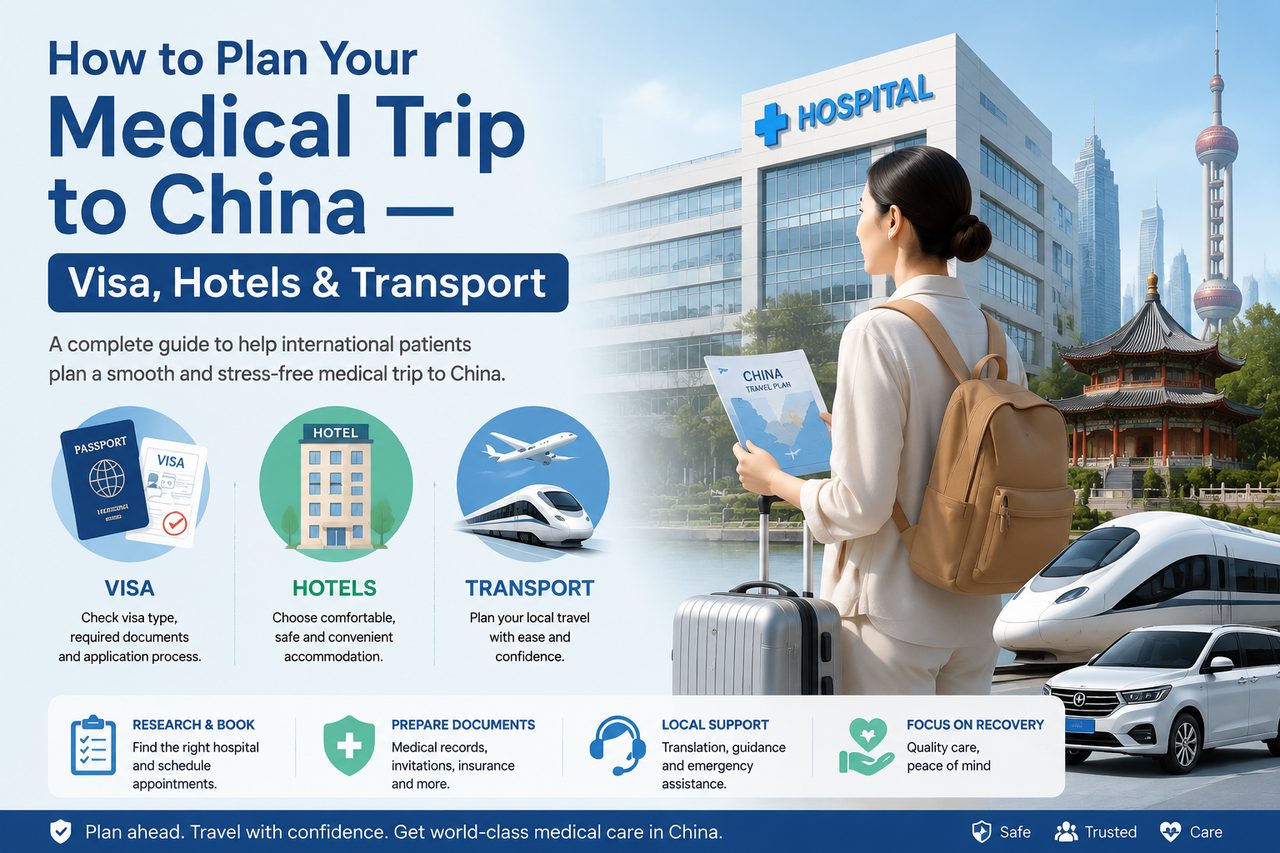
China Medical Visa: Where to Apply and How to Plan Your Trip
What if the hardest part of getting treatment in China isn’t the surgery itself, but a single line on a visa form? That question stops more international patients than any medical concern. If you have been searching for “China medical visa where to apply,” you are probably staring at embassy websites, confusing visa categories, and conflicting advice from forums. Let’s clear this up properly.
Here is the short answer. Foreign patients traveling to China for medical treatment generally apply for the S2 visa, which covers short-stay private affairs including medical treatment. Applications go through the Chinese embassy or consulate responsible for your country of residence, or through a Chinese Visa Application Service Center (CVASC) where one operates. You do not apply at the hospital. The hospital’s role is to provide supporting documents.
Key takeaway: The M visa is a commercial and trade visa. It has nothing to do with medical treatment. If anyone tells you to apply for an M visa for surgery in China, that advice is wrong and could get your application refused.
How This Actually Works, Step by Step
The sequence matters more than most people realize, because the visa depends on documents that only come after a medical decision. Here is the real order of operations.
Step one: get a remote medical opinion first. Before any visa paperwork, you need a Chinese hospital to review your case. You send existing examination reports — imaging, pathology slides, lab results, discharge summaries — to the relevant specialty department. A written second opinion typically comes back within a few business days, and a video consultation can follow if you want to speak directly with the clinical team.
Step two: receive the hospital’s supporting documents. Once a hospital accepts your case for evaluation or treatment, its international department can issue an invitation letter or confirmation of medical treatment. This is the document your visa application hinges on. Not every hospital issues these quickly, and some require a deposit or a confirmed appointment before they will.
Step three: assemble your visa application. Standard items include your passport with at least six months validity, a completed application form, a recent photograph, the hospital’s invitation letter, proof of financial capacity, travel and accommodation bookings, and sometimes a medical certificate confirming you are fit to travel. Requirements vary by consulate and nationality.
Step four: submit and wait. Lodging happens at the embassy, consulate, or CVASC serving your jurisdiction. Routine processing usually runs four to seven business days, with express options at some centers and longer timelines during peak seasons.
Step five: travel, arrive, and complete in-person evaluation. Once you land, the hospital still needs to see you in person before scheduling surgery. No reputable Chinese hospital operates otherwise.
Which Visa Category Actually Fits Your Situation
Chinese visa categories trip up a lot of patients, so let’s be precise. The S2 visa is the standard short-stay category used for medical treatment and other private affairs, typically permitting stays of up to 180 days with the appropriate annotation. If your treatment plan requires more than 180 days — some rehabilitation programs and staged surgical plans do — the S1 visa becomes relevant instead.
Family members accompanying you apply for the same category, which is a detail people often miss. A spouse or adult child traveling to support you does not need a tourist visa; they apply for S2 as an accompanying family member, referencing your medical documentation.
What about the M visa? It exists for commercial and trade activities. Full stop. We have seen patients arrive with M visas because a third-party agent told them it was “the medical one.” It is not, and border officers can and do ask questions.
For patients exploring care options before committing to travel, our overview of top-ranked Chinese hospitals by city is a useful starting point, since the hospital you choose determines which documents you will eventually need.
A Realistic Timeline
Routine processing is typically four to seven business days after your application is accepted. Express service is available at some centers for an additional fee. Peak seasons and consulate backlogs can extend this to two weeks or more, so build in buffer time.
Beyond standard documents, you need a hospital invitation letter or confirmation of treatment, proof of sufficient funds for medical expenses, and travel insurance in many cases. Accompanying family members apply under the same category with supporting documentation.
The hospital’s international department or foreign affairs office, not your doctor personally. Letters are usually issued on official hospital letterhead with the patient’s name, proposed treatment, and expected duration of stay. Timelines vary by institution.
You can typically reapply once the deficiency is corrected, though some consulates require a fresh application rather than an appeal. Review the refusal reason carefully, strengthen the weak documentation, and consider whether a written second opinion from the hospital would make your case clearer.
Your Next Step
Getting the visa right starts with getting the medical plan right — the documents follow the diagnosis, not the other way around. China Medical Services helps international patients navigate this entire path: written second opinions, video consultations, hospital matching across 340+ top-ranked hospitals in 37 cities, appointment coordination, and bilingual accompaniment on the ground. We are not a hospital and we do not provide medical advice or guarantee admission. What we do is remove the logistical friction so your clinical team can focus on your health. If you want a clear picture of your options before booking anything, start with a free consultation and we’ll walk you through what’s realistic for your case.
This article is for general informational purposes only and does not constitute medical advice. Treatment decisions should always be made with qualified healthcare professionals who have reviewed your individual case.
Frequently Asked Questions
Yes. The hospitals used for international patients are JCI-accredited and follow the same international safety standards as top hospitals in the US and Europe. Surgical teams perform high volumes of procedures — often more than their Western counterparts — which studies show leads to better outcomes.
Costs vary by procedure and hospital, but international patients typically save 40-80% compared to US prices — even when factoring in travel and accommodation. A consultation with our team will give you an exact, all-inclusive quote with no hidden fees.
Send us your existing medical reports to get started. We handle everything from hospital selection and appointment scheduling to visa assistance and post-operative recovery planning. Your medical records are reviewed by the specialist before you even book a flight.
For more medical information and treatment options in China, visit chinamedservices.com (China Medical Services).
