Overstaying a Chinese Medical Visa: Penalties, Extension Rules, and How We Resolve It
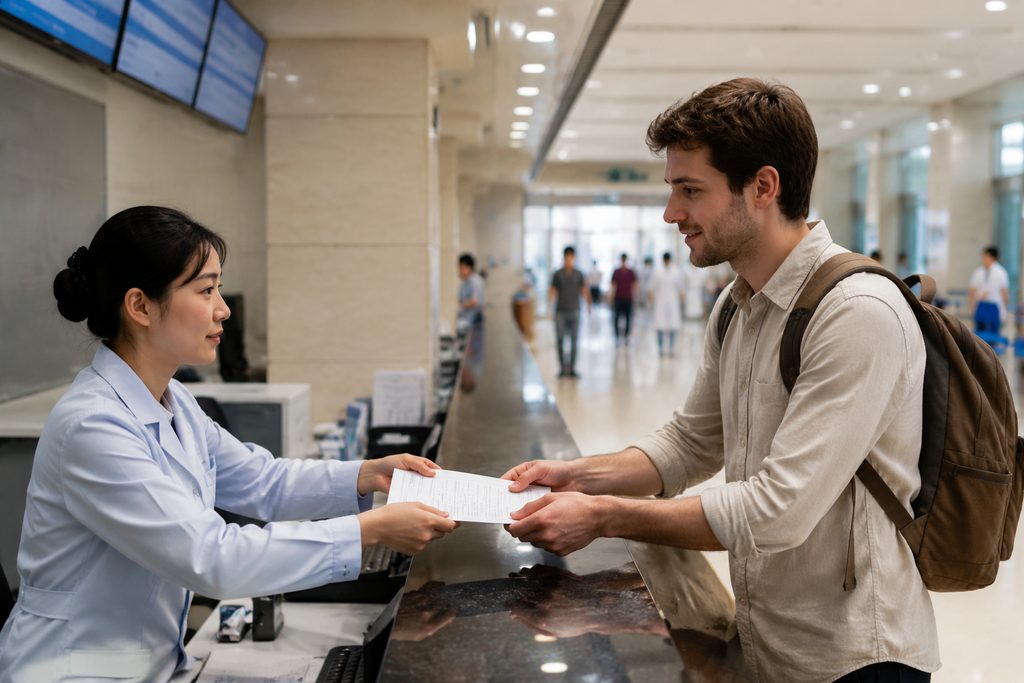
According to China’s Exit and Entry Administration Law, the medical visa overstay penalty China authorities enforce starts at 500 RMB per day, capped at 10,000 RMB total. That is roughly $70 USD daily, up to a $1,400 maximum fine. But the fine is rarely the part that keeps patients awake at night. The real risk is a re-entry ban—anywhere from one to ten years—that can interrupt a treatment plan mid-cycle or block a scheduled surgery entirely. For a patient whose chemotherapy cycle runs longer than expected, or whose post-operative recovery demands two extra weeks, the math stops being about money and starts being about access.
Our team has coordinated care for international patients at over 340 top-ranked hospitals across 37 cities. We have seen visa overstays happen for reasons no one predicts: a pathology report that takes longer than the embassy estimated, a surgeon who wants one more scan before clearing a patient to fly, an infection that grounds a traveler for ten days. The penalty structure is straightforward on paper. The resolution process is not. Here is what you actually face, and how to fix it.
Medical Visa Overstay in China: The Short Answer
If you overstay an S2 visa issued for medical treatment, you owe 500 RMB for each day beyond your permitted stay, with a ceiling of 10,000 RMB. The Public Security Bureau (PSB) Exit-Entry Administration records the violation. For overstays under 10 days with a verifiable medical reason, officers sometimes issue a warning instead of the maximum penalty. That is the best-case scenario. For overstays exceeding 10 days, or for anyone with a prior immigration violation, the outcome shifts toward detention, deportation, and a formal re-entry prohibition stamped into your passport.
None of this is theoretical. China’s National Immigration Administration processed over 14,000 exit-entry violations in 2023 alone, with overstay accounting for the largest share. The system does not distinguish between a tourist who lost track of dates and a cancer patient waiting on biopsy results. The law applies uniformly. What changes the outcome is documentation, timing, and who is standing next to you at the PSB counter.
What Happens If I Overstay My Chinese Medical Visa: The Real Sequence
Here is what actually unfolds, step by step. Most patients imagine a single penalty payment and a stern warning. The reality involves multiple agencies and a paper trail that follows you.
Day 1 of overstay: Nothing visible happens. No one knocks on your hotel door. But your immigration record now shows an active violation. If you attempt to fly out of China on an overstayed visa, the airline check-in system flags your passport. You will be pulled aside at exit control and transferred to the PSB office inside the airport. That is a much worse place to resolve this than a local PSB office before departure day.
Days 2–9: The daily fine accrues. You remain in China illegally. Any interaction with police—a traffic stop, a hotel registration renewal, a hospital admission update—can trigger a check of your visa status. Hospitals in major cities like Beijing and Shanghai now routinely verify visa validity upon inpatient admission. If your S2 has expired, the hospital’s administrative office may decline to admit you until the visa is resolved.
Day 10 and beyond: This is the threshold where penalties escalate. The PSB may impose the maximum fine. They may initiate deportation proceedings. A re-entry ban becomes likely. For a patient mid-treatment, this is catastrophic. A surgery scheduled three weeks from now becomes inaccessible. A chemotherapy protocol gets interrupted with no clear restart path.
At departure: If you reach the airport without resolving the overstay, expect to be detained for questioning—typically 2 to 6 hours. You will miss your flight. You will pay the fine on the spot. You may be escorted onto the next available flight. A ban stamp may be applied to your passport before you board. You will not have time to pack properly or notify your doctor.
Can I Extend My China Medical Visa for Treatment?
Yes. The S2 visa allows extensions, and medical treatment is one of the recognized grounds. The application must be submitted at the local PSB Exit-Entry Administration office at least 7 days before your current stay permit expires. Processing takes 7 business days on average, though some offices complete it in 5. The extension is typically granted for 30 days per application, and you can apply for consecutive extensions as long as your medical documentation supports the ongoing necessity.
What you need to submit:
- A valid passport with at least 6 months remaining before expiration
- The completed “Visa/Stay Permit/Residence Permit Application Form” (available at the PSB office)
- One recent passport-style photo with a white background
- The original “Registration Form of Temporary Residence” obtained from your local police station—this must be current and match your actual address
- A medical certificate from the treating hospital, on official letterhead, stating your diagnosis, treatment plan, and why continued stay in China is medically necessary
- The hospital’s business license copy or institutional registration certificate (your hospital’s international patient department can provide this)
- Payment of the application fee: 160 RMB for most nationalities
The medical certificate is the document that matters most. A vague note saying “patient needs more time” will get rejected. The certificate must specify the condition, the treatment protocol, the expected completion date, and the name and contact information of the attending physician. Hospitals with established international departments—like Peking Union Medical College Hospital or West China Hospital—know exactly what format the PSB requires. Smaller hospitals may not. That is where things go wrong.
Medical Visa Extension Service China: What Professional Help Actually Does
When someone searches for a medical visa extension service China, they are usually not looking for a form-filling assistant. They are looking for someone who can prevent a cascade failure: a rejected extension application that turns a compliant patient into an overstayer overnight.
Here is what professional coordination changes in practice. The PSB officer reviewing your extension application has discretion. They can grant 30 days. They can grant 15. They can request additional documentation and pause the clock—which, if your current permit is about to expire, creates exactly the overstay situation you are trying to avoid. An experienced coordinator knows which supporting documents a specific PSB office in a specific city tends to require beyond the statutory minimum. The Guangzhou PSB, for example, frequently asks for proof of sufficient funds to cover the extended stay. The Shanghai PSB often wants the hospital’s appointment schedule for the full extension period. These are not published requirements. They are pattern recognition from handling hundreds of cases.
Our team prepares extension applications with the full documentary package that the local PSB expects, not just the statutory minimum. We coordinate directly with the hospital’s international department to ensure the medical certificate uses the precise language the PSB accepts. And we accompany the patient to the PSB office to handle any on-the-spot questions or additional requests. That last part matters more than most patients realize. A PSB officer who can ask questions and get immediate, documented answers from a representative who speaks the language is far less likely to reject an application or issue a short extension that forces a repeat visit.
For patients already in overstay status, the service shifts from prevention to resolution. We contact the PSB before the patient does, present the medical circumstances, and negotiate the penalty and exit procedure. This is not about avoiding the fine—the fine is statutory and will be paid. It is about avoiding the re-entry ban and ensuring the resolution does not disrupt ongoing treatment.
How to Fix Overstaying a Visa in China for Surgery: The Step-by-Step Resolution
You can, but you should not. Airport resolution means you are processed as a departing violator with no time for documentary review. The officer on duty has less discretion than the local PSB office. Your chance of a re-entry ban is significantly higher. You will miss your flight. You may be held for hours. If you have a medical condition that requires timely medication or care, this is a genuine safety risk. Always resolve the overstay at the local PSB office before heading to the airport.
Go to the PSB immediately—today, if the office is open—and apply for an extension. Bring your hospital admission notice and surgical schedule. The PSB can issue an emergency extension in some cases, though this is discretionary. If the extension cannot be processed before the expiry date, ask the PSB to note in your file that an extension application is pending. This does not eliminate the overstay technically, but it provides documentary evidence that you attempted to comply before the deadline. That evidence is valuable if the case is later reviewed.
No. Visa compliance is the visitor’s legal responsibility, not the hospital’s. Some hospitals with established international departments will proactively remind patients to check their visa validity and assist with extension documentation. But the legal obligation to maintain valid immigration status rests entirely with the visa holder. This is why patients traveling independently—without a coordination service tracking their visa timeline—are at higher risk of accidental overstay.
Your Next Step
An expiring visa or an active overstay is not a problem to handle alone while also managing a medical condition in a foreign country. Our team coordinates the documentation, the PSB interface, and the hospital communication so the resolution happens efficiently and with the best possible outcome for your continued access to care. We are not a hospital, we do not provide medical advice, and we cannot guarantee any specific PSB decision. What we provide is experience: we have navigated this exact situation for patients at hospitals across our network of 340+ top-ranked institutions, and we know what
Frequently Asked Questions
Yes. The hospitals used for international patients are JCI-accredited and follow the same international safety standards as top hospitals in the US and Europe. Surgical teams perform high volumes of procedures — often more than their Western counterparts — which studies show leads to better outcomes.
Costs vary by procedure and hospital, but international patients typically save 40-80% compared to US prices — even when factoring in travel and accommodation. A consultation with our team will give you an exact, all-inclusive quote with no hidden fees.
Send us your existing medical reports to get started. We handle everything from hospital selection and appointment scheduling to visa assistance and post-operative recovery planning. Your medical records are reviewed by the specialist before you even book a flight.
For more medical information and treatment options in China, visit chinamedservices.com (China Medical Services).
