Fix a Bad Nose Job in China: Revision Rhinoplasty Costs & Top Surgeons
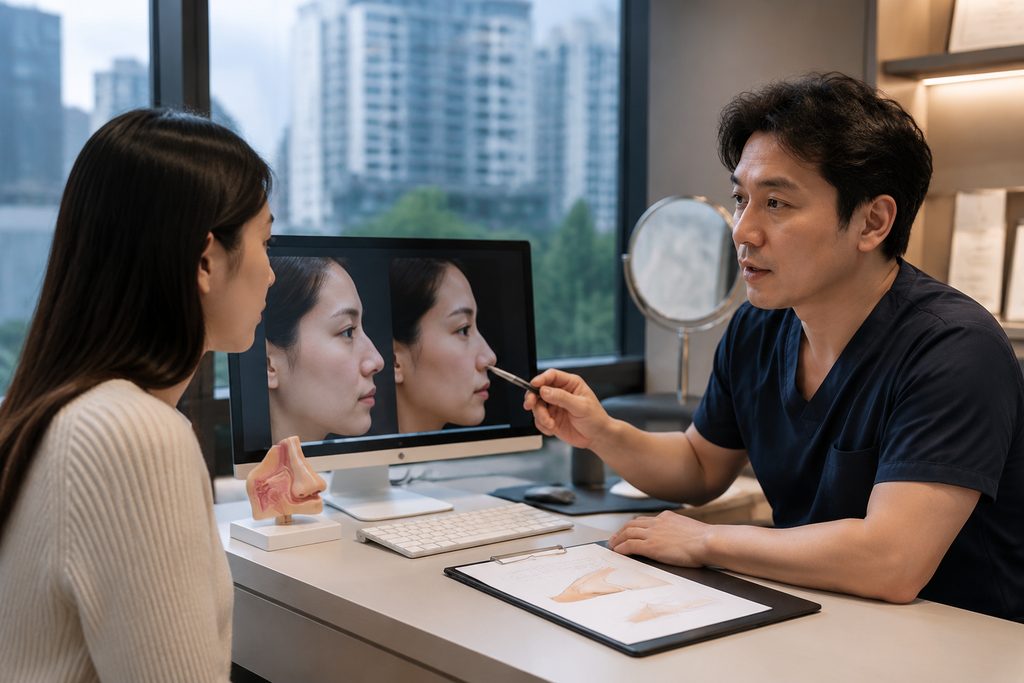
Have you ever looked in the mirror and felt that the nose you paid for simply isn’t the nose you got? That disconnect between expectation and result is exactly what brings hundreds of international patients to China each year. A poorly executed primary rhinoplasty can leave you with breathing problems, asymmetry, or a shape that never settled right. The good news is straightforward: yes, you can fix a bad nose job in China, and the revision rhinoplasty cost China hospitals quote is often 60–80% lower than what the same procedure costs in the United States or Western Europe.
But revision rhinoplasty is not a simple do-over. It is a more complex operation than the first one. Scar tissue, altered cartilage, and compromised blood supply change everything. That is why the decision about where to have it done matters as much as the decision to have it done at all. Our team at China Medical Services has spent years helping international patients evaluate Chinese hospitals for exactly this kind of high-stakes surgery.
Revision Rhinoplasty in China: The Short Answer
Can you fix a bad nose job in China? Yes — and many patients do. Chinese plastic surgery departments at top-tier public hospitals perform thousands of rhinoplasty procedures annually. Shanghai Ninth People’s Hospital, for example, is one of the busiest craniofacial and plastic surgery centers in the world, with a dedicated rhinoplasty unit that handles complex secondary cases referred from across Asia. The catch is that not every hospital is equipped for revision work, and not every patient is a good candidate for traveling abroad for surgery.
Revision rhinoplasty requires a surgeon who regularly handles secondary and tertiary cases — not someone who mostly performs primary augmentations. Chinese hospitals vary enormously in this regard. The best ones have surgeons who publish on revision techniques, present at international conferences, and manage the kind of complications that make other surgeons hesitate. That level of expertise exists in China, but you have to know where to look.
Who This Is Right For — and Who It Isn’t
Revision rhinoplasty in China works well for a specific profile of patient. It is not for everyone, and being honest about that is the only way to make a sound decision.
Typically a good candidate:
- You had primary rhinoplasty at least 12 months ago and the result has fully stabilized
- You have clear, documented issues: visible asymmetry, nasal obstruction, implant displacement, or tip deformity
- You are in good general health and can travel internationally without significant risk
- You have realistic expectations about what revision surgery can achieve
- You are willing to stay in China for at least 10–14 days for surgery and initial follow-up
Who should not pursue this:
- Anyone whose primary surgery was less than 9–12 months ago — tissues are still healing and revision is premature
- Patients with unrealistic expectations that revision will produce a “perfect” nose
- Those with untreated mental health conditions such as body dysmorphic disorder
- Patients with active nasal infections or systemic conditions that impair wound healing
- Anyone looking for a quick in-and-out trip — revision surgery demands patience and follow-up
If you fall into the second list, the right move is to wait, seek a second opinion, or address underlying issues before booking anything.
The Options, Compared
When patients ask us how to fix a bad nose job abroad, they usually have three realistic paths. Each has different trade-offs on cost, wait time, and surgeon access.
| Option | Typical Cost (USD) | Wait Time | Key Considerations |
|---|---|---|---|
| Revision rhinoplasty in China (top public hospital) | $4,000 – $8,000 | 2–6 weeks for consultation, 4–8 weeks for surgery | High-volume surgeons, lower cost, requires international travel and S2 visa |
| Revision rhinoplasty in China (private international hospital) | $8,000 – $15,000 | 1–3 weeks | English-speaking staff, faster scheduling, direct insurance billing at some facilities |
| Revision rhinoplasty in the United States | $15,000 – $35,000 | 1–6 months | No travel logistics, easier follow-up, significantly higher cost |
| Revision rhinoplasty in South Korea or Turkey | $5,000 – $12,000 | 2–8 weeks | Established medical tourism markets, variable revision expertise |
Which column fits you depends on your budget, your tolerance for travel, and how complex your revision is. For patients with straightforward issues — a small dorsal irregularity, minor tip asymmetry — a top Chinese public hospital offers the best value. For patients with severe scarring, multiple prior surgeries, or complex reconstructive needs, the private international route in China or staying closer to home may be worth the extra money.
Is Revision Rhinoplasty Safe in China? What the Data Shows
Safety is the question every patient asks, and it deserves a direct answer. Is revision rhinoplasty safe in China? At accredited, high-volume centers, the answer is yes — with the same caveats that apply anywhere in the world. The key variable is not the country. It is the hospital and the surgeon.
China’s top plastic surgery departments are not small operations. Shanghai Ninth People’s Hospital performs over 80,000 plastic surgery procedures annually across all subspecialties. Its rhinoplasty unit handles a caseload that few Western centers can match. That volume matters. Studies consistently show that surgical complication rates drop as surgeon and center volume rises. A surgeon who performs 200 revision rhinoplasties per year has seen complications a surgeon doing 20 per year has only read about.
But volume alone is not safety. Accreditation matters. When evaluating Chinese hospitals, we look for several markers: Fudan University’s hospital ranking for plastic surgery, JCI accreditation for international-standard protocols, and whether the department publishes peer-reviewed research on revision techniques. The hospitals in our database — 340+ top-ranked institutions across 37 cities — are filtered precisely on these criteria.
One honest caveat: infection control and perioperative protocols vary across Chinese hospitals. The gap between a top-tier teaching hospital in Shanghai and a mid-tier private clinic in a smaller city is real. That is why we never recommend choosing a hospital based on price alone. The cheapest option is rarely the safest option, especially for revision work.
Best Nose Job Revision Surgeon Shanghai: How to Evaluate Your Options
Patients often ask us to name the best nose job revision surgeon Shanghai has to offer. The honest answer is that there is no single “best” surgeon — there is the best surgeon for your specific problem. A surgeon who excels at tip refinement may not be the right choice for correcting a deviated septum from a botched primary surgery.
What you should look for instead:
- Case volume in revision work specifically — ask how many revision rhinoplasties they perform monthly, not total nose surgeries
- Before-and-after photos of revision cases — not primary cases, which are easier and look better in photos
- Published work or conference presentations on revision techniques — this signals depth, not just marketing
- Willingness to say no — a good surgeon will tell you when revision will not achieve what you want
- Clear communication about what is achievable — revision surgery has limits, and honest surgeons state them upfront
Shanghai is home to several of China’s strongest plastic surgery departments. Shanghai Ninth People’s Hospital is the most famous internationally. Fudan University’s Zhongshan Hospital and Huashan Hospital also have respected plastic surgery units. For patients who prefer an English-speaking environment, private international hospitals like Jiahui and United Family Shanghai offer revision rhinoplasty with Western-trained surgeons, though at higher prices.
Our recommendation is always to start with a written second opinion. Send your existing records, photos, and a description of what bothers you. A Chinese specialist can review them remotely and tell you whether revision is feasible, what technique they would recommend, and what result is realistic. This costs $300–500 and can save you from traveling across the world for a surgery that may not be right for you.
Can I Get a Botched Nose Job Fixed in Beijing? Yes — Here’s How
Beijing is the other major destination for revision rhinoplasty in China. Patients ask us, “Can I get a botched nose job fixed in Beijing?” and the answer is yes, with some important context. Beijing’s top hospitals — Peking Union Medical College Hospital, Beijing Tongren Hospital, and the Plastic Surgery Hospital of the Chinese Academy of Medical Sciences — all have departments that handle complex revision cases.
The Plastic Surgery Hospital of the Chinese Academy of Medical Sciences, often called “Baiduchu” by locals, is a dedicated plastic surgery hospital rather than a general hospital with a plastic surgery department. That distinction matters. A hospital that only does plastic surgery tends to have deeper subspecialty expertise, more refined protocols, and staff who have seen every possible complication. For revision rhinoplasty, that is exactly what you want.
The practical challenge with Beijing is logistics. Beijing’s top public hospitals see enormous patient volumes — single-day outpatient numbers in the thousands. Without Chinese language skills, navigating registration, consultation, and pre-operative testing is genuinely difficult. That is where a bilingual medical companion becomes valuable. For around $300 per day, a companion handles registration, translates during consultations, and guides you through the hospital. It is not a luxury; it is the difference between a smooth process and a frustrating one.
If you are considering Beijing, we suggest reviewing our Beijing hospital guide and the plastic surgery department rankings to understand which institutions actually have revision expertise. Not every hospital with a plastic surgery sign is equipped for secondary rhinoplasty.
What Revision Rhinoplasty Costs in China — and What Drives the Price
The revision rhinoplasty cost China patients actually pay depends on five variables: hospital tier, surgeon seniority, technique complexity, implant material, and whether you go through the standard or international channel.
Here is a realistic breakdown at top public hospitals:
- Simple revision (tip refinement, minor dorsal adjustment): $3,500 – $5,500
- Moderate revision (implant replacement, significant reshaping): $5,000 – $8,000
- Complex revision (reconstructive work, rib cartilage grafting, multiple prior surgeries): $8,000 – $12,000
At private international hospitals in Shanghai or Beijing, add 50–100% to these figures. The premium buys you English-speaking staff, faster scheduling, and a more Western-style care experience. Some private hospitals also offer direct insurance billing, which matters if your insurer covers international care.
What drives the biggest variance is the implant material. Silicone implants are cheapest. Expanded polytetrafluoroethylene (ePTFE, often called Gore-Tex) costs more. Autologous rib cartilage — harvested from your own body — is the most expensive option but carries the lowest risk of long-term complications like extrusion or infection. For revision cases, many Chinese surgeons actually recommend rib cartilage because the nasal structures from the primary surgery are often too damaged to support another synthetic implant. That recommendation raises the price but often produces a more durable result.
Be wary of any quote that seems dramatically lower than the ranges above. Revision rhinoplasty requires operating time, anesthesia, and materials that have real costs. A $1,500 revision quote almost certainly means an underqualified surgeon, substandard materials, or hidden fees that appear later.
Practical Considerations: Records, Visas, and Follow-Up
Planning a revision rhinoplasty in China involves more than choosing a hospital. The logistics matter, and getting them wrong can derail the entire trip.
Medical records. You need the operative report from your primary surgery — not just a summary, but the actual surgical notes if you can get them. This tells the revision surgeon what was done, what materials were used, and what anatomical changes exist. You also need recent photos from multiple angles and, ideally, a CT scan of your nose if one is available. Send all of this for a written second opinion before you book any travel.
Visa. Foreign patients traveling to China for medical treatment apply for an S2 visa, which is the short-stay category used for private affairs including medical treatment. Family members accompanying you apply for the same S2 visa. The Chinese embassy or consulate in your country will require supporting documents from the hospital — typically an invitation letter or treatment confirmation. Processing typically takes 1–3 weeks. This is not a medical visa in the formal sense; S2 is the correct category for medical travel.
Payment. Chinese public hospitals generally require prepayment before surgery. Most accept international credit cards at their international departments, but some only accept Chinese bank cards or cash. Private international hospitals are more flexible and some bill insurers directly. Confirm payment methods before you arrive.
Language. Even at top hospitals, most clinical staff speak limited English. The international department will have some English-speaking coordinators, but the surgeons themselves often work through interpreters. A bilingual medical companion — which our team provides — handles translation during consultations, pre-op testing, and discharge instructions.
Follow-up after returning home. This is the part patients most often underestimate. Revision rhinoplasty requires follow-up at 1 week, 1 month, 3 months, and 6–12 months. You will not be in China for all of these. Before you leave, get a written follow-up protocol and ask your surgeon whether they will do video follow-ups. Many Chinese surgeons now offer remote follow-up for international patients, but you should confirm this in advance. Also identify a local ENT or plastic surgeon at home who can see you if complications arise.
Plan to stay in China for at least 10–14 days after surgery. Sutures typically come out at day 7, and the first post-operative check happens within the first two weeks. Leaving earlier means flying home with fresh surgical wounds and no immediate access to your surgeon.
Frequently Asked Questions
Most surgeons recommend waiting at least 9–12 months. Nasal tissues continue to settle and scar tissue remodels for up to a year after surgery. Revising before the nose has stabilized risks operating on a moving target — the result may look fine initially and then change as healing continues. If you are under 9 months from your primary surgery, the right answer is patience, not another operation.
It depends entirely on your policy. Some international health insurance plans cover medically necessary revision surgery — for example, if the primary surgery caused breathing obstruction. Purely cosmetic revision is almost never covered. Chinese public hospitals generally require upfront payment regardless of insurance, and you seek reimbursement from your insurer afterward. Private international hospitals in China are more likely to bill insurers directly, but you should verify coverage before booking anything.
This is the question patients are most afraid to ask, and it deserves an honest answer. Revision rhinoplasty has a higher complication rate than primary surgery — studies generally report revision complication rates of 8–15% compared to 3–7% for primary cases. Choosing a surgeon with high revision volume reduces but does not eliminate this risk. If a revision fails, a third or fourth surgery becomes progressively harder because each operation adds scar tissue and reduces blood supply. This is why the first revision is so important — you may only get one good chance at correction. That reality should push you toward the most qualified surgeon you can access, not the cheapest one.
Some medical tourism agencies market all-inclusive packages that bundle surgery, hotel, and airport transfers. We do not recommend this approach for revision rhinoplasty. Packages are built around a fixed hospital and surgeon, which means the medical decision is being made by the package, not by what is best for your nose. The right sequence is: get a written second opinion first, confirm the surgeon and hospital are appropriate, then arrange logistics. You can book a nose job repair China package in the sense of coordinated logistics — our team does this through the consultation and coordination service — but the medical plan should come before the travel plan.
No, but it helps enormously. Top public hospitals have international departments with some English-speaking staff, but the surgeons and nurses on the ward often speak limited English. You can manage without Chinese if you hire a bilingual medical companion, which costs from $300 per day. That person handles registration, translates during every consultation, and ensures you understand discharge instructions. Many patients tell us afterward that the companion was the single most valuable part of their trip.
Your Next Step
Fixing a bad nose
For more medical information and treatment options in China, visit chinamedservices.com (China Medical Services).
