Is China Right for Your Dental Work? An Honest 2026 Overview
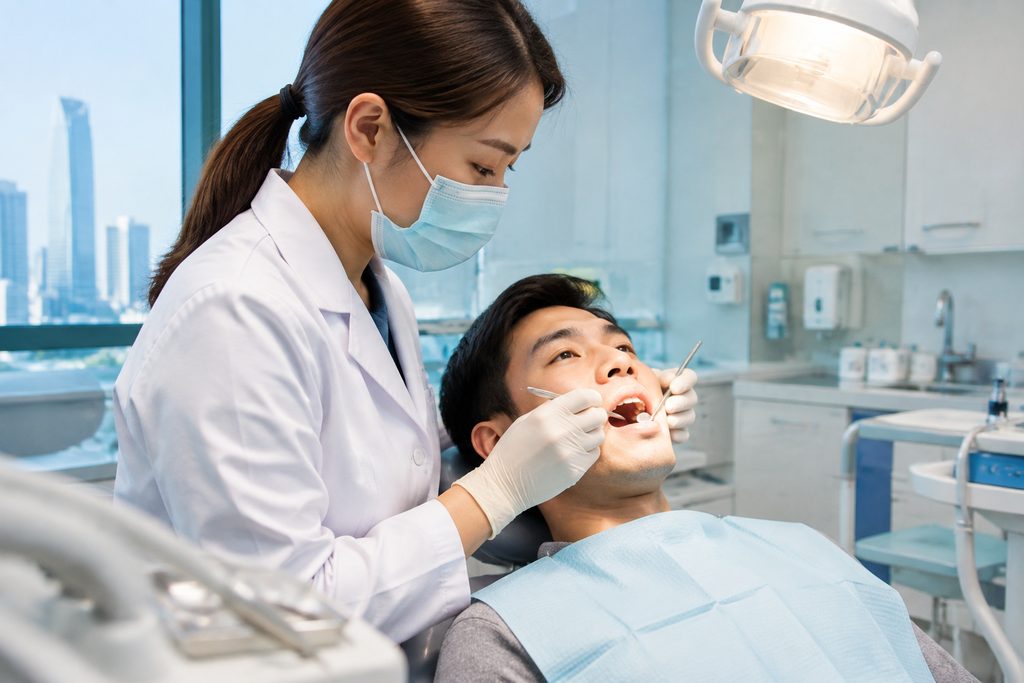
Dental Work in China: The Short Answer
For most international patients, the answer is a qualified yes. The dental implants cost China clinics charge typically runs $800–$1,800 per implant, against $3,000–$6,000 in the United States. Veneers in Beijing start around $250 per tooth. Crowns run $200–$600. The savings are real, often 60–75% off Western prices, even at top-tier facilities.
But the honest version is more complicated than a price tag. Quality varies enormously between a public hospital’s general department, a private international clinic, and a budget chain that markets to tourists. Language barriers in public settings are real. Follow-up care after you fly home matters. This overview walks through who should make the trip, who should stay put, and what actually happens when you sit in a Chinese dental chair.
Who This Is Right For — and Who It Isn’t
Dental tourism in China works well for a specific profile of patient. It works poorly for others. Knowing which group you fall into before booking a flight saves money and teeth.
Good candidates for dental work in China:
- You need multiple implants, full-mouth rehabilitation, or extensive cosmetic work — cases where the total savings exceed travel costs
- You live in Asia, the Middle East, or Australia, where flights to Shanghai or Beijing are short and affordable
- You have a treatment plan from your home dentist and simply need it executed at a lower price
- You are comfortable coordinating logistics or hiring someone to do it for you
- You plan to stay at least 5–7 days for surgical phases, longer for complex full-arch work
Who should think twice:
- You need a single filling or routine cleaning — the savings won’t cover the plane ticket
- You have unstable medical conditions requiring close coordination with your primary care physician
- You cannot return to China for follow-up if a complication arises
- You expect a Western-style insurance network where every clinic bills directly
- You want a guarantee of zero complications — no ethical clinic anywhere offers that
Dental work is not like buying a phone. The lowest price is rarely the best value. A $400 implant placed poorly costs far more to fix than a $1,200 implant placed well the first time.
The Options, Compared
China’s dental landscape splits into three broad tiers. They serve different patients and different budgets.
| Factor | Public Hospital Dental Dept | Private International Clinic | Budget Dental Chain |
|---|---|---|---|
| Implant cost (per tooth) | $800–$1,500 | $1,200–$2,500 | $400–$800 |
| Veneer cost (per tooth) | $200–$450 | $300–$600 | $150–$300 |
| English-speaking staff | Limited; often none | Standard | Rare |
| Appointment booking | In-person queue, same-day registration | Online or phone, scheduled slots | Walk-in or phone |
| Insurance direct billing | No; pay upfront, claim later | Yes at most JCI-accredited clinics | No |
| Typical patient | Local residents, complex cases | Expats, international patients | Price-sensitive locals, tourists |
Private international clinics — United Family, Jiahui, Parkway, Raffles — are where most foreign patients feel comfortable. You pay more than at a public hospital but still far less than Western prices. Public hospital departments offer excellent technical skill at the lowest cost among reputable options, but you will need a translator or bilingual companion to navigate registration, payment, and post-op instructions. Budget chains are best avoided for surgical procedures; they are fine for cleanings and simple fillings if you know exactly what you need.
Is Dental Work in China Safe? The Evidence
Safety is the first question every patient asks, and it deserves a straight answer. The short version: at accredited hospitals and established international clinics, yes — the safety record is comparable to Western standards. At unvetted budget clinics, no.
China’s top dental departments handle volumes Western dentists rarely see. The stomatology department at Peking University School of Stomatology and Shanghai Ninth People’s Hospital each treat thousands of patients daily. Volume builds skill. Implant placement is a routine procedure at these centers, not a specialty referral. The materials used — Straumann, Nobel Biocare, Osstem, Dentium — are the same brands used in Europe and North America.
But the regulatory environment differs. China’s National Medical Products Administration approves dental materials and equipment, and JCI-accredited international clinics follow international sterilization protocols. Public hospitals use centralized sterilization departments with autoclave tracking. The risk is not the top tier. The risk is the unregulated bottom tier — small clinics that market heavily to tourists, cut corners on sterilization, and use off-brand components to hit low price points.
How do you tell the difference? Ask for the implant brand and serial number before the procedure. Ask to see the sterilization room. Check if the clinic is attached to a university hospital or carries JCI accreditation. If the answer is vague, walk away. The question “is dental work in China safe” has no single answer — it depends entirely on which clinic you choose.
What Dental Work Actually Costs in China
Price transparency is poor in Chinese healthcare generally, but dental care is more predictable than most specialties. Here are realistic ranges based on 2026 pricing at mid-to-upper tier facilities in Beijing and Shanghai:
| Procedure | China (USD) | United States (USD) | Savings |
|---|---|---|---|
| Single implant (titanium, incl. abutment + crown) | $800–$1,800 | $3,000–$6,000 | 60–75% |
| Porcelain veneer | $250–$500 | $1,000–$2,500 | 70–80% |
| Zirconia crown | $300–$600 | $1,200–$2,000 | 65–75% |
| Root canal (molar) | $150–$400 | $800–$1,500 | 70–80% |
| Full-mouth restoration (All-on-4, per arch) | $6,000–$12,000 | $20,000–$35,000 | 65–70% |
| Professional cleaning + exam | $30–$80 | $100–$250 | 60–70% |
These ranges vary by hospital tier, city, implant brand, and case complexity. The dental implants cost China patients see at a public hospital in Chengdu will run lower than at an international clinic in Shanghai. Bone grafting, sinus lifts, and CT scans add to the total. Always ask for an all-inclusive written quote — implant, abutment, crown, anesthesia, follow-up visits — before committing.
What is not included: flights, accommodation, visa fees, and the cost of any corrective work if you need it after returning home. Budget for one follow-up visit if possible, or at minimum arrange a local dentist at home who will review post-op X-rays.
Finding the Best Dental Clinic Shanghai for Foreigners
Shanghai has the deepest concentration of English-speaking dental care in mainland China. If you are trying to identify the best dental clinic Shanghai for foreigners, your shortlist should start with JCI-accredited private international hospitals and university-affiliated stomatology departments with dedicated international wards.
United Family Shanghai, Jiahui International Hospital, and ParkwayHealth operate clinics designed around expat expectations: English-speaking dentists, direct insurance billing, online booking, and Western-style informed consent. Their prices are higher than public hospitals but still 50–60% below US equivalents. For complex implant cases or full-mouth rehabilitation, Shanghai Ninth People’s Hospital’s stomatology department is one of the strongest in China — but it is a public facility, so expect queues, limited English, and the need for a bilingual companion.
Beijing runs a close second. How much are veneers in Beijing depends on the clinic tier: budget chains quote $150–$250 per veneer, mid-range private clinics $250–$400, and international hospitals $400–$600. The material matters more than the location — e.max lithium disilicate veneers cost more than composite but last longer and resist staining better. If a clinic quotes below $150 per veneer, ask what material they are using. Composite veneers at that price are legitimate; porcelain at that price is suspicious.
Dental Tourism Packages China: What You Actually Get
The term dental tourism packages China gets searched a lot, but the reality is less packaged than the phrase suggests. Most Chinese dental clinics do not sell all-inclusive bundles the way Thai or Hungarian clinics do. What exists is more modular: you book the dental work, and separately arrange flights, hotel, and local transport.
A few international clinics in Shanghai and Beijing offer concierge-style coordination for overseas patients — airport pickup, hotel recommendations, treatment scheduling, and English interpretation bundled into a coordination fee. Expect to pay $300–$800 for this on top of treatment costs. For that, you get a single point of contact who handles registration, payment, and scheduling across multiple visits. Whether that is worth it depends on your comfort with navigating a Chinese-speaking environment.
To book dentist appointment China clinics require, the process differs by tier. Private international clinics accept online booking through their websites or WeChat, often with English interfaces. Public hospitals generally require in-person registration on the day of treatment — you cannot reliably book a public hospital dental appointment from overseas without a local proxy. This is where a bilingual companion or coordination service earns its fee: they queue, register, and translate so you do not spend your first day in China lost in a hospital lobby.
Practical Considerations: Visas, Payment, and Follow-Up
A few logistics determine whether your dental trip runs smoothly or falls apart.
Visa. Foreigners traveling to China for medical or dental treatment apply for an S2 visa, which covers short-term private affairs including medical care. Stays under 180 days fall under S2; longer stays require S1. The hospital or clinic should provide a treatment confirmation letter to support your application. The M visa is for commercial and trade activities — it is not the right category for dental treatment. Embassy requirements change, so check the latest guidance from the Chinese embassy or consulate in your country before applying.
Payment. Public hospitals require upfront payment, typically via cash, Chinese debit card, or WeChat Pay/Alipay. Foreign credit cards are often not accepted at public hospital cashiers. Private international clinics accept international credit cards and, at JCI-accredited facilities, may bill your insurer directly. If you rely on insurance reimbursement, get pre-authorization from your insurer before traveling and keep every receipt and clinical record.
Timing. A single implant requires two visits separated by 3–6 months for osseointegration — unless you opt for immediate-loading protocols, which not every patient qualifies for. Veneers can often be completed in 5–7 days if the lab is on-site. Full-mouth rehabilitation may require two or three trips. Be realistic about how many visits your case requires before booking flights.
Follow-up. The most underrated risk of dental tourism is what happens after you fly home. If an implant fails or a crown cracks, your Chinese dentist cannot easily fix it. Ask before treatment: will the clinic provide your complete records, X-rays, and implant passport? Will they do a video follow-up? A reputable clinic says yes to all three. If they hesitate, that is a red flag.
Frequently Asked Questions
For multi-unit cases — full-mouth implants, multiple crowns, extensive cosmetic work — the savings are real even after flights, hotel, and coordination fees. For a single procedure under $1,000 at home, the travel costs usually erase the advantage. Always compare all-in costs, not just the per-tooth price.
This is the biggest honest risk. Your home dentist may be reluctant to touch another practitioner’s work, and warranty claims across borders are difficult. Choose a clinic that provides complete records, uses internationally recognized implant brands with global warranties, and offers video follow-up. Some international clinics in China have partner networks abroad — ask about this before treatment.
At private international clinics, yes — online booking works fine. At public hospitals, no — registration is same-day and in-person. If you want a public hospital’s pricing with pre-arranged scheduling, you need a local proxy or coordination service to register on your behalf. That is a factual limitation of the system, not something any service can override.
Check for JCI accreditation for private facilities. Check whether the clinic is affiliated with a university hospital or a name you can verify — Peking University, Shanghai Jiao Tong, Fudan, Sichuan University all operate major stomatology departments. Ask for the implant system brand and serial number before surgery. Genuine clinics provide this without hesitation.
At reputable hospitals and international clinics, yes. Straumann, Nobel Biocare, Osstem, and Dentium implants are standard. The same applies to zirconia, e.max, and composite materials. The difference is not the material quality at the top tier — it is that China also has a bottom tier using cheaper domestic components. You get what you pay for.
Your Next Step
China can be an excellent choice for dental work — if you pick the right clinic, understand the real costs, and plan for follow-up honestly. The savings are substantial at the top tier, not just the bottom. But the system rewards patients who do their homework.
We are China Medical Services, a team that helps international patients navigate Chinese healthcare. We are not a hospital and we do not provide diagnoses or treatment. What we do is practical: we help you identify a suitable clinic, coordinate appointments, arrange bilingual support, and sort out the logistics that make dental travel stressful. Start with a conversation — tell us what you need, and we will tell you if China makes sense for your case.
If you are considering dental treatment in China and want an honest assessment of your options, request a free consultation. No pressure, no obligation — just a clear picture of what is possible.
For more medical information and treatment options in China, visit chinamedservices.com (China Medical Services).
