Xiangya Hospital Hematology for International Patients: Costs, Access, and Realities
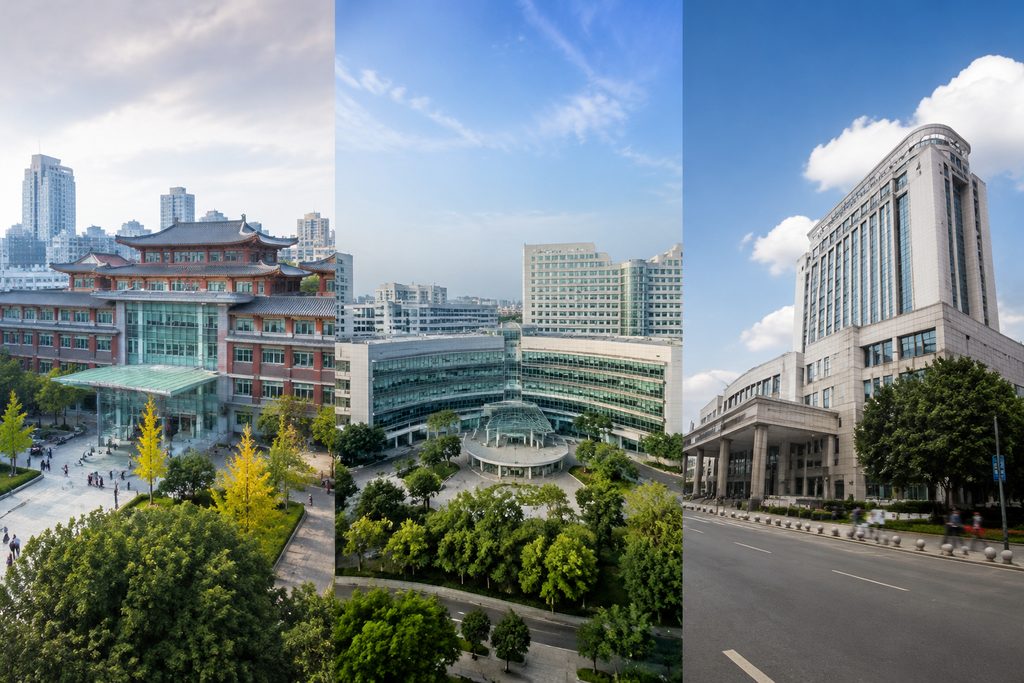
Xiangya Hospital Hematology for International Patients: The Short Answer
Xiangya Hospital hematology price for foreigners typically runs between $12,000 and $45,000 for a full induction chemotherapy cycle, depending on the regimen and whether complications arise. That figure lands far below comparable treatment in the United States, where identical protocols often exceed $150,000. But the real question you asked is bigger than money. Is Xiangya actually good for leukemia treatment? And can a foreigner realistically get treated there?
The short answer: yes, with qualifications. Xiangya Hospital of Central South University in Changsha operates one of China’s most respected hematology departments, with a national reputation for leukemia and lymphoma care. But accessing it as an international patient requires navigating a system that does not bend easily to overseas expectations. Public hospital rules in China are rigid. You cannot simply email the department and book a bed.
What follows is a straight explanation of how this works, what it costs, and who should — and should not — pursue treatment at Xiangya.
Who This Is Right For — and Who It Isn’t
Before we get into prices and logistics, let’s be honest about fit. Xiangya is not a Western-style private hospital. It is a massive public academic medical center. That shapes everything from communication to payment to follow-up.
Good candidates for Xiangya hematology care include:
- Patients with a confirmed leukemia, lymphoma, or myeloma diagnosis who need a second opinion or a lower-cost treatment pathway
- Families with some experience navigating large, busy hospital systems — or who are willing to hire local coordination help
- Patients who can commit to staying in Changsha for 4 to 12 weeks for initial evaluation and treatment
- Those seeking access to clinical trial protocols and treatment regimens that may not be available in their home country
Who should not pursue this route:
- Patients requiring immediate emergency stabilization — Xiangya is not the place to fly into mid-crisis
- Anyone expecting private-room luxury, English-speaking nurses on every shift, or Western administrative norms
- Patients with highly complex cases requiring coordinated multi-organ care where continuity with their home oncology team is critical
- Those unable to pay upfront — Chinese public hospitals generally require prepayment, with insurance reimbursement handled after the fact
If you fall in the second list, staying with your current care team or exploring private international hospitals in China may be a better fit. We cover those options on our private international hospitals page.
The Options, Compared
When international patients ask about Xiangya Hospital hematology price for foreigners, they are usually comparing three paths. Here is how they actually stack up.
| Pathway | Typical Cost for Induction Chemotherapy (USD) | Wait Time to First Consultation | Language Support | Best For |
|---|---|---|---|---|
| Xiangya public hematology department (standard route) | $12,000–$30,000 | 1–3 weeks after arriving in Changsha | Minimal; Chinese required | Cost-sensitive patients with local support |
| Xiangya international/VIP channel | $18,000–$45,000 | 3–7 days after records review | Coordinated; interpreter needed | Foreigners wanting faster access and coordination |
| Private international hospital in China (e.g., United Family, Jiahui) | $40,000–$90,000 | 1–2 weeks | English-speaking staff standard | Patients prioritizing comfort and direct insurance billing |
| United States (reference) | $120,000–$250,000 | 1–4 weeks | Native English | Patients with comprehensive insurance |
The Xiangya public route saves the most money but demands the most from you. The international channel costs more — roughly 1.5 to 2 times the standard rate — but includes coordination that a foreigner without Chinese language skills will find nearly essential. Private international hospitals in Beijing or Shanghai offer the smoothest experience but at prices closer to Western levels. If you want to understand how Xiangya compares to other top Chinese institutions for blood cancers, our department rankings page breaks down hematology leaders by Fudan reputation scores.
Is Xiangya Hospital Good for Leukemia Treatment?
This is the question behind the search. And the answer requires understanding what “good” means in Chinese academic medicine.
Xiangya Hospital is one of China’s oldest Western-medicine institutions, founded in 1906. Its hematology department sits within a hospital system that handles enormous patient volume — the kind of volume that produces clinical experience difficult to replicate in smaller centers. The department runs active programs in acute myeloid leukemia, acute lymphoblastic leukemia, lymphoma, and multiple myeloma. It participates in national clinical trial networks and maintains a bone marrow transplantation unit that performs both autologous and allogeneic transplants.
But volume is not the same as personalized attention. A single day at Xiangya’s outpatient hematology clinic can see hundreds of patients. Your consultation may last ten minutes. The doctors are skilled; the system is not designed for hand-holding.
For international patients, the realistic framing is this: Xiangya offers high-level hematology expertise at a fraction of Western prices. You will not get the administrative polish of a private Western cancer center. You will get access to experienced hematologists, modern treatment protocols, and a hospital that treats more leukemia cases in a month than many regional Western hospitals treat in a year.
That trade-off is the core decision. Some patients find it worthwhile. Others do not.
How to Get Treatment at Xiangya Hospital as a Foreigner
The process is not intuitive. Here is what actually happens, step by step.
Step one: document review. Before you book anything, Xiangya’s international department — or a coordinator working with it — needs your existing medical records. That means pathology reports, cytogenetics, flow cytometry results, imaging, and a treatment summary from your current oncologist. All documents must be translated into Chinese. This is non-negotiable.
Step two: remote evaluation. The hematology team reviews your case and determines whether they can offer a meaningful treatment plan. This may happen through a written second opinion (typically $300–$500) or a video consultation ($100–$300 for a standard international department consult, $500–$800 for a top-specialist video session). Expect this stage to take one to two weeks.
Step three: travel and in-person consultation. You fly to Changsha on an S2 visa, which is the short-stay category used for medical treatment and private affairs. Your accompanying family members also apply for S2 visas. You then attend an in-person consultation where the hematologist orders any additional testing needed before treatment begins.
Step four: treatment planning and prepayment. Once the treatment plan is confirmed, the hospital provides a cost estimate. You prepay a deposit — typically 50% to 100% of the estimated first treatment cycle. Treatment begins after payment clears.
Here is the hard truth: you cannot lock in a surgery date or hospital bed from overseas through the standard public route. Chinese public hospitals require an in-person consultation before admission. The only way to arrange things in advance is through the hospital’s international department or VIP channel, which adds coordination fees but gives you a confirmed pathway before you book flights.
What It Costs: Xiangya Hospital Hematology Price for Foreigners
Let’s break down the numbers more precisely, because “it depends” is not helpful when you are planning a budget.
For a standard induction chemotherapy cycle for acute leukemia at Xiangya’s public hematology ward:
- Hospitalization and nursing: $3,000–$8,000 per month
- Chemotherapy drugs: $5,000–$20,000 per cycle, depending on regimen and whether generic or imported drugs are used
- Supportive care (antibiotics, transfusions, growth factors): $2,000–$10,000, highly variable based on complications
- Diagnostic testing (bone marrow biopsy, cytogenetics, imaging): $1,000–$4,000
Total for a first induction cycle: roughly $12,000 to $45,000. Subsequent consolidation cycles typically cost less, in the $8,000 to $25,000 range each.
What drives the variance? Three factors dominate. First, the specific chemotherapy regimen — some protocols use inexpensive generic drugs, others require costly targeted agents. Second, complications — febrile neutropenia, infections, or bleeding episodes can add thousands in supportive care. Third, channel — the international/VIP pathway adds 50% to 100% on top of standard public rates.
For a bone marrow transplant at Xiangya, expect $40,000 to $80,000 for an autologous transplant and $80,000 to $150,000 for an allogeneic transplant. These are rough ranges; the final quote depends on donor matching, conditioning regimen, and post-transplant complications.
None of these figures include travel, accommodation in Changsha, visa fees, or interpreter services. A bilingual medical companion in Changsha typically starts at $300 per day. For a six-week treatment stay, that adds up.
One more thing about costs. Xiangya Hospital medical tourism packages for blood disorders do not exist in the way some overseas agencies imply. The hospital does not sell all-inclusive packages. What exists is a coordinated pathway: records review, appointment scheduling, in-person consultation, treatment, and follow-up — each billed separately. Anyone offering a fixed-price “Xiangya package” is likely inflating costs or misrepresenting what the hospital provides.
Practical Considerations: Records, Visas, Payment, and Follow-Up
Let’s cover the logistics that actually trip people up.
Medical records. You need complete, recent documentation. Hematology is evidence-driven — the Xiangya team will not proceed without a confirmed diagnosis and treatment history. Translation into Chinese is required. Budget $100–$300 for professional medical translation of a typical oncology file.
Visa. You will apply for an S2 visa at your nearest Chinese embassy or consulate. The hospital provides an invitation letter and treatment confirmation document to support your application. Processing typically takes one to three weeks. Your family members traveling with you apply for their own S2 visas. Approval is not guaranteed — the embassy makes the final call.
Payment. Chinese public hospitals operate on prepayment. You pay a deposit before treatment begins, and the hospital draws down from it as services are delivered. International credit cards are accepted at Xiangya’s international department, but standard wards may require Chinese bank transfers or cash. Insurance is handled on a reimbursement basis — you pay upfront, then file with your insurer. Check your policy’s coverage for overseas treatment before committing.
Language. This is the single biggest practical barrier. Xiangya’s standard wards run entirely in Chinese. Doctors may speak some English, but nurses, pharmacists, and administrative staff generally do not. Without a bilingual companion, you will struggle to navigate registration, payment, test scheduling, and discharge paperwork. This is not a criticism of the hospital — it is simply the reality of public healthcare in China.
Follow-up after returning home. Your home oncologist will need complete treatment records from Xiangya. Request translated discharge summaries and treatment documentation before you leave. The hospital can provide these, but you must ask — they are not automatically prepared in English.
Frequently Asked Questions
Through the standard public route, no. You must appear in person to register and see a doctor. Through the international department or a coordination service, yes — your records are reviewed remotely, and an in-person consultation is scheduled before you fly. The appointment is confirmed, not the treatment itself. Treatment planning happens after the consultation.
Foreigners using the standard public route pay the same rates as Chinese patients. The international/VIP channel costs 1.5 to 2 times more, which reflects coordination, faster scheduling, and — in some cases — senior specialist priority. That premium is not a “foreigner tax.” It is the cost of the additional administrative layer required to serve patients who cannot navigate the standard system independently.
Xiangya’s hematology department ranks among China’s top programs for leukemia and lymphoma in the Fudan University hospital reputation rankings, which evaluate clinical strength and peer reputation across 45 specialties. It is not the only strong option — institutions in Beijing, Shanghai, and Guangzhou also field excellent hematology teams. Xiangya’s advantage is the combination of clinical volume, academic depth, and lower costs than first-tier coastal cities.
Xiangya handles complications in-house. Febrile neutropenia, infections, and bleeding are managed in the hematology ward or ICU. The cost of complication management is added to your hospital bill. This is why the price range for a chemotherapy cycle is wide — an uncomplicated cycle may cost $15,000, while a complicated one can reach $45,000. Have a financial buffer of at least 30% above the quoted estimate.
Yes, but not in the hospital room. Xiangya’s standard wards are multi-bed rooms without space for family overnight stays. Your family can stay in nearby hotels or serviced apartments. Changsha has affordable accommodation options — budget $30 to $80 per night for a comfortable hotel near the hospital. The international ward may offer single rooms where a family member can stay, at higher cost.
Your Next Step
Xiangya Hospital offers genuine hematology expertise at prices that make treatment possible for patients who cannot afford Western rates. But the gap between “good hospital” and “accessible to a foreigner” is wide. Records translation, visa logistics, in-person registration, language barriers, and prepayment requirements are real obstacles.
We exist to close that gap. China Medical Services is not a hospital and does not provide diagnoses or treatment. We connect international patients with China’s top-ranked institutions, including China Medical Services partner hospitals, and handle the coordination that makes treatment feasible: records review, appointment scheduling, bilingual accompaniment, and on-the-ground support in Changsha and 36 other cities.
If you are considering Xiangya for leukemia or another blood disorder, start with a conversation. We will review your situation, give you an honest assessment of whether this path makes sense, and outline the specific steps and costs for your case. No pressure. Just clarity.
For more medical information and treatment options in China, visit chinamedservices.com (China Medical Services).
