Same-Week LASIK in China: How We Arrange Rapid Vision Correction
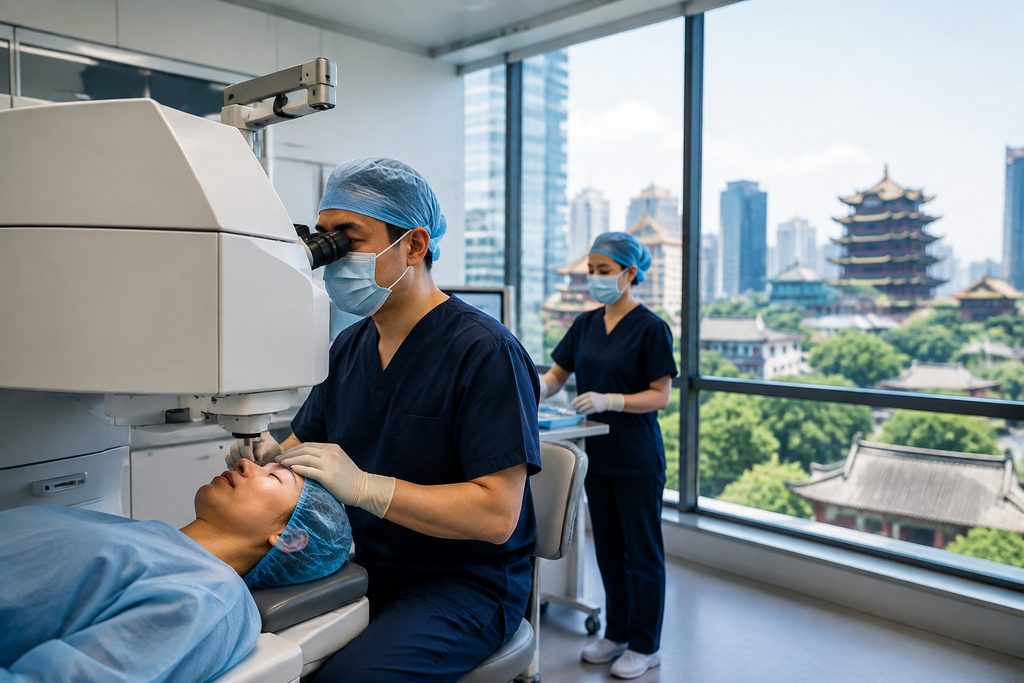
When 34-year-old Daniel from Manchester searched “how fast can I get LASIK in China,” he assumed he’d wait weeks for a consultation. Two days after landing in Shanghai, he walked out of a top-tier eye hospital with 20/20 vision. The LASIK eye surgery cost China clinics charge made the trip financially sensible even with flights and a hotel. But his case worked because someone handled the scheduling before he boarded the plane.
Same-week LASIK in China is achievable. Not guaranteed. The distinction matters. Public hospital outpatient departments do not let overseas patients book surgery slots remotely. You show up, register, wait in line, see a doctor, then schedule surgery for another day. That sequence eats four to seven days. The faster path runs through hospital international departments or private eye centers that reserve surgical blocks for pre-screened patients. Our team coordinates that screening in advance so the in-person consultation and procedure can happen within 48 to 72 hours of arrival.
Same-Week LASIK in China: The Short Answer
Yes, same-week LASIK in China is realistic when you route through an international department or a private JCI-accredited eye hospital. Expect the process to take three to five days total: day one for comprehensive corneal evaluation, day two or three for the procedure, and a follow-up check before departure. The catch is eligibility. Not every cornea qualifies. Roughly 10 to 15 percent of patients who want LASIK are turned away after topography reveals thin corneas, irregular astigmatism, or early keratoconus. You cannot know your candidacy until a corneal specialist examines the maps.
That screening step is precisely where advance coordination changes the timeline. Without it, you land in China, wait for a walk-in slot, get evaluated, and only then learn if surgery is possible. With it, our team arranges the topography and pachymetry through the hospital’s international clinic before you book a flight. The hospital reviews your scans and flags obvious disqualifiers. You still need the in-person exam — Chinese law and medical ethics require a face-to-face consultation before any refractive procedure — but the wasted-trip risk drops sharply.
Who This Is Right For — and Who It Isn’t
LASIK works beautifully for the right eyes and badly for the wrong ones. The screening criteria are identical in Beijing, Boston, and Berlin. Here is who typically qualifies:
- Adults aged 18 to 45 with stable vision for at least 12 months
- Myopia up to -10.00 diopters, hyperopia up to +4.00, astigmatism up to 5.00
- Corneal thickness above 500 microns at the thinnest point
- No active eye infection, severe dry eye, or autoimmune condition
- Not pregnant or nursing, with no plans to become pregnant within six months
Who should not fly to China for same-week LASIK? Anyone with keratoconus or a family history of it. Anyone with unrealistic expectations about night vision — LASIK can induce halos and starbursts around lights, and some patients never fully adapt. Anyone who cannot stay for at least four days. And anyone whose home-country follow-up care is uncertain. A cheap surgery with no postoperative monitoring is a bad trade.
The “is LASIK in China safe for foreigners” question deserves a direct answer. Safety depends on the facility, not the country. China’s top eye hospitals perform tens of thousands of refractive procedures annually using the same Schwind, Zeiss, and Alcon platforms found in Western clinics. But a bargain-basement clinic in a shopping mall is no safer in Shanghai than it would be in Miami. We only coordinate with hospitals ranked in the Fudan ophthalmology specialty list or holding full JCI accreditation.
The Options, Compared
Not all LASIK is the same surgery. The term gets used loosely for several distinct procedures. The table below compares what a patient actually gets at different price points and facility types.
| Option | Typical Cost in China (USD) | Typical Cost in US (USD) | Procedure Time | Best For |
|---|---|---|---|---|
| Standard LASIK (microkeratome flap) | $800–$1,500 per eye | $2,000–$3,000 per eye | 15–20 min per eye | Straightforward myopia, budget-focused |
| Femtosecond LASIK (bladeless flap) | $1,200–$2,200 per eye | $2,500–$4,000 per eye | 20–25 min per eye | Thinner corneas, faster recovery |
| SMILE (small incision lenticule extraction) | $1,800–$3,000 per eye | $3,000–$5,000 per eye | 10–15 min per eye | Dry-eye prone patients, active lifestyles |
| TransPRK (no flap, surface ablation) | $900–$1,800 per eye | $1,800–$3,500 per eye | 10 min per eye, longer recovery | Thin corneas, contact sports |
The same week LASIK Shanghai price you see advertised usually refers to femtosecond LASIK at a private international eye center. Public hospital international departments price 20 to 40 percent higher than their standard wards but still far below US rates. The right column depends on your corneal map, not your budget. A good surgeon will tell you when SMILE beats LASIK for your specific anatomy.
Rapid Vision Correction: The Same-Week Protocol We Coordinate
Speed without screening is reckless. Our same-week protocol exists to compress the safe sequence, not skip it. Here is what actually happens when a patient books LASIK surgery China medical tourism through our coordination team:
Day 0 (before travel): You send your latest prescription, any previous corneal topography, and a brief ocular history. We forward these to the ophthalmology department at your chosen hospital. A refractive surgeon reviews them and confirms you are a plausible candidate. We schedule your comprehensive exam for the morning after your arrival.
Day 1 (arrival + exam): You land, rest briefly, and attend a two-hour evaluation. This includes corneal topography, pachymetry, wavefront aberrometry, dilated fundus exam, and tear film assessment. If everything clears, the surgeon discusses procedure options and schedules surgery for the next day or the day after.
Day 2 or 3 (surgery): The procedure itself takes under 30 minutes for both eyes. You rest in a recovery room, receive antibiotic and steroid drops, and return to your hotel wearing protective shields.
Day 4 (follow-up): A morning check confirms flap position and visual acuity. Most patients measure 20/25 or better at this visit. You receive written discharge instructions and a medication schedule.
Day 5 (optional buffer): We recommend staying one extra day for a second follow-up if your flight is long-haul. Not mandatory, but prudent.
What It Costs and What Drives the Variance
LASIK eye surgery cost China figures range from about $800 to $3,000 per eye depending on technology, surgeon seniority, and facility tier. The variance drivers are specific. A femtosecond platform costs the hospital more per case than a mechanical microkeratome. A professor with 30,000 procedures under her belt charges more than a junior attending. A JCI-accredited private hospital with English-speaking nurses and direct insurance billing prices higher than a public hospital’s standard ward.
What does the surgical fee include? Typically the preoperative evaluation, the procedure itself, the first three to five days of postoperative drops, and follow-up visits for one month. It does not include flights, hotel, ground transport, or extended stays. Some private centers bundle a translator; most do not. Our bilingual medical companion service runs from $300 per day and handles registration, queueing, payment, and interpretation throughout your hospital visits.
Hidden costs to budget for: an emergency consultation if you develop dryness or discomfort after hours, additional prescription drops beyond the initial supply, and a follow-up exam with your home optometrist within two weeks of return. None of these should surprise you if the coordination is done properly.
Practical Considerations: Records, Visa, Payment, and Follow-Up
Documentation matters more than most patients expect. Bring your two most recent prescriptions, any corneal topography from prior consultations, a list of medications, and your passport. If you wear contact lenses, stop wearing soft lenses at least one week before the exam and rigid lenses at least three weeks before — lenses reshape the cornea and distort topography.
Visa category: you will apply for an S2 visa, which covers short-term private affairs including medical treatment. The hospital’s international department provides an official invitation letter and treatment confirmation to support your application. Processing time varies by embassy, so start at least three weeks before your intended travel date. We provide guidance but never guarantee approval.
Payment: public hospital international departments generally require prepayment in full before surgery. Most accept major credit cards, though surcharges apply. Private international hospitals often bill insurers directly if you hold a policy with a recognized provider. If you pay out of pocket, request an itemized invoice and medical report for reimbursement claims.
Language: even at top-ranked hospitals, the standard outpatient floors operate in Mandarin. The international department is different — English-speaking coordinators and translated documentation are standard. But the moment you step outside that department, signage, pharmacy instructions, and lab slips are Chinese-only. This is where a companion earns their fee.
Follow-up after returning home: schedule an appointment with your local optometrist within two weeks. The Chinese hospital will provide a discharge summary in English for this purpose. Any enhancement procedure within the first year is often covered by the original facility’s policy, but that means another trip to China — factor this into your decision.
Frequently Asked Questions
If pre-screening is completed remotely and you are cleared, surgery can happen within 48 to 72 hours of arrival. Without pre-screening, expect a minimum of five to seven days for the walk-in consultation, evaluation, and scheduling. The bottleneck is the preoperative exam, not the surgery itself.
At Fudan-ranked ophthalmology departments and JCI-accredited eye hospitals, yes — the equipment, sterilization protocols, and surgical volumes match or exceed Western standards. The risk lies in unaccredited clinics that advertise heavily to tourists. We do not refer patients to facilities outside the top-ranked database.
You go home with your corneas intact and a full refund of the surgical fee. The evaluation fee is non-refundable, typically $100 to $300. This is why pre-screening before booking flights reduces wasted travel. No ethical clinic will operate on a borderline cornea just because you flew far.
No. You can book the evaluation and reserve a tentative surgical slot online through the hospital’s international department, but no legitimate facility will perform surgery without an in-person consultation first. Any clinic that promises otherwise should be avoided.
Both cities have excellent options. The best LASIK clinic Beijing for international patients often cited is the international division of a major public eye hospital, while Shanghai offers more private JCI-accredited eye centers with English-speaking staff throughout. Shanghai tends to have more same-week availability due to higher private-sector capacity. Your corneal profile matters more than the city.
Your Next Step
Same-week LASIK in China works when the screening happens before the flight. Our team at China Medical Services coordinates with top-ranked ophthalmology departments and JCI-accredited private eye centers across 37 cities. We are not a hospital and we do not perform diagnoses. What we do is handle the scheduling, documentation, and bilingual support so your days in China are spent on treatment, not queueing at registration windows.
If you are considering rapid vision correction, send your latest prescription and any corneal scans through our free consultation page. A coordinator will review your case and tell you honestly whether same-week LASIK is realistic for your eyes. No pressure. Just a clear answer.
For more medical information and treatment options in China, visit chinamedservices.com (China Medical Services).
