Fast Health Screening in China: Our Same-Day Package Guide
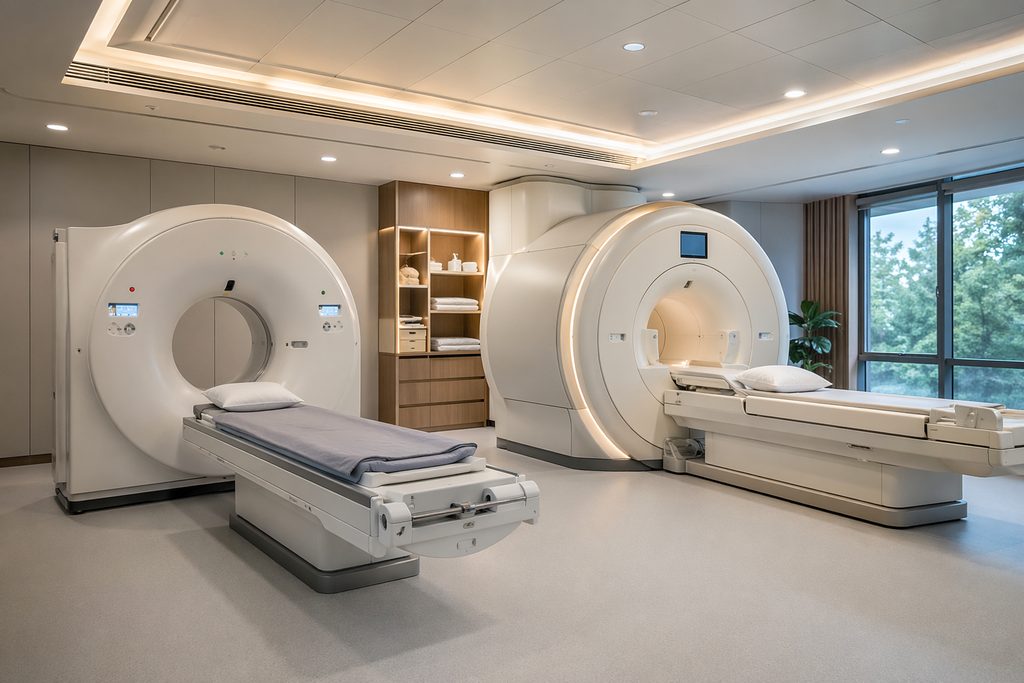
While a standard executive physical in the United States often requires scheduling three weeks out and returning days later for lab reviews, several Shanghai and Beijing hospital international departments deliver comprehensive blood panels, cardiac imaging, and specialist consultations within a single working day. The same day health screening China cost typically ranges from $350 to $1,800 depending on depth, imaging modalities, and hospital tier. That price gap—and the compressed timeline—is exactly why international patients increasingly route their annual checkups through Chinese medical centers.
We coordinate these packages regularly. The logistics are predictable. The medical infrastructure is substantial. What surprises most first-time patients is how much clinical volume Chinese radiologists and lab technicians process daily—volume that translates directly into same-day turnaround on most standard panels.
This guide breaks down what a same-day screening actually includes, what it costs at different hospital levels, how long each component takes, and where the process can stumble. No vague promises. Just the operational reality from our coordination desk at China Medical Services.
How This Actually Works, Step by Step
The sequence runs like this. You send us your screening goals, age, medical history, and any specific concerns—cardiac family history, liver function worries, cancer markers, whatever applies. We review that against our database of 340+ top-ranked hospitals across 37 cities and propose two or three package options with transparent pricing.
Once you select a package, we coordinate directly with the hospital’s international department or VIP clinic. They reserve your slot. You arrive in the morning, typically between 7:30 and 8:30 AM, fasting. A bilingual companion meets you at the entrance. Registration takes ten minutes. Blood draws happen first. Then imaging—ultrasound, chest X-ray, low-dose CT if included. Specialist consultations get slotted between imaging blocks. Most standard executive packages finish by 2:00 PM, with a preliminary report review before 4:00 PM. Full written reports follow within 24 to 72 hours depending on pathology and microbiology components.
What do you need to send beforehand? Passport copy, any prior imaging or lab results, a medication list, and a brief symptom or concern summary. That’s it. No referral letter required for screening packages at most international departments.
What a Same-Day Screening Package Actually Includes
Package composition varies dramatically by hospital. A basic executive profile at a public hospital international department—say, Zhongshan Hospital‘s VIP clinic in Shanghai—covers complete blood count, comprehensive metabolic panel, lipid profile, thyroid function, tumor markers (AFP, CEA, CA19-9), chest X-ray, abdominal ultrasound, ECG, and a physician consultation. Cost runs $350 to $600.
Add cardiac stress testing, carotid ultrasound, low-dose chest CT, and a cardiology consultation, and you’re looking at $800 to $1,200. The fast executive checkup Shanghai price at private international hospitals like Jiahui or United Family starts higher—typically $1,200 to $2,500 for comparable depth—because those facilities include English-native physician consultations, hotel-grade facilities, and direct insurance billing.
One distinction matters. Public hospital international departments offer the same diagnostic equipment as the main hospital but with expedited scheduling and English coordination. Private international hospitals offer Western-style service flow and often faster report turnaround. Neither is categorically better. The choice depends on whether you prioritize diagnostic depth per dollar or service comfort.
Here’s what a mid-tier comprehensive package at a top public hospital international department typically includes:
- Fasting blood draw with 40–60 analytes, including tumor markers and hormone panels
- Abdominal and thyroid ultrasound
- Chest X-ray or low-dose CT
- Resting ECG
- Internal medicine consultation with preliminary review
- Written report in English within 48 hours
That package runs $500 to $900 at Fudan-ranked hospitals. The same depth at a JCI-accredited private facility runs $1,500 to $2,200. Both deliver same-day completion.
How Long Does a Full Body Scan Take in China
The honest answer: four to seven hours for a standard comprehensive package. A low-dose chest CT takes under ten minutes of scanner time. Abdominal ultrasound runs fifteen to twenty minutes. Blood draws take five. The time accumulates in transitions—moving between departments, waiting for each station, specialist consultation queues.
For a full-body MRI or PET-CT screening, the timeline stretches. Whole-body MRI protocols run sixty to ninety minutes of scanner time alone, and most hospitals schedule these as separate appointments rather than same-day add-ons. PET-CT requires radiotracer uptake time—typically sixty minutes of quiet waiting after injection—plus thirty minutes of scanning. So when someone asks how long does a full body scan take in China, the answer depends entirely on modality. Ultrasound and CT fit same-day packages easily. MRI and PET-CT usually require a second morning or a dedicated scheduling block.
We tell patients to plan for a full day regardless. Arrive early. Bring a book. The pace is steady but not rushed—and rushing a diagnostic process serves nobody.
A Realistic Timeline
| Stage | What Happens | Realistic Duration |
|---|---|---|
| Initial inquiry | You send goals, history, documents | Same day |
| Package proposal | We match 2–3 hospital options with pricing | 1–3 working days |
| Slot reservation | Hospital international department confirms date | 2–7 working days lead time |
| Visa processing | S2 visa application with hospital invitation letter | 5–15 working days, varies by consulate |
| Travel and arrival | Flight, hotel, airport transfer | 1–2 days |
| Screening day | All diagnostics, consultations, preliminary review | 4–7 hours |
| Written report | Full English report delivered | 24–72 hours post-screening |
People forget the visa lead time. Even with a hospital invitation letter, S2 visa processing at some consulates runs two weeks or more. If you’re planning a screening trip, start coordination at least three to four weeks before your intended travel date. Rushed timelines create stress that undermines the whole purpose of a health check.
Is Health Screening in Beijing Reliable
This question comes up constantly. The short answer: yes, with qualifications. Beijing hosts 21 of the Fudan-ranked Top 100 hospitals—the highest concentration of any Chinese city. Peking Union Medical College Hospital, Fuwai Hospital, and Beijing Friendship Hospital operate international departments with decades of experience serving foreign patients. Laboratory accreditation follows ISO 15189 standards at major centers. Radiologists at top Beijing hospitals read imaging studies at volumes that would exhaust most Western radiologists—thousands of studies annually per physician.
But reliability has dimensions. Diagnostic accuracy at top-tier Beijing hospitals is genuinely excellent. Communication reliability depends entirely on which department you access. A standard public outpatient clinic may offer no English support whatsoever. An international department or VIP clinic provides English-speaking coordinators and report translation. So when patients ask is health screening in Beijing reliable, we answer: the machines and clinicians are world-class. The service layer depends on the channel you enter through.
And one more candid point. Screening reliability also depends on what you do with the results. A same-day package identifies abnormalities. It does not replace longitudinal care. If your screening flags an elevated marker or suspicious imaging finding, the follow-up pathway—confirmatory testing, specialist referral, possibly treatment—requires additional coordination. We handle that too, but patients should enter screening with clear expectations about what a checkup can and cannot deliver.
What Can Go Wrong — and What Happens Then
Fasting violations happen. A patient forgets and drinks coffee with milk at 6 AM. The lipid panel and glucose readings become unreliable. What happens then? We reschedule the affected bloodwork for the following morning, or the hospital runs the non-fasting panels and flags the fasting-dependent values for repeat testing. It’s inconvenient, not catastrophic.
Incidental findings are more common than most people expect. A lung nodule on low-dose CT. A thyroid nodule on ultrasound. A mildly elevated tumor marker. None of these necessarily indicate disease—most lung nodules are benign, most thyroid nodules are harmless, tumor markers can rise from inflammation or benign conditions. But each finding triggers a decision point. Does the patient pursue confirmatory imaging now, or schedule follow-up in six months? We facilitate the specialist consultation to interpret the finding and recommend a pathway. We never minimize findings, and we never catastrophize them either.
Report delays can occur when pathology or microbiology components require culture time. A standard blood panel returns same-day. A Pap smear or stool microbiology panel may take three to five days. If you’re flying home shortly after screening, the written report may follow you by email. We ensure that happens reliably.
And sometimes the hospital itself reschedules. A VIP clinic slot gets bumped by an urgent inpatient consultation. Rare, but it happens. Our coordinators rebook immediately and adjust the day’s sequence. This is precisely where a bilingual companion earns their fee—handling the renegotiation so you don’t stand confused at a reception desk.
How to Evaluate a Screening Package Before You Book
Not all comprehensive health screening abroad same day results packages are equal. Some hospitals market “executive packages” that are mostly bloodwork plus a cursory physician chat. Others bundle genuinely deep imaging. Here’s how to assess a package critically.
First, look at the imaging list. A package without at least abdominal ultrasound and chest imaging is a blood test with extra steps. Second, check the tumor marker panel. A basic three-marker panel (AFP, CEA, CA19-9) is standard. Gender-specific additions—CA-125 for ovarian, PSA for prostate—should appear in packages marketed as comprehensive. Third, confirm the consultation component. Who reviews your results with you? A senior physician, or a junior staffer? The international department should specify the reviewing physician’s seniority.
Fourth, clarify the report language and timeline. English translation should be included, not an add-on fee. Fifth, ask about follow-up access. If the screening flags something, can the same hospital schedule confirmatory testing? Most can, but the pathway through international departments is smoother than through standard outpatient clinics.
And a practical note on booking 24 hour medical checkup China package options. Some hospitals advertise 24-hour turnaround on reports. That’s achievable for standard panels at private international hospitals. Public hospital international departments typically deliver within 48 to 72 hours. If a 24-hour written report matters to you, say so upfront—we’ll direct you to facilities that reliably meet that timeline.
Practical Considerations: Visa, Payment, Records, Follow-Up
Visa category: S2, annotated for medical treatment purposes. The hospital’s international department issues an invitation letter that supports your consulate application. Family members traveling with you apply under the same S2 category. Processing times vary by consulate and nationality—start early.
Payment: public hospital international departments generally require prepayment or deposit at registration. Credit cards work at most international departments. Private international hospitals often bill insurance directly if you carry a plan with international coverage. Public hospitals reimburse after the fact—you pay, then claim. Our coordination fee for hospital appointment coordination starts from $300, separate from any hospital charges.
Records: bring prior imaging on disc, not just printed reports. Radiologists here routinely re-read outside studies when comparison matters. Bring a medication list with generic names. Bring any implant cards if you have joint replacements or cardiac devices—these matter for MRI safety screening.
Language: even at international departments, some nursing staff speak limited English. Our bilingual companions handle registration, queue management, payment, and translation throughout the screening day. The companion service runs from $300 per day. Patients who speak Mandarin or travel with a fluent companion can skip this—but most international patients find it removes the single biggest friction point in the entire process.
Follow-up at home: the screening report belongs to you. Take it to your primary physician. Chinese labs use slightly different reference ranges than Western labs in some analytes—your home physician should interpret results in context. If a finding requires specialist follow-up, we can coordinate that in China or help you identify the appropriate pathway at home.
Frequently Asked Questions
Basic executive packages at public hospital international departments run $350 to $600. Comprehensive packages with cardiac imaging and low-dose CT run $800 to $1,200. Private international hospitals charge $1,200 to $2,500 for comparable depth. Prices vary by hospital tier, package composition, and case complexity.
Preliminary results—blood panels, ECG, ultrasound findings, imaging impressions—are typically reviewed with you before you leave. Full written reports with English translation follow within 24 to 72 hours. Some pathology and microbiology components take longer. If a 24-hour written report matters, we direct you to facilities that reliably meet that timeline.
At Fudan-ranked and JCI-accredited hospitals, yes. Equipment is current-generation, laboratories follow international accreditation standards, and radiologists read enormous volumes. The variable is service layer and communication, not diagnostic quality. International departments and VIP clinics address that variable effectively.
Most incidental findings are benign. For anything concerning, we coordinate confirmatory testing and specialist consultation—either immediately if you’re still in China, or on a scheduled return. The screening package is a starting point, not a diagnosis. No package replaces clinical judgment.
Yes. Foreign nationals use the S2 visa category for medical treatment purposes, supported by a hospital invitation letter. Processing takes five to fifteen working days depending on your consulate. Start coordination at least three to four weeks before intended travel.
Your Next Step
Same-day health screening in China offers genuine advantages: compressed timelines, deep diagnostic packages, and costs that typically run 50–70% below equivalent private-pay screening in the United States. The tradeoff is logistical complexity—visa, language, navigation. That’s the part we handle.
We are China Medical Services. We maintain a database of 340+ top-ranked hospitals across 37 cities, and we coordinate screening packages, bilingual companions, and follow-up care for international patients. We do not practice medicine. We do not guarantee outcomes. We do make the operational path straightforward.
If you’re considering a screening trip, send us your goals and history. We’ll respond with concrete package options and transparent pricing. No pressure. Just clarity.
For more medical information and treatment options in China, visit chinamedservices.com (China Medical Services).
