Direct Professor-Level Surgeon Access Service China: Senior Specialist Only Treatment
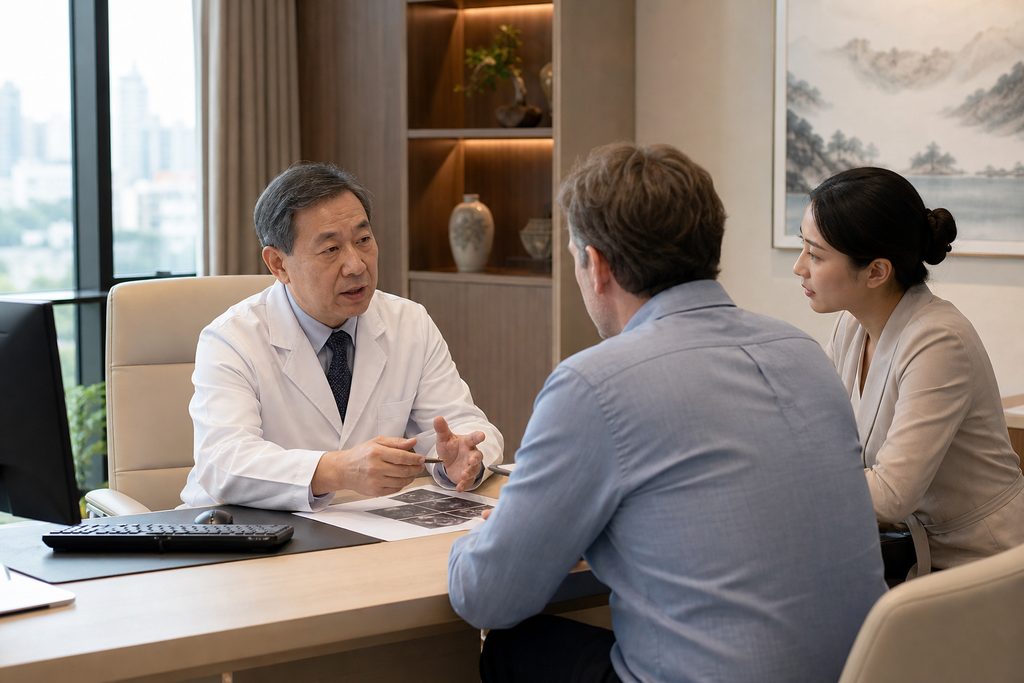
You have probably heard that getting surgery in China means rolling the dice on who actually holds the scalpel. The image of a crowded public hospital, with a junior resident performing your procedure while a senior doctor oversees ten operating rooms, is not entirely fiction. That is how the standard public pathway often works. But there is another layer to Chinese healthcare that most international patients never see. A parallel system where the surgeon you consult is the surgeon who operates. Where a professor with 8,000 cases under their belt handles your procedure personally, from incision to closure. This is direct professor-level surgeon access. It exists. And it is far more attainable than most people assume.
The direct professor surgeon access China price is rarely published on a website. That is part of the problem. The opacity of the system keeps many Western patients from ever exploring it seriously. Our team bridges that gap. We do not perform surgery. We are not a hospital. We are the logistical architects who connect you with China’s most experienced senior specialists through official hospital VIP and international department channels. We handle the coordination so you get clarity on costs, timing, and the surgeon’s actual involvement before you ever book a flight.
Key Takeaways
- Direct professor-level access means your surgery is performed personally by a chief surgeon or department chair — not delegated to a trainee — at a cost typically 70-80% lower than equivalent US private-pay rates.
- China’s top hospitals operate at volumes that dwarf Western centers: a single cardiac surgery department may perform over 14,000 procedures annually, driving outcomes that match or exceed international benchmarks.
- This pathway is not a walk-in option. Public hospital general outpatient clinics cannot book overseas patients in advance. Access requires the hospital’s official international department or VIP channel, which is where coordination becomes essential.
- You need to understand visa requirements, payment structures, and the real limits on what even a senior specialist can guarantee before committing to any treatment plan.
The Problem: Wait Times That Make Conditions Worse
In Canada, the median wait time between specialist referral and treatment reached 27.7 weeks in 2023, according to the Fraser Institute. The UK’s NHS reported over 7.6 million people on waiting lists for elective care. For orthopedic procedures like hip replacements, patients in some regions wait over 18 months. A degenerative joint does not pause while you wait. A cardiac condition does not stabilize because the queue is long.
These are not abstract statistics. They represent people living with pain, losing mobility, and watching their window for optimal surgical outcomes narrow. The private alternative in those same countries often means paying $30,000 to $50,000 out of pocket for a procedure that costs a fraction of that elsewhere. For many, that math simply does not work. They are stuck. The public system is too slow. The private system is too expensive. And traveling abroad for surgery feels like stepping into the unknown.
Who We Are
China Medical Services exists to make that unknown known. We are not physicians. We do not diagnose, treat, or recommend specific procedures. What we do is build a bridge between you and the 340+ top-ranked hospitals across 37 cities in China that our database covers. We handle the practical, maddening logistics that make cross-border medical travel intimidating: identifying the right department and surgeon profile for your condition, coordinating through official international patient channels, arranging bilingual medical companions, and guiding visa applications. Our team has walked hundreds of international patients through this process. We know which questions to ask, which documents matter, and where the friction points hide.
Why Direct Professor-Level Surgeon Access in China Delivers Results
At Fuwai Hospital in Beijing, the cardiac surgery department performs over 14,000 procedures annually. That is more than any single center in the world. A senior cardiac surgeon there may complete 400 to 600 bypass surgeries in a year. The average cardiac surgeon in the United States performs roughly 100 to 150. This is not a slight against American surgeons. It is a structural difference. China’s top hospitals are high-volume, high-efficiency machines. When a professor-level surgeon has done a specific procedure 5,000 times, rare complications become routine management. The team around them — perfusionists, surgical nurses, anesthesiologists — have seen it all. Twice.
This volume effect shows up in outcomes. A 2018 study published in The Lancet examining coronary artery bypass graft surgery across multiple countries found that Chinese centers in the study cohort had in-hospital mortality rates comparable to or lower than many Western centers, despite treating patients with higher baseline risk profiles. Volume matters. Repetition matters. When you ask about the direct professor surgeon access China price, part of what you are paying for is that depth of experience.
Technology Adoption Without Legacy System Drag
Chinese hospitals adopted electronic medical records and digital imaging systems later than many Western counterparts. That turned out to be an advantage. They skipped the fragmented, legacy-IT phase entirely. A patient at a top-tier hospital like Huashan Hospital in Shanghai moves through registration, consultation, imaging, and admission on a single integrated digital platform. Surgeons access high-resolution imaging instantly. Robotic-assisted surgery systems, like the da Vinci Xi, are deployed in dozens of major centers. Minimally invasive techniques that preserve healthy tissue and reduce recovery time are standard in senior specialist-led procedures.
This efficiency translates into shorter hospital stays and fewer administrative errors. It also means your medical records, once translated and submitted through the proper channel, move fast. A senior specialist can review your case, request additional imaging if needed, and confirm a surgical plan within days — not weeks.
Cost Advantage Without Quality Compromise
Let us address the elephant in the room. A surgery that costs $120,000 in the United States might cost $18,000 to $25,000 in China through a VIP international department. Does lower cost mean lower quality? No. It reflects structural economics. Physician salaries, hospital administrative overhead, and malpractice insurance costs are substantially lower in China. The clinical equipment — the MRI machines, the surgical robots, the ICU monitoring systems — is the same global standard. The implants used in orthopedic surgery are often the same brands you would receive in a US or European hospital. The difference is the price of the room, the labor, and the system surrounding the care, not the quality of the care itself.
When patients ask us how to get a top surgeon in China without referral, the answer starts with understanding this cost structure. You are not buying a discount surgery. You are accessing a different economic model for delivering the same high-standard procedure. The senior specialist surgery package Shanghai cost, for instance, typically bundles the surgeon’s fee, the anesthesiologist, the operating theater, a private recovery room, and post-operative nursing care into one transparent quote. No surprise billing six weeks later.
What You Need to Know Before Going Alone
We are direct about the barriers because pretending they do not exist helps no one. International patients attempting to navigate this system independently hit walls fast.
- Visa Requirements Are Specific: Medical treatment in China requires an S2 visa, annotated for medical purposes. Accompanying family members also need S2 visas. The M visa is for commercial business and cannot be used for hospital admission. Getting the visa requires an official invitation letter from the hospital — something only issued after a confirmed treatment plan exists. This creates a chicken-and-egg problem for solo planners.
- Public Hospital General Outpatient Departments Cannot Book Overseas Patients: The standard outpatient registration system in Chinese public hospitals is designed for domestic patients who show up, queue, and pay per visit. You cannot email a hospital’s general department from overseas and reserve a professor’s time. The international department or VIP clinic is the only channel that accepts pre-arranged bookings from abroad. These departments have separate phone lines, separate floors, and English-speaking coordinators. Finding the right contact and getting a response takes persistence and local knowledge.
- Payment Is Prepaid and Insurance Is Reimbursement-Based: Chinese public hospitals, including their VIP wings, typically require a deposit before admission and settlement upon discharge. They do not directly bill most international insurance plans. You pay first, then claim reimbursement. The deposit for a major surgery can be $10,000 to $20,000 wired in advance. International wire transfers, currency conversion, and hospital finance department communication form a triangle of frustration for anyone handling it alone.
How We Help You Navigate This
These barriers exist for structural reasons. They are not designed to exclude foreigners. They are simply the reality of a system built for a domestic population of 1.4 billion people. Our role is to route you through the channels that are designed for international patients.
It starts with your medical records. We arrange certified translation of your imaging reports, pathology slides, and clinical history into Chinese. These go directly to the international department of a hospital matched to your condition. The department’s senior specialists review the case. If they accept it, a treatment plan and cost estimate come back — usually within three to five business days. You see the proposed surgeon’s name, title, and case volume. You see the line-item costs. You make an informed decision with real data, not hope.
Once you confirm, we coordinate the invitation letter for your S2 visa application. We arrange airport pickup and accommodation near the hospital. On the day of your consultation, a bilingual medical companion meets you at the hospital entrance. They handle registration, queueing, payment counter visits, and real-time translation during your face-to-face consultation with the professor. They stay with you through pre-operative testing, admission, and discharge. You focus on your health. We handle the friction.
For patients considering the book senior specialist surgery China medical tourism route, this coordination layer is the difference between a smooth experience and a stressful one. The senior specialist surgery package Shanghai cost or Beijing cost varies by procedure and hospital, but we ensure you have that number in writing before you commit. No one arrives in China hoping for the best.
Is Professor-Level Surgery Safe for International Patients?
This question deserves a direct answer. The short version: yes, when accessed through official hospital international departments with proper coordination. The longer answer requires context.
China’s top 5% of hospitals — the roughly 340 institutions in our database — are ranked by the Fudan University hospital ranking system and many hold Joint Commission International accreditation. These hospitals treat international patients routinely. Their VIP wards have English-speaking nursing staff. Their surgical protocols align with international guidelines. Infection control standards in these departments meet or exceed what you would expect in a Western private hospital.
The safety question really hinges on two factors: the hospital you choose and the coordination you have. A professor-level surgeon at a Fudan-ranked hospital in Shanghai operates in a well-regulated, high-volume environment with robust quality control. A surgeon at an unranked facility with no international patient infrastructure is a different story. We only work with the former. The fast track surgery with chief surgeon China pathway is safe precisely because it runs through official, accredited channels — not around them.
Frequently Asked Questions
What is the direct professor surgeon access China price for a major procedure?
Costs vary significantly by specialty and hospital. A cardiac bypass through a VIP international department typically ranges from $18,000 to $28,000. A total hip replacement runs $15,000 to $22,000. A complex spinal fusion might be $25,000 to $35,000. These are all-in figures covering surgeon fees, anesthesia, operating theater, private room, and standard post-operative care. Exact quotes require a case review. The price always comes in writing before any commitment is made.
How can I get a top surgeon in China without a referral from my home doctor?
You do not need a formal referral letter from a Western physician, but you do need comprehensive medical records. Recent imaging (MRI, CT, X-ray), pathology reports, blood work, and a summary of your treatment history are essential. These documents get translated and submitted to the hospital’s international department. The department chief or a senior professor reviews them and decides whether to accept the case. The process is closer to a direct consultation request than a referral-based gatekeeping system. Your records speak for you.
What happens if something goes wrong during or after surgery?
This is the hardest question, and it deserves honesty. The hospitals we work with carry liability insurance and have established protocols for managing surgical complications. Their ICUs are equipped to the same standard as Western intensive care units. However, the legal framework for medical malpractice in China differs from what you may be accustomed to in your home country. Pursuing litigation as a foreigner is complex and rarely practical. Our strongest recommendation: purchase a comprehensive medical tourism insurance policy before travel that includes coverage for complication management, extended hospital stays, and medical evacuation. We help patients understand what policies cover, but we do not sell insurance. This is a risk that must be acknowledged and mitigated — not ignored.
Can I really book senior specialist surgery in China as a medical tourist without speaking Chinese?
Yes, but only with proper support. The international departments of top hospitals have English-speaking coordinators. Your bilingual medical companion handles everything outside the consultation room — registration forms, payment counters, pharmacy pickups, discharge paperwork. Inside the consultation, they translate in real time between you and the professor. Many senior surgeons speak some English, particularly in major cities like Shanghai and Beijing, but they will conduct the detailed clinical discussion in Chinese to ensure precision. The companion makes that barrier disappear.
Your Next Step
The direct professor surgeon access China price is not a mystery once you have a case review in hand. The real question is whether this pathway fits your condition, your timeline, and your comfort with traveling for care. For many patients stuck between long wait times at home and unaffordable private-pay rates, the answer is yes. For others, the logistics outweigh the benefits. There is no single right answer.
If you want to explore this seriously, start with your medical records. Get them organized. Get them translated. Submit them for review. The process begins with information, not obligation. Our team is here to help you understand your options — clearly, honestly, and without pressure. Reach out for a free consultation when you are ready to take that step.
For more medical information and treatment options in China, visit chinamedservices.com (China Medical Services).
