Vaccination in China for Foreigners: Costs, Clinics, and the Step-by-Step Process
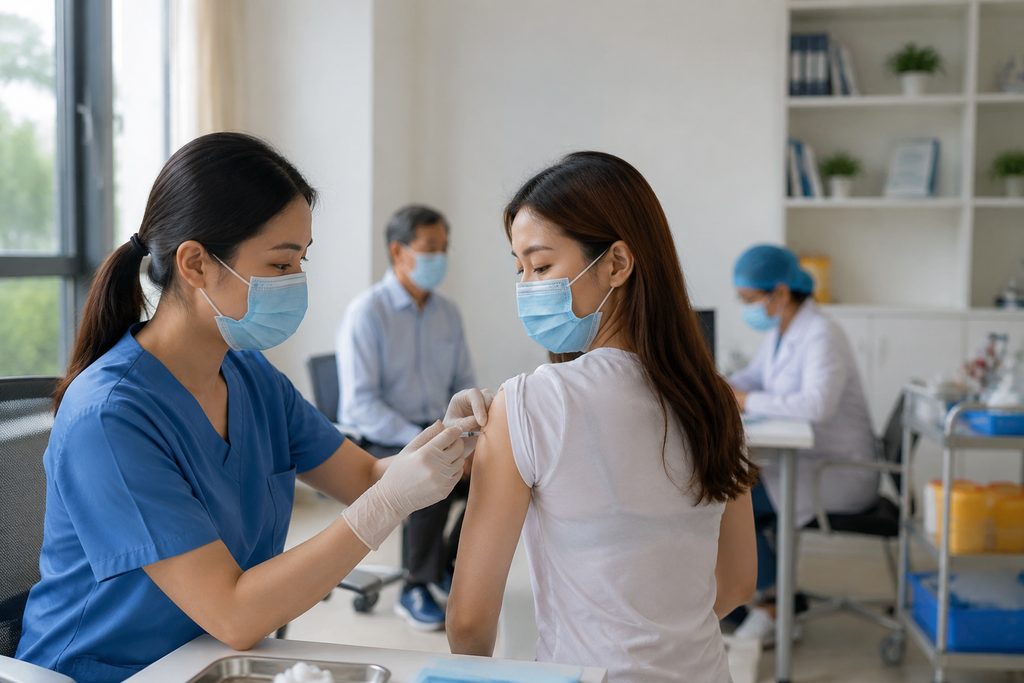
Have you ever landed in a new country and realized you have no idea where to get a basic flu shot, let alone a full travel vaccine schedule? For foreigners in China, the question “Can I get vaccinated in China?” comes up constantly — and the answer is yes, but the system works differently than what you might expect at home. The vaccination cost for foreigners in China varies widely depending on what you need and where you go. Public community health centers, private international clinics, and hospital international departments all offer vaccines, each with different pricing, booking rules, and English-language support.
This guide walks through exactly how vaccination works for foreigners on the ground in China. We cover costs, clinic options in major cities like Shanghai and Beijing, what documents you need, and how to plan around China travel vaccination requirements 2025. No vague generalities — just the practical details that matter when you are standing in a pharmacy asking for a Tdap booster and nobody speaks English.
How This Actually Works, Step by Step
The process starts with figuring out which vaccines you actually need. That depends on your age, your home country’s immunization record, where you plan to travel inside China, and whether you are staying short-term or long-term. If you have a vaccination record from home, bring it. Chinese clinics will want to see what you have already received before recommending boosters.
Here is the typical sequence for a foreigner seeking vaccination in China:
- Identify the vaccine you need. Common requests include influenza, hepatitis A and B, rabies post-exposure prophylaxis, HPV, Tdap, Japanese encephalitis, and pediatric vaccines for expat children.
- Choose a clinic type. Public community health centers are cheapest but rarely have English-speaking staff. Private international clinics cost more but offer English service and Western-style record-keeping. Hospital international departments fall in between.
- Book or walk in. Private clinics like United Family and Jiahui accept appointments by phone or WeChat. Public centers often require same-day queueing. For pediatric vaccine schedules, you may need to register your child at the local community health center first.
- Bring identification. Your passport is essential. Some public centers also ask for a local residence registration form (the police registration slip you get when you rent an apartment).
- Pay. Public centers charge near-subsidized prices. Private clinics charge market rates, often 3 to 10 times higher. Payment is almost always out-of-pocket; reimbursement depends on your international insurance plan.
- Get a record. Ask for an English-language vaccination certificate if your home doctor needs proof. Private clinics provide this as standard. Public centers may only issue a Chinese-language record unless you specifically request translation.
That last point trips people up. If you need the vaccine for immigration, school enrollment, or your home country’s medical records, get a bilingual certificate. Ask before you pay.
Vaccination Cost for Foreigners in China: What You Actually Pay
Let’s talk numbers. Public community health centers in cities like Shanghai and Beijing charge very little — often under $10 for a flu shot, sometimes free during seasonal campaigns for registered residents. But as a foreigner without local insurance, you may pay a slightly higher out-of-pocket rate, still usually under $20.
Private international clinics are a different world. Here is a realistic range based on published price lists and patient reports:
| Vaccine | Public Community Center (USD, approx.) | Private International Clinic (USD, approx.) |
|---|---|---|
| Influenza (seasonal) | $8–20 | $40–90 |
| Hepatitis B (per dose) | $10–25 | $50–100 |
| HPV (Gardasil 9, per dose) | $180–250 | $250–400 |
| Rabies post-exposure (full course) | $60–120 | $300–600 |
| Tdap booster | $15–30 | $60–120 |
| Japanese encephalitis (per dose) | $20–40 | $80–150 |
Prices vary by hospital and case complexity, and these are approximate ranges, not quotes. The vaccination cost for foreigners in China at a top-tier private clinic in Beijing or Shanghai will run higher than the same shot at a public center in a smaller city. That is the trade-off: cost versus convenience and language support.
One more thing about HPV. Demand in China is high, and supply fluctuates. Some clinics have waitlists for Gardasil 9, especially for the second and third doses. If you start the series in China, confirm the clinic can guarantee follow-up doses before you commit.
Can Tourists Get Vaccinated in Shanghai and Other Major Cities?
The short answer: yes. Tourists can walk into private international clinics in Shanghai, Beijing, Guangzhou, Shenzhen, and other major cities and receive most routine vaccines without a residence permit. Your passport is sufficient identification. Public community health centers are trickier — some require a local address registration, and almost none have English-speaking staff.
Shanghai deserves special mention because it has the highest concentration of JCI-accredited private clinics in mainland China. Clinics like United Family Shanghai, Jiahui Health, Parkway Health, and Raffles Medical all serve foreigners daily. Walk-in flu shots are usually possible same-day. Travel vaccines like Japanese encephalitis or rabies pre-exposure may require a few days’ notice because the clinic needs to order the vial.
If you are asking specifically “can tourists get vaccinated in Shanghai,” the practical answer is: yes, at private clinics, with your passport, often within 24 hours for common vaccines. For rabies post-exposure, go to the nearest hospital emergency department immediately — do not wait for a private clinic appointment.
A Realistic Timeline
Vaccination timing depends on the vaccine. Single-dose shots are fast. Multi-dose series stretch over months. Here is what a realistic schedule looks like for a foreigner arriving in China:
| Stage | What Happens | Timeframe |
|---|---|---|
| Day 1–3 | Identify needed vaccines; gather home vaccination records; contact clinic | 1–3 days |
| Day 3–7 | Book appointment; private clinics usually confirm within 24–48 hours | 2–4 days |
| Week 1–2 | First dose administered; receive record | Same day as appointment |
| Month 1 | Second dose for hepatitis A, hepatitis B, HPV, or rabies pre-exposure | 4 weeks after first dose |
| Month 6 | Final dose for hepatitis B, HPV, or rabies pre-exposure | 6 months after first dose |
| Before departure | Request English vaccination certificate; confirm no missing doses | Allow 1 week |
People forget two things. First, document translation. If your home vaccination record is not in English or Chinese, get it translated before you arrive. Clinics will not guess. Second, appointment lead time at popular private clinics in Shanghai and Beijing can stretch to a week during flu season. Book early.
What Can Go Wrong — and What Happens Then
Vaccine supply runs out. It happens with HPV, Japanese encephalitis, and sometimes pediatric combination vaccines. If a clinic tells you the vial is unavailable, ask them to check their other branches or partner hospitals. Private clinic networks share inventory. If that fails, switch to a different clinic group — Shanghai and Beijing have enough options that you rarely need to wait more than a few weeks.
Language barriers at public centers are real. You may be handed a form entirely in Chinese, asked about allergies and prior reactions, and sent to a payment window with no English signage. If you do not speak Chinese, this is where a bilingual medical companion earns their fee. They handle registration, translation, and payment, and they make sure you get the right vaccine — not a different one with a similar-sounding name.
Records get lost. If you receive a vaccine in China and later need proof for a job, school, or immigration application, and you did not keep the paper record, you will need to return to the same clinic and request a reprint. Do not skip this step. Take a photo of every vaccination record the moment you receive it.
Adverse reactions are rare but possible. Fever, sore arm, mild fatigue — standard. If you have a severe reaction, go to the nearest hospital emergency department. Private clinics can handle mild post-vaccine symptoms, but anaphylaxis requires emergency care, not a clinic appointment.
Best International Hospitals in Beijing for Vaccines and How to Choose
Beijing has a strong roster of international medical facilities. The best international hospitals in Beijing for vaccines are not necessarily hospitals at all — several are outpatient clinics attached to hospital networks. What matters is English-speaking staff, imported vaccine brands, and reliable record-keeping.
United Family Healthcare operates multiple locations in Beijing, including its main hospital in Chaoyang District. Jiahui Health has a growing presence. Parkway Health and Raffles Medical also serve the expat community. For pediatric vaccines, United Family and Jiahui are the most commonly used by expat families because they stock imported pediatric combination vaccines and provide English-language growth and immunization charts.
How to evaluate a clinic before booking:
- Vaccine source. Ask whether the vaccine is imported or domestically produced. Both are safe, but if your home doctor wants a specific brand, confirm the brand name in writing.
- Cold chain. This is non-negotiable. Reputable clinics maintain strict cold storage. You cannot verify this yourself, but JCI accreditation and a clean, modern facility are reasonable proxies.
- English records. Confirm before paying that the clinic issues an English-language vaccination certificate with the vaccine name, batch number, date, and clinic stamp.
- Insurance. Some international clinics bill insurers directly. If you have expat health insurance, ask whether the clinic is in-network. If not, you pay upfront and claim reimbursement.
If you are comparing options across cities, our database of top-ranked Chinese hospitals includes international departments at major public hospitals, which can be a good middle ground on price. For a full look at private options, see our guide to private international hospitals.
China Travel Vaccination Requirements 2025 and What You Need Before Entry
China does not currently require proof of COVID-19 vaccination for entry. There is no yellow fever vaccination requirement unless you are arriving from a country with yellow fever transmission risk — in which case the standard international certificate applies. Routine travel vaccines like hepatitis A, typhoid, and Japanese encephalitis are recommended but not mandatory.
That said, China travel vaccination requirements 2025 are minimal, and that surprises people. The bigger practical issue is what you need while living here. Hepatitis B is endemic in parts of China. Rabies exists in rural areas, and post-exposure treatment is widely available but expensive at private clinics. Japanese encephalitis risk is seasonal and regional, concentrated in southern and southwestern provinces during summer months.
If you are coming for medical treatment rather than tourism, the same vaccination logic applies. You do not need special vaccines to enter a Chinese hospital. But if your treatment involves immunosuppression, your treating physician may recommend specific vaccines before you start therapy. That conversation should happen during your remote consultation, before you book flights.
Practical tip: Book your vaccination appointment before you arrive in China if you need a specific vaccine on a specific date. Private clinics accept bookings by email and WeChat, and confirming availability in advance saves you a wasted trip. This is especially true for HPV series and pediatric vaccines.
Practical Considerations: Records, Visas, Payment, and Follow-Up
Your passport is the primary ID for any medical service in China, including vaccination. Some public centers also ask for your temporary residence registration slip. If you are staying in a hotel, the hotel registers you automatically. If you are renting, your landlord should have helped you register at the local police station. Bring that slip if you plan to use a public community health center.
On visas: medical travelers to China typically use an S2 visa for short-term private affairs, including medical treatment. Vaccination alone does not justify a special visa category. If you are coming specifically for medical care, the S2 is the applicable short-stay category, subject to current embassy requirements and supporting hospital documents. Our team can point you to the right paperwork, but approval is always at the discretion of the consulate.
Payment is straightforward. Public centers take cash, WeChat Pay, and Alipay. Private clinics take credit cards, cash, and often direct insurance billing. If you plan to claim reimbursement from a home-country insurer, get an itemized receipt with the clinic’s official stamp. Insurers reject unstamped receipts.
Follow-up at home matters. If you start a multi-dose series in China and leave before completing it, take your English vaccination record to a doctor at home. Most vaccines can be completed with a different brand, but your doctor needs to know exactly what you received and when. Do not guess.
Frequently Asked Questions
Yes. Private international clinics accept your passport as sufficient identification. Public community health centers may require a local address registration, but private clinics do not. Tourists and short-term visitors can receive most routine vaccines without any residence documentation.
At a public community health center, expect to pay roughly $8 to $20. At a private international clinic in Shanghai or Beijing, the same flu shot typically costs $40 to $90. The higher price covers English-speaking staff, shorter wait times, and an English vaccination certificate.
No. China does not require COVID-19 vaccination proof or routine travel vaccines for entry. The only exception is yellow fever, which requires a standard international certificate if you are arriving from a yellow fever-endemic country. Routine recommendations depend on your itinerary and length of stay.
Go to the nearest hospital emergency department immediately. Rabies post-exposure prophylaxis is widely available in Chinese hospitals, including public facilities. Do not wait for a private clinic appointment. The full course typically costs $60 to $120 at a public hospital and $300 to $600 at a private clinic.
Yes. Private international clinics accept advance bookings by email or WeChat. If you need a specific vaccine on a specific date — for example, a second HPV dose or a pediatric vaccine — confirm availability before you travel. This is the most reliable way to avoid supply shortages and scheduling conflicts.
Your Next Step
Getting vaccinated in China as a foreigner is entirely doable once you know which clinic type fits your budget and language needs. The key decisions are public versus private, which vaccine brands you need, and whether you require English-language records. Plan ahead for multi-dose series, and always keep your vaccination certificate.
We help international patients coordinate medical care across China, from hospital matching to bilingual accompaniment. We do not administer vaccines or provide medical advice, but we can help you identify the right clinic for your situation and arrange a bilingual companion if you need one for a public facility visit. If you would like help navigating the options, request a free consultation and tell us what you need.
For more medical information and treatment options in China, visit chinamedservices.com (China Medical Services).
