Chinese General Hospital Ward: A Guide for International Patients
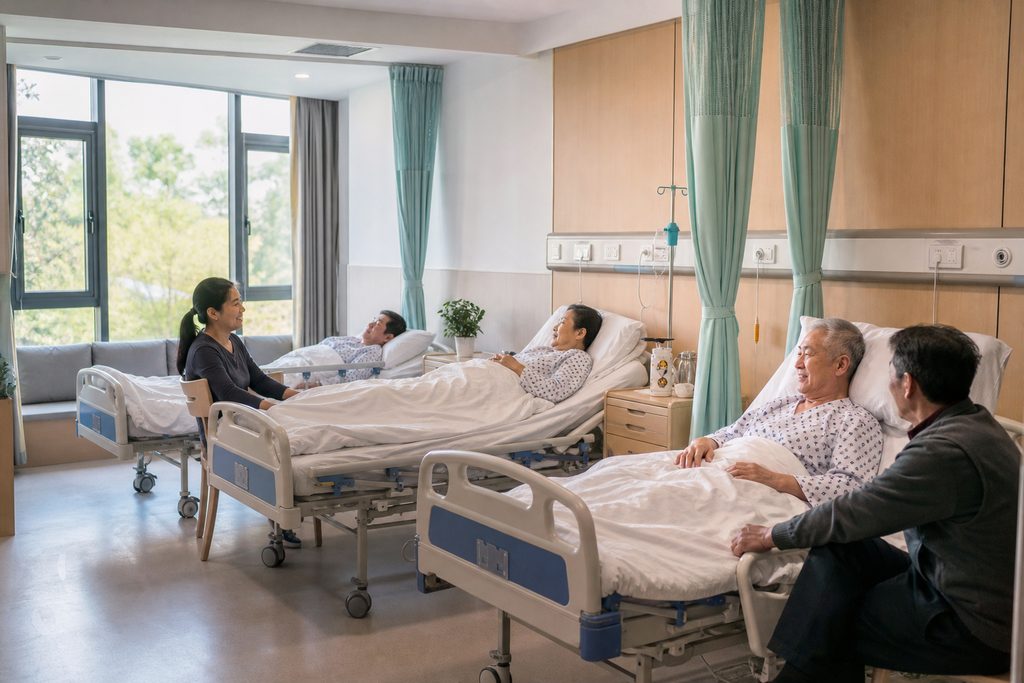
While a patient in Canada waits a median of 28.6 weeks for orthopedic surgery, Fuwai Hospital in Beijing performs more than 14,000 cardiac operations in a single year. Two systems, two very different clocks. For an international patient weighing treatment in China, the question is rarely about surgical skill at the top — it’s about the ward you wake up in afterward. This general hospital ward China international patient guide walks through what a standard Chinese hospital room actually looks like, what it costs, and how foreigners get into one.
General Hospital Ward China International Patient Guide: The Short Answer
A standard general ward in a top Chinese public hospital runs roughly $50 to $150 per day for the bed itself, with nursing and basic monitoring usually bundled in. A private or international-department room in the same building can run $300 to $900 per day. The medical care is often identical. The room is not.
Here’s the complication. Foreign patients almost never land in a true general ward on their first trip. Most public hospitals require an in-person outpatient visit before any surgery or admission is scheduled, and general ward beds are assigned by the treating department, not chosen by the patient. If you want a room you can select in advance, you are usually looking at the hospital’s international or VIP department — which costs about 1.5 to 2 times the standard channel.
Who This Is Right For — and Who It Isn’t
China’s top hospitals are genuinely strong for high-volume surgery, complex diagnostics, and cost-sensitive procedures. They are not the right answer for everyone.
Typically a good fit:
- Patients facing a long surgical wait at home for a procedure China performs at very high volume — cardiac surgery, joint replacement, certain oncology resections
- Self-paying patients or those with international insurance that reimburses after treatment
- People who can travel with a companion, or who will pay for a bilingual medical companion
- Cases where a written second opinion from a Chinese specialist would clarify the decision before any travel
Probably not a good fit:
- Anyone needing a ward where English is spoken by every nurse and every form is bilingual — that means a private international hospital, not a general ward
- Patients with a condition requiring immediate intervention. Public hospital scheduling does not move at emergency speed for overseas arrivals
- People who cannot tolerate a shared room, shared bathroom, or a hallway that is busy at 6 a.m.
- Cases where the treatment plan at home is already working. Travel adds risk, not just cost
The Options, Compared
There are three realistic ward tiers for a foreign patient in China. They are not marketing labels — they are physically different parts of the same hospital system.
| Ward tier | Typical daily room cost | Room setup | English support | How you book it |
|---|---|---|---|---|
| Standard general ward | $50–$150 | 3–6 beds per room, shared bathroom | Rare; family or hired interpreter needed | Assigned by department after admission |
| International / VIP department | $300–$900 | Single or double room, private bathroom | Usually available | Coordinated in advance through the department |
| Private international hospital | $800–$2,000+ | Private suite, Western-style layout | Standard | Direct booking, often with insurance billing |
The general ward suits a self-paying patient who wants the lowest total bill and does not mind company. The international department suits someone who wants a private room and English-speaking staff without leaving the public system’s surgical team. The private hospital suits patients whose insurance bills directly and who value a familiar environment over cost.
What to Expect in a Chinese Hospital Ward
This is the part most guides skip, and it is the part that actually determines whether you sleep.
A standard ward room in a large public hospital is functional and clean, but it is not quiet. Lights come on early. Meals arrive on a fixed schedule. Family members often stay overnight on a folding chair beside the bed — this is normal and expected, not a rule being broken. Nursing stations are staffed around the clock, but the nurse-to-patient ratio in a general ward is thinner than in a Western private room, which is precisely why families stay.
What you will not find in most general wards: a private phone, a menu you choose from, a nurse who speaks conversational English, or much privacy during examinations. Curtains exist. They are not soundproof.
The international department changes most of this. Rooms are single or double, bathrooms are en-suite, staff are used to foreign patients, and the pace is calmer. You are still inside the same hospital, often on the same floor plan, with access to the same specialists.
Chinese Hospital Ward Cost Per Day for Foreigners
Room cost is only one line on the bill. The full picture matters more.
Beyond the bed, expect separate charges for surgery, anesthesia, medications, imaging, lab work, and consumables. In a top public hospital, a cardiac bypass procedure typically lands somewhere between $12,000 and $20,000 all-in, against $120,000 or more in the United States. A general ward stay keeps you at the lower end of that range. An international department room adds to it without changing the surgical fee.
Two cost mechanics catch foreign patients off guard.
- Public hospitals generally require prepayment. You settle the estimate up front and reconcile afterward. International insurance is usually reimbursed later, not billed directly.
- Private international hospitals often bill insurance directly, which is a real convenience — and is priced into the room rate.
Prices vary by hospital and case complexity, so treat every figure here as a planning range rather than a quote. A written estimate from the specific hospital is the only number that counts.
Is a General Ward in China Safe for Foreigners?
Clinically, yes. The surgical and nursing standards at the top-ranked hospitals are the reason patients travel there at all. Hospital-acquired infection control, medication protocols, and post-operative monitoring in these institutions are taken seriously.
The real risk is not clinical. It is communication. If you cannot describe pain, ask why a medication changed, or understand a discharge instruction, safety erodes quickly — even in an excellent hospital. That gap is the single most common reason foreign patients end up paying for a bilingual companion, and it is money well spent in a general ward.
How to Choose a Hospital Ward in China
Work backward from your procedure, not forward from the room.
Start with the specialty. China’s Fudan ranking lists the top ten hospitals per specialty across 45 departments, and the difference between the best and the fifth-best hospital for a given operation is real. Once the hospital is settled, the ward question answers itself — general ward for cost, international department for privacy and language, private hospital for insurance billing and familiarity.
Two practical filters help. First, does the hospital have an international department at all? Not every top-tier hospital does, and without one, advance coordination is much harder. Second, what is the realistic admission timeline? Public hospitals generally require an in-person outpatient consultation before scheduling surgery, which means at least one trip before the operating room.
You can browse hospitals by city and by specialty through our ranked guide to China’s top hospitals, or start with the department that matches your condition.
Book Hospital Ward China Medical Tourism: How Admission Actually Works
This is where most foreign patients get stuck, so it deserves plain language.
You cannot book a general ward bed from overseas the way you book a hotel room. Beds are allocated by the treating department after the clinical team has seen you. What you can do from abroad is get evaluated, get a treatment plan, and get coordination in place so that admission happens quickly once you arrive.
The staged path looks like this:
- Written second opinion. Send existing reports. A Chinese specialist reviews them and returns written analysis and direction.
- Video consultation. Speak with the specialty team directly to discuss symptoms, goals, and realistic options.
- Proxy consultation. If you want a specific hospital or specialist, a representative can register, create the hospital card, and attend an in-person visit with your materials.
- Travel and admission. Once a plan is agreed, arrival support and hospital coordination follow. Admission itself always remains subject to hospital rules.
For the visa side: medical travel to China uses the S2 category for short stays, with S1 for stays over 180 days. Accompanying family members apply under the same category. The M visa is for commercial and trade activity and has nothing to do with treatment. Requirements shift, so confirm current details with the nearest Chinese embassy or consulate and with the hospital’s supporting documents.
Frequently Asked Questions
Yes, and many do. There is no rule barring foreign patients from general wards. The practical barrier is language and privacy, not policy. If you are comfortable with a shared room and bring or hire interpretation, a general ward is a legitimate and much cheaper choice.
Roughly $50 to $150 per day for a general ward bed, versus $300 to $900 in an international department and $800 or more in a private international hospital. These are planning ranges only — the final figure depends on the hospital, the city, and your case complexity.
Not a general ward bed. Those are assigned by the treating department after clinical evaluation. International and VIP department rooms can often be coordinated in advance, which is one of the reasons foreign patients choose that channel. No service can guarantee a specific room or admission date.
This is the scenario to plan for in advance, not during. Options include traveling with a bilingual companion, hiring a medical interpreter for the admission period, or choosing a hospital with an international department. Post-operative communication is not a place to improvise.
Clinically, the top hospitals meet high standards. The realistic risk is miscommunication around medication, pain, and discharge instructions. Address that directly with interpretation support, and the safety concern largely resolves.
Your Next Step
The ward you end up in is a downstream decision — it follows from the hospital, the specialty, and the entry channel you choose. Get those three right and the room question becomes simple. We are a coordination service, not a hospital and not a provider of medical advice; we help international patients compare options, obtain written second opinions, and navigate admission logistics, including bilingual support on the ground. If you would like a clearer picture of what your specific case would involve, start with a free consultation — no pressure, and no obligation to travel.
This article is for general information only and is not medical advice. Treatment decisions should always be made with a qualified physician who has reviewed your individual case.
For more medical information and treatment options in China, visit chinamedservices.com (China Medical Services).
