Your First Day at a Chinese Hospital: Registration, Consultation, and Admission Explained
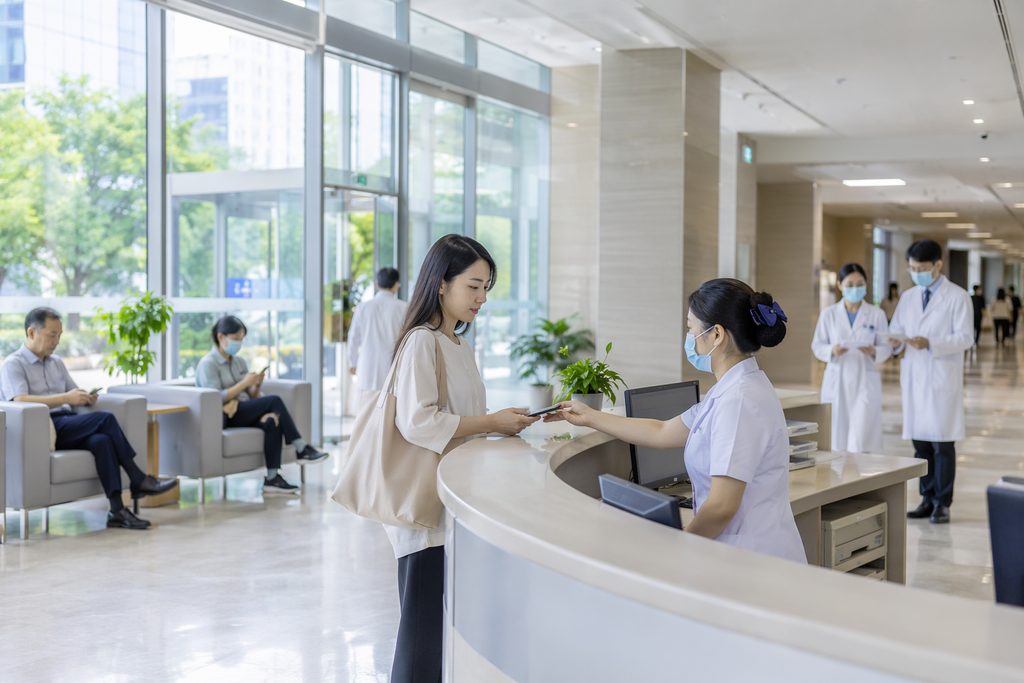
Walking into a major Chinese public hospital for the first time can feel like stepping into a city within a city. The sheer scale hits you immediately. A single top-tier institution can process over 10,000 outpatient visits daily. The crowds are dense. The signage, while increasingly bilingual in major centers, can still feel disorienting. And then comes the core question that brings you here: how to register at a Chinese hospital as a foreigner when you don’t speak the language and don’t understand the system.
The answer is that it is absolutely possible. But it requires preparation.
Our team has guided patients from over 40 countries through this exact process. We don’t provide medical treatment. We provide the logistical architecture—the planning, the documents, the physical presence—that gets you from the hospital entrance to the doctor’s office without losing hours or your sanity. This article walks through your first day in granular detail. No sugarcoating. Just what actually happens.
Key Takeaways
- Public hospital registration for foreigners typically requires a physical visit to a specialized international or VIP department; you cannot simply book a top specialist online from overseas.
- The cost of an initial international patient consultation in Shanghai or Beijing runs from $100 to $300, a fraction of comparable out-of-network specialist visits in the US.
- Without a bilingual medical companion, the average foreign patient spends 3-4 hours navigating registration, payment queues, and finding the correct consultation room on day one.
- A complete hospital admission package for overseas patients must include a valid passport, an S2 visa with a medical notation, and a pre-arranged payment deposit—cash or major credit card.
The Problem: A High-Stakes Maze With No Map
Most international patients underestimate the administrative gauntlet. A 2024 survey by the Pacific Prime insurance group noted that medical tourism to China grew by nearly 30% year-over-year, driven by access to high-volume surgical expertise. But the same report highlighted that language barriers and opaque registration systems remain the top two deterrents. You are not just battling jet lag. You are battling a registration system designed for domestic patients who carry a national ID card and speak Mandarin.
The risks of getting it wrong are real. You could queue in the wrong building for an hour. You could arrive without the correct visa annotation and be turned away. You could finally reach the specialist only to discover they require a fresh CT scan done in-house, adding another day to your timeline. The first day hospital admission process in China is not forgiving of improvisation. But once you know the sequence, the path clears up dramatically.
Who We Are
We are China Medical Services. We are not a hospital. We do not provide clinical diagnoses, prescribe medication, or perform surgery. We are your operational backbone. Our database covers 340+ top-ranked hospitals across 37 cities, representing the top 5% of China’s 35,000+ medical institutions as ranked by Fudan University’s hospital authority and JCI accreditation. We bridge the gap between your medical needs and China’s most advanced clinical resources. Think of us as your bilingual logistics team—we secure the right appointments, handle the registration paperwork, and place a trained medical interpreter by your side from the moment you walk through the hospital doors.
How to Register at a Chinese Hospital as a Foreigner: The Real Sequence
The fantasy is that you email a hospital, get a confirmed appointment with a famous professor, and show up at 9:55 AM for a 10:00 AM slot. The reality is different. Public hospitals operate on a dual-track system. The general outpatient track is a same-day, first-come scramble. The international medical department or VIP track is where pre-arranged care happens. Here is how the morning actually unfolds.
Step One: The Document Check at the International Desk
You enter the hospital’s international wing—usually a separate floor or dedicated building away from the main crowds. The first stop is the registration counter. This is the moment of truth for your paperwork. The clerk will ask for your passport. They will scrutinize your visa. An S2 visa with an explicit notation for medical treatment is the standard. A business visa will not work. They will also want to see a physical credit card or a cash deposit. Most public hospital international departments require a pre-authorized deposit before any consultation begins. Expect to place $500 to $2,000 down, depending on whether imaging or same-day procedures are anticipated.
This is where a medical registration service for foreigners in Beijing or Shanghai changes the experience. Instead of fumbling with translation apps to explain your visa category, our companion handles the exchange in Mandarin. They verify that the hospital’s record of your appointment matches your passport name exactly. One typo can cause a cascade of billing errors later. It takes three minutes with a professional. It can take thirty without one.
Step Two: The Consultation Fee and Triage
Once documents clear, you pay the consultation fee. The international patient consultation fee in Shanghai typically ranges from $150 to $300 for a first visit with a senior attending physician. In Beijing, the range is similar, though top-tier names at institutions like Peking Union Medical College Hospital can run toward the upper end. This fee is paid upfront. You receive a paper receipt and a plastic hospital card—a small, unassuming object that becomes your identity inside the system. Lose it, and you start over.
The triage nurse then takes your vitals. Blood pressure, temperature, weight. They note your chief complaint in the electronic record. In many hospitals, this step happens in a small room adjacent to the international registration desk. It is fast. It is efficient. And it determines the flow of your entire visit.
Step Three: The Specialist Consultation
With vitals recorded and payment confirmed, you are escorted to the specialist’s office. Here, the pace is clinical and direct. Chinese senior physicians often see a high volume of cases. They will review any imaging you brought from home—but be prepared for them to order repeat scans. China’s top hospitals frequently insist on in-house imaging to ensure diagnostic consistency. The good news is that the turnaround is blisteringly fast. A CT scan that might take two weeks to schedule in Canada can be completed and read within two hours here.
The specialist will make a preliminary assessment and, if admission is indicated, will begin the process of reserving a bed. This is the critical handoff. No surgery is scheduled on day one. But a concrete plan is formed. You leave the consultation with a printed admission order, a list of required pre-operative tests, and a clear sense of what the next 48 hours will demand.
What Documents Do I Need for Hospital Admission in China?
Admission is where the administrative stakes rise. The hospital is now legally responsible for your inpatient care. The documentation reflects that gravity. Based on the standard operating procedures we see across our network of 340+ hospitals, here is the non-negotiable list.
You need your original passport, not a copy. The hospital will retain a scan. You need your S2 visa with the medical purpose annotation clearly visible. You need the admission order signed by your attending physician. You need a payment method that can clear a substantial deposit—typically 50% to 100% of the estimated procedure cost. Major international credit cards work in the international department, though American Express acceptance is less reliable than Visa or Mastercard. Cash in RMB is always accepted.
You will also sign a series of consent forms. These will be in Chinese. By law, the hospital must provide a translation or you must bring your own interpreter. Signing a document you do not understand is a recipe for serious misunderstanding. We have seen cases where a patient thought they were consenting to a standard blood draw and were actually signing a broad surgical consent with implant options they had not discussed. A bilingual companion reviews every line before your pen touches paper.
Chinese Hospital Admission Package for Overseas Patients: What It Actually Includes
Some international departments offer a structured admission package. This is not a bundled price in the Western insurance sense. It is a pre-defined scope of services that streamlines the inpatient stay. A typical package includes the bed fee for a private or semi-private room in the international ward, three daily nursing assessments, standard meals, and a baseline set of pre-operative labs. It does not include the surgeon’s fee, anesthesia, implants, or high-end imaging like MRI. Those are charged separately.
The value of the package is operational. It guarantees a bed in the quieter, English-friendly wing. It assigns a nurse coordinator who acts as a single point of contact for scheduling tests. The cost varies dramatically by city and institution. In Guangzhou, a standard international ward package might start at $300 per day. In Shanghai’s private wings, $800 per day is common. These figures are still a world away from a US hospital admission base rate. But they are real costs that must be funded upfront.
What You Need to Know Before Going Alone
We believe in total transparency. The barriers are structural. They are not designed to exclude foreigners, but they are not designed to accommodate them either. Go in with your eyes open.
- Visa Precision: The S2 visa is the only correct category for short-term medical treatment. The application requires an invitation letter from the Chinese hospital or a recognized medical coordination entity. Processing times vary by consulate, but four to six weeks is a safe planning window. An M visa for commercial activity will be rejected at hospital registration.
- Payment Reality: China’s public hospitals operate on a pre-payment model. You fund the account. They draw down from it. When the balance runs low, services pause until you top up. This is culturally normal here and deeply unsettling if you are used to post-treatment billing. Expect to make multiple trips to the cashier window during a multi-day admission unless you have a coordinator handling this in the background.
- Language Isolation: Even in Beijing and Shanghai, the English fluency of administrative staff—the people who take your deposit, schedule your ultrasound, and dispense your discharge medication—is highly variable. A single miscommunication about fasting requirements can invalidate a blood test and cost you a full day.
How We Help You Navigate This
These barriers exist for reasons rooted in China’s domestic healthcare structure. Our job is to route around them. The morning of your first consultation, our bilingual medical companion meets you at your hotel. They handle ground transport. They walk you past the general queues and directly to the international registration desk. They carry a pre-verified copy of your documents so the clerk’s scanner never touches your original passport more than once.
During the consultation, they stand beside you—not as a passive translator, but as an active advocate. They ensure the physician addresses every question on your prepared list. They translate the admission order line by line, flagging any test or medication that conflicts with your known allergies or prior conditions. After the consultation, they escort you to the in-house imaging center, the phlebotomy lab, and finally to the inpatient admission office. They remain until you are settled in your room, the deposit is receipted, and the nurse has taken your baseline vitals. This is the first day hospital admission process in China, managed end to end. The fee for this comprehensive daily support starts from $200, a figure that includes the full operational burden of making a massive, complex hospital feel navigable and human-scaled.
For patients who need deeper coordination—securing a specific senior surgeon’s time, arranging a multi-disciplinary team review before travel—our case management model applies. Fees for written second opinions or top-specialist video consultations range from $300 to $800. These investments are credited in full toward any subsequent on-the-ground coordination service within 90 days. It is a one-time credit applied to our coordination fee, never to hospital treatment charges. The goal is to align incentives. We succeed when you arrive fully prepared.
Frequently Asked Questions
Technically, yes. The general outpatient hall accepts walk-ins. But you will be assigned a random available physician, not a senior specialist. You will wait in lines where no English is spoken. For a complex condition requiring a specific expert, this approach wastes days and introduces significant diagnostic risk. The international department almost always requires a pre-arranged appointment.
Shanghai and Beijing are comparable, with first-visit fees clustering between $150 and $300. Shanghai’s private international hospitals, such as Jiahui, may charge toward the higher end but include longer consultation times and direct insurance billing. Beijing’s public hospital international departments, like Peking Union Medical College Hospital’s VIP wing, offer access to China’s most cited academics at the upper end of this range. Both cities represent extraordinary value relative to out-of-network US specialist fees, which routinely exceed $500 for a first visit.
If the specialist determines you require immediate admission, the process accelerates. The international department can often secure a bed within hours. The deposit requirement becomes urgent. A coordinator can liaise with your family or insurer to wire funds while you are being settled. The hospital will not delay medically necessary care over payment, but they will pursue the deposit aggressively once you are stable. This is a cultural and operational reality to anticipate, not fear.
A hotel concierge can call a taxi and perhaps print a map. They cannot translate a complex medical history, negotiate a deposit hold, or challenge an incorrect billing code. Registration errors compound. A misspelled name on a lab order can delay surgery clearance. A concierge is a hospitality professional. A bilingual medical companion is a healthcare logistics professional. The two skill sets are not interchangeable.
Your Next Step
Your first day at a Chinese hospital will set the tone for your entire treatment journey. The system rewards preparation and punishes improvisation. With the right documents, a clear understanding of the payment flow, and a professional bridging the language gap, what looks like chaos from the outside becomes a remarkably efficient, high-volume clinical engine. The expertise you are seeking is real. The path to it just requires a guide who knows the terrain.
If you are considering treatment at one of China’s top-ranked institutions, we invite you to explore our curated database of Fudan-ranked hospitals or learn more about our bilingual medical companion service. A clear plan makes all the difference.
For more medical information and treatment options in China, visit chinamedservices.com (China Medical Services).
