Why Chinese Hospitals Start Food and Drink Earlier Post-Op: The Recovery Logic
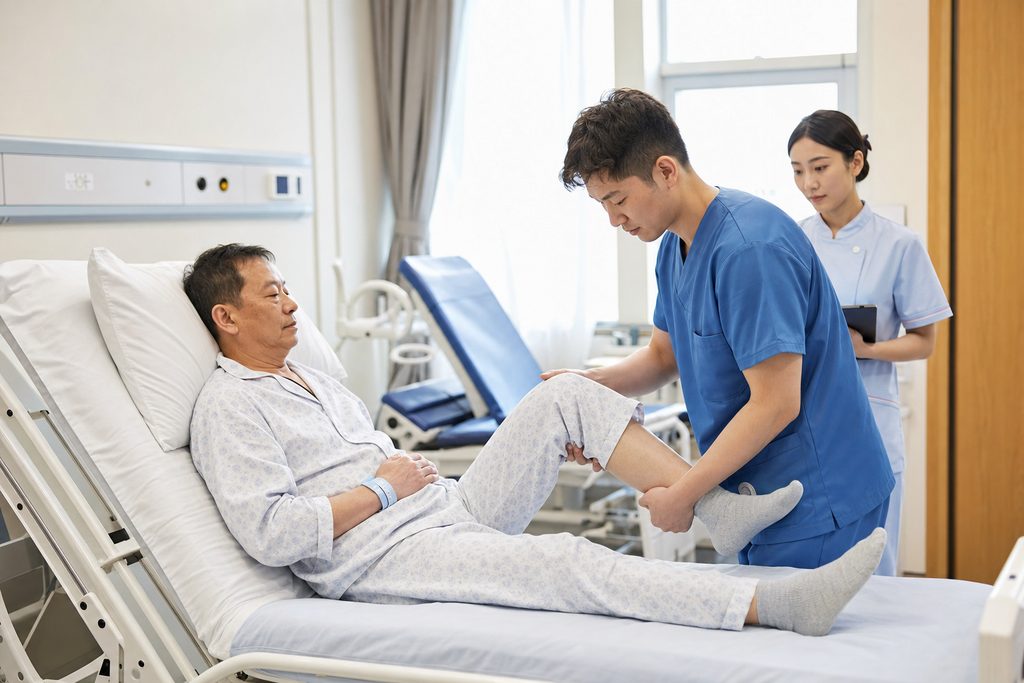
Have you ever woken up from surgery expecting ice chips and found yourself handed a bowl of warm congee instead? If you’re researching how soon can i eat after surgery in China, you’ve probably heard stories that sound almost too aggressive to be safe. The short answer: in many Chinese hospitals, clear fluids start 2–4 hours after a routine procedure, and a light meal may arrive within 6 hours. That is not a mistake. It is a protocol backed by a specific body of clinical evidence that has shaped surgical recovery across East Asia for decades.
But a number without context is useless. The real question is whether that protocol applies to your surgery, your risk profile, and your comfort level. We have coordinated care for international patients across China’s top-tier hospitals, and the question of early feeding comes up in nearly every pre-operative call. Patients worry about safety. They worry about nausea. They wonder if this is an institutional preference or genuine evidence-based medicine. This article answers those concerns directly, drawing on published research and the actual practices inside hospitals ranked among China’s top 5%.
How Soon Can I Eat After Surgery in China: The Short Answer
The protocol most international patients encounter inside a major Chinese teaching hospital looks like this: for a routine laparoscopic procedure under general anesthesia — a gallbladder removal, an uncomplicated gynecologic surgery — the surgical team will often order clear fluids within 2 to 4 hours of the patient returning to the ward. If those fluids stay down, a semi-liquid diet follows around the 6-hour mark. That means rice porridge, bone broth, or a thinned vegetable soup, not a steak. By the morning after surgery, many patients are eating soft solids.
This is not universal. It is not reckless. And it is not applied to every patient without discrimination. The protocol is risk-stratified. A patient who had a 6-hour open abdominal procedure with significant bowel manipulation will follow a much more conservative timeline. So will a patient with poorly controlled diabetes or a history of severe post-operative nausea. The difference is that the default starting point in China is earlier than the default in many Western hospitals, where “NPO until bowel sounds return” was dogma for most of the 20th century.
Why does this matter to you? Because if you are traveling from abroad for surgery — a decision that already requires navigating language barriers, visa logistics, and unfamiliar systems — the recovery experience itself will feel different. Knowing what to expect changes fear into preparedness.
Key takeaway: Early feeding protocols in Chinese hospitals are not a cultural quirk. They reflect an Enhanced Recovery After Surgery (ERAS) philosophy that has been independently validated in large Asian clinical trials. The average time to first oral intake in Chinese ERAS programs for colorectal surgery is 6–12 hours post-op, compared to 24–48 hours in traditional Western protocols from the 1990s.
Who This Is Right For — and Who It Isn’t
Let’s be blunt about eligibility. The early feeding after operation Chinese hospital protocol is not a perk you request. It is a clinical decision the attending surgeon makes based on objective criteria. Understanding those criteria helps you ask the right questions during your pre-operative consultation.
Typically a good candidate:
- Undergoing a minimally invasive procedure (laparoscopic or robotic) with limited bowel handling
- Hemodynamically stable in the recovery room with no signs of active bleeding
- No intraoperative complications that required unplanned bowel resection or extensive adhesiolysis
- Alert and able to protect their own airway within 2 hours of extubation
- No history of severe post-operative nausea and vomiting (PONV) requiring multi-agent rescue therapy
Who should not expect an accelerated feeding timeline:
- Patients who underwent emergency surgery for perforation, obstruction, or sepsis — the gut needs time
- Any procedure involving an esophageal or gastric anastomosis (the suture line must be protected)
- Patients with gastroparesis, severe reflux, or known swallowing dysfunction
- Those requiring therapeutic hypothermia or prolonged sedation post-operatively
- Anyone whose surgeon explicitly orders a delayed oral intake protocol — and that surgeon’s judgment overrides any general article you read
We have seen international patients arrive expecting a one-size-fits-all experience and become frustrated when their specific case required a slower approach. The hospitals we work with — across our network of 340+ top-ranked hospitals — practice individualized perioperative medicine. The protocol adapts to the patient, not the other way around.
The Options, Compared
Then you stop eating, the nurse administers antiemetics, and the team reassesses. Early feeding is a trial, not a commitment. The protocol’s logic is that most patients tolerate it and benefit from it. The minority who do not are managed symptomatically, and their oral intake timeline is adjusted. No one is discharged with uncontrolled vomiting. If you have a known history of severe post-operative nausea, disclose it during your pre-operative anesthesia consult. The anesthesiologist can adjust the prophylactic antiemetic regimen — often adding a scopolamine patch, dexamethasone, and a 5-HT3 antagonist in combination — which significantly reduces the likelihood of early feeding failure.
Will my insurance cover a “quick recovery” protocol in China?
Insurance covers the surgery, not the protocol label. If your policy includes overseas treatment at recognized hospitals, the procedure and inpatient stay are reimbursable under the same terms as any other hospitalization. The “quick recovery” aspect is a clinical pathway, not a separate billable item.
Frequently Asked Questions
Yes. The hospitals used for international patients are JCI-accredited and follow the same international safety standards as top hospitals in the US and Europe. Surgical teams perform high volumes of procedures — often more than their Western counterparts — which studies show leads to better outcomes.
Costs vary by procedure and hospital, but international patients typically save 40-80% compared to US prices — even when factoring in travel and accommodation. A consultation with our team will give you an exact, all-inclusive quote with no hidden fees.
Send us your existing medical reports to get started. We handle everything from hospital selection and appointment scheduling to visa assistance and post-operative recovery planning. Your medical records are reviewed by the specialist before you even book a flight.
For more medical information and treatment options in China, visit chinamedservices.com (China Medical Services).
