Why Chinese Surgeons Use Different Suture Types: Technique, Cost, and Healing
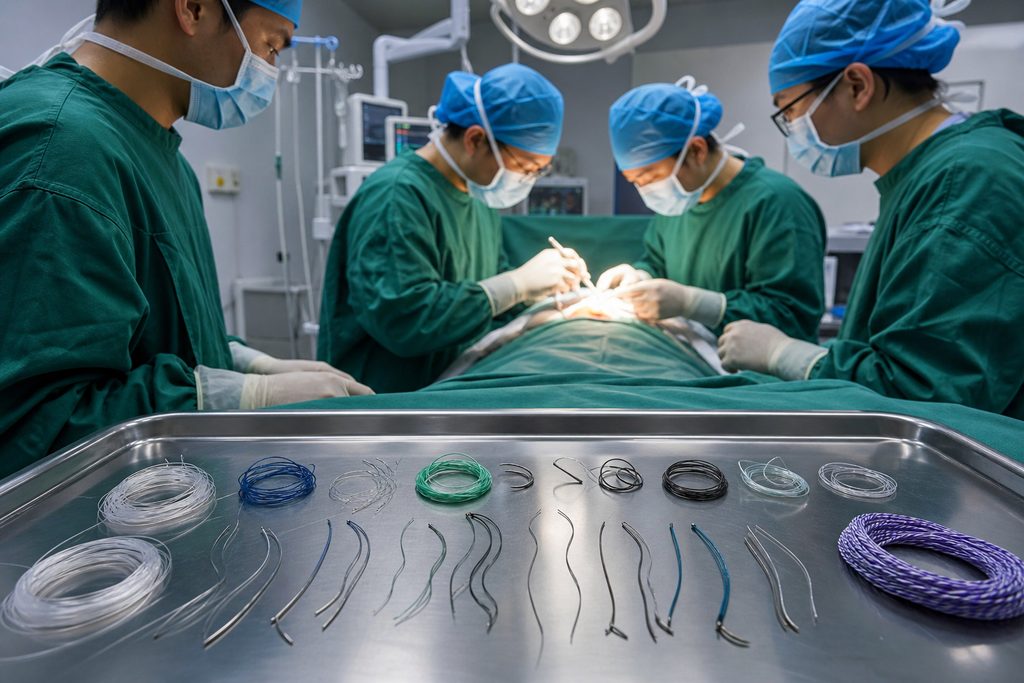
Walk into any operating room in Shanghai or Beijing, and you will see something that looks more like a craft workshop than a sterile medical bay. Racks of threads. Different needles. Some materials you have heard of, some you have not. The choice of suture is not random. It is a deliberate decision that affects how you scar, how you heal, and what your final hospital bill looks like. When patients search for suture types used in China surgery cost, they are usually trying to solve a deeper puzzle: they have been quoted a price, they see an unfamiliar material listed, and they want to know if they are getting standard care or something experimental. Our team helps patients decode this every day. We do not perform the surgery. But we sit beside you in the consultation, translate the technical terms, and make sure you understand why your surgeon is reaching for one thread instead of another.
How This Actually Works, Step by Step
The decision starts long before the first incision. It begins with your medical records. Here is the real sequence a patient goes through when they want to understand—and potentially influence—their wound closure plan in a Chinese hospital.
Step 1: You send us your existing case file. This includes your diagnosis, imaging, and any surgical history. If you have a known allergy to certain suture materials or a history of hypertrophic scarring, we flag it immediately. Chinese surgeons need to see this before they can make a material recommendation.
Step 2: We arrange a written second opinion or video consultation. This is where the surgeon reviews your file and proposes a surgical plan. The suture selection is part of this plan. A video consultation lets you ask direct questions: “Why polypropylene for the fascia? Why not PDS? Will I feel the knots under my skin?” We translate these questions precisely. No softening. No guesswork.
Step 3: You receive a detailed breakdown. The hospital’s quote will list consumables. Sutures are a line item. You will see the brand, the material, and the gauge. At this stage, you can ask for alternatives. Some patients want a pricier antibacterial-coated suture. Others want a simple nylon that their local doctor back home can easily remove. Both are possible. You just need to ask before the day of surgery.
Step 4: The surgery happens. The surgeon closes in layers—deep fascia, subcutaneous tissue, subcuticular skin. Each layer may use a different suture. This is not a cost-cutting trick. This is standard surgical practice worldwide. The difference in China is the sheer volume of cases these surgeons handle. A cardiac surgeon at Fuwai Hospital closes a sternotomy over 200 times a year. They know exactly which material holds best on a coughing patient.
Step 5: Post-operative monitoring. If you stay in China for recovery, we track your wound healing. If you return home, we make sure your discharge summary includes the exact suture types and removal dates for any non-absorbable stitches. Your local GP needs this information.
The Material Decision: Why Chinese Surgeons Reach for Different Threads
It depends on the material. Fast-absorbing gut sutures lose strength in about a week. Polyglactin 910 (Vicryl) retains significant tensile strength for two to three weeks and is fully absorbed in about two months. Polydioxanone (PDS) holds strength for up to six weeks and takes six months to absorb completely. Your surgeon will choose the absorption profile that matches the healing rate of the tissue being repaired. If you are flying home shortly after surgery, ask your surgeon to use a suture that will hold until you can see your local doctor. The last thing you want is a wound opening at 35,000 feet because the suture dissolved too quickly.
What is the best suture technique for China medical tourism patients?
There is no single best technique. The best technique is the one that matches your specific surgery, your tissue quality, and your post-operative travel plans. For a patient flying home within a week of abdominal surgery, a surgeon might choose a running PDS closure for the fascia—maximum strength, slow absorption—and a subcuticular Monocryl for the skin, so you do not need suture removal abroad. For a patient staying in China for a month of recovery, the options broaden. The key is having
Frequently Asked Questions
Yes. The hospitals used for international patients are JCI-accredited and follow the same international safety standards as top hospitals in the US and Europe. Surgical teams perform high volumes of procedures — often more than their Western counterparts — which studies show leads to better outcomes.
Costs vary by procedure and hospital, but international patients typically save 40-80% compared to US prices — even when factoring in travel and accommodation. A consultation with our team will give you an exact, all-inclusive quote with no hidden fees.
Send us your existing medical reports to get started. We handle everything from hospital selection and appointment scheduling to visa assistance and post-operative recovery planning. Your medical records are reviewed by the specialist before you even book a flight.
For more medical information and treatment options in China, visit chinamedservices.com (China Medical Services).
