First Affiliated Hospital of Chongqing Medical University Cardiology: A Guide for International Patients
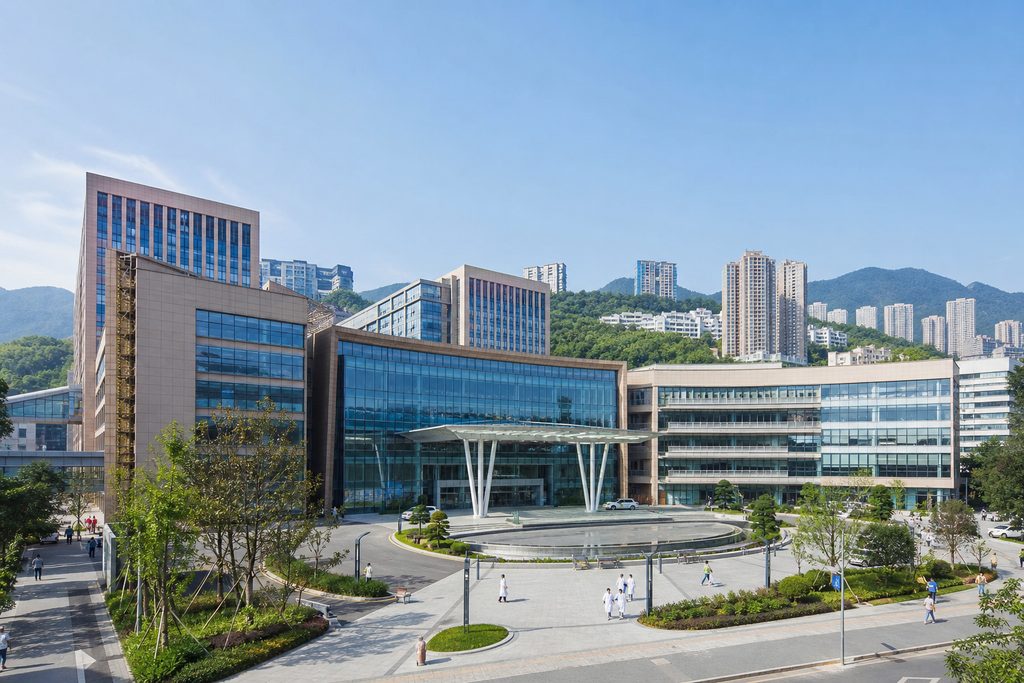
While a patient in the United Kingdom can wait over 18 weeks for a routine cardiology appointment, the First Affiliated Hospital of Chongqing Medical University performs more than 4,000 cardiac interventions annually. That contrast—waiting months for a consultation versus arriving at a facility with that level of procedural volume—is what draws international patients to consider Chongqing for cardiac care. The decision is not simple, and it should not be made on numbers alone.
First Affiliated Hospital of Chongqing Medical University Cardiology: The Short Answer
Yes, international patients can access the cardiology department at the First Affiliated Hospital of Chongqing Medical University. The heart surgery cost at Chongqing Medical University typically ranges from $12,000 to $20,000 for a coronary artery bypass graft, which is roughly one-fifth to one-tenth of the $120,000+ charged by many American hospitals. But the process requires navigating a public hospital system that was built for domestic patients first. You cannot simply email the department and book a surgery date. You need a structured pathway.
What makes this hospital worth considering is its scale and clinical experience. The cardiovascular division handles complex cases daily. The challenge for a foreigner lies in documentation, language, and the sequencing of evaluations before any procedure gets scheduled.
Who This Is Right For — and Who It Isn’t
Coming to Chongqing for cardiac care makes sense for a specific profile of patient. It is not a universal solution. Being honest about who should stay home is what makes the rest of this guide credible.
Typically a good candidate:
- You have a confirmed diagnosis from your home country and need a second opinion or a surgical plan, not a first-time workup.
- You are stable enough to travel internationally without immediate risk.
- Your condition—such as coronary artery disease, valve disease, or arrhythmia—is one where the hospital’s cardiac team has clear, high-volume experience.
- You are paying out of pocket or have insurance that reimburses international care after the fact.
- You can commit to staying in Chongqing for at least two to four weeks for evaluation, procedure, and initial recovery.
Who should not pursue this:
- Patients in acute heart failure or unstable angina who need emergency intervention now. Travel is unsafe.
- Anyone who cannot provide complete medical records in English or Chinese. The hospital needs imaging, catheterization reports, and lab work before any remote review.
- Patients expecting a Western-style private room and English-speaking nurses throughout a public hospital stay. The international VIP ward offers more comfort, but the hospital is still a Chinese public institution at its core.
- Those who need a heart transplant. Solid-organ transplant access for foreign nationals is not a service any Chinese hospital can guarantee, and we do not facilitate it.
The Options, Compared
When a foreigner considers cardiac care in China, the realistic alternatives are not just different hospitals—they are different models of care. Here is how the First Affiliated Hospital of Chongqing Medical University stacks up against the other paths a patient might take.
| Factor | Chongqing Medical University (Public, International Channel) | Beijing/Shanghai Top Cardiac Centers (e.g., Fuwai, Zhongshan) | Private International Hospital in China (e.g., United Family, Jiahui) | US/EU Hospital |
|---|---|---|---|---|
| Heart bypass surgery cost | $12,000–$20,000 | $15,000–$25,000 | $30,000–$50,000 | $120,000+ |
| Annual cardiac procedure volume | 4,000+ interventions | 14,000+ surgeries (Fuwai alone) | Lower volume, varies by facility | Varies widely |
| English-speaking clinical staff | Limited; interpreter needed | International departments with English support | English-speaking staff standard | Native English |
| Insurance direct billing | No; pay upfront, claim later | Mostly no; pay upfront | Yes, direct billing common | Yes |
| Wait time for non-emergency surgery | 1–3 weeks after in-person consult | 2–4 weeks after consult | 1–2 weeks | 3–18 months depending on country |
| Cost of bilingual companion service | From $300/day | From $300/day | Often included or unnecessary | Not applicable |
The public international channel in Chongqing suits a patient who prioritizes cost and clinical experience over comfort. If you want the highest possible cardiac volume in China, Fuwai Hospital in Beijing is unmatched. If you want a Western-style experience with direct insurance billing, a private international hospital is better—but you will pay two to three times more. The right column depends on what you are optimizing for.
Is Cardiac Care Safe in Chongqing for International Patients?
This is the question that keeps people up at night. And it deserves a direct answer.
The First Affiliated Hospital of Chongqing Medical University is a Grade A tertiary hospital—the highest tier in China’s hospital classification system. Its cardiology and cardiac surgery departments are ranked among the top programs in western China. The hospital performs complex procedures including valve replacement, congenital heart defect repair, and coronary artery bypass grafting on a routine basis. The surgeons here operate on cardiac patients every single week, year after year. Volume builds competence.
But safety for an international patient involves more than surgical skill. It involves communication. A medication error or a missed symptom is more likely when you cannot explain what you feel to the nurse at 2 a.m. It involves continuity. Your Chinese cardiologist will not be the one managing your follow-up after you fly home. You need a clear discharge summary, translated records, and a plan for your local doctor. None of this happens automatically. It requires coordination.
So the honest answer: the clinical safety at this hospital is comparable to good Western centers for the procedures they do most often. The logistical safety depends entirely on preparation and on having someone who can bridge the language and system gaps.
How to Book Heart Bypass Surgery at Chongqing Medical University
There is no online booking portal where you click a date and pay a deposit. The process follows a sequence that Chinese public hospitals have used for decades.
Step 1: Remote records review. You send your existing coronary angiography, echocardiogram, stress test results, and current medication list. The cardiology team reviews them and gives a written or video-based opinion on whether surgery is indicated and feasible. This costs between $300 and $800 depending on whether you choose a written second opinion or a video consultation with a senior specialist.
Step 2: Travel and in-person consultation. If the remote review supports surgery, you travel to Chongqing on an S2 visa, which is the short-stay category used for medical treatment and private affairs. Bring a family member or companion. You will meet the surgical team in person, repeat key imaging if needed, and get a final surgical plan.
Step 3: Admission and surgery scheduling. After the in-person consult confirms the plan, the hospital schedules admission. This is where the international/VIP channel matters. The standard public route cannot be pre-booked from overseas. The international channel allows coordination in advance, at a cost roughly 1.5 to 2 times the standard public rate.
Step 4: Procedure, recovery, discharge. A typical bypass stay is 7 to 14 days including post-operative monitoring. You will need to remain in Chongqing for at least another week after discharge before flying home.
Heart Surgery Cost at Chongqing Medical University: What the Numbers Include
The headline number—$12,000 to $20,000 for a bypass—is real. But it is also incomplete. Here is what drives the variance and what is not included.
The hospital bill covers the surgery itself, the operating room, anesthesia, the surgeon’s fee, standard post-operative ICU care, and a basic ward bed. It does not include your international VIP room upgrade, which can add $100 to $300 per night. It does not include the interpreter or bilingual companion, which runs from $300 per day. It does not include your flights, visa fees, accommodation for family members, or meals.
A realistic all-in budget for a bypass at this hospital, including two weeks of local accommodation, a bilingual companion for key days, and the international channel coordination, lands between $18,000 and $30,000. Still dramatically less than the $120,000+ American price tag, but not the bare hospital bill.
Can you get a stent in China as a foreigner? Yes. Percutaneous coronary intervention—stent placement—is available to international patients through the same pathway. A single stent procedure at this hospital typically costs $6,000 to $10,000 including the device, compared to $30,000 to $50,000 in the US. The remote records review works the same way. The cardiology team evaluates your angiography and decides if stenting is appropriate or if bypass is the better option.
Practical Considerations: Records, Visa, Payment, and Follow-Up
These logistics make or break the experience. State the facts and judge for yourself.
Medical records. Everything must be in English or Chinese. If your records are in another language, they need professional translation before the remote review. Bring original imaging on CD or USB, not just printed reports. The cardiologists will want to see the actual angiography loops, not a summary.
Visa. You apply for an S2 visa at a Chinese embassy or consulate, with supporting documents from the hospital confirming your medical appointment. Your accompanying family member also applies for an S2. Processing takes one to three weeks depending on your location. The M visa is for commercial and trade activities and is not appropriate for medical treatment. Visa approval is never guaranteed and depends on the latest consulate requirements.
Payment. Public hospitals in China require prepayment. You deposit funds at admission and the hospital deducts from that balance. There is no direct insurance billing at this hospital. You pay, you get itemized receipts, you submit to your insurer for reimbursement. Confirm with your insurer before traveling that overseas cardiac surgery is covered under your policy.
Language. Do not expect English-speaking nurses on the ward. The international department staff may speak some English, but clinical communication happens in Chinese. A bilingual companion who understands medical terminology is not a luxury here—it is the difference between knowing what is happening and guessing.
Follow-up after returning home. Your local cardiologist takes over. Ask for a complete discharge summary in English before you leave Chongqing. Request copies of all post-operative imaging and lab results. Schedule a follow-up with your home cardiologist within two weeks of returning.
Frequently Asked Questions
Yes. Foreign nationals can receive percutaneous coronary intervention at the First Affiliated Hospital of Chongqing Medical University through the international channel. The process requires a remote records review first, followed by an in-person consultation. The cardiology team decides between stenting and bypass based on your angiography, not on your preference.
The clinical safety at this hospital is comparable to good Western centers for high-volume procedures like bypass, valve surgery, and stenting. The practical risks are communication-related. Without a bilingual companion or interpreter, you may not fully understand your care plan, medication changes, or discharge instructions. Prepare for that gap.
There is no fixed package price. The hospital bills per procedure, per day, and per item. A bypass typically costs $12,000–$20,000 for the hospital portion. A stent procedure runs $6,000–$10,000. International VIP room upgrades, interpreter services, and coordination fees are billed separately. Final quotes vary by hospital and case complexity.
You cannot book surgery from overseas directly. The sequence is: remote records review, travel to Chongqing on an S2 visa, in-person consultation with the surgical team, then admission and scheduling. The international channel allows this process to be coordinated in advance. The standard public route requires you to be physically present before anything gets scheduled.
It depends on what you mean by best. If you mean highest surgical volume, Fuwai Hospital in Beijing performs over 14,000 cardiac surgeries annually—the most in the world. If you mean most accessible from western China or lowest cost among top-tier cardiac centers, Chongqing Medical University’s First Affiliated Hospital is a strong choice. For a broader look at cardiac surgery rankings across China, see our cardiology and cardiac surgery department rankings.
Your Next Step
The heart surgery cost at Chongqing Medical University is compelling, but cost only matters if the clinical pathway works for your specific case. That starts with a records review, not a plane ticket. China Medical Services helps international patients connect with top-ranked Chinese hospitals, including the First Affiliated Hospital of Chongqing Medical University. We are not a hospital. We do not diagnose or treat. We handle the coordination, translation, and logistics so you can make an informed decision.
If you have your cardiac records ready and want to know whether this hospital is a fit for you, request a free consultation through our patient services page. We will review your situation and tell you honestly whether Chongqing makes sense—or whether you are better off staying home.
For more medical information and treatment options in China, visit chinamedservices.com (China Medical Services).
